Science Toys vs. Engineering Toys: Which Fosters Better Learning?
The debate between science toys and engineering toys has long intrigued parents, educators, and toy manufacturers. On the surface, both categories appear to serve a similar purpose—they entertain while educating. Yet a closer look reveals fundamental differences in their approach to learning. Science toys typically focus on observation, experimentation, and understanding natural phenomena, while engineering toys emphasize construction, problem-solving, and the application of principles to create functional objects. Which is better? The answer, as with most educational questions, is not a simple binary. Rather than declaring a winner, we must examine the distinct cognitive, developmental, and motivational benefits each type offers, and consider how they complement each other in a well-rounded STEM education.
The Case for Science Toys
Science toys are designed to ignite curiosity about the natural world. Chemistry sets, crystal-growing kits, microscopes, and physics demonstration toys like Newton’s cradles or kaleidoscopes all fall into this category. Their primary strength lies in fostering a mindset of inquiry and discovery. When a child mixes baking soda and vinegar to produce a fizzing eruption, they are not merely witnessing a reaction—they are internalizing the scientific method: hypothesizing, observing, and concluding. This process cultivates critical thinking, patience, and attention to detail.
Moreover, science toys often come with open-ended possibilities. A magnifying glass or a simple prism can lead to endless exploration of light and optics. Unlike toys with a single correct outcome, science tools encourage repeated experimentation. A child who tries to grow crystals may fail multiple times before succeeding, learning resilience and the importance of controlled variables. These experiences build foundational knowledge of concepts such as chemical reactions, forces, energy transfer, and biological systems.
Another advantage is that science toys nurture abstract reasoning. Understanding why a balloon sticks to a wall after being rubbed requires grasping static electricity—an invisible force. This abstraction prepares young minds for higher-level scientific thinking. Furthermore, many science toys align closely with school curricula, making them excellent supplements for classroom learning. A child who has used a telescope is more likely to engage eagerly during a lesson on astronomy.
However, science toys are not without limitations. They often require adult supervision, especially when involving chemicals or sharp instruments. Some children may find them less engaging if they prefer immediate, tangible results. The learning is often slower and less visible, which can frustrate those who thrive on building and making.
The Case for Engineering Toys
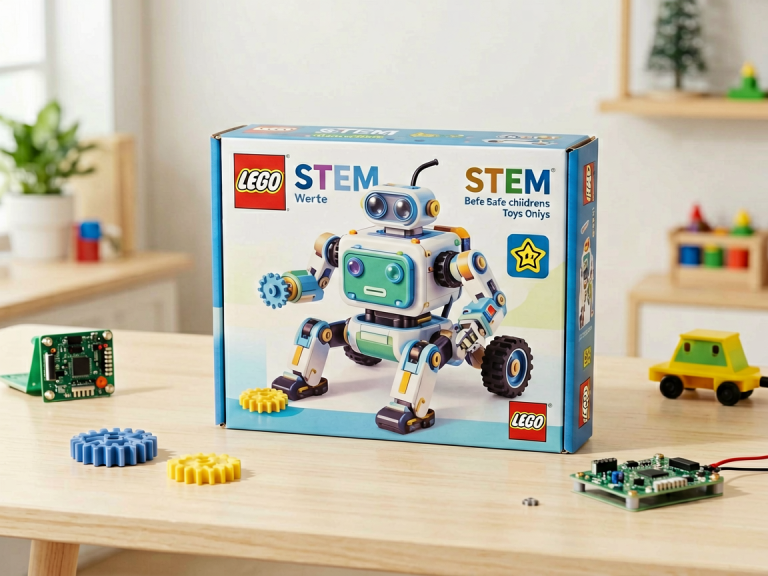
Engineering toys, by contrast, are all about creation and application. Building blocks, LEGO sets, K’NEX, marble runs, robotics kits, and bridge-building challenges exemplify this category. Their core appeal lies in the satisfaction of constructing something that works. A child who assembles a LEGO crane that actually lifts a small weight experiences a sense of accomplishment that is immediate and concrete. This direct feedback loop fuels motivation and perseverance.
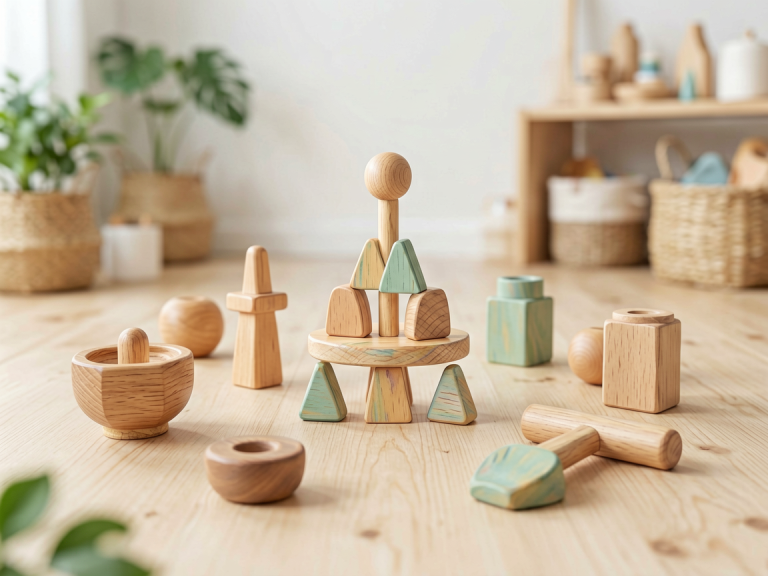
Engineering toys excel at developing spatial reasoning and fine motor skills. As children plan how to connect pieces, balance structures, and ensure stability, they practice geometry, physics, and design thinking. Unlike science toys that ask “why does this happen?”, engineering toys ask “how can I make this work?”. This shift from explanation to application is crucial for developing problem-solving abilities. When a tower collapses, the child must diagnose the weakness—was the base too narrow? Were the joints insufficient?—and redesign accordingly. This iterative process mirrors real-world engineering.
Another major benefit is that engineering toys often promote collaboration. Many construction projects are large enough that siblings or friends need to work together. This teaches communication, division of labor, and compromise. Additionally, engineering toys frequently introduce basic principles of mechanics, structural integrity, and even programming. Modern robotics kits, for instance, allow children to code movements, blending engineering with computational thinking.
Yet engineering toys have their own drawbacks. They can be expensive, and many kits are designed for a single project, reducing replay value. Some children may become overly focused on following instructions rather than innovating, especially with highly prescriptive sets. The learning can become too “applied” without enough conceptual depth—a child might build a bridge that holds weight but not understand why triangular trusses are stronger than square ones.
Comparing Learning Outcomes: Cognitive Skills and Future Careers
When we compare the cognitive outcomes, we see that science toys tend to develop divergent thinking—the ability to generate many possible explanations or hypotheses. Engineering toys, on the other hand, foster convergent thinking—the ability to find a solution that works within given constraints. Both are essential. In the workplace, a scientist must interpret data and form theories (divergent), while an engineer must design solutions within budget and timeline (convergent). A future physicist needs the curiosity nurtured by science toys; a future civil engineer gains directly from building bridges with blocks.
From a career perspective, the distinction is not absolute. Many fields, such as biomedical engineering, require both scientific understanding and engineering application. A child who only plays with science toys may struggle to translate ideas into tangible results. Conversely, a child who only builds with engineering kits may lack the theoretical depth to innovate beyond existing designs. The ideal preparation for STEM careers involves exposure to both.
Context Matters: Age, Interest, and Educational Goals
The “better” choice heavily depends on the child’s age, temperament, and stage of development. For preschool children, engineering toys like large blocks or Duplo are often more appropriate because they require less fine motor control and provide immediate gratification. Around age 6–8, science toys such as simple magnet kits or bug observation containers can spark wonder. As children enter middle school, more sophisticated engineering kits (e.g., hydraulic arms or basic circuits) become feasible, while chemistry sets or telescopes offer deeper scientific exploration.
Interest also plays a pivotal role. A child who loves building with LEGO may resist a microscope, and vice versa. Forcing one type over the other can backfire. Parents and educators should observe a child’s natural inclinations and then introduce the complementary toy type gradually. For example, a child who loves building could be given a science toy that explains why certain shapes are stronger—turning the engineering passion into a gateway for scientific learning.
Educational goals further influence the choice. If the aim is to develop creativity and design skills, engineering toys are unmatched. If the goal is to nurture curiosity and understanding of the world, science toys take the lead. Most holistic educational frameworks, such as STEAM (Science, Technology, Engineering, Arts, Mathematics), advocate for integrating both.
The Synergy of Combining Both
The most powerful approach is not to choose one over the other, but to use them in tandem. A child can first explore the concept of buoyancy with a science toy—floating and sinking experiments—and then apply that knowledge to build a boat from recycled materials. Similarly, after constructing a simple machine like a lever with an engineering kit, the child can experiment with different weights to discover the mechanical advantage, a science lesson hidden in the play.
Many modern toys blur the line. Snap Circuits, for example, combine electrical science (understanding circuits) with engineering (building functional devices). Robotics kits require both coding (a science of logic) and mechanical assembly (engineering). These hybrid toys offer the best of both worlds.
Ultimately, the question “which is better?” misses the point. Science and engineering are not rivals; they are two sides of the same coin. Science toys help children understand why things happen, while engineering toys help them create things that do something. A child equipped with both types of play will develop a versatile mind capable of asking questions, testing ideas, and building solutions. In the real world, the most innovative thinkers are those who can seamlessly move from discovery to invention.
Therefore, instead of asking which is better, we should ask: how can we provide a balanced diet of both? The answer lies in thoughtful selection, open-ended play, and encouragement to explore connections. When a child builds a tower and then wonders why it fell, they are already practicing the beautiful interplay of science and engineering. That is the true winner.