The Power of Play: Essential Learning Toys for 8-Year-Olds That Spark Growth and Curiosity
At the age of eight, children are at a fascinating crossroads of development. They have outgrown the simple cause-and-effect toys of early childhood, yet they are not quite ready for the abstract reasoning of adolescence. Instead, eight-year-olds are curious, energetic, and increasingly capable of logical thinking, problem-solving, and social cooperation. They ask "why" and "how" with genuine hunger, and their play begins to reflect a desire for mastery, creativity, and connection. This is the perfect moment to introduce learning toys that are not only engaging but also designed to nurture cognitive, emotional, social, and physical growth. The right toys can transform playtime into a rich learning experience, building skills that last a lifetime. Below, we explore several categories of learning toys specifically chosen to meet the needs and interests of eight-year-olds.
Cognitive and Problem-Solving Toys
At eight, children’s brains are rapidly developing the ability to think logically and systematically. They can understand rules, sequence steps, and plan ahead. Toys that challenge their reasoning, memory, and strategic thinking are incredibly valuable.
Logic Puzzles and Brain Teasers
Classic puzzles like Rubik’s Cubes, tangrams, and 3D wooden puzzles require children to visualize spatial relationships, test hypotheses, and persevere through frustration. Rubik’s Cubes, in particular, help develop working memory and pattern recognition. For an eight-year-old, solving a puzzle not only boosts confidence but also teaches the importance of a step-by-step approach. Many puzzle sets come with varying difficulty levels, so children can start simple and gradually tackle more complex challenges, building resilience along the way.
Strategy Board Games
Board games like *Settlers of Catan (Junior version)*, *Ticket to Ride* (simplified edition), *Chess* (with beginner lessons), or *Blokus* encourage forward thinking, resource management, and flexible strategy. Unlike mindless digital games, these analog experiences force kids to consider multiple variables and anticipate opponents’ moves. Playing with family or friends also cultivates patience, turn-taking, and good sportsmanship—essential emotional skills. For example, *Blokus* is a geometric strategy game that develops spatial intelligence and planning; it is visually appealing and easy to learn but offers deep strategic depth.
Building and Construction Sets
Advanced building sets like LEGO Technic, K’NEX, or magnetic tiles (e.g., Magna-Tiles) are excellent for teaching engineering, physics, and mathematics. Eight-year-olds can follow complex instructions to construct moving vehicles, bridges, or machines, or they can design their own creations. The open-ended nature of these toys encourages creativity while simultaneously reinforcing concepts like gears, levers, and symmetry. Building a working model also provides a tangible sense of accomplishment—something that digital alternatives often lack.
STEM Learning Toys
STEM (Science, Technology, Engineering, and Math) toys are especially relevant for this age group because children are naturally curious about how the world works. Hands-on experiments and coding kits make abstract concepts concrete and fun.
Science Experiment Kits
Chemistry and physics sets designed for ages 8–12, such as the *Thames & Kosmos* line or *National Geographic* kits, allow children to conduct safe, guided experiments. They can grow crystals, build simple circuits, create volcanoes, or explore the properties of light and sound. These kits often come with instruction booklets that explain the scientific principles in kid-friendly language. Doing experiments at home nurtures curiosity, observation skills, and the scientific method—forming hypotheses, testing, and analyzing results.
Introductory Coding Robots and Kits
Robots like the *Sphero Mini* or *Botley 2.0* (for screen-free coding) or *LEGO Boost* allow children to learn programming logic through play. With drag-and-drop coding interfaces, they can command a robot to move, light up, or respond to sensors. This teaches sequencing, loops, and conditional statements—foundational concepts for computational thinking. Many of these toys also integrate math and geometry, as children must calculate distances and angles to program precise movements. The immediate feedback of seeing a robot execute their code is incredibly motivating.
Microscopes and Exploration Sets
A child-friendly microscope with prepared slides, or a hand-held digital microscope that connects to a tablet, opens up a hidden world of cells, fibers, and tiny organisms. Eight-year-olds love collecting leaves, insects, or soil samples to examine. This kind of exploratory play builds attention to detail, classification skills, and a sense of wonder. Pairing a microscope with a nature journal encourages writing and drawing as children record their observations.
Creative and Artistic Toys
Creativity is not just about making pretty pictures; it involves divergent thinking, problem-finding, and emotional expression. At eight, children have greater fine motor control and can engage in more intricate artistic projects.
Coding Art Tools and DIY Crafts
Toys like the *Osmo Coding Starter Kit* or *QuBits* combine creativity with logical thinking. The *Osmo* system uses a tablet and physical pieces to teach coding while creating animations or drawings. On the craft side, kits like *Klutz* or *Creativity for Kids* offer step-by-step projects such as sewing, weaving, or making slime, bath bombs, and jewelry. These activities improve hand-eye coordination, patience, and the ability to follow instructions—while allowing for personal flair.
Musical Instruments for Beginners
Learning to play a simple instrument like a ukulele, recorder, or small keyboard promotes auditory skills, memory, and discipline. Many instruments come with color-coded or numbered tutorials so children can start playing recognizable tunes quickly. Music also engages both hemispheres of the brain, enhancing cognitive development. For an eight-year-old, playing with a friend or sibling can become a cooperative experience, teaching rhythm and teamwork.
3D Printing Pens and Clay Sculpting Kits
A low-temperature 3D printing pen (like the *3Doodler Start*) lets children draw three-dimensional structures. They can design keychains, animal shapes, or architectural models. This tool bridges the gap between 2D drawing and 3D objects, reinforcing spatial reasoning and design thinking. Similarly, polymer clay kits allow children to sculpt figurines or create jewelry, developing fine motor skills and artistic expression.
Social and Emotional Learning Toys
Eight-year-olds are increasingly aware of others’ feelings and are learning to navigate friendships, disagreements, and group dynamics. Toys that encourage cooperation, empathy, and emotional regulation are extremely beneficial.
Cooperative vs. Competitive Board Games
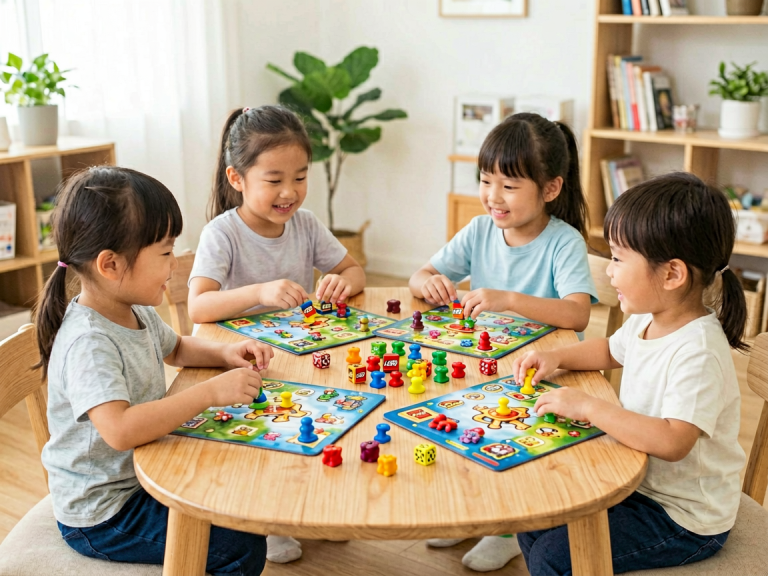
Games like *The Floor is Lava*, *Outfoxed!*, or *Dragonwood* require players to work together toward a common goal. Unlike traditional competitive games, cooperative games teach children to communicate, share ideas, and support each other. They also reduce the stress of losing, making it easier for kids to practice resilience in a safe environment. Emotional intelligence is built when children have to discuss strategies, apologize for mistakes, and celebrate joint victories.
Emotion Cards and Storytelling Games
Products like *Totem: The Feel Good Game* or *My Feelings* card sets help eight-year-olds identify and articulate emotions. They might be asked, "What makes you feel brave?" or "When did you feel proud?" These conversations normalize emotional vocabulary and help children understand that all feelings are valid. Storytelling games like *Rory’s Story Cubes* or *Story Time* encourage children to invent narratives with characters facing challenges, which builds empathy and perspective-taking.
Role-Playing and Dress-Up Sets
At age eight, imaginative play is still vibrant but more complex. Costume kits for doctors, archaeologists, or astronauts allow children to explore different identities and social roles. They can act out scenarios involving collaboration, problem-solving, and caring for others. This type of pretend play helps children process the world and develop social scripts that they can use in real-life interactions.
Active and Physical Learning Toys
Physical activity is crucial for brain development. Eight-year-olds benefit from toys that improve gross motor skills, balance, and coordination while also incorporating learning elements.
Geometric Jumping and Balance Games
Products like the *Sit ‘n’ Spin* (modified for older kids), *Balance Boards*, or sidewalk chalk with number games combine movement with math or spelling. For example, a parent can call out a math problem, and the child must hop to the correct numbered square on a hopscotch grid. This activates the whole brain, making learning kinesthetic and memorable.
Coding with Movement: Interactive Mats
Floor mats with grid patterns (like the *Code & Go Robot Mouse Activity Set*) can also be used for human "robots." Kids can program each other by writing simple commands (forward, turn left) on index cards, then physically walk through the code. This merges kinesthetic learning with computational thinking and is especially helpful for children who learn by doing.
Sports and Coordination Sets
While not always categorized as "learning toys," items like a basketball hoop with adjustable height, jump ropes with built-in counters, or obstacle course sets teach children goal-setting, perseverance, and physical self-awareness. Parents can add a learning twist: ask kids to keep score, calculate average scores, or time their laps to practice math and measurement skills.
Conclusion
The best learning toys for eight-year-olds are those that respect their growing intelligence, feed their curiosity, and honor the joy of play. They should challenge without overwhelming, inspire creativity, and encourage interaction with peers and family. Whether it is a logic puzzle that sharpens critical thinking, a coding robot that demystifies technology, a cooperative board game that builds social skills, or a microscope that opens a new world, each toy has the potential to be a stepping stone for deeper learning. When selecting a toy, consider the child’s individual interests and developmental stage. The goal is not to rush academic advancement, but to cultivate a love of discovery, resilience in the face of difficulty, and the confidence to ask questions. After all, at eight years old, every new skill learned through play is a seed planted for a lifetime of growth.