Educational Toy Buying Guide for Newborns: Choosing the Best for Your Baby’s First Year
Bringing a newborn into the world is a transformative experience, and as parents, we naturally want to give our little ones the very best start in life. Among the countless decisions that await, selecting the right educational toys can feel both exciting and overwhelming. The market is flooded with products claiming to boost intelligence, creativity, and motor skills—but how do you know which ones are truly beneficial for a baby who can barely lift their head? This comprehensive guide will walk you through everything you need to consider when choosing educational toys for newborns, from developmental milestones to safety criteria, so you can make informed choices that support your baby’s growth and spark joy in those precious early months.
Why Educational Toys Matter for Newborns
Newborns may seem like passive recipients of care, but in reality, their brains are developing at an astonishing rate. In the first year of life, a baby’s brain doubles in size, and every sensory experience—sight, sound, touch, taste, and smell—helps build crucial neural connections. Educational toys are not about “teaching” in the traditional sense; rather, they are tools that stimulate natural curiosity and encourage exploration. For a newborn, the “education” comes from learning cause and effect, developing hand-eye coordination, and beginning to understand the world through their senses. A well-chosen toy can support visual tracking, auditory discrimination, and even early problem-solving. But the key is to match the toy to your baby’s current stage of development, because overstimulation or overly complex toys can frustrate a young infant rather than help them learn.
Key Developmental Milestones in the First Six Months
Before diving into specific toy recommendations, it’s essential to understand what your newborn is capable of at different ages. The first few months are all about sensory integration and basic motor development.
0–3 Months: At this stage, a newborn has limited vision—they can see clearly only about 8 to 12 inches away, which is the perfect distance for seeing a parent’s face. Their vision is blurry and they prefer high-contrast patterns like black, white, and red. They also start to follow moving objects with their eyes. Hearing is well-developed, and they are soothed by soft, rhythmic sounds. Motor skills are reflexive: they grasp anything placed in their palm and will turn their head toward a sound. Educational toys for this age should focus on high-contrast images, gentle sounds, and simple textures that are safe to mouth.
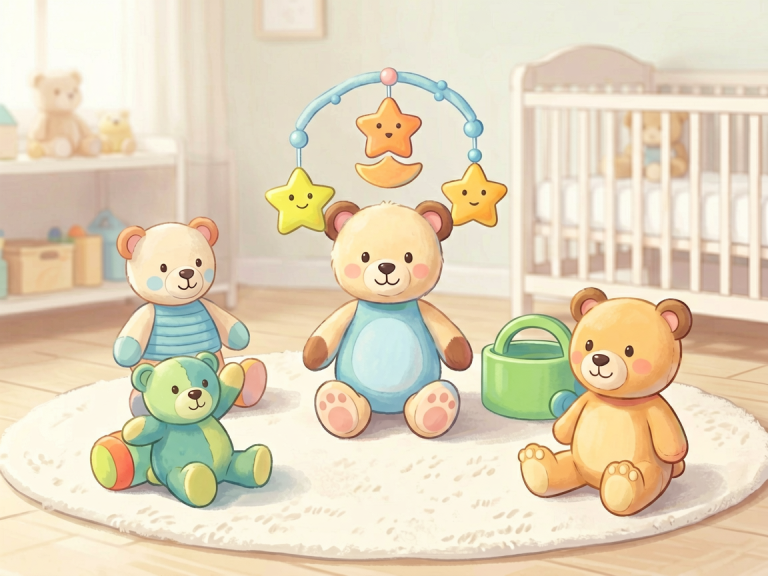
3–6 Months: By three months, babies begin to reach for objects, bat at dangling toys, and bring their hands to their mouths. They can track movements more smoothly and start to recognize familiar faces and toys. This is the beginning of intentional grasping, though they are still clumsy. Tummy time becomes crucial for strengthening neck and shoulder muscles. Toys that encourage reaching, grasping, and batting—such as soft rattles, activity gyms with hanging toys, and textured balls—are ideal. Babies also enjoy mirrors and toys that make simple cause-and-effect sounds (like a squeak or a rattle) because they are learning that their actions produce results.
Types of Educational Toys for Newborns
Now that we have a developmental framework, let’s explore the categories of toys that are most beneficial for newborns. Remember, simplicity is key—the best educational toys for infants are often the simplest ones.
Sensory Toys for Visual and Auditory Stimulation
High-contrast black-and-white cards or soft books are classic first toys. Why? Because newborns’ retinas are still developing, and they are naturally drawn to bold patterns with clear edges. These toys help sharpen their visual acuity and encourage focus. Look for cards or mobiles that can be placed within their field of vision (about 8–12 inches away). Auditory toys like soft musical instruments (a gentle shaker or a soft bell) or a lullaby-playing plush toy can captivate a baby’s attention and help them learn to localize sound. Avoid loud, jarring noises—newborns have sensitive hearing, and overly loud toys can be distressing.
Tummy Time Toys for Motor Development
Tummy time is a daily essential for strengthening the neck, shoulders, and back muscles that will eventually enable rolling, sitting, and crawling. Educational toys designed for tummy time include padded activity mats with dangling toys, mirrors that babies can look at (they love seeing their own reflection), and low-profile toys that encourage reaching. A simple, colorful play mat with contrasting patterns and a few safe, attachable toys can transform tummy time from a chore into an engaging exploration. Some mats even have built-in textures, crinkle sounds, and squeakers that add sensory variety.
Grasping and Teething Toys for Fine Motor Skills
From about three months onward, babies start to intentionally grasp objects. Soft rattles with easy-to-hold handles, textured teething rings, and plush toys with different fabrics are perfect for this stage. Look for toys that are lightweight, easy to grip, and free of small parts that could detach. The act of shaking a rattle and hearing the sound teaches cause and effect. Teething toys that are chilled in the refrigerator (never frozen) can also soothe sore gums while providing a safe object to mouth—an important sensory exploration. Avoid toys with strings longer than 12 inches to prevent strangulation hazards.
Interactive and Cause-and-Effect Toys
Simple interactive toys that respond to a baby’s actions are incredibly educational. For example, a soft ball that lights up when squeezed, or a toy that plays a melody when a button is pressed (though newborn buttons may be too advanced—look for toys that react to batting or touching). Activity gyms with a variety of hanging toys—some that rattle, some that crinkle, some that have mirror surfaces—offer endless opportunities for exploration. These toys help babies understand that their movements have consequences, which is a fundamental building block of cognitive development.
Safety Considerations: The Non-Negotiable Rules
When buying toys for a newborn, safety always comes first. The U.S. Consumer Product Safety Commission (CPSC) and similar agencies worldwide set strict guidelines for infant toys. Always check the label for “non-toxic,” “BPA-free,” and “phthalate-free” materials. Because infants explore the world by putting everything in their mouths, any toy must be large enough that it cannot be swallowed or become lodged in the throat. A good rule is that if a toy can fit entirely inside a toilet paper roll, it is too small. Avoid toys with small plastic eyes, buttons, or ribbons that could detach. Additionally, ensure that all toys are washable—newborns drool and spit up frequently, and hygiene is crucial.
Batteries should be secured with screws, and always supervise your baby during play, especially with toys that have electronic components. For mobiles and hanging toys, install them securely out of reach of a baby who can grab, and remove them once your baby begins to push up on hands and knees (around 4–5 months) to prevent entanglement.
Tips for Choosing the Right Toys on a Budget
You don’t need to spend a fortune to provide excellent educational toys. Many of the best play experiences come from everyday household items: a clean, empty plastic bottle with a few dried beans inside becomes a fascinating rattle; a silky scarf can be used for peekaboo; a stainless steel bowl makes a wonderful drum. However, if you prefer manufactured toys, focus on a few high-quality, versatile pieces rather than a large collection. Look for toys that “grow” with your baby—for instance, an activity gym that can be converted to a toddler play mat, or a stacking ring toy that teaches fine motor skills now and color recognition later.
Another tip: observe your baby’s interests. Some newborns are mesmerized by movement, while others are more responsive to sound. Follow their cues. If your baby seems overwhelmed by a toy with multiple flashing lights and sounds, simplify. Conversely, if they become bored quickly with a stationary toy, look for something with more interactive features. Remember that the most educational toy of all is you—your voice, your face, and your loving interaction. Toys are merely tools to enhance that connection.
Conclusion: Play Is the Work of Childhood
Choosing educational toys for your newborn is not about creating a prodigy; it is about supporting your baby’s natural development through safe, stimulating, and age-appropriate play. The first year is a time of rapid growth, and the right toys can make that journey more joyful for both parent and child. Focus on sensory experiences, encourage motor milestones through tummy time and grasping toys, and always prioritize safety. Less is often more—a few thoughtfully selected items that match your baby’s current abilities will be far more beneficial than a room full of flashy gadgets. Most importantly, remember that your presence and engagement turn any toy into a powerful learning tool. So get down on the floor, shake a rattle together, watch your baby’s eyes light up, and know that you are giving them the greatest educational gift of all: your time and attention.