A Parent’s Guide to Choosing Fine Motor Toys for Newborns: Nurturing Early Development Safely
Introduction
The arrival of a newborn brings joy, wonder, and a flurry of decisions—including which toys to introduce. While many parents focus on visual or auditory stimulation, fine motor development deserves equal attention even in the earliest weeks. Fine motor skills involve the small muscles of the hands, fingers, and wrists, and they lay the foundation for later abilities such as grasping, feeding, drawing, and writing. For newborns (birth to three months), fine motor play is not about complex manipulation; it is about reflexive movements, sensory exploration, and the beginning of voluntary hand control. Choosing the right fine motor toys can support this delicate period safely and effectively. This guide will walk you through the developmental milestones of a newborn, the essential features to look for in toys, recommended toy types, safety considerations, and practical tips for introducing them. By the end, you will feel confident in selecting items that nurture your baby’s growing coordination without overwhelming or risking harm.
Understanding Newborn Fine Motor Development (0–3 Months)
Before shopping, it helps to know what a newborn can actually do with their hands. At birth, babies have a strong palmar grasp reflex: if you place a finger or toy in their palm, they will automatically curl their fingers around it. This is an involuntary action, not a controlled movement. Over the first few weeks, they begin to briefly hold objects placed in their hand, though they cannot yet reach for them. By around two months, newborns start to bat at dangling objects—a sign of emerging hand-eye coordination. Their hands are often clenched in fists, but they will gradually open them more often. Around three months, many infants can swat at a toy and may even bring their hands to their mouth for self-soothing and exploration.
Therefore, a fine motor toy for a newborn should not require intentional grasping or precision. Instead, it should encourage the following: sensory input (touch, sight, sound), reflexive gripping, and accidental discovery. Toys that are too complex or require fine finger movements will frustrate the baby; those that are too heavy or have small parts may pose choking hazards. The goal is to stimulate the nerves and muscles in the hands and fingers in a gentle, age-appropriate way.
Key Features to Look for in Fine Motor Toys for Newborns
When evaluating a toy, consider these five critical features:
- Soft and Lightweight: Newborns have no strength to lift heavy items. Toys should be made of soft fabric, silicone, or lightweight plastic so that even if the baby accidentally knocks them, there is no risk of injury. Examples include crinkle cloth books, soft plush rattles, and silicone teethers.
- Easy to Grip (Reflex Friendly): The toy should have a shape that fits naturally into a tiny palm. Rings, dumbbell-shaped teethers, or toys with multiple textured loops allow the palmar grasp reflex to engage. Avoid toys that require the baby to hold with fingertips.
- Contrasting Colors and Simple Patterns: Newborns’ vision is blurry and they see best in high-contrast black-and-white or bold primary colors. Toys with bold stripes, checkerboards, or simple faces attract visual attention and encourage visual tracking, which is a precursor to hand-eye coordination.
- Multisensory Elements: Incorporate gentle sounds (soft rattles, crinkle paper), varied textures (smooth, bumpy, furry), and sometimes a safe mirror. Stimulating multiple senses helps the brain form connections between touch, sight, and hearing.
- Safety First: No small parts that could detach, no sharp edges, no long cords or strings (strangulation risk), and materials that are non-toxic and BPA-free. All toys should be easy to clean because newborns explore by mouthing.
Top Recommended Types of Fine Motor Toys for Newborns
Based on the above criteria, here are the best categories of fine motor toys for the 0–3 month stage:
- Wrist Rattles and Foot Rattles: These soft bands attach around the wrist or ankle with Velcro. When the baby waves their arms or kicks, the rattle makes sound, teaching cause and effect. They encourage the baby to move their limbs intentionally, which strengthens the muscles that will later control the hands.
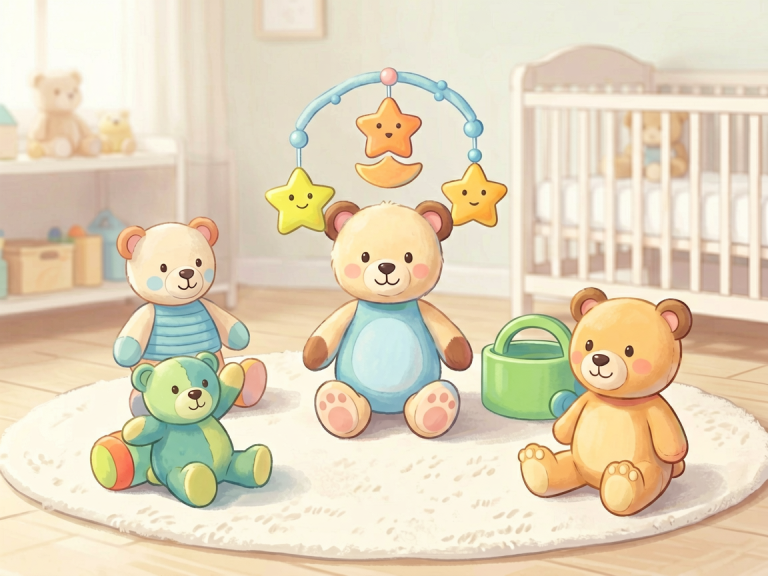
- Activity Gyms with Hanging Toys: A simple play mat with an arch and dangling toys—preferably with high-contrast colors, crinkle elements, and a baby-safe mirror—invites batting, swatting, and accidental grasping. The newborn lies on their back and practices reaching upward.
- Soft Crinkle Books and Fabric Blocks: These are lightweight and easy for a parent to hold while the baby touches the pages. The crinkle sound inside each page stimulates hearing, and the different fabrics (satin, corduroy, fleece) provide tactile variety. Some blocks have a bell inside that rings when shaken.
- Teething Rings and Silicone Toys: Even before teeth erupt, newborns love to mouth objects to relieve gum discomfort. A simple ring made of food-grade silicone with various textures (ridges, bumps, smooth sections) is perfect. It encourages the baby to hold and transfer from one hand to another as they grow older.
- Pull-and-Tug Toys (Parent-Assisted): While a newborn cannot pull a string themselves, a parent can hold a soft toy with a loop and gently tug it. This mimics the experience of grasping and releases the reflex. Over time, the baby may begin to reach for the loop.
All these toys share common traits: they are soft, safe, simple, and responsive to the newborn’s accidental movements.
Safety Considerations When Choosing Toys
Safety cannot be overemphasized for newborns. Here are the non-negotiable rules:
- Choking Hazard Check: Do not buy toys with small eyes, buttons, beads, or any component smaller than a toilet paper roll (the standard choke tube tester). Even if the toy looks sturdy, if a tiny part can be chewed off, it is dangerous.
- Avoid Long Strings or Ribbons: Anything longer than 12 inches (30 cm) poses a strangulation risk. Mobiles should be placed well out of reach—never within the baby’s grasp.
- Check for Loose Parts: Shake the toy gently. If you hear something loose inside, do not use it until it is fixed. A rattle that breaks open can release small pellets.
- Material Safety: Ensure all toys are made from non-toxic, phthalate-free, BPA-free materials. Look for labels like “food-grade silicone” or “organic cotton.” Avoid paint that might chip off.
- Age Labeling: Always follow the manufacturer’s recommended age. A toy labeled “3 months+” may include small parts not suitable for a 2-week-old.
- Supervision: No toy substitutes for adult supervision. A parent should always watch the baby during play, especially with any toy that makes sound or has fabric that could be pulled into the mouth.
How to Introduce Fine Motor Toys to Your Newborn
The way you present a toy matters as much as the toy itself. Follow these steps for a positive experience:
- Start with Your Hands: Before using any toy, let your baby grasp your finger. This familiarizes them with the sensation of holding and releases the palmar reflex. Then offer a soft rattle by placing it directly into their open palm.
- Use Tummy Time Wisely: Place a crinkle book or a small mirror in front of your baby during supervised tummy time. They will lift their head, see the toy, and may try to reach forward—strengthening neck, shoulder, and hand muscles simultaneously.
- Keep Sessions Short: Newborns tire quickly. Two to five minutes of focused play with a fine motor toy is plenty. Stop if the baby becomes fussy or turns away.
- Model the Action: Gently shake a rattle or crinkle the fabric while the baby watches. Then place it in their hand. Repeat. The repetition builds neural pathways.
- Rotate Toys: Babies get bored too! Offer only two or three different toys per week and swap them out to maintain novelty.
- Observe and Follow Cues: If your baby drops the toy immediately, they may not be ready. Wait a few days and try again. If they hold onto it for 30 seconds and then drop it, celebrate that achievement.
Conclusion
Choosing fine motor toys for a newborn does not require a nursery full of gadgets. The best toys are simple, safe, and tailored to the baby’s natural reflexes and limited motor control. Look for soft, lightweight items with high-contrast colors, varied textures, and gentle sounds. Prioritize safety by avoiding small parts, sharp edges, and long cords. Remember that your interaction is the most important “toy” of all—your voice, touch, and undivided attention stimulate your baby’s brain more than any store-bought item. By selecting a few well-chosen fine motor toys and using them thoughtfully during daily playtime, you are investing in your newborn’s future ability to grasp, scribble, and ultimately explore the world with their hands. Enjoy this precious window of discovery—it passes quickly, but the foundation you build will last a lifetime.