Avoid These Common Mistakes When Choosing Screen-Free Toys for Your Child
Introduction
In an age dominated by glowing screens and digital distractions, the appeal of screen-free toys has never been stronger. Parents around the world are actively seeking alternatives that encourage hands-on creativity, physical activity, and genuine social interaction. Yet, despite the best intentions, many well-meaning adults fall into predictable traps when selecting these analog treasures. The result? Toys that gather dust, frustrate children, or fail to deliver the developmental benefits they promise. Choosing wisely requires more than just avoiding screens—it demands a thoughtful understanding of child development, play theory, and practical household realities. This article explores the most common mistakes parents make when buying screen-free toys and offers practical guidance to help you make choices that truly enrich your child's play experience.
—
Mistake #1: Ignoring Age-Appropriateness
One of the most frequent errors is selecting toys that are either too advanced or too simple for a child's developmental stage. A toddler handed a complex building set with tiny pieces will likely become frustrated or even endanger themselves by swallowing small parts. Conversely, a preschooler given a baby rattle will quickly lose interest, missing out on opportunities for cognitive growth.
Age labels on toy packaging are not arbitrary marketing gimmicks; they are based on safety regulations and developmental benchmarks. For instance, a toy labeled "3+" is tested for choking hazards and assumes a certain level of fine motor control and cause-and-effect understanding. Yet many parents, eager to challenge their children or save money by buying "grown-up" toys early, ignore these guidelines. The result is not only wasted money but also missed opportunities for meaningful engagement.
When choosing a screen-free toy, consider your child's current abilities and interests. A one-year-old benefits from sensory toys like textured balls or stacking rings, while a four-year-old thrives with simple board games, magnetic blocks, or art supplies. Always err on the side of simplicity—a toy that is slightly below the child's skill level can still be used creatively, while one that is too advanced will only frustrate.
—
Mistake #2: Prioritizing Educational Value Over Play Value
In the quest to boost early learning, many parents fall into the trap of selecting toys that are heavily marketed as "educational." These toys often claim to teach letters, numbers, or scientific concepts, but they can be dry, prescriptive, and devoid of the joyful spontaneity that true play requires. The irony is that children learn most effectively when they are fully engaged and having fun—not when they are being drilled with flashcards or forced into rigid activity patterns.
A classic example is the electronic "learning" tablet that mimics screen-based apps, ironically defeating the purpose of screen-free play. Even non-electronic educational toys, such as phonics puzzles or math games, can become tedious if they leave no room for imagination. Children naturally explore, experiment, and make discoveries during free play. A set of plain wooden blocks, for instance, teaches geometry, balance, and physics far more organically than a box that shouts "Now you have built a tower!"
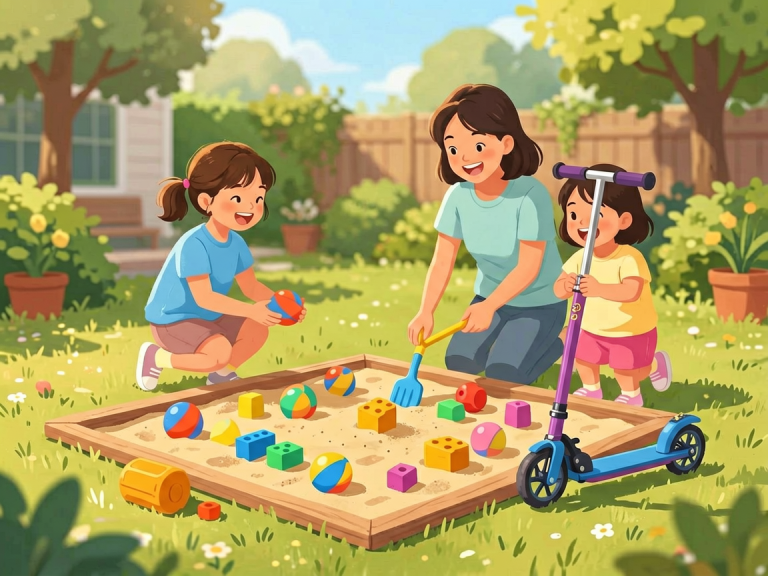
Instead of prioritizing overt educational claims, look for toys that spark curiosity and allow open-ended exploration. A simple set of colorful scarves can become a cape, a river, or a magic carpet. A bucket of sand and water provides lessons in physics, creativity, and sensory integration. The best screen-free toys are those that children return to again and again, not because they are "smart," but because they are deeply satisfying to play with.
—
Mistake #3: Overloading with Too Many Toys
Modern consumer culture encourages abundance, but when it comes to toys, more is not better. A child surrounded by dozens of options often becomes overwhelmed, switching from one toy to another without sustained engagement. This phenomenon, sometimes called "toy overload," reduces the depth of play and can even hinder attention span development.
Research in child psychology suggests that fewer, more versatile toys lead to richer imaginative play. When a child has only a few items, they are forced to improvise, reuse, and combine them in novel ways. A single cardboard box can become a spaceship, a fort, or a time machine. But if that box is buried under a mountain of plastic action figures and battery-powered gadgets, its potential is overlooked.
Parents also fall into the trap of using toys as bribes, rewards, or quick fixes for boredom. Instead of curating a thoughtful collection, they accumulate piles of cheap, trendy items that quickly break or lose appeal. The solution is to practice mindful selection: choose a small number of high-quality, durable toys that align with your child's current passions and developmental stage. Rotate toys every few weeks to maintain novelty without clutter. Remember that a child's best playmate is often their own imagination—not a wall-to-wall toy store.
—
Mistake #4: Overlooking Open-Ended Toys
Another common mistake is favoring toys with a single, predetermined purpose over open-ended ones that can be used in countless ways. Battery-operated cars that race along a fixed track, puzzles with only one correct solution, and plastic food sets that must be used "correctly" all fall into the closed-ended category. While these have their place, they cannot match the developmental richness of open-ended materials.
Open-ended toys—such as blocks, clay, sand, water, fabric scraps, art supplies, and loose parts—invite children to take the lead. They encourage problem-solving, creativity, and persistence because there is no single "right" answer. A child constructing a tower with wooden blocks may test dozens of configurations, learning through trial and error. The same child playing with a pre-assembled toy garage is simply pressing buttons and watching pre-programmed actions.
When you choose screen-free toys, prioritize those that offer maximum flexibility. Classic examples include LEGO bricks (but not the themed sets that come with strict instructions), magnetic tiles, play dough, dolls and dollhouses without predetermined stories, and simple wooden trains without pre-set tracks. These toys grow with your child, adapting to their changing interests rather than being discarded after a few weeks.
—
Mistake #5: Neglecting Quality and Safety
In the rush to buy affordable or trending toys, many parents overlook crucial aspects of quality and safety. Cheap toys made from flimsy plastic often break quickly, creating sharp edges or small parts that pose choking hazards. Paints and finishes may contain lead, phthalates, or other toxic substances. Worse, poorly constructed toys can cause injuries—a rickety climbing frame, a wagon with weak wheels, or a doll with easily detached buttons.
Safety standards vary by country, but conscientious parents should go beyond basic labels. Look for certifications like ASTM (American Society for Testing and Materials) or EN71 (European standard for toy safety). Avoid toys with strong chemical smells, peeling paint, or rough surfaces. For wooden toys, ensure they are made from sustainably sourced timber and finished with non-toxic, water-based paints.
Quality also affects longevity and environmental impact. A well-made wooden puzzle can be passed down to siblings or donated, while a cheap plastic one often ends up in a landfill within months. Investing in a few durable, safe toys is not only better for your child's health but also for the planet. Remember that a toy that breaks after two uses sends a hidden message about disposability—the opposite of the values many parents wish to instill.
—
Mistake #6: Dismissing Your Child’s Interests
Perhaps the most profound mistake is ignoring what genuinely captivates your child. Parents sometimes project their own childhood nostalgia or ideals onto their children, insisting on toys that they themselves loved or that fit a certain educational philosophy. A father who adored model trains may push his daughter toward an elaborate train set, while a mother passionate about art may flood her son with painting supplies—even if the child shows no interest.
Children are individuals with unique personalities, temperaments, and preferences. A quiet, introspective child may love puzzles and books, while an energetic, sensory-seeking child may thrive with trampolines, balance bikes, or messy science kits. Forcing a child to play with toys they dislike can create resentment and even discourage exploration.
The solution is simple: observe your child at play. Note what activities they choose independently, what materials they handle longest, and what themes they revisit in their pretend play. Then, select toys that support those passions. If your child constantly builds forts with couch cushions, invest in a sturdy set of building planks or a teepee. If they love pretending to cook, provide real child-safe kitchen tools and ingredients rather than plastic play food. By following your child's lead, you ensure that screen-free toys become beloved companions, not chores.
—
Mistake #7: Forgetting About Storage and Organization
Even the best-chosen toys can become a source of stress if they are not properly stored. Many parents buy without considering where the items will live, leading to cluttered playrooms, tripping hazards, and daily battles over cleanup. This logistical oversight often results in toys being shoved into bins or left scattered, which reduces their appeal and lifespan.
Children need an organized environment to engage deeply with play. When toys are stored in a chaotic heap, it is difficult to find pieces, and the mess itself can be overwhelming. A well-organized space, on the other hand, invites exploration. Simple, low shelves, clear bins with labels (pictures for pre-readers), and a rotation system can transform playtime.
Involve your child in the organization process. Teach them to put one set of toys away before bringing out another. This not only fosters responsibility but also helps them develop focus. When selecting toys, consider their physical size and storage needs. A large dollhouse with hundreds of tiny accessories may seem wonderful, but if you lack the shelf space or the patience to manage the pieces, it will quickly become a burden. Choose toys that fit your home and your family's lifestyle, not just your aspirations for perfect play.
—
Conclusion
Choosing screen-free toys is a powerful way to nurture creativity, resilience, and genuine connection in children. Yet the path is littered with well-intentioned mistakes—from ignoring age labels to overloading on quantity, from undervaluing open-ended play to neglecting safety and storage. By avoiding these common pitfalls, you can curate a collection of toys that truly enrich your child's development and bring lasting joy. Remember that the best toy is not the one with the most features or the highest price tag—it is the one that sparks curiosity, supports independence, and invites your child into a world of their own making. So pause, observe, and choose wisely. Your child's imagination will thank you.