Beyond the Screen: How Screen-Free Robot Toys Are Reshaping Childhood Learning and Play
Introduction: The Digital Dilemma
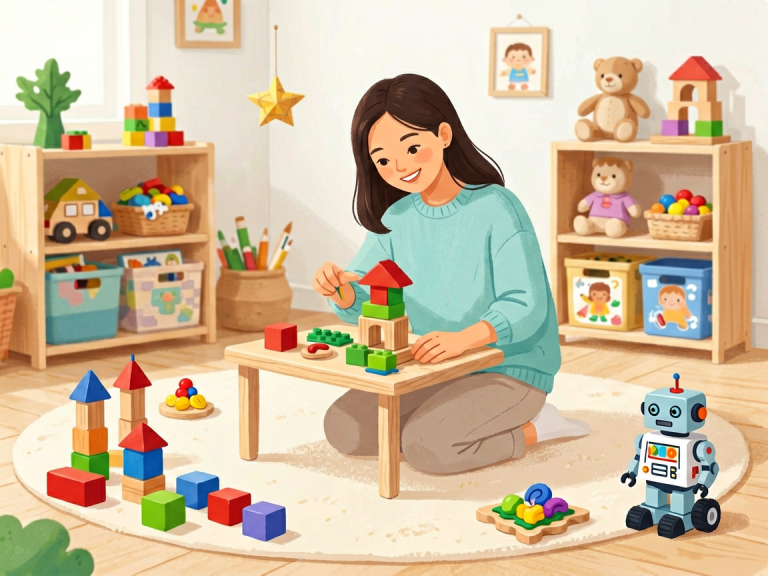
In an age where children are born into a world of glowing rectangles, where the average toddler can swipe before they can stack blocks, the pendulum of parental anxiety has swung hard toward the screen. From educational tablets to coding apps, the digital marketplace promises a smarter, faster, more connected childhood. But a quiet revolution is taking place on the nursery floor—not in the cloud, but in the tangible, clunky, whirring world of screen-free robot toys. These devices, which rely on physical interaction, tactile feedback, and hands-on logic rather than pixels and touchscreens, are challenging the assumption that the best learning tools must be digital. They offer something radical: a return to embodied cognition, where thinking happens through doing, and where the robot is not a window into a virtual world but a companion in the real one.
The rise of screen-free robot toys is not a Luddite rejection of technology; it is a sophisticated understanding of developmental psychology, neuroscience, and the limitations of passive screen consumption. This article explores the design principles, educational benefits, market trends, and future potential of these devices, arguing that the most innovative toy of the twenty-first century may be the one that *doesn't* need a charger for anything other than its motors.
—
What Exactly Are Screen-Free Robot Toys?
Before diving deeper, it is essential to define what we mean by "screen-free robot toys." These are interactive, programmable, or responsive robotic devices that do not incorporate a visual display (LCD, OLED, or otherwise) as their primary interface. Instead, they rely on physical inputs: buttons, dials, motion sensors, sound sensors, light sensors, modular blocks, magnetic tiles, or even voice commands processed locally. Examples include Ozobot (which can be programmed with color codes drawn on paper), Sphero BOLT (with a matrix LED display but used primarily via block coding on a separate device, though often screen-free variants exist), Fisher-Price Code-a-Pillar, Wonder Workshop's Dash (which can be used without a screen via physical programming cards), and the increasingly popular KIBO robotic kit from KinderLab Robotics, which uses wooden blocks as code.
The key distinction is that the child's interaction is primarily with a physical object, not a screen. The feedback is haptic (vibrations, movement, sound), auditory (beeps, whirs, spoken words), or visual (lights, movement patterns), but it does not require the child to stare at a flat panel. This design philosophy aligns with the Montessori method's emphasis on concrete learning, as well as with recent research on the "screen time" debate, which warns that excessive passive screen exposure can impair attention, sleep, and language development in young children.
—
The Cognitive Case: Why Hands-On Beats Tap-On
Embodied Cognition and Learning
One of the most compelling arguments for screen-free robot toys comes from the field of embodied cognition, which posits that cognitive processes are deeply rooted in the body's interactions with the world. When a child physically moves a robot by connecting blocks, or tilts a sensor to change its direction, they are engaging multiple sensory systems simultaneously: touch, vision, proprioception (awareness of body position), and executive function. Neuroscientific studies show that such multi-modal learning strengthens neural pathways more effectively than purely visual or auditory stimuli. A 2019 study published in *Frontiers in Psychology* found that children who programmed a physical robot using tangible blocks demonstrated significantly better understanding of sequencing and debugging concepts compared to peers who used a tablet app with identical logic. The physicality of the task—picking up a block, placing it in a slot, watching the robot respond—creates a cause-effect chain that is intuitively understood. On a screen, the connection is abstract; the child taps, and something happens in a two-dimensional space. With a physical robot, the child *feels* the consequence.
Screen Time, Attention, and Creativity
The American Academy of Pediatrics recommends no more than one hour of high-quality screen time per day for children aged 2 to 5, and even less for younger children. Yet the average preschooler in developed nations spends over two hours daily in front of screens, often watching passive videos or playing simple games that require minimal problem-solving. Screen-free robot toys offer an alternative that actively cultivates patience, persistence, and creative failure. When a child programs a robot to navigate a maze and it crashes into a wall, the frustration is immediate and physical. They must debug their "code" by rearranging blocks or adjusting parameters. This iterative process is the essence of computational thinking, but it happens without a single pixel. Moreover, because these toys do not offer the infinite, dopamine-driven loops of app-based games (where rewards are frequent and superficial), children are more likely to engage in sustained, deep play. A 2021 longitudinal study by the University of Twente followed 120 children aged 4–6 who used screen-free robot kits over six months. Compared to a control group that used coding apps, the screen-free group showed higher scores in creative problem-solving tasks and lower levels of task-switching behavior—a sign of improved focus.
—
Design Principles: Crafting the Perfect Screen-Free Experience
Intuitive Interfaces and Low Bandwidth
The best screen-free robot toys are designed with what interaction designers call "low bandwidth" interfaces. They reduce cognitive load by presenting only the essential controls. For example, the Code-a-Pillar uses a series of segment modules that a child snaps together in a sequence (forward, left, right, wiggle). There is no menu, no settings, no user profile—just a caterpillar that moves according to the physical chain. This simplicity is not a limitation; it is a feature. It allows even two-year-olds to grasp the concept of sequencing without language. Contrast this with a typical coding app, which may require reading, navigating multiple screens, and understanding icons. The screen-free interface respects the child's developing executive functions.
Durability and Safety
Screen-free robot toys are often built to withstand the rigors of physical play. They are dropped, chewed, thrown, and stepped on. Because they lack fragile glass screens, they can be made from rugged ABS plastic, silicone, and soft materials. This durability reduces the anxiety parents feel about handing expensive electronics to toddlers. Furthermore, the absence of a screen eliminates concerns about blue light exposure, eye strain, and the addictive potential of animated content. Many screen-free robots are also designed with open-ended play in mind—they can be used without batteries (in the case of wind-up or pull-back mechanisms), or with simple AA batteries that require no setup. This democratization of play means that a robot toy can be used in a car, on a camping trip, or in a power outage, providing consistent engagement regardless of Wi-Fi availability.
Progressive Complexity
A hallmark of well-designed screen-free robot toys is their ability to scale in complexity as the child grows. For instance, KIBO starts with simple sequences of wooden blocks (e.g., "move forward, turn, shake") and eventually incorporates sensors, loops, and conditional logic (e.g., "if the light sensor is dark, then stop"). The child ages with the toy, moving from concrete to abstract reasoning. This progressive scaffolding is crucial for sustained interest. Unlike a tablet, which becomes obsolete after a few months of app updates, a robot toy that can be expanded with add-on modules or new challenges remains relevant for years. This also aligns with the principles of the "constructionist" learning theory championed by Seymour Papert, who argued that children learn best when they build something meaningful that they can share, test, and modify.
—
Educational Outcomes: More Than Just Coding
Computational Thinking Without Computers
The term "screen-free robot toy" is often equated with "coding toy," but the learning extends far beyond programming. Through physical interaction with these devices, children develop:
- Sequencing and Pattern Recognition: Understanding the order of events is fundamental to logic. Block-based robot toys teach this in a tangible way.
- Spatial Reasoning: navigating a robot through an obstacle course requires mental rotation, distance estimation, and spatial planning—skills linked to later math achievement.
- Trial and Error Resilience: Because physical robots provide immediate, unambiguous feedback (they either work or they don't), children learn to persist without the cushion of "hints" or "skip" buttons common in apps.
- Collaboration and Communication: Many screen-free robot challenges are solved in pairs or groups. Children must verbalize their plans, negotiate which block to use next, and debug together. A study from MIT's Lifelong Kindergarten group found that screen-free robotics activities promoted more peer-to-peer conversation and less solitary silence compared to tablet-based coding.
Bridging the Gender Gap in STEM
An often-cited problem in computing education is the underrepresentation of girls and minorities. Screen-free robot toys may help address this. Because they feel more like "toys" and less like "computers," they reduce the stereotype threat that can discourage girls from engaging with STEM. Research from the University of Colorado Boulder showed that when first graders used screen-free robot kits, girls and boys showed equal levels of confidence and enthusiasm. In contrast, when the same children used a tablet coding app, girls were significantly more likely to say "I'm not good at this." The physical, low-stakes, playful nature of screen-free robots removes the intimidating aura of "technology." Additionally, many screen-free robot toys feature friendly, animal-like designs (the Code-a-Pillar, the Bee-Bot, the KIBO that looks like a wooden robot with a smiley face) that appeal to a broad range of interests, not just to children who already love sci-fi.
—
Market Trends and Parental Preferences
The Post-Pandemic Pivot
The COVID-19 pandemic forced millions of children into remote learning, dramatically increasing screen time. A 2021 report by Common Sense Media found that children aged 8–12 increased their daily screen use by 17% during the pandemic. In the aftermath, many parents are seeking intentional "screen breaks." This has fueled a boom in screen-free toys of all kinds, including robot kits. Sales of screen-free coding toys grew by 28% in 2022 compared to 2019, according to market research firm NPD Group. Companies like Wonder Workshop (maker of Dash) have introduced "screen-free programming cards" as an alternative to their app. Fisher-Price's Code-a-Pillar has become a bestseller in preschool education kits.
The Rise of "Slow Tech"
A cultural movement known as "slow tech" is gaining traction among progressive parents. It advocates for technology that is deliberate, mindful, and not addictive. Screen-free robot toys fit squarely within this ethos. They are designed to be used for defined periods, not to capture attention indefinitely. Many come with activity cards, storybooks, or challenge mats that provide structure without gamification. The slow tech parent values quality of interaction over quantity of time spent. A robot toy that elicits ten minutes of deep, focused problem-solving is deemed more valuable than an app that holds attention for an hour through random rewards and bright animations.
Environmental and Economic Considerations
From a sustainability perspective, screen-free robot toys have a longer life cycle. They do not require operating system updates, app stores, or monthly subscriptions. They can be repaired with simple tools, and they are often made from recyclable materials. As parents become more environmentally conscious, the eco-friendly aspect of non-digital toys becomes a selling point. Moreover, the absence of a screen reduces e-waste; broken screens are the most common failure in children's tablets, and repairing them is often more expensive than replacing the whole device.
—
Challenges and Criticisms
No technology is perfect. Screen-free robot toys face legitimate challenges. First, they can be more expensive than their digital counterparts because of the cost of motors, sensors, and durable materials. A full KIBO kit costs around $300, whereas many coding apps are free. Second, the learning curve for parents can be steep; adults accustomed to screens may find it harder to figure out how to use a set of wooden blocks than to hand a child a tablet. Third, the lack of detailed data analytics means parents cannot track their child's progress in the way an app might. Fourth, the industry is still niche, and the variety of screen-free robot toys remains limited compared to the thousands of coding apps on the market.
However, these criticisms often miss the point. Screen-free robot toys are not meant to replace digital tools for older children or for advanced coding. They are a bridge—a developmentally appropriate introduction to computational thinking for ages 2–8. The expense is offset by longevity and durability. The lack of data is a feature, not a bug: it allows for unstructured, child-led exploration. And the parent learning curve is an opportunity for shared discovery, which strengthens the parent-child bond in ways that passive screen time cannot.
—
The Future: AI, Voice, and Tangible Tech
Where are screen-free robot toys heading? The integration of on-device AI and voice processing offers exciting possibilities. Imagine a robot that can understand spoken commands without connecting to the cloud, using a local neural network on a chip. Such a robot could respond to "go forward three steps" or "dance when I clap" without a screen or app. Companies like Osmo (which uses a camera to blend physical and digital play) are experimenting with hybrid models, but the pure screen-free approach is also evolving. Researchers at the MIT Media Lab are developing "tangible programming languages" using physical objects that generate sound and movement, bypassing screens entirely. The home robot market, led by devices like Cozmo and Vector (both of which had screens), is shifting toward more tactile, ambient interaction.
One emerging trend is the use of screen-free robot toys in therapeutic settings. Occupational therapists are using them to help children with autism improve motor skills, sequencing, and social turn-taking. The predictable, non-judgmental feedback of a robot is less overwhelming than a human therapist, yet more engaging than a tablet. Studies from the University of Southern California show that children on the autism spectrum demonstrated increased eye contact and verbal initiative when playing with a physical robot compared to a screen.
—
Conclusion: Tuning Out to Tune In
The screen-free robot toy movement is not a rejection of technology; it is a paradigm shift in how we define "smart" play. In a world where every aspect of childhood is being digitized—from learning to socializing to entertainment—the decision to put down the tablet and pick up a whirring, blinking, rolling piece of hardware is an act of intentionality. It says that we value the texture of a button under a small finger, the sound of gears meshing, the delayed gratification of a program that runs correctly on the third try. It says that we believe learning should be felt, not just watched.
As the robotics industry matures, the most radical innovation may not be a faster processor or a higher-resolution display. It may be a toy that asks nothing of the child except their hands, their voice, and their imagination. In the end, the best screen-free robot toy is not a tool for the future; it is a doorway back to the present—a present where a child and a robot, face to face, figure out how to move forward together, one block at a time.