Bridging Curiosity and Creation: The Best STEM Toys for Kids Who Love Animals
Introduction
For many children, animals are the first sparks of wonder that ignite a lifelong love for learning. Whether it’s watching a ladybug crawl across a leaf, marveling at the speed of a cheetah on television, or begging for a pet hamster, the natural world holds an irresistible pull. This fascination with animals is not just cute—it’s an incredibly powerful educational lever. When parents and educators combine a child’s passion for animals with science, technology, engineering, and math (STEM) principles, they unlock a world of hands-on, engaging play. STEM toys designed for animal-loving kids do more than just entertain; they teach biology, physics, coding, ecology, and problem-solving in ways that feel like pure fun. The following guide explores the most effective categories of STEM toys that harness this love for animals, turning curiosity into concrete skills.
1. Anatomy and Dissection Kits: A Peek Inside the Animal World
One of the most direct ways a child can learn biology is by understanding how animals are built. Anatomy and dissection kits for kids are now designed to be safe, reusable, and incredibly informative. Instead of real (and potentially upsetting) specimens, these kits often use high-quality plastic models or gelatin-based “squishy” organs that can be taken apart and reassembled. For example, a frog dissection kit might include a detailed plastic frog with removable heart, lungs, stomach, and intestines, each labeled for learning. This hands-on approach teaches children about organ systems, comparative anatomy, and the specialized adaptations that allow animals to survive. For slightly older children (ages 8+), there are even kits that let them simulate a “veterinary surgery,” using tools to remove foreign objects from a stuffed animal or repair a “broken bone.” These toys not only satisfy a child’s natural curiosity about what’s inside their favorite creatures but also lay the groundwork for future interest in medicine, zoology, or veterinary science.
2. Robotics and Coding Kits: Building Bionic Beasts
Kids who love animals often imagine what it would be like to have a pet that can do incredible things—like a dog that fetches your slippers or a cat that never knocks over a vase. Robotics kits that simulate animal behavior take this fantasy into the practical realm. Many coding toys now feature animal-like robots that can be programmed to walk, wag tails, chirp, or even react to light and sound. For instance, the “Cubetto” or “Botley” robots can be adorned with dinosaur or animal skins, while more advanced kits like “Makeblock mBot Ranger” allow kids to build three different animal-like robots: a dinosaur, a spider, or a racing turtle. The engineering and coding skills involved are substantial. Children learn to write simple logic sequences (if-then commands) to make their robot “hunt” for prey (a glowing ball) or “avoid obstacles” like a real animal would. Some kits even incorporate sensors that mimic animal senses: temperature sensors for “snake detection,” touch sensors for “whiskers,” and motion sensors for “eyes.” By programming a robot to behave like a real animal, kids internalize the cause-and-effect relationships that govern animal behavior, all while building computational thinking.
3. Habitat and Ecosystem Building Kits: Engineering for the Wild
Another excellent STEM toy category is ecosystem simulators or habitat-building kits. These toys require children to act as mini engineers, designing a living space that meets an animal’s needs. A classic example is the ant farm, but modern versions are far more sophisticated. Some kits allow kids to create a self-contained terrarium for plants and small insects (like isopods or millipedes), complete with a water cycle, soil layers, and ventilation systems. Others are specifically designed for observing animals in a controlled environment—such as butterfly habitats where children raise caterpillars into butterflies, or “AquaSprouts” aquaponics kits where a small aquarium supports both fish and plants. Through these activities, kids learn about the water cycle, photosynthesis, filtration, and the interdependence of species. They also develop engineering skills as they design the layout, ensure proper water flow, and monitor temperature and humidity. For animal lovers, the thrill of watching a real living creature thrive because of their own careful planning is deeply rewarding and instills a sense of responsibility.
4. Nature Exploration and Field Science Kits: Becoming a Mini-Zoologist
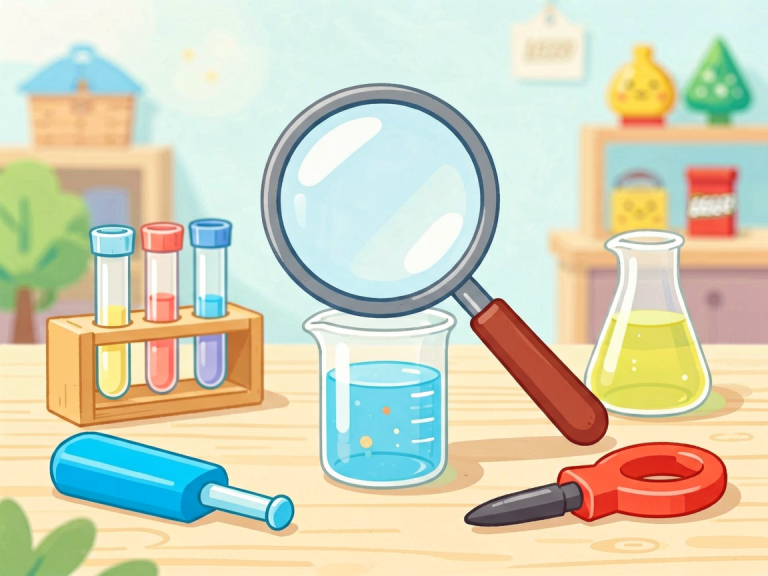
Not all STEM toys are boxed and shipped; some are designed for outdoor exploration. Field science kits turn any backyard or park into a laboratory. For animal-loving kids, binoculars, magnifying glasses, bug catchers, and field guides are classic tools, but modern STEM versions go further. There are “citizen science” kits that include a simple microscope to examine pond water for microorganisms, audio recorders to capture bird songs and analyze their patterns, and even footprint-casting kits to make plaster molds of animal tracks. One popular example is the “National Geographic Mega Science Lab,” which includes a rock tumbler, microscope, and a variety of specimens to study. More advanced kits integrate smartphone apps that help identify animal species via photo recognition or sound analysis, turning a nature walk into a data-collecting expedition. Kids learn how scientists use observation, documentation, and classification—core elements of the scientific method. They also practice mathematics by measuring the size of animal prints, counting species, or estimating population density. For a child who already loves watching wildlife, these tools elevate their interest from passive observation to active inquiry.
5. Animal-Themed Math and Logic Games: Numbers in the Wild
While many people think of STEM toys as flashy robots or microscopes, math and logic puzzles based on animal themes are equally valuable. Board games and card games can teach essential STEM skills while keeping kids engaged with cute or interesting animal characters. For instance, “Sum Swamp” is a math board game where players navigate a swamp by solving addition and subtraction problems—each step lands them on lily pads occupied by frogs, turtles, or dragonflies. “Pirate vs. Pirate” might feature sea creatures, but more directly, “Zingo! Numbers” uses animal imagery to help preschoolers count. For older kids, there are logic puzzles like “Primates: A Logic Puzzle” that require strategic thinking, or “Animal Lotto” which involves pattern recognition. Even simple card games like “Top Trumps Animal Edition” teach comparative data such as size, speed, lifespan, and weight, forcing kids to rank and compare—a foundational data analysis skill. By embedding mathematical thinking into the context of animals they love, these toys reduce math anxiety and show that numbers are everywhere, even in the speed of a cheetah or the wingspan of an eagle.
6. Engineering Challenges: Animal Bridges and Shelters
Engineering toys that challenge kids to design structures for animals combine creativity with physics. These can be as simple as building a “bear-proof” food container from cardboard, or as complex as constructing a suspension bridge to help a toy elephant cross a “river” (a gap between two tables). Popular kits like “K’NEX Animal Amusement Park” let kids build roller coasters and rides for plastic animals, learning about gears, angles, and momentum. Another fantastic option is “LEO & FRIENDS” sets that include animal figures along with building bricks, encouraging children to design habitats, vehicles, and rescue equipment. There are also STEM-specific kits like “Engino: Discovering STEM – How Animals Move?” which explores levers, linkages, and mechanics by modeling animal legs, wings, and jaws. This type of play teaches trial-and-error design, force distribution, and the importance of stable foundations—all while the child imagines they are building a zoo enclosure, a birdhouse, or a deep-sea submersible for a dolphin. The animal context makes the engineering challenge feel like a mission rather than a dry lesson.
7. Digital Apps and Virtual Animal Science Labs
In our increasingly digital world, some of the best STEM toys are software-based. Apps and online platforms that simulate animal biology or ecology offer a no-mess, no-cost way to learn. For example, “Minecraft: Education Edition” has animal-themed lessons on habitats and food chains. “Toca Boca” apps like “Toca Lab: Plants” allow kids to experiment with mutation and genetics on cute creatures. More specialized tools include “Zooniverse” (a citizen science platform where kids help classify animal photos) and “iNaturalist” (where they can contribute real observations). There are also virtual dissection apps like “Frog Dissection” by Emantras, which uses 3D models to teach anatomy without harming a single frog. Coding apps like “Scratch” allow kids to program their own animal animations, combining computer science with creative storytelling about animal characters. While screen time should be balanced, these digital tools are undeniably engaging and can deepen a child’s understanding of animal science in an interactive way.
Conclusion
The best STEM toys for kids who love animals do not simply present facts; they invite hands-on exploration, problem-solving, and creative thinking. From dissecting a model frog to programming a robotic dinosaur to building a self-sustaining ant farm, these toys transform a child’s natural affinity for animals into a structured learning experience. They teach patience, observation, and the scientific method, all while reinforcing that science is anything but boring. When choosing a STEM toy for an animal enthusiast, look for one that matches their age and interests—whether they prefer dinosaurs, pets, sea creatures, or jungle animals. Each toy opens a window into the real-world applications of STEM. By encouraging this kind of play, we are not just raising future scientists and engineers; we are nurturing thoughtful, curious individuals who understand and respect the world they share with animals. And that is a lesson that extends far beyond any toy box.