Building Beyond Blocks: The Ultimate Guide to the Best Building Toys for Kids
From towering castles to roaring rockets, building toys have long been the unsung heroes of childhood development. They are more than just playthings—they are miniature laboratories where physics meets imagination, where patience meets creativity, and where failure becomes the first step toward innovation. In a world increasingly dominated by screens, building toys offer a tactile, open-ended experience that challenges young minds in ways that no app ever can. But with shelves overflowing with colorful boxes and cryptic age recommendations, how do parents and educators choose the best building toys for kids? The answer lies not in a single brand or material, but in understanding the unique developmental needs of children at different stages. This comprehensive guide explores the top contenders in the building toy universe, breaking down what makes each one special, which ages they serve best, and why they deserve a permanent spot in your child’s playroom.
The Timeless Appeal of Classic Wooden Blocks
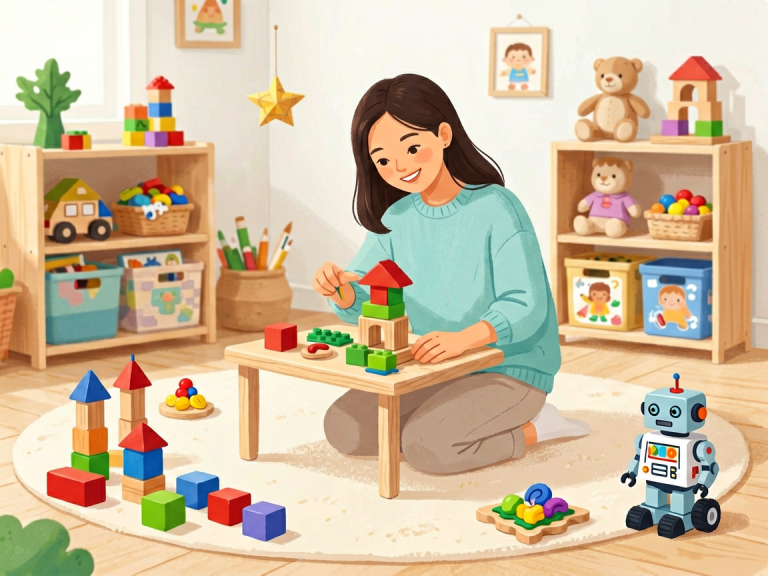
Before the age of plastic interlocking bricks, there were wooden blocks—simple, unadorned, and profoundly powerful. Classic wooden block sets, such as those made by Melissa & Doug, Hape, or Tegu, remain some of the best building toys for kids aged 1 to 6. Why? Because they offer pure, unscripted construction. There are no instructions, no specialized pieces, and no right or wrong way to build. A toddler can stack two blocks and feel the triumph of gravity defied. A preschooler can create a symmetrical tower, then knock it down with delighted laughter. An older child can build bridges, walls, and enclosures that teach basic principles of balance, weight distribution, and geometry.
Wooden blocks are especially valuable for developing fine motor skills. Grasping, stacking, and aligning these solid shapes requires hand-eye coordination that becomes more refined with practice. Moreover, the natural texture and weight of wood provide sensory feedback that plastic often lacks. Many modern wooden block sets now include magnetic edges (like Tegu’s magnetic wooden blocks), adding an extra layer of complexity and possibility. The open-ended nature of wooden blocks also fosters social play—children learn negotiation, sharing, and collaborative problem-solving as they build together. For these reasons, no list of the best building toys for kids is complete without a high-quality wooden block set. They are the foundation upon which all other building skills are built.
The Unrivaled Versatility of LEGO and Interlocking Brick Systems
If wooden blocks are the daddies of building toys, LEGO bricks are the undisputed kings. Since their patent in 1958, LEGO has evolved from a simple interlocking brick into a vast ecosystem of themes, sets, and even digital companions. But what makes LEGO and its compatibles (such as Mega Bloks for younger children and Cobi for historical enthusiasts) among the best building toys for kids? The answer lies in their precision and progressive complexity. A two-year-old can handle DUPLO blocks—larger, safer LEGO bricks that click satisfyingly together. By age four or five, children can follow simple instructions to build a car or a house. By age seven, they are constructing intricate Star Wars spaceships with moving parts. And by age ten and beyond, they are designing their own creations, combining pieces from multiple sets to create something entirely new.
LEGO systems teach children to read and follow step-by-step instructions, a skill that translates directly into academic and real-world contexts. They also introduce mathematical concepts such as ratios, symmetry, and spatial awareness. More advanced sets incorporate gears, axles, and motors (LEGO Technic or LEGO Mindstorms), turning building into a lesson in mechanical engineering and programming. Perhaps most importantly, LEGO encourages resilience. When a structure collapses, a child must analyze why it fell and try a different approach—a miniature version of the scientific method. With thousands of sets available, from architectural landmarks to fantasy worlds, LEGO ensures that no child ever outgrows the joy of building. However, parents should note that LEGO can be expensive and that small pieces pose choking hazards for children under three. For older kids, though, it remains one of the best building toys for kids who crave challenge and creativity.
The Magnetic Magic of Tiles and Rods
Magnetic building toys, such as Magna-Tiles, Magformers, and Picasso Tiles, have exploded in popularity over the last decade—and for good reason. These sets consist of translucent plastic shapes with embedded magnets that snap together effortlessly. Unlike LEGO, which requires precise alignment and manual pressure, magnetic tiles allow children to build in three dimensions almost instantly. A child as young as two can create a simple cube or a ramp. By age four or five, children build castles, rockets, and geometric structures that defy gravity. The pieces are lightweight, large enough to avoid choking hazards, and easy to clean—a godsend for parents.
What makes magnetic tiles among the best building toys for kids is their ability to bridge the gap between art and science. Children naturally explore symmetry and pattern as they arrange colorful squares and triangles. They learn about magnetism, polarity, and structural stability without any formal teaching. Many sets include wheels, allowing kids to build moving vehicles. Some, like Magna-Tiles, offer expansion packs with curved pieces, hinges, and even glow-in-the-dark elements. Because the pieces connect with a satisfying “click,” children with fine motor delays or sensory sensitivities often find magnetic tiles more accessible than traditional blocks. Moreover, these toys are highly collaborative—multiple children can build on a single structure, or create separate worlds that connect. For parents seeking a screen-free STEAM (Science, Technology, Engineering, Art, Math) activity that works for a broad age range—typically 2 to 8—magnetic building tiles are an outstanding choice.
Engineering with Gears, Pulleys, and Connectors
For children who have outgrown simple stacking and are hungry for mechanical understanding, construction sets that incorporate gears, pulleys, and connectors are the next step. Brands like K’NEX, Erector (now part of Meccano), and the gear-based sets from Learning Resources offer a more complex building experience. These toys typically feature rods, connectors, and specialized pieces that allow children to create machines with moving parts—cranes, cars with steering wheels, Ferris wheels, and even simple robots. The best building toys for kids in this category are those that combine a clear learning goal with freedom for experimentation.
K’NEX, for example, is famous for its building system that includes rods and connectors that snap into place to form structural frameworks. A child can follow instructions to build a roller coaster that actually works, or design their own contraption. This type of play teaches principles of mechanical advantage, force transfer, and design iteration. Similarly, gear-based sets teach cause and effect—turning one gear makes another spin faster or slower, depending on their size ratio. These toys are perfect for kids aged 6 to 12 who enjoy solving puzzles and understanding how things work. They also foster patience and systematic thinking because a mistake in the sequence of connecting pieces can prevent the whole mechanism from functioning. For families interested in STEM education, gear-based building toys are among the best building toys for kids, providing a hands-on introduction to physics and engineering that school textbooks rarely match.
The Curved World of Marble Runs and Track Systems
Marble runs—tracks built from interlocking plastic pieces that allow marbles to roll, jump, and spin—represent a unique subset of building toys. Brands like Quadrilla, Hape, and Marble Genius offer sets that range from simple U-shaped chutes to elaborate multi-level courses with loops, bridges, and funnel drops. What makes marble runs among the best building toys for kids is their dynamic, cause-and-effect nature. The building phase requires careful planning: children must consider the slope of the track, the height of supports, and the sequence of obstacles. Then comes the payoff—watching the marble race through the course they built. If the marble derails, the child must troubleshoot: Was the track too steep? Did a connection come loose? This iterative process builds logical thinking and spatial reasoning.
Marble runs are particularly beneficial for children aged 4 to 10. Younger children can build simple straight tracks and enjoy the visual thrill of the rolling marble. Older children can design complex courses that incorporate gravity, momentum, and even simple mechanical elements (some sets include gears and levers that trigger track changes). Beyond the engineering, marble runs encourage aesthetic design—children often try to create visually appealing structures with symmetry and color coordination. They are also excellent for social play; two or more children can collaborate on a huge course, debating placement and celebrating successes. One caution: marble runs do come with small marbles that pose choking hazards for children under three. But for older children, they remain a wonderfully engaging and educational choice.
Eco-Friendly and Open-Ended: Natural Building Materials
In recent years, there has been a growing movement toward eco-friendly building toys made from sustainable materials. Products like Unit Bricks (which use biodegradable plastic), Green Toys construction sets (made from recycled milk jugs), and wooden block sets from brands like PlanToys (which use rubberwood from sustainable plantations) are gaining popularity. Additionally, there are building toys made from bamboo, wheat straw, and even recycled cardboard, such as Makedo’s cardboard construction kits that include safe saws and connectors for turning old boxes into forts and sculptures. These options are among the best building toys for kids for families who prioritize sustainability and want to reduce plastic waste.
Natural building materials offer a different sensory experience: warm, often lighter, and sometimes less standardized than their plastic counterparts. This open-endedness encourages children to think more creatively because the pieces may not fit together as predictably. For example, a set of bamboo sticks with rubber connectors allows children to build geodesic domes, towers, and abstract sculptures—but also requires more trial and error. This type of play fosters cognitive flexibility and adaptability. Moreover, eco-friendly building toys often come with fewer screen-based attachments (no apps, no digital instructions), promoting pure analog play. While the selection is narrower than mainstream plastic brands, the ecological benefits and the unique creative challenges make these toys a worthy addition to any playroom.
Choosing the Right Building Toy for Your Child
With so many excellent options, selecting the best building toy for a specific child can feel overwhelming. The key is to match the toy to the child’s current developmental stage and interests. For toddlers (ages 1–3), large wooden blocks or DUPLO sets are ideal; they are safe, durable, and allow for basic stacking and knocking down. For preschoolers (ages 3–5), magnetic tiles and simple marble runs introduce more complex spatial reasoning without requiring fine motor precision. For early elementary kids (ages 5–7), LEGO sets with 50–200 pieces, along with beginner K’NEX or gear sets, provide satisfying challenges that still allow for success. For older children (ages 7–12), advanced LEGO Technic, complex marble runs, and mechanical construction sets will keep them engaged for hours. And for tweens and teens (ages 12+), programmable robotics kits like LEGO Mindstorms or Sphero BOLT combine building with coding, offering a powerful STEM learning experience.
It is also important to consider the child's temperament. A child who loves following instructions will thrive with a detailed LEGO set. A child who prefers free-form creativity will benefit from magnetic tiles or wooden blocks. A child who is drawn to motion will love gear-based or marble run systems. Finally, remember that the best building toys for kids are not necessarily the most expensive or the most advertised. They are the ones that invite repeated play, that spark questions, and that grow with the child—allowing for new discoveries every time they are opened.
Conclusion: Building More Than Structures
In the end, the best building toys for kids do more than occupy time. They build minds. They teach resilience when a tower falls, precision when a gear must align, and joy when a marble completes its journey. They foster collaboration, ignite curiosity, and provide a rare opportunity for children to experience the satisfaction of creating something from nothing. Whether you choose the timeless simplicity of wooden blocks, the global phenomenon of LEGO, the magnetic ease of tiles, or the mechanical complexity of gears, you are giving a child a tool for thinking. So clear some floor space, open a box, and watch as tiny hands transform scattered pieces into entire worlds. That is the magic of building toys—and that is why they remain, generation after generation, one of the most powerful gifts we can give to our children.