Building Brilliance: The Ultimate Guide to STEM Toys for Kids Who Love to Build
Introduction
Every child who loves to build—whether with blocks, bricks, or recycled cardboard—is already thinking like an engineer. The urge to stack, connect, and create is not just play; it is the foundation of problem-solving, spatial reasoning, and scientific inquiry. For parents, educators, and gift-givers, choosing the right STEM toys for these young builders can transform their natural curiosity into lasting skills. STEM (Science, Technology, Engineering, and Mathematics) toys designed specifically for building go beyond simple construction. They integrate mechanics, physics, coding, and design thinking into hands-on experiences that feel like pure fun. In this guide, we will explore why building toys are so effective for STEM learning, what features to look for, the best categories of toys for different ages, and how to nurture a builder’s passion at home.
—
Why Building Toys Are Essential for STEM Learning
Building is one of the most natural ways for children to experiment with cause and effect. When a child stacks blocks and they fall, they learn about gravity, balance, and structural integrity. When they connect magnetic tiles to form a tower, they intuitively grasp concepts of polarity and geometry. These “aha” moments are the seeds of scientific thinking.
STEM building toys differ from generic construction sets because they intentionally introduce constraints and challenges. A set that requires a child to build a working crane, for example, forces them to think about leverage, pulley systems, and weight distribution. A robotics kit that snaps together with sensors and motors teaches basic programming logic. The best part? Children are rarely aware they are learning. They are too busy solving the puzzle of why their bridge collapsed or how to make their car move forward.
Research consistently shows that hands-on, project-based learning strengthens memory and comprehension. When children build something tangible, they engage multiple senses and develop fine motor skills while also exercising executive functions like planning and perseverance. For kids who already love construction, STEM toys channel that passion into structured exploration, making the abstract principles of science and math concrete and memorable.
—
Key Features to Look for in STEM Building Toys
Not every toy labeled “STEM” delivers real educational value. When selecting building toys for a child who loves construction, focus on these critical features:
Open-ended vs. Goal-oriented Design
The best toys balance freedom with purpose. Open-ended sets—like classic wooden blocks or magnetic tiles—allow infinite creativity, while goal-oriented sets—like a model solar car or a mechanical hand—teach specific engineering concepts. A mix of both is ideal. Children can first explore freely, then tackle guided projects that stretch their skills.
Modularity and Reusability
Look for sets that can be rebuilt in multiple ways. Modular pieces (interlocking bricks, snap-together beams, gears, and axles) grow with the child. A good set should allow a child to build a simple tower at age four and a complex gear-driven mechanism at age ten. Reusability also reduces clutter and waste.
Integration of Real STEM Principles
Does the toy introduce forces, motion, electricity, or coding? For example, sets that include rubber bands to store elastic potential energy, or gears to change torque, are excellent for teaching physics. Robotics kits with programmable motors and sensors introduce basic computer science. Even simple motorized kits can demonstrate how electricity powers movement.
Age-appropriate Complexity
A toy that is too easy leads to boredom; one that is too hard leads to frustration. Manufacturers often list age ranges, but consider the child’s experience level. A six-year-old who has been building with LEGO since age three may be ready for a Technic set with gears. Meanwhile, a beginner builder might find a magnetic tile set more satisfying than a complex snap-together vehicle.
Safety and Durability
Building toys often take a beating. Pieces should be non-toxic, free of sharp edges, and sturdy enough to withstand repeated assembly and disassembly. For younger children, avoid small parts that pose choking hazards.
—
Top Types of STEM Building Toys for Different Ages
Choosing the right type of building toy can be overwhelming given the market’s variety. Below are the most effective categories, organized by developmental stage, with examples that highlight their STEM value.
For Ages 3–6: Foundation Builders
At this stage, children are developing hand-eye coordination and basic spatial awareness. The best toys are large, colorful, and easy to manipulate.
- Magnetic Tiles (e.g., Magna-Tiles, PicassoTiles): These translucent squares and triangles connect via magnets. Children learn about magnetic attraction, symmetry, and geometry as they build 2D patterns and 3D structures. They also explore concepts like balance and load distribution.
- Large Interlocking Blocks (e.g., Duplo, Mega Bloks): Bigger than classic LEGO, these blocks allow toddlers to create towers, houses, and simple vehicles. The act of pressing blocks together strengthens fine motor skills, and stacking them teaches basic physics of weight and stability.
- Wooden Unit Blocks: Timeless and simple, these blocks come in standard proportional sizes. Children naturally discover fractions (two half-blocks equal one whole block) and principles of structural engineering as they build bridges and ramps.
For Ages 6–10: Mechanics and Motion
As children’s fine motor skills improve, they can handle smaller pieces and more complex mechanisms.
- LEGO Technic and Bionicle: These sets use gears, axles, pins, and beams to create working machines—cars with steering, cranes that lift, robots that walk. Kids learn about gear ratios, torque, and mechanical advantage. The instruction booklets double as engineering blueprints.
- K’NEX Building Sets: Featuring rods and connectors, K’NEX allows children to build realistic models of roller coasters, Ferris wheels, and bridges. The sets often include battery-powered motors, teaching how energy is converted into motion. Building a roller coaster, for instance, requires thinking about potential and kinetic energy.
- Snap Circuits: While more electronic than structural, snap circuits are a natural extension for builders. Children snap together components like switches, resistors, and LEDs to create working circuits. They learn about electricity, conductivity, and circuit design—all while building a functional alarm clock or doorbell.
For Ages 10+: Robotics, Coding, and Advanced Engineering
At this stage, children can handle multiple-step instructions and abstract concepts. They are ready for true integration of STEM disciplines.
- LEGO Mindstorms or SPIKE Prime: These robotics kits combine LEGO Technic elements with programmable hubs, motors, and sensors. Children build a robot, then use drag-and-drop coding (based on Scratch or Python) to make it move, sense its environment, and complete tasks. This teaches coding logic, debugging, and systems thinking.
- littleBits or Makeblock: LittleBits are magnetic electronic building blocks that snap together to create circuits and devices, from a simple light sensor to a full robot. Makeblock kits use aluminum beams and mechanical parts, often requiring screwdrivers and wrenches—great for developing mechanical aptitude. Both offer step-by-step projects and open-ended hacking.
- 3Doodler or 3D Printing Pens: A 3D printing pen lets children “draw” in three dimensions by extruding heated plastic. They can build structures, repair broken toys, or design their own custom parts. This toy introduces additive manufacturing, material properties, and design for strength.
—
How to Encourage Your Young Builder’s Passion
A great toy is only half the equation. The environment and support you provide can turn a casual builder into a lifelong learner and innovator.
Create a Dedicated Building Space
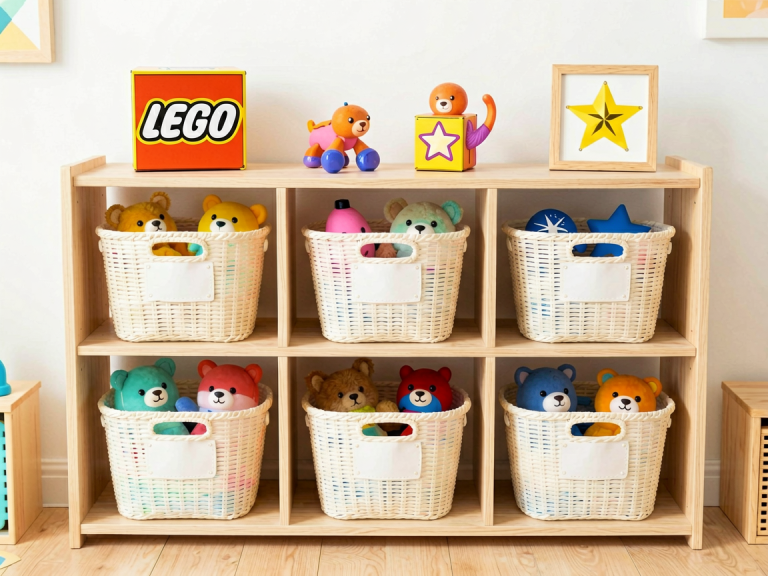
Set up a table or corner where building projects can remain unfinished overnight. A storage system with divided bins—labeled by part type (wheels, gears, connectors)—teaches organization and makes it easier to find pieces. Having a space that is “okay to be messy” encourages longer, deeper play.
Pose Challenges, Not Answers
Instead of telling a child how to fix a wobbly tower, ask questions: “What do you think would make it stronger?” or “What happens if you add a support beam here?” These open-ended prompts stimulate critical thinking and resilience. If a project fails, celebrate the failure as a learning opportunity. Thomas Edison famously said he found 10,000 ways that didn’t work.
Connect Building to Real-World STEM Careers
Point out how the mechanisms in their toy are similar to real machines. A gear train in a LEGO car works just like the transmission in a family car. A suspension bridge built with K’NEX mirrors the Golden Gate Bridge. Watching videos of engineers, architects, or roboticists can inspire children to see their play as part of a bigger picture.
Incorporate Books and Online Resources
Pair building toys with age-appropriate books about engineering, physics, or inventions. Websites like Instructables, KiwiCo, or NASA’s STEM engagement page offer free building challenges that extend play. Many LEGO and littleBits kits come with companion apps or online tutorials that teach coding through gamified lessons.
Celebrate the Process, Not Just the Product
When a child proudly displays their creation, ask them to explain how they built it: “What was the hardest part?” or “What would you change next time?” This reflection deepens learning and builds communication skills. Display their models on a shelf or take photos to create a portfolio of their engineering journey.
—
Conclusion
STEM toys for kids who love building are far more than playthings. They are the tools that transform a child’s natural fascination with construction into the foundational skills for tomorrow’s engineers, scientists, and inventors. From magnetic tiles that teach geometry to robotic kits that introduce programming, each type of building toy offers a unique entry point into the world of STEM.
The key is to choose toys that match the child’s developmental stage, encourage open-ended exploration, and integrate real scientific principles. Then, support that play with patience, curiosity, and a willingness to let mistakes happen. A child who learns that a collapsed bridge can be rebuilt stronger—that a failed motor can be reprogrammed—grows up believing that problems are solvable, and that they have the power to build solutions.
So the next time you see a young builder surrounded by scattered bricks, gears, and wires, remember: They are not just playing. They are building brilliance, one piece at a time.