Building the Future: The Transformative Power of Engineering Toys for Toddlers
Introduction: More Than Just Play
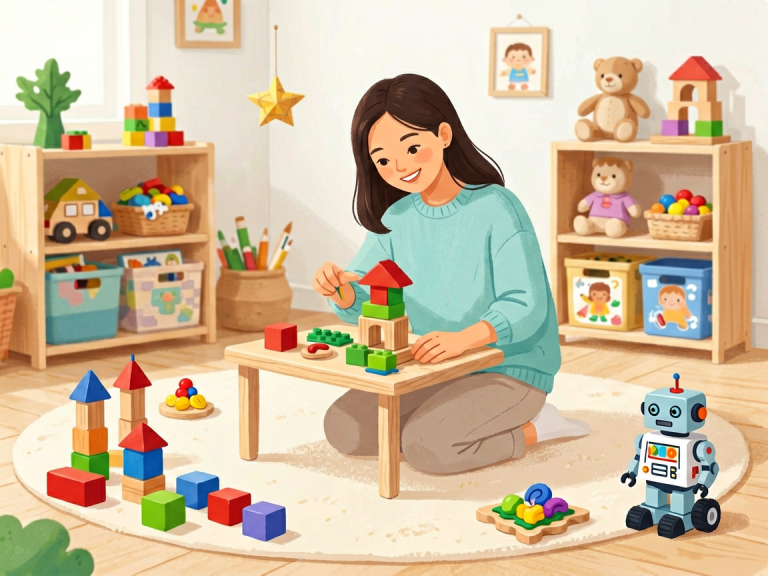
In the soft glow of a playroom, a two-year-old carefully stacks wooden blocks, watches them wobble, and then joyfully knocks them down. To an untrained eye, this is simple chaos. To a developmental psychologist or early childhood educator, however, it is the first step toward understanding structural integrity, cause and effect, and basic physics. Engineering toys for toddlers are not merely colorful distractions; they are the scaffolding upon which critical thinking, problem-solving, and spatial reasoning are built. As the world becomes increasingly dependent on STEM (Science, Technology, Engineering, and Mathematics) skills, introducing engineering concepts at the earliest possible age has never been more important. This article explores why engineering toys matter for toddlers, what types of toys are most effective, how they support holistic development, and what parents and caregivers should look for when selecting them.
The Developmental Rationale: Why Toddlers Need Engineering Play
1. Building Foundational Cognitive Skills
Toddlers are naturally curious. Between the ages of one and three, their brains undergo rapid neural growth, forming connections at a rate unmatched in later life. Engineering toys—those that involve stacking, connecting, rotating, balancing, or constructing—directly stimulate the prefrontal cortex, which governs planning, decision-making, and impulse control. When a toddler tries to fit a square peg into a square hole, they are not just practicing fine motor skills; they are engaging in a process of hypothesis testing. “Does this shape go here? No. Let me try another.” This iterative trial-and-error process is the same methodology used by professional engineers designing bridges or software algorithms. By providing structured yet open-ended challenges, engineering toys teach toddlers that failure is not an end but a step toward success—a mindset that serves them throughout life.
2. Spatial Reasoning and Early Math Skills
Research consistently shows that early spatial reasoning—the ability to visualize and manipulate objects in two and three dimensions—is a stronger predictor of future STEM achievement than early math or reading scores. Engineering toys such as building blocks, magnetic tiles, and interlocking gears require toddlers to rotate pieces in their minds, estimate distances, and understand how parts fit together. A simple activity like stacking rings from largest to smallest introduces concepts of size, order, and conservation of space. Magnetic construction sets, where toddlers connect rods and balls to form geometric shapes, teach symmetry, angles, and balance. These experiences lay the groundwork for later understanding of geometry, algebra, and even physics mechanics.
3. Fine Motor Development and Hand-Eye Coordination
While cognitive benefits are paramount, the physical demands of engineering toys should not be underestimated. Toddlers must grasp, pinch, push, pull, and twist small components. Manipulating building bricks with varying textures and weights strengthens the small muscles in their hands and fingers, which is essential for future writing skills. The precision required to align two connecting pieces trains hand-eye coordination. Unlike passive entertainment such as screens, engineering toys force active engagement, requiring the brain and body to work in concert. This sensorimotor integration is crucial during the toddler years when children are refining their control over their own bodies.
Key Categories of Engineering Toys for Toddlers
1. Classic Building Blocks and Stacking Sets
Wooden unit blocks remain the gold standard for early engineering play. They come in simple shapes—rectangles, cylinders, triangles, arches—and require no batteries or instructions. The open-ended nature of block play allows toddlers to create towers, bridges, enclosures, and ramps. As they build, they discover that a wide base is more stable than a narrow one, that a triangular arch can support weight, and that gravity always wins in the end. Sets with textured or colored blocks add sensory dimensions that enhance engagement. For example, blocks with different weights or magnetic properties introduce concepts of density and attraction. The simplicity of stacking toys also promotes focus and patience, as toddlers learn to place one block gently on top of another without toppling the structure.
2. Magnetic Construction Sets
Magnetic tiles, rods, and balls have revolutionized toddler engineering play. Unlike traditional blocks that rely solely on gravity and friction, magnetic pieces allow for more dynamic and complex structures. Toddlers can build 3D shapes, geometric solids, and even simple machines like a seesaw or a windmill. The satisfying “click” when magnets connect provides immediate feedback, reinforcing successful connections. These sets are particularly effective because they enable children to experiment with tension and compression. A toddler can build a tall tower that stays upright because internal magnetic forces hold it together. Some sets include wheels and axles, introducing basic mechanical principles of rotation and motion. Because magnetic pieces are easy to connect and disconnect, they are forgiving of clumsy little hands, reducing frustration and encouraging prolonged play.
3. Gears, Pulleys, and Simple Machines
For toddlers who are slightly older (approaching three years), gear sets offer a fantastic introduction to cause and effect, rotational mechanics, and chain reactions. Plastic gear boards with interlocking cogs allow children to see how turning one gear causes others to spin in sequence. This teaches the concept of energy transfer and mechanical advantage. Some sets include cranks, belts, and even small platforms that lift when gears are turned. While a one-year-old may simply enjoy spinning the gears, a two-and-a-half-year-old begins to understand that the direction of spin matters, and that a small gear can turn a larger one faster. Similarly, simple pulley systems—even those made with a string and a bucket—allow toddlers to experience how lifting heavy objects can be made easier by redirection of force. These early encounters with mechanical principles demystify the world around them, from escalators to construction cranes.
4. Interlocking and Snap-Together Kits
Plastic snap-together toys, such as popular building brick brands (LEGO Duplo, Mega Bloks First Builders), are specifically designed for small hands. The larger size of Duplo bricks ensures safety and ease of use while still requiring a deliberate pushing force to connect. Toddlers learn pressure regulation—too little force and the bricks fall apart; too much and they cannot separate them. These kits often include specialty pieces like wheels, windows, and animal figures, allowing children to create vehicles, houses, and scenes. The narrative aspect—building a “car” or “house”—adds imaginative play, which is critical for language development and social-emotional growth. Moreover, following simple picture instructions (for older toddlers) introduces sequencing and symbolic thinking, as the child must match a 2D image to a 3D creation.
How Engineering Toys Support Holistic Development
1. Language and Communication
Engineering play is rarely silent. As toddlers build, they often narrate their actions: “I put big block here. Now small block. Uh-oh, fall down!” This self-talk is a powerful tool for cognitive processing. When building with a peer or adult, they learn negotiation, request-making, and discussion. “Can I have the blue triangle?” “Let’s put this on top.” These interactions boost vocabulary related to spatial concepts (above, below, inside, beside), colors, shapes, and magnitudes (bigger, smaller, heavier). Caregivers can scaffold language by asking open-ended questions: “What happens if you put this block sideways?” “How can you make the tower taller without falling?” Such dialogue encourages toddlers to articulate their reasoning.
2. Social-Emotional Growth
Engineering toys naturally promote frustration tolerance. A tower that collapses after ten minutes of careful stacking can elicit tears, but with gentle guidance, a toddler learns to try again. This builds resilience and emotional regulation. Cooperative building activities teach turn-taking, sharing, and perspective-taking. A toddler must understand that their partner wants to place a piece somewhere different, and they must negotiate a compromise. These are foundational social skills for school and life. Additionally, the sense of accomplishment when a structure is completed—even a simple three-block tower—boosts self-esteem and intrinsic motivation.
3. Creativity and Innovation
Contrary to the stereotype that engineering is rigid, these toys foster immense creativity. There is no single “right” way to build with blocks or magnetic tiles. A toddler might decide that a square tile is a window, a triangle is a roof, and a cylinder is a chimney. They may create fantastical structures that defy real-world physics, such as a bridge supported by a single column. This divergent thinking is exactly what leads to innovation in engineering fields. By allowing toddlers to experiment without fear of “wrong” outcomes, we nurture the creative problem-solvers of tomorrow.
Selecting the Right Engineering Toys: A Guide for Parents
1. Safety First
For toddlers under three, any toy must pass the choke test: no small parts that can fit inside a toilet paper roll. Avoid toys with sharp edges, toxic paints, or magnets that are small enough to swallow (small magnets are extremely dangerous if ingested). Look for ASTM or CE safety certifications. Wooden blocks should be splinter-free, and plastic parts should be BPA-free. Always supervise play with sets that include small gears or axles.
2. Age-appropriateness and Complexity
A one-year-old benefits from large, soft blocks that they can grasp and stack without frustration. A two-year-old enjoys snap-together bricks and simple magnetic tiles. A three-year-old can handle gear sets with moving parts and kits that require following two-step instructions. Resist the temptation to buy “advanced” toys too early; if a toy is too difficult, a toddler will lose interest or become frustrated. Conversely, toys that are too simple will not challenge them. The “Goldilocks zone” of slight challenge—where a child might need minor adult help to succeed—optimizes learning.
3. Open-endedness vs. Directed Play
Engineering toys that offer multiple possibilities (open-ended) are generally superior to those with only one predetermined outcome (e.g., a plastic puzzle that makes only one shape). Open-ended toys allow toddlers to explore at their own pace and follow their curiosity. However, some directed toys (like a simple wooden hammer-and-peg set) are excellent for developing specific skills. A good mix of both is ideal. Look for toys that come with multiple building ideas but also allow free creation.
4. Quality and Durability
Toddlers are not gentle. Cheap plastic pieces may crack, leaving sharp edges or breaking into small pieces. Invest in high-quality toys from reputable brands—they often use stronger materials and are designed to withstand years of play. Wooden blocks with non-toxic paints can be passed down siblings or even sold second-hand. Magnetic tiles from brands like Magna-Tiles or PicassoTiles are known for their durability and strong magnets. Remember that a well-made engineering toy is not an expense; it is an investment in a child’s developmental future.
Conclusion: Engineering Play as a Gateway
Engineering toys for toddlers are far more than a pastime. They are a gateway to understanding the physical world, a playground for the developing mind, and a training ground for essential life skills. From the first wobbly tower to the complex magnetic castle, each construction teaches lessons in patience, logic, creativity, and perseverance. In a world that will demand ever more sophisticated problem-solving abilities, giving toddlers the tools to think like engineers—curious, resilient, and innovative—is one of the greatest gifts we can offer. So the next time you see a toddler stacking blocks, know that you are witnessing the earliest stages of building not just a tower, but a future. Let them build. Let them fall. And let them build again.