Building Minds: A Comprehensive Guide on How to Choose Engineering Toys for Children
Introduction
In an era where STEM (Science, Technology, Engineering, and Mathematics) education is increasingly emphasized, engineering toys have emerged as powerful tools to spark curiosity, foster problem-solving skills, and lay the groundwork for future innovation. However, the market is flooded with products labeled “educational,” “STEM,” or “engineering,” and parents often find themselves overwhelmed by the sheer variety. A poorly chosen toy can quickly become a dust collector or, worse, frustrate a child instead of inspiring them. So, how do you separate the genuinely educational from the merely gimmicky? This article provides a structured, research-informed approach to selecting engineering toys that match a child’s developmental stage, interests, and learning goals. By examining the educational value, age appropriateness, material quality, and open-endedness of different toy categories, you will be equipped to make confident, thoughtful choices that turn playtime into a foundation for lifelong learning.
—
Understanding the Educational Value of Engineering Toys
Before diving into selection criteria, it is essential to understand what makes a toy truly “engineering.” Engineering toys are not simply building blocks or robots; they are designed to engage children in the engineering design process—identifying a problem, brainstorming solutions, building prototypes, testing, and iterating. Unlike passive toys that offer fixed outcomes, quality engineering tools encourage experimentation, failure, and revision. For example, a simple set of interlocking plastic bricks can teach structural stability, symmetry, and balance, while a more advanced robotics kit introduces concepts of sensors, actuators, and programming logic. The best engineering toys nurture spatial reasoning, fine motor skills, creativity, and perseverance. They also demonstrate real-world applications of physics, mathematics, and technology. When evaluating a toy, ask yourself: Does it allow multiple ways to solve a problem? Does it adapt as the child’s skills grow? Does it require active thinking rather than following step-by-step instructions? These criteria separate superficial “STEM” labeling from genuine educational depth.
—
Age-Appropriate Selection: Matching Toys to Developmental Stages
One of the most critical factors in choosing engineering toys is aligning the complexity with the child’s cognitive and physical development. A toy that is too advanced leads to frustration; one that is too simple leads to boredom. Here is a breakdown by broad age ranges:
Ages 3–5: Foundations of Building and Cause-Effect
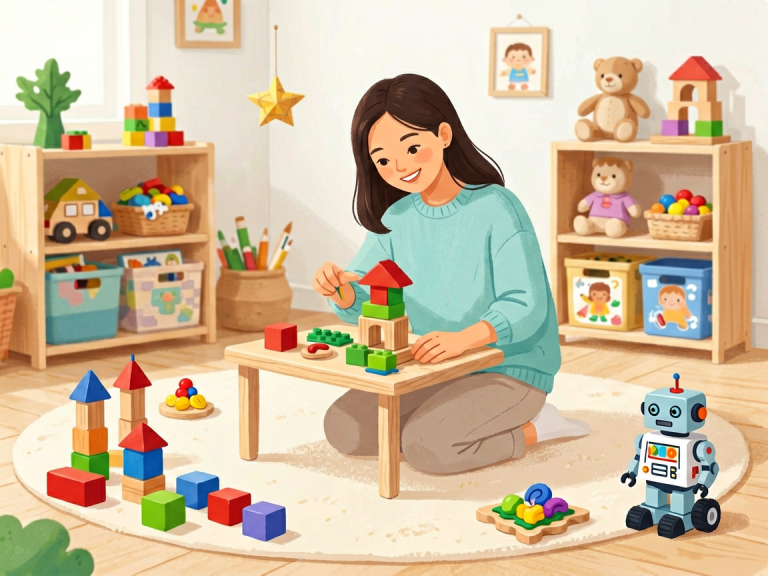
At this stage, children are developing hand-eye coordination, basic logic, and an understanding of cause and effect. Engineering toys should focus on large, safe pieces that are easy to manipulate. Classic wooden blocks, Duplo-style bricks, magnetic tiles (like Magna-Tiles), and simple gear sets are ideal. These toys allow children to stack, balance, and connect without requiring fine motor precision. Look for sets that encourage open-ended construction—no right or wrong outcome. Avoid small parts that pose choking hazards. The goal is to introduce vocabulary like “tall,” “short,” “stable,” and “wobbly” through hands-on play.
Ages 6–8: Introduction to Structural Principles and Simple Mechanisms
Children in this age group can follow multi-step instructions and enjoy building models that move. Ideal toys include LEGO Technic sets, K’NEX, and beginner marble runs. These introduce gears, levers, pulleys, and wheels. Look for kits that require trial and error—for instance, a bridge-building set where the challenge is to make the structure hold weight. At this stage, children also benefit from toys with reversible components, so they can modify their designs. Simple circuit kits that snap together (like Snap Circuits) are excellent for introducing electricity and cause-effect relationships. Avoid overly complex kits with tiny screws or soldering—manual dexterity is still developing.
Ages 9–12: Advanced Systems, Programming, and Robotics
Preteens are ready for deeper engagement with engineering principles. Robotics kits like LEGO Mindstorms, VEX IQ, or Arduino-based starter sets allow children to build programmable machines. They learn about sensors, motors, and coding logic. Alternatively, mechanical model kits (such as wooden gear-driven vehicles or hydraulic arms) teach transmission of power and mechanical advantage. At this age, it is important to choose toys that combine hardware and software, because engineering in the 21st century increasingly involves digital control. Look for kits that have clear tutorials but also leave room for original projects. Check that the programming interface is age-appropriate—drag-and-drop block coding (like Scratch for physical computing) is ideal.
Ages 13 and Up: Professional-Grade Tools and Specialized Engineering
Teenagers can handle more sophisticated tools, including microcontrollers (Raspberry Pi, Arduino), 3D printing pens or printers, and full robotics competition platforms (FIRST Tech Challenge). They may also enjoy soldering kits for electronic music synthesizers or drone building. At this stage, the toy becomes a tool for independent projects. The key criteria are expandability and community support—can they add modules, share designs online, or participate in competitions? Also consider safety: soldering irons and chemicals require adult supervision. Encourage long-term projects that demand planning, budgeting, and iterative design.
—
Key Factors to Consider When Choosing Engineering Toys
Beyond age, several universal factors determine whether an engineering toy will deliver lasting educational value.
1. Open-Ended vs. Prescriptive Play
The most effective engineering toys offer open-ended possibilities. A set of identical blocks can become a castle, a bridge, or a spaceship. In contrast, a kit that only builds one model—say, a pre-molded plastic airplane—limits creativity. While following instructions is a valuable skill, the real engineering learning happens when children deviate, improvise, and innovate. Look for toys that include extra parts or connectors so that children can extend their creations beyond the manual. For example, LEGO Classic boxes are more open-ended than theme-specific sets.
2. Material Quality and Safety
Engineering toys are often manipulated extensively, dropped, and sometimes even chewed. Ensure materials are non-toxic, free from BPA, phthalates, and lead. Wooden blocks should be splinter-free and painted with safe finishes. Plastic components should be durable enough to withstand repeated assembly and disassembly. Magnets in magnetic tiles should be securely enclosed to prevent swallowing. For electronics, verify that low-voltage circuits are used and that batteries are securely housed. Check for certifications like ASTM (American Society for Testing and Materials) or CE (European Conformity) marks.
3. Progressive Challenge and Replayability
A good engineering toy grows with the child. Some sets offer different difficulty levels or expansion packs. Others allow the same pieces to be recombined in increasingly complex ways. For instance, a marble run might come with a single track layout, but a better version includes branching paths, elevators, and looping components. Similarly, robotics kits often have multiple projects—beginner, intermediate, and advanced. Read reviews to see if children remain engaged after the initial build.
4. Real-World Relevance and Cross-Curricular Connections
The strongest engineering toys connect to real-world phenomena. A toy that demonstrates how a windmill turns wind into energy, or how a hydraulic press lifts heavy objects, makes abstract concepts tangible. Moreover, the best toys integrate math (measuring, angles, ratios) and art (aesthetics, symmetry) into the engineering challenge. Kits that require calculating gear ratios, optimizing material use, or balancing aesthetic appeal with function provide a more holistic learning experience.
5. Social and Collaborative Potential
Engineering is rarely a solitary pursuit. Toys that allow for collaborative building—such as large-scale construction sets or multi-player robotics competitions—teach communication, teamwork, and compromise. Even at home, sets that two children can work on together foster discussion and shared problem-solving. Avoid toys that are too small for multiple hands or that require one person to do all the control work (e.g., a single remote controller for a robot).
—
Popular Categories of Engineering Toys and How to Evaluate Them
To simplify your decision, here is a breakdown of common engineering toy categories and specific evaluation points for each.
Building Blocks and Construction Sets
Examples: LEGO Classic, Mega Bloks, Lincoln Logs, TinkerToys.
Evaluation: Look for variety in shapes, connectors that allow multiple angles (e.g., ball-and-socket joints vs. 90-degree only), and compatibility with other sets. The best blocks have a neutral design that doesn’t force a particular theme.
Mechanical and Kinetic Toys
Examples: K’NEX, Gears! Gears! Gears!, marble runs, Fischertechnik, model engines.
Evaluation: Check for smooth operation of moving parts. Gears should mesh easily; marbles should roll without jamming. Some kits include a crank or motor—evaluate if the motor speed is adjustable and if the parts can be reconfigured.
Electronic and Circuit Kits
Examples: Snap Circuits, littleBits, Makey Makey, basic breadboard kits.
Evaluation: For younger users, snap-together circuits are safer. For older users, ensure the kit includes a clear schematic and that components (resistors, LEDs, sensors) are labeled. Avoid kits with loose wires that can fray; prefer modules with sturdy connectors.
Robotics and Programmable Toys
Examples: LEGO Mindstorms, VEX IQ, Sphero, Ozobot, Arduino-based Starter Kits.
Evaluation: The programming interface should be intuitive—block-based for beginners, text-based for advanced. Check that the robot can be reprogrammed repeatedly and that sensors (distance, light, touch) are included. Also assess build time: a kit that takes three hours to assemble might not be ideal for a short attention span unless there are incremental milestones.
3D Printing and Modeling
Examples: 3D printing pens (e.g., 3Doodler), entry-level 3D printers (e.g., Creality Ender) with safe filament.
Evaluation: For pens, ensure the plastic is low-temperature and non-toxic. For printers, consider ease of leveling, safety enclosures, and availability of beginner templates. The toy should encourage freehand design, not just copying existing models.
—
Red Flags to Avoid: Common Pitfalls in Toy Selection
Even with good intentions, some toys are misleadingly marketed. Here are warning signs:
Over-Reliance on Screens
Some “coding toys” are essentially apps with a physical component that does little on its own. If the toy’s primary function is to be a controller for a mobile app, the engineering value is diminished. Look for toys that can be played with without a screen at least part of the time.
One-Time Builds
Kits that produce a single, non-modifiable model (e.g., a pre-cut wooden puzzle that becomes a fixed dinosaur) do not teach engineering process. They are fun assembly exercises but not repeatable. Always check if the toy can be taken apart and rebuilt differently.
Overly Simplistic “STEM” Claims
Many toys slap a “STEM” label on a simple electronic game. Read the packaging carefully: does the toy actually involve engineering principles (design, testing, iteration) or is it just a quiz game? Avoid toys that claim to teach engineering but only ask children to press buttons to answer trivia.
Fragile or Hard-to-Replace Parts
Engineering toys often lose pieces. Ensure that replacement parts are available from the manufacturer or that the toy uses standard components (e.g., common AA batteries, standard LEGO bricks). A missing gear can render a whole set useless.
Lack of Documentation or Community
For advanced kits, a good manual and an active online community are invaluable. If a company does not provide project guides, troubleshooting forums, or expansion ideas, the toy may have limited long-term value.
—
Conclusion
Choosing the right engineering toy is an investment in a child’s cognitive development, creativity, and resilience. The key is to look beyond flashy packaging and focus on the fundamental qualities: open-ended play, age-appropriate challenge, durable and safe materials, real-world relevance, and room for iteration. Remember that the best toy is one that a child returns to again and again, each time discovering new ways to solve problems. As a parent or educator, you can amplify the benefits by engaging with the child during play—asking questions like “What happens if you change this gear?” or “How could you make this bridge stronger?” In doing so, you transform a simple toy into a gateway for engineering thinking. The world needs more builders, innovators, and problem-solvers; give them the tools to start young, and they will construct not only towers and robots but also a future full of possibilities.