The Ultimate Guide to Choosing Building Toys: What Every Parent and Educator Should Look For
Introduction
Building toys have long been a staple of childhood play, cherished for their ability to spark creativity, develop fine motor skills, and introduce foundational concepts in engineering, physics, and mathematics. From classic wooden blocks to complex magnetic tiles and programmable construction kits, the market is flooded with options. Yet not all building toys are created equal. To make an informed purchase—whether for your own child, a classroom, or a gift—you need to look beyond the flashy packaging and popular brands. This article explores the key factors that distinguish an exceptional building toy from a mediocre one. By understanding what to look for, you can choose toys that not only entertain but also educate, inspire, and grow with the child.
1. Educational Value and Developmental Benefits
The primary reason parents and educators invest in building toys is their educational potential. A high-quality building toy should promote cognitive, physical, and social development simultaneously.
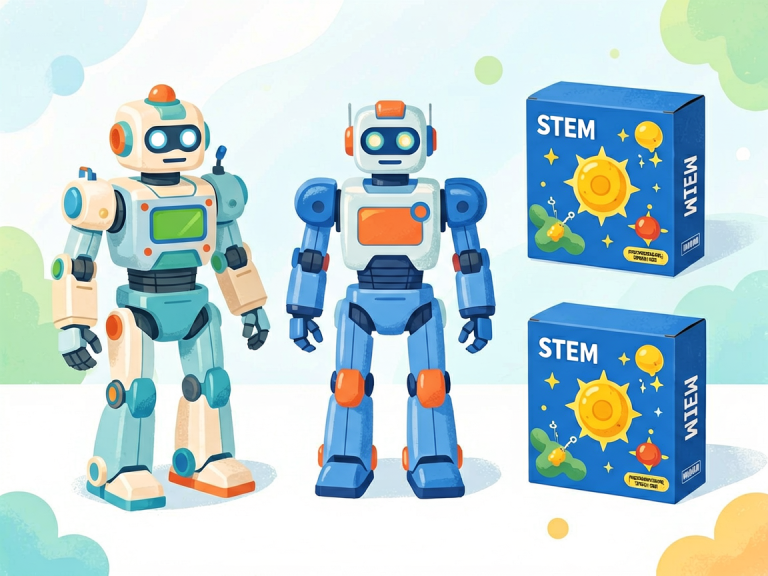
First, consider how the toy supports STEM learning (Science, Technology, Engineering, Mathematics). Look for sets that introduce concepts like balance, stability, symmetry, and leverage. For instance, building blocks with different shapes encourage children to experiment with weight distribution. Magnetic tiles teach polarity and geometric relationships. Advanced construction kits may include gears, pulleys, or even simple circuit components, allowing kids to explore cause and effect.
Second, evaluate the toy’s capacity to foster problem-solving and critical thinking. The best building toys present open-ended challenges—they don’t have a single “correct” end product. Instead, they invite trial and error. A child who builds a tower that keeps falling must analyze why and adjust their approach. This iterative process is invaluable for developing resilience and logical reasoning.
Third, building toys should enhance fine motor skills and hand-eye coordination. The act of grasping, aligning, and connecting pieces—whether small interlocking bricks or larger wooden blocks—strengthens the small muscles in a child’s hands and improves dexterity. For younger children, oversized pieces are easier to handle, while older kids benefit from more precise manipulation.
2. Safety and Material Quality
Safety is non-negotiable when selecting any toy, and building toys are no exception. A thorough inspection of materials and construction is essential.
Check for non-toxic materials. Look for certifications such as ASTM (American Society for Testing and Materials) or EN71 (European standard for toy safety). Wooden blocks should be made from sustainably sourced wood and finished with water-based, lead-free paints or stains. Plastic components should be BPA-free and phthalate-free. Avoid toys with sharp edges, small parts that could become choking hazards for children under three, or loose magnets that could be swallowed.
Durability also matters. Cheap building toys may crack, splinter, or lose their connection strength after minimal use. High-quality pieces should withstand repeated assembly and disassembly. For example, interlocking bricks should fit snugly but not require excessive force to separate, as overly tight connections can frustrate young builders and cause injuries. Test the toy yourself if possible: does it feel robust? Are the colors fade-resistant? Do the magnets in magnetic tiles hold firm without being too strong?
Additionally, consider hygiene. Building toys are often shared among siblings or classmates. Smooth, non-porous surfaces are easier to clean. Avoid toys with intricate crevices that trap dirt and bacteria. Some manufacturers offer dishwasher-safe components, which is a huge plus.
3. Age Appropriateness and Complexity
A toy that is too simple will bore a child; one that is too complex will frustrate them. The best building toys offer a graduated complexity that matches a child’s developmental stage.
For toddlers (ages 1–3), look for large, lightweight blocks that are easy to grasp and stack. These should be too big to swallow and have rounded corners. Sets with bright colors and simple shapes help with color and shape recognition. Avoid anything with small connectors or intricate instructions.
For preschoolers (ages 3–5), building toys can introduce basic interlocking mechanisms, such as Duplo-style bricks or magnetic tiles. At this age, children are beginning to create structures with a plan in mind. Sets that include wheels, simple figures, or themed pieces (like animals or vehicles) add narrative play, which enriches the building experience.
For school-age children (ages 5–9), look for sets with more pieces, smaller components, and higher structural demands. They can handle detailed instruction manuals for specific models, but also benefit from open-ended sets that allow free creation. Construction kits with gears, axles, and connectors—such as those from K’NEX or certain LEGO Technic lines—introduce mechanical concepts.
For tweens and teens (ages 10+), advanced building toys may include programmable elements, such as robotics kits with motors, sensors, and coding interfaces. These challenge users to integrate engineering with computer science. However, even older children can enjoy pure creativity with expansive sets of standard blocks or magnetic rods and balls.
Always check the recommended age range on the packaging, but also observe the individual child’s skill level and interest. Some children thrive with challenges above their age, while others need more simplicity.
4. Versatility and Open-Ended Play
One of the most important features of a great building toy is open-endedness. This means the toy can be used in countless ways, without a predetermined outcome. Open-ended building toys encourage divergent thinking—the ability to generate many solutions to a problem—rather than convergent thinking, which focuses on a single correct answer.
Consider the variety of pieces included. Does the set contain only cubes, or does it offer arches, triangles, cylinders, columns, and connectors? More shapes mean more possibilities. Similarly, the connection system matters. Some toys use simple stacking (like wooden blocks), which is infinitely versatile but limited in stability. Others use interlocking studs, magnets, notches, or pins. A combination of different connection types can yield even more creative structures.
Versatility also extends to thematic expansion. Can the building toy be combined with other sets from the same line? For example, LEGO bricks are universally compatible across countless themes, allowing a child to mix space ships with castles. This cross-compatibility prolongs the toy’s life and deepens engagement. When buying, check if the brand offers expansion packs or supplementary pieces.
Moreover, does the toy lend itself to collaborative building? Large building sets that accommodate multiple children simultaneously promote social skills like negotiation, sharing ideas, and cooperative problem-solving. The best building toys can be used alone or in groups, adapting to the social context.
5. Durability and Longevity
Building toys are an investment, and you want them to last for years—sometimes even for multiple children. Beyond individual piece durability, consider the toy’s long-term play value. Does it remain interesting as the child grows? Some sets are designed for a single project (e.g., a specific model that once built, has little replay value). Others are intended for constant deconstruction and reconstruction.
Replayability is enhanced when the toy supports both following instructions and free building. A set that includes a mix of structured plans and blank canvas pieces is ideal. Also, consider the storage and organization aspect. Toys with many small pieces require a good storage solution; some sets come with sorting trays, bags, or labeled boxes. If the pieces are easy to sort and find, children are more likely to rebuild and experiment.
Finally, warranty and customer support matter. Reputable brands stand behind their products, offering replacement parts if a piece breaks or gets lost. This is particularly important for magnetic building toys, where magnets can become dislodged over time. A brand that sells individual pieces or provides free replacements extends the toy’s lifespan significantly.
6. Encouragement of Imagination and Storytelling
While the structural and mechanical aspects of building toys are crucial, don’t overlook their power to inspire imaginative play. The best building toys are not just engineering challenges—they are tools for world-building. When children construct a castle, they imagine knights and dragons. When they build a spaceship, they fly to distant galaxies.
Look for building toys that include figures, animals, vehicles, or scenery elements. These add narrative depth. Some sets combine building with role-play, such as a construction kit that also has a crane and construction worker figures. Others may include translucent pieces for light effects, or pieces that resemble natural elements like trees and water.
Moreover, consider the aesthetic quality of the toy. Beautifully designed pieces in appealing colors and textures can ignite a child’s artistic side. The tactile experience of building—the smoothness of wood, the click of plastic, the magnetic pull—is also part of the sensory stimulation that fosters creativity.
7. Social Interaction and Collaborative Play
Building toys are often associated with solitary play, but many of the best designs facilitate group activities. In classrooms or playdates, building projects can become cooperative endeavors. Children learn to communicate their ideas, listen to others, and compromise on designs.
Look for sets that are large enough for multiple builders to work simultaneously without fighting over pieces. Some sets come with enough symmetrical parts that two or three children can each build their own structure and then combine them. Others are specifically designed for large-scale collaborative builds, such as giant floor puzzles or architectural sets with multiple themed sections.
Additionally, consider building toys that promote intergenerational play. Grandparents, parents, and children can all enjoy building together, especially if the toy is accessible to different skill levels. A simple set of wooden blocks allows a toddler to stack while an adult creates complex arches. This shared experience strengthens family bonds and models creative problem-solving.
8. Budget and Value for Money
Finally, price is a practical consideration. But a cheap building toy is not necessarily a bargain if it breaks easily or fails to engage. Evaluate value in terms of playtime per dollar. A moderately priced set that is used for hundreds of hours over several years is far more valuable than an expensive electronic toy that is abandoned after a week.
Consider the number of pieces and their variety, but don’t be fooled by sheer quantity. A thousand identical bricks may be less valuable than a smaller set with diverse shapes and connectors. Also, check if the toy aligns with the child’s current interests. If a child loves dinosaurs, a building set that includes dinosaur-themed pieces will likely see more use than a generic one.
Reusable packaging can also add value. Some building toys come in sturdy boxes that double as storage or even as part of the play environment (e.g., a box that becomes a garage or a stage). This reduces the need for additional storage solutions.
Conclusion
Choosing the right building toy is about more than picking a popular brand or a colorful box. The best building toys are safe, durable, age-appropriate, and endlessly versatile. They foster cognitive development, fine motor skills, creativity, and social interaction. They can be used alone or in groups, with instructions or without, and they grow with the child, offering new challenges over time. By evaluating educational value, safety, complexity, open-endedness, durability, imaginative potential, social aspects, and cost-effectiveness, you can make a thoughtful decision that will provide years of meaningful play. Ultimately, a great building toy doesn’t just keep a child busy—it builds a foundation for lifelong learning and curiosity.