The Ultimate Guide to Choosing Outdoor Toys: Essential Tips for Safe and Engaging Play
Introduction
Outdoor play is a cornerstone of childhood development, offering physical exercise, social interaction, and a vital connection with nature. Yet with the overwhelming variety of outdoor toys available—from swing sets and scooters to water guns and gardening kits—parents and caregivers often find themselves puzzled about what to buy. The right outdoor toy can ignite a child’s imagination, build motor skills, and ensure hours of safe fun, while the wrong one can lead to boredom, accidents, or wasted money. This comprehensive guide will walk you through eight essential tips for choosing outdoor toys, covering safety, durability, developmental appropriateness, and more. Whether you are shopping for a toddler, a preschooler, or a pre-teen, these evidence-based insights will help you make informed decisions that keep children active, engaged, and protected.
1. Prioritize Safety First – Non‑Negotiable Rules
Safety must be the top priority when selecting any outdoor toy. Start by checking for sharp edges, small detachable parts that could be choking hazards (especially for children under three), and pinch points in mechanical toys like tricycles or wagons. Look for certification marks such as ASTM (American Society for Testing and Materials) or CE (Conformité Européenne), which indicate that the product meets recognized safety standards. For climbing structures, swing sets, and slides, ensure the equipment comes with proper anchoring hardware to prevent tipping. Also consider the surface underneath: hard ground like concrete or asphalt is unforgiving—opt for toys intended for use on grass, rubber mats, or soft sand. For ride‑on toys like scooters or bikes, always include a well‑fitting helmet and knee pads in your purchase. Finally, read recall lists on the Consumer Product Safety Commission (CPSC) website; even reputable brands occasionally issue recalls. A toy that looks fun but has a history of injury reports is not worth the risk.
2. Match Toys to the Child’s Developmental Stage
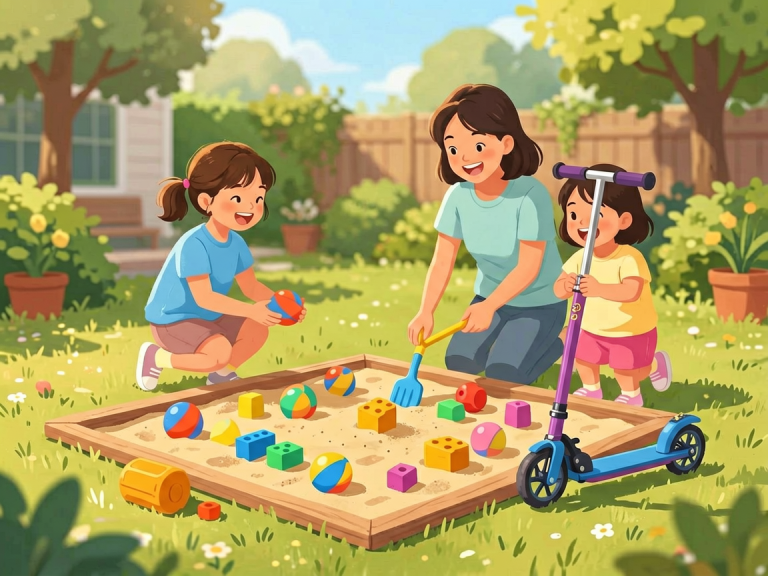
A toy that thrills a five‑year‑old may frustrate or endanger a two‑year‑old, while a “simple” toddler toy will bore an eight‑year‑old. Consider gross and fine motor skills, cognitive ability, and social‑emotional maturity. For infants and toddlers (1–3 years), choose low‑to‑the‑ground toys that encourage crawling, walking, and pushing—like plastic wheelbarrows, small balls, and ride‑on vehicles with a parent handle. Preschoolers (3–5 years) love pretend play: sandboxes, playhouses, and tricycles boost balance, creativity, and language skills. For early elementary children (5–8 years), scooters, jump ropes, and beginner sport sets (plastic golf, tennis, or basketball) teach hand‑eye coordination and turn‑taking. Older kids (8–12 years) benefit from more complex toys: skateboards, rollerblades, archery sets (with foam tips), and strategy‑based games like giant Jenga or obstacle course kits. Remember that children develop at different rates—observe your child’s interests and abilities rather than strictly following age labels on the box.
3. Consider Durability and Weather Resistance
Outdoor toys endure sun, rain, mud, snow, and the inevitable drops, crashes, and scrapes of enthusiastic play. Cheap plastic toys often crack or fade within a season, while well‑made alternatives last for years. Look for toys made from high‑density polyethylene (HDPE) or injection‑molded plastic, which resists UV damage and impact. Metal parts should be powder‑coated to prevent rust; wooden toys require sealed or pressure‑treated lumber to avoid splinters and rot. If you live in a rainy or coastal climate, avoid toys with exposed steel springs or hinges unless they are stainless steel. For inflatable products like bounce houses or pool toys, check the vinyl thickness (minimum 0.4mm for durability) and look for puncture‑proof materials. Remember that even the most rugged toy needs proper care—wipe it down after muddy play, store cushions and inflatables in a dry place, and periodically tighten screws or bolts. Investing in durable outdoor toys saves money in the long run and reduces plastic waste.
4. Encourage Active Play and Physical Development
One of the main benefits of outdoor toys is combating sedentary screen time by getting children moving. Choose toys that target multiple aspects of physical fitness: cardiovascular endurance (bikes, jump ropes, running games), strength (climbing ropes, pull‑along wagons with resistance), balance (skateboards, balance bikes), and coordination (frisbees, bats and balls). Avoid toys that primarily involve passive motion—for example, motorized ride‑on cars may be fun but do little for a child’s own muscle development. Instead, opt for toys that require the child’s own energy input. Equipment like trampolines (with safety nets and appropriate for age) build leg strength and body awareness. Water play toys—sprinklers, water tables, and splash pads—encourage running and squatting, while gardening tools promote fine motor control and endurance through digging, watering, and weeding. The best outdoor toys are those that make movement feel like play, not exercise.
5. Factor in Available Space and Environment
Before purchasing a large outdoor toy, measure your yard, patio, or the designated play area. A backyard may be spacious for a small swing set, but a full‑size playset could dominate the lawn and leave no room for running. For limited spaces (apartment balconies, tiny patios), consider compact options: portable soccer goals, foldable trampolines, sidewalk chalk, or a small sandbox that can be covered and stored. Also consider the terrain: if your yard is hilly, roller skates and scooters may be dangerous; if it’s heavily shaded, PVC inflatables may grow moldy. In dry climates, water toys like slip‑n‑slides require lots of water and may be wasteful—opt for misting fans or pool floats instead. For urban environments, look for toys that can be easily transported to a park, such as a flying disc, badminton set, or collapsible cornhole boards. Always check with your homeowners’ association or rental agreement for rules about permanent structures before buying.
6. Look for Educational and Creative Potential
Outdoor play is not just about burning energy—it also builds cognitive skills. Choose toys that invite open‑ended exploration rather than one‑trick gadgets. Water tables, for instance, let children experiment with volumes, flow, and buoyancy. A gardening kit teaches biology, responsibility, and patience. Building toys like outdoor blocks, large foam bricks, or rope‑and‑pulley systems encourage engineering thinking and problem solving. Art‑focused toys such as sidewalk chalk, paintbrushes with washable paints, or mud‑kitchen utensils foster creativity and sensory learning. Science‑oriented toys like bug catchers, binoculars, or weather stations connect children with the natural world. For group play, consider cooperative games—parachutes, giant board games, or treasure hunt clues—that encourage teamwork and communication. By selecting toys with educational layers, you turn every sunny afternoon into a hands‑on lesson.
7. Assess Maintenance and Storage Needs
An outdoor toy is only fun if it stays in good condition. Before committing, ask yourself: How often will this toy need cleaning? Will it require winter storage? Does it have replaceable parts? For example, inflatable pools must be drained, dried, and folded away to prevent mildew. Sandboxes need regular sifting and covering to keep out animals and debris. Bicycles and scooters benefit from occasional chain lubrication and tire inflation. If you live in an area with frequent rain, look for toys with built‑in drainage holes, waterproof covers, or easy‑to‑detach fabric components. Storage is equally important: a simple toy box on the deck can keep balls, jump ropes, and frisbees organized, while larger items like slides and climbers should have weather‑resistant covers. For families with limited indoor space, choose toys that disassemble or collapse compactly—for instance, a collapsible wagon or foldable soccer goal. Lack of maintenance planning often leads to abandoned, broken toys in the backyard; a small upfront effort can extend a toy’s life dramatically.
8. Choose Age‑Appropriate and Multi‑User Options
Outdoor toys are often shared among siblings or friends. If you have children with different ages, look for toys that can be used by multiple skill levels. For example, a basketball hoop with an adjustable height can serve both a five‑year‑old and a twelve‑year‑old. A swing set with a toddler bucket swing and a regular belt swing accommodates growing children. Sandboxes and water tables work for toddlers and preschoolers side‑by‑side, while older kids can use them for sinking and floating experiments. Multi‑user toys also promote social skills: a large seesaw, a tetherball set, or a four‑player croquet set teaches sharing, turn‑taking, and conflict resolution. Avoid single‑use niche toys that one child might outgrow in a few months—instead, invest in classics like a tricycle that converts to a bike, or a playhouse that can be accessorized differently over the years. For birthday or holiday gifts, consider modular systems that allow future upgrades (like adding a slide to a swing set). This “grows‑with‑the‑child” approach not only saves money but also reduces clutter.
Conclusion
Choosing outdoor toys is an exciting responsibility that shapes how children experience fresh air, friendship, and physical adventure. By keeping safety at the forefront, aligning purchases with developmental stages, prioritizing durability and active play, considering your space, and seeking educational value, you can build a toy collection that enriches childhood for years. Don’t forget the practical side—maintenance and storage plans prevent toys from becoming hazards or eyesores. Finally, opt for versatile, multi‑user items that encourage cooperation and accommodate growing abilities. With these tips in mind, you’ll be ready to navigate the aisles of toy stores, online marketplaces, and second‑hand sales with confidence. The best outdoor toy is the one that makes a child’s eyes light up and their body move—and with careful selection, you can provide exactly that. Happy playing!