The Ultimate Guide to Choosing Quiet Toys for Your Child
In today’s fast-paced, noise-filled world, many parents are seeking ways to bring more calm into their homes. One powerful yet often overlooked strategy is choosing quiet toys for children. Quiet toys are not just about reducing noise—they can also foster deeper concentration, creativity, and independent play. Whether you have a sensitive child, a small apartment, or simply value a peaceful environment, this guide will help you navigate the process of selecting the best quiet toys. From understanding their benefits to knowing what features to look for, here is everything you need to make informed, thoughtful choices.
The Importance of Quiet Play
Before diving into the specifics of toy selection, it’s essential to understand why quiet play matters. Modern life bombards children with constant auditory stimulation—television, video games, electronic gadgets, and even busy classrooms. While some noise is inevitable, excessive sound can overstimulate a child’s developing nervous system, leading to irritability, difficulty focusing, and disrupted sleep. Quiet toys provide a counterbalance. They encourage calm, focused activities that allow children to process their thoughts and emotions at their own pace.
Moreover, quiet play promotes deeper cognitive engagement. When a child plays with a toy that doesn’t beep, flash, or sing, their brain must work harder to create its own stories, sounds, and outcomes. This kind of imaginative play is critical for language development, problem-solving skills, and social-emotional growth. Studies have shown that children who engage in regular quiet play exhibit better self-regulation and longer attention spans. For parents, quiet toys also mean fewer auditory distractions, making it easier to work, read, or simply enjoy a moment of peace alongside their children.
Key Characteristics of High-Quality Quiet Toys
Not all quiet toys are created equal. To choose wisely, look for these essential characteristics:
1. No Electronic Sounds or Lights
The most obvious feature is the absence of batteries or electronic components. Traditional toys like wooden blocks, fabric dolls, and puzzles rely on physical interaction rather than pre-programmed sounds. However, be aware that some “wooden” toys still include small speakers; always check the product description.
2. Durable and Non-Toxic Materials
High-quality quiet toys are often made from natural materials such as solid wood, organic cotton, or wool. These materials are not only safer for children who mouth toys but also produce less noise when handled. Avoid cheap plastic toys that may squeak, rattle, or make grating sounds when moved.
3. Open-Ended Play Potential
The best quiet toys do not dictate a single way to play. Instead, they invite creativity. A set of plain wooden blocks can become a castle, a race track, or a counting tool. Open-ended toys grow with the child, offering years of use and endless possibilities without ever running out of battery.
4. Sensory Richness Without Noise
Quiet toys can still engage the senses. Look for toys with varied textures, subtle colors, and pleasant natural scents (like beeswax crayons). These sensory qualities captivate a child’s attention without overwhelming their auditory system.
Types of Quiet Toys by Age Group
Choosing the right quiet toy also depends on your child’s developmental stage. Here is a breakdown of suitable options for different ages.
Infants and Toddlers (0–2 Years)
For the youngest children, quiet toys should prioritize safety and sensory exploration. Soft fabric books with crinkly pages (which produce a gentle, quiet crinkle) are excellent choices. Look for items like wooden rattles that make a soft clink rather than a loud shake, or silicone teething rings in muted colors. Stacking cups made of smooth, lightweight wood create satisfying but quiet clunks when nested. Avoid toys that require adult assembly to operate; simplicity is key.
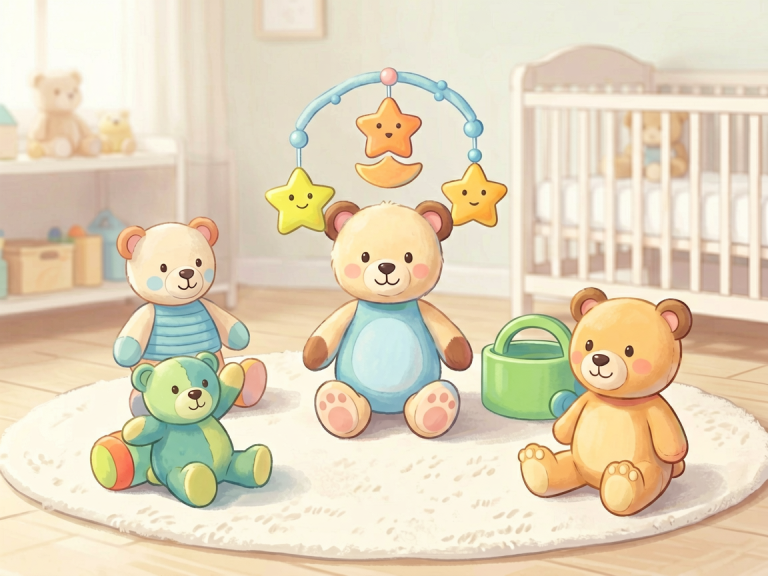
Montessori-inspired mobiles with paper or felt shapes can be hung over a changing table or crib for quiet visual tracking. Another favorite is the “silent rattle” made from a sealed container filled with soft grains (like rice) wrapped in fabric—this provides gentle sound without harshness.
Preschoolers (3–5 Years)
At this age, children begin to engage in more complex imaginative play. Quiet toys that support storytelling and fine motor skills are ideal. Wooden train sets without electronic components—where the train cars simply snap together with magnets—allow children to build tracks and push the train along, producing only the soft rumble of wheels on wood. Similarly, felt boards with fabric shapes let children create scenes without any noise.
Puzzles are another staple, but choose those with thick wooden pieces that fit snugly. Avoid puzzles with “snap-in” pieces that produce a clicking sound; instead, look for friction-fit puzzles. Art supplies like beeswax crayons, watercolor sets, and modeling clay (which can be used without banging) also belong in this category. These materials encourage quiet, focused creation.
School-Age Children (6+ Years)
Older children benefit from quiet toys that challenge their logic and creativity. Construction kits like magnetic tiles (e.g., Magna-Tiles) are nearly silent and allow for complex structures. Marble runs made from soft foam or wood with felt lining produce only a gentle rolling sound. Board games that use cards, tokens, and quiet dice (cloth or foam dice) are excellent for family game nights without the shouting.
Another wonderful option is handcrafted knitting or weaving kits. Learning to knit produces a rhythmic, quiet motion that can be very soothing. Similarly, calligraphy or drawing sets with high-quality paper and ink encourage a meditative state. For children who love stories, felt storyboards or “story cubes” (dice with images instead of numbers) promote silent storytelling.
Materials and Safety Considerations
The material of a quiet toy affects not only its sound but also its safety and longevity. Solid wood (especially sustainably sourced beech, maple, or birch) is a top choice because it is durable, non-toxic, and naturally sound-absorbing. Avoid particleboard or MDF, which can splinter and often contain formaldehyde glue. For textiles, choose organic cotton, linen, or wool, and ensure all dyes are natural and free of harmful chemicals.
If you choose plastic, select high-quality, BPA-free plastics that are thick and heavy enough to feel substantial. However, be cautious: thin plastic toys often rattle or squeak. Always check for sharp edges or small parts that could become choking hazards. Remember that “quiet” does not mean “safe” by default—always verify age recommendations and safety certifications.
How to Evaluate Educational Value
A quiet toy’s educational value often comes from its ability to encourage independent thinking. Ask yourself: Does this toy require my child to experiment? Does it allow for different outcomes each time? For example, a simple set of foam geometric shapes can be used for stacking, sorting, pattern-making, or even counting. A noisy electronic toy that only produces one sound or one game loses its educational charm quickly.
Look for toys that promote STEM learning in a quiet way: magnetic building sets teach engineering concepts, while nesting dolls teach size sequencing. Fine motor skills are strengthened by lacing beads, threading blocks, or using tweezers to sort small natural objects (like pebbles or acorns). Social-emotional development can be fostered with quiet cooperative games, such as a memory card game where players silently match pairs.
Practical Tips for Parents
Implementing quiet toys into your home doesn’t require a complete overhaul of your child’s playroom. Start by assessing your current collection. Remove toys that produce loud, sudden noises (like electronic barking dogs or blaring sirens) and replace them with quality alternatives. You can also introduce a “quiet time” basket filled with calming toys—wooden puzzles, felt books, and soft blocks—that your child can access during transition periods like before nap time or after a tantrum.
When shopping, read reviews that mention noise level. Many online retailers now have filters for “quiet” or “noise-free.” Visit local toy stores where you can physically handle toys to test their sound. Avoid impulse buying; a well-chosen quiet wooden toy will outlast dozens of cheap plastic gadgets.
Finally, model quiet play yourself. Children learn by example. When you sit down with a book or do a puzzle alongside them, you reinforce the value of calm, focused activity. Over time, you’ll likely find that your home feels more peaceful, your child’s creativity flourishes, and the constant background noise fades away.
Conclusion
Choosing quiet toys is an investment in your child’s well-being and your household’s serenity. By prioritizing materials, age-appropriateness, and open-ended design, you can create a play environment that nurtures concentration, imagination, and calm. Whether you are a new parent or seeking to refresh your child’s playthings, use this guide as a roadmap to select toys that whisper—not shout—their value. In a loud world, the quietest toys often speak the loudest to a child’s growing mind.