The Ultimate Guide to Choosing STEM Toys: Nurturing Curiosity and Building Future Innovators
In an era where technology and science dominate nearly every aspect of our lives, parents and educators are increasingly turning to STEM toys—playthings that teach the principles of science, technology, engineering, and mathematics. But with a dizzying array of options flooding the market—from coding robots to chemistry kits, from building blocks to biology models—how does one choose the right STEM toy for a child? The wrong choice can lead to frustration or boredom, while the right one can ignite a lifelong passion for discovery. This comprehensive guide will walk you through the essential factors to consider when selecting STEM toys, ensuring that your investment delivers both fun and genuine learning.
Understanding Your Child’s Age and Developmental Stage
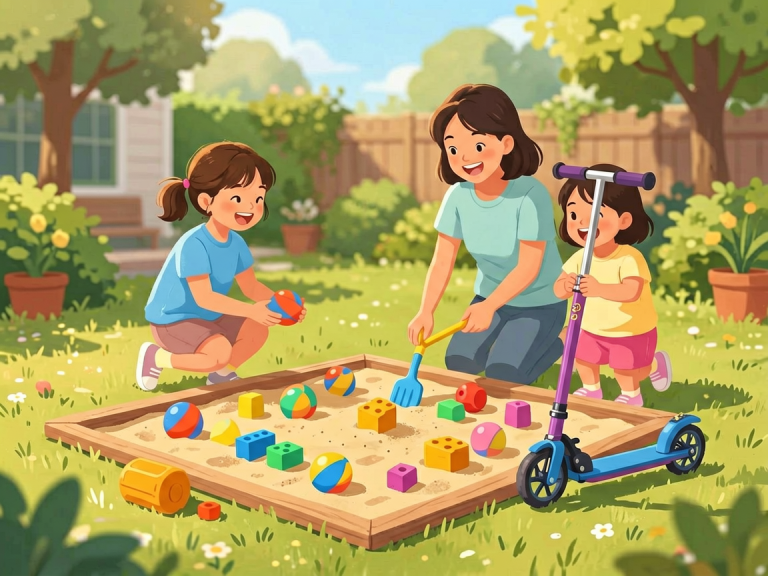
The first and most critical step is to match the toy to the child’s age and cognitive abilities. A toy that is too advanced will overwhelm a child, while one that is too simple will fail to engage them. STEM learning is inherently progressive; concepts build on prior knowledge. For toddlers aged 2–4, the focus should be on sensory exploration and cause-and-effect. Simple stacking blocks, magnetic tiles, or water-play sets introduce basic engineering and physics without requiring abstract reasoning. For example, a set of large plastic gears that mesh together teaches mechanical movement and spatial awareness, all through hands-on play.
For children aged 5–7, toys that involve basic coding concepts, such as programmable floor robots like Bee-Bot, or simple circuit kits that use snap connectors, are ideal. At this stage, children can follow simple instructions and understand that their actions produce predictable outcomes. They also begin to grasp foundational math ideas like counting, sorting, and pattern recognition. A classic example is a set of interlocking pattern blocks that allow children to create geometric shapes and explore symmetry.
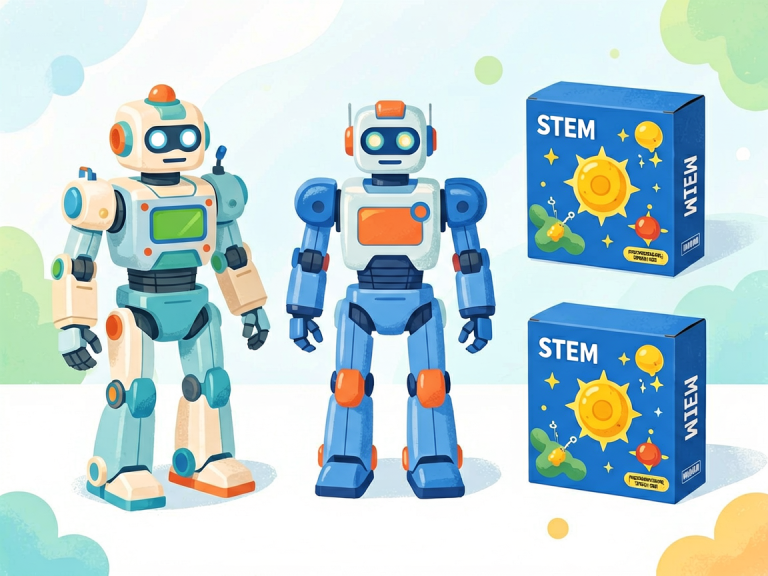
Older children, ages 8–12, can handle more complex challenges. Robotics kits that require assembly and programming, chemistry sets with real (but safe) reactions, and advanced building systems like LEGO Mindstorms or K’NEX offer deep learning opportunities. For teenagers, consider coding platforms like Raspberry Pi or Arduino kits, which combine hardware and software engineering. They can also explore electronics with soldering kits or delve into biology with dissection tools. Remember that age recommendations on packaging are just starting points; you know your child’s individual maturity and interest level best.
Aligning with the Child’s Interests and Learning Style
A STEM toy that reflects a child’s existing passions will naturally capture their attention. Does the child love animals? A biology-focused kit that lets them examine insect specimens or grow crystals might be a hit. Are they fascinated by space? A model rocket kit or a telescope can channel that curiosity into physics and astronomy. If they enjoy building, construction toys that incorporate gears, pulleys, or hydraulics will keep them engaged for hours. The key is to connect STEM concepts to something the child already finds exciting.
Equally important is the child’s learning style. Some children are visual learners; they benefit from colorful diagrams, videos, or models. Others are kinesthetic learners who need to touch, manipulate, and build. A child who learns best by reading might enjoy a detailed instruction booklet or a coding game that requires logic puzzles. Many STEM toys now offer online tutorials or companion apps that cater to different modalities. For example, a robotics kit might include both a step-by-step paper manual and an interactive digital guide. Observing how your child naturally solves problems—whether they tinker intuitively or follow instructions meticulously—can guide your choice.
Evaluating Educational Value and Open-Ended Play
Not all toys labeled “STEM” are created equal. Some are little more than gimmicks with a few scientific terms on the box. True educational value comes from toys that encourage exploration, critical thinking, and creativity. The best STEM toys are open-ended, meaning they can be used in multiple ways and allow for repeated play without a single predetermined outcome. A bucket of interlocking connectors, for instance, can be built into a bridge one day, a robot the next, and a tower the day after. Each construction teaches different principles of balance, force, and design.
In contrast, a pre-assembled solar car that simply moves when exposed to light offers limited learning. The child might witness a phenomenon but not understand the underlying mechanics. Look for toys that require the child to build, test, iterate, and fail. Failure is a crucial part of the learning process in STEM. Toys that break or don’t work on the first try teach resilience and problem-solving. For example, a marble run that the child must adjust to get the marble to reach the end promotes trial-and-error thinking, which is the essence of scientific inquiry.
Furthermore, consider whether the toy introduces fundamental STEM concepts in an age-appropriate and progressive way. A good chemistry kit for a 10-year-old should explain chemical reactions, not just provide pre-mixed powders. Similarly, a coding toy should teach logical sequencing, not just allow the child to press buttons randomly. Read the product description carefully. Does it mention specific skills like “cause and effect,” “experimentation,” “spatial reasoning,” or “algorithmic thinking”? These keywords indicate a focus on genuine learning.
Quality, Safety, and Durability
STEM toys often involve moving parts, electronic components, or small pieces. Safety should never be compromised. Always check for non-toxic materials, rounded edges, and compliance with safety standards like ASTM (in the United States) or CE (in Europe). Avoid toys with small parts for children under three, as they pose a choking hazard. For older children, ensure that electrical components are well-insulated and that chemistry sets include safety goggles and clear instructions for handling substances.
Durability is equally important, especially for toys that will be taken apart and reassembled many times. Cheap plastic gears that snap under pressure or flimsy wires that break easily will lead to frustration. Read customer reviews that mention build quality. Many reputable STEM toy brands—such as LEGO, Snap Circuits, Thames & Kosmos, and littleBits—have a track record of producing robust products. Investing a bit more upfront in a well-made toy often pays off in the long run, as it can be passed down to siblings or friends.
Also consider the longevity of the toy. Some STEM toys come with expansion packs or compatible add-ons, allowing the child to grow with the system. Programmable robotics kits that support multiple programming languages (from visual blocks to Python) can serve a child for several years. Similarly, building sets that are compatible with standard bricks or connectors encourage continued creativity.
Reading Reviews and Seeking Recommendations
In the age of online shopping, reviews are invaluable—but they must be read critically. Look for reviews from parents or educators who describe how the toy was used in real-life settings. Pay attention to comments about the difficulty level, the clarity of instructions, and the engagement factor. A toy that a five-year-old found boring might be perfect for a seven-year-old. Also note any recurring issues, such as parts that break easily or apps that crash.
Beyond consumer reviews, seek out recommendations from trusted sources. STEM education blogs, teacher forums, and organizations like the National Science Teaching Association often publish lists of high-quality toys. Some toys have even received awards from the Toy Association or Parenting magazines. These accolades can serve as a shortcut to quality. However, remember that every child is unique. What works for the neighbor’s child might not work for yours. If possible, visit a toy store or a science museum gift shop to see the toy in person and let your child interact with a demo unit.
Balancing Digital and Hands-On STEM Toys
The debate between screen-based learning and physical play is ongoing. On one hand, apps and software can teach coding, simulation, and virtual experimentation in engaging ways. On the other, hands-on toys provide tactile feedback and fine motor development that digital tools cannot replicate. The ideal approach is a balanced mix. For example, a physical robotics kit that is programmed via a tablet app combines the best of both worlds: the child builds a real object and then uses a digital interface to control it.
When choosing digital STEM toys, consider the time your child spends on screens. The American Academy of Pediatrics recommends limiting recreational screen time for school-age children to one to two hours per day. If you choose a digital STEM toy, ensure it is active rather than passive—meaning the child must think, solve problems, and create, rather than just watch or tap repetitively. Good examples include coding puzzle games like Lightbot or simulation tools like Kerbal Space Program, which require planning and trial-and-error.
For younger children, prioritize hands-on toys. Building with blocks, mixing colors, and experimenting with magnets are irreplaceable activities that develop neural connections. As children grow older, they can integrate digital tools in moderation. A good rule of thumb is to look for STEM toys that require physical assembly before any digital interaction. This ensures that the child understands the tangible basis of the technology.
Considering Budget and Value
STEM toys can range from a few dollars for a simple magnet set to hundreds for a full robotics lab. Budget is a practical concern, but the cheapest option is not always the best value. A $10 toy that is used for one afternoon is less valuable than a $50 toy that provides months of engagement. Look for toys that offer replayability, expandability, and learning depth. For example, a box of wooden blocks costs little but can be used from ages 1 to 7, teaching physics, math, and creativity along the way.
Also consider whether the toy requires additional purchases. Some chemistry kits come with refill packs, and some robotics kits need extra sensors or motors. Calculate the total cost of ownership. On the other hand, don’t overlook second-hand options. Many STEM toys are built to last, and platform like eBay or Facebook Marketplace often have gently used sets at a fraction of the retail price. Just be sure to check that all pieces are present.
Conclusion: The Real Goal of STEM Toys
Ultimately, the purpose of a STEM toy is not to turn every child into a scientist or engineer, but to nurture a mindset of curiosity, resilience, and logical thinking. The best STEM toys are those that make the child ask “What if?” and then provide a safe way to find out. They transform abstract concepts into concrete experiences, building confidence and a love for learning that extends far beyond the toy box. When you choose wisely—considering age, interest, educational value, safety, and budget—you are not just buying a toy; you are investing in your child’s cognitive development and future potential. So go ahead, pick up that circuit kit or that set of gears, and watch as your child’s eyes light up with the joy of discovery. That spark is the true reward of a well-chosen STEM toy.