Educational Graduation Gifts for Newborns: Celebrating the First Milestone with Purpose
The arrival of a newborn is a moment of profound transformation—not only for the parents but for the child itself. In a metaphorical sense, the baby has just graduated from the warm, sheltered environment of the womb into the vast, stimulating world of light, sound, and sensation. This unique perspective invites us to rethink the traditional concept of graduation gifts. Instead of waiting for high school or college commencements, why not honor this very first “graduation” with presents that are both celebratory and deeply educational? Educational graduation gifts for newborns are not merely toys or trinkets; they are intentional tools designed to nurture cognitive, sensory, and emotional development from day one. This article explores why such gifts matter, what forms they can take, and how to choose them wisely, ensuring that the celebration of new life also plants the seeds of lifelong learning.
The Concept of “Graduation” for a Newborn
To understand why we might call a newborn a “graduate,” we need to look at the journey of birth itself. For nine months, the baby has existed in a relatively constant environment—dim light, muffled sounds, a fluid medium that cushions and supports. Then, in one dramatic event, the baby emerges into a world of gravity, air, bright lights, and a cacophony of new stimuli. This transition is arguably the most significant milestone in human development. It is a graduation from dependence on the placenta to independent respiration, from darkness to light, from silence to the mother’s voice. Anthropologists and child development experts have long noted that the first few months of life are a period of intense neural wiring, akin to a newborn “learning to learn.” Giving an educational gift at this stage is not about teaching the alphabet or numbers; it is about providing the raw materials for the brain to build its fundamental architecture. By framing the newborn’s arrival as a graduation, we shift the focus from mere celebration to purposeful nurturing, making the gift a symbol of the family’s commitment to the child’s intellectual and emotional growth.
Why Educational Gifts Matter from Day One
It is a common misconception that babies are passive recipients of care who only begin to learn at preschool age. On the contrary, neuroscience has demonstrated that the first three years of life are a critical window for brain development. During this period, the brain forms more than one million new neural connections every second. These connections are shaped by the environment—by what the baby sees, hears, touches, smells, and tastes. An educational graduation gift, therefore, is not just a nice gesture; it is an investment in the child’s future cognitive abilities. Research from the Harvard Center on the Developing Child shows that responsive, stimulating interactions with caregivers and age-appropriate toys can enhance language acquisition, problem-solving skills, and even emotional regulation. Moreover, educational gifts that encourage sensory exploration—such as high-contrast books, textured rattles, or musical mobiles—help the baby make sense of the world. In contrast, passive gifts like flashing light toys that do not require interaction may overstimulate without fostering learning. The key is to choose gifts that invite the baby to act, explore, and engage, even in the simplest ways. For parents, receiving an educational gift can also be a gentle reminder of the importance of early stimulation, guiding them to create a rich learning environment from the very first day.
Top Educational Gift Categories for Newborns
When selecting an educational graduation gift for a newborn, it helps to consider the specific developmental domains that are most active in the first year. The following categories offer excellent starting points, each backed by developmental science.
Sensory Stimulation Toys
Newborns rely heavily on their senses to understand their new environment. Gifts that stimulate sight, hearing, touch, and even taste (within safe limits) are invaluable. High-contrast black-and-white cards or soft books are perfect for the first few weeks, as a newborn’s vision is still developing and they respond best to bold patterns. Later, toys with different textures—silky, bumpy, crinkly—encourage tactile exploration. A simple wooden rattle that produces a gentle sound can help the baby start to connect cause and effect: “When I shake this, I hear a noise.” Musical mobiles that play soft lullabies and feature slowly rotating objects also support visual tracking and auditory processing. The key is to choose items that are safe, non-toxic, and free of small parts, while being deliberately designed to engage the senses without overwhelming them.
Language and Communication Tools
Language development begins long before a baby speaks their first word. The foundations are laid through exposure to sounds, rhythms, and facial expressions. Educational gifts that promote language include board books with simple, repetitive texts and bright pictures. Even a newborn benefits from being read to—they absorb the cadence of their parents’ voices and begin to associate books with comfort and attention. Another valuable gift is a set of nursery rhyme cards or a musical instrument like a small xylophone or shaker that the parent can use to sing along. High-quality baby mirrors are also excellent; when babies see their own reflection and hear their name repeated, they start to build self-awareness and the early stages of identity. Some modern gifts even include recordings of the parents’ voices or heartbeats, providing a soothing link to the familiar sounds of the womb while encouraging auditory discrimination.
Motor Skill Development Aids
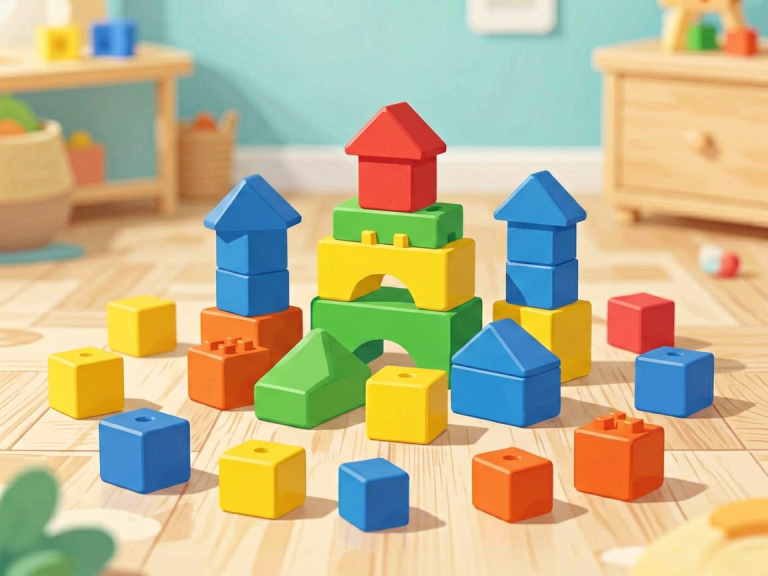
While a newborn cannot yet grasp toys, their motor development happens in predictable stages. Gifts that support this progression are both educational and practical. A soft play gym with hanging toys encourages reaching and batting, strengthening the muscles that will later be used for crawling and grasping. Baby-safe teethers with varied shapes help with oral motor development and hand-eye coordination as the baby learns to bring objects to the mouth. For older newborns (around three to six months), activity centers that offer buttons to press, sliders to push, and flaps to lift provide early problem-solving experiences. Even something as simple as a set of brightly colored stacking cups can teach concepts of size, order, and gravity when the baby is ready to interact. The educational value lies not in the complexity of the toy, but in the opportunities it creates for the baby to practice emerging skills.
Social and Emotional Learning Resources
Newborns are social creatures from birth. They are wired to connect with caregivers, and educational gifts can support this bonding. Soft dolls or plush toys with simple facial features can be used by parents to model emotions, such as “Look, the bunny is happy!”. Some gifts are designed specifically for parent-baby interaction, like storytelling cards or prompts for baby massage and gentle exercises. A photo book filled with pictures of family members—with clear, smiling faces—helps the baby learn to recognize familiar people and begin to differentiate emotions. Additionally, there are now educational subscription boxes that deliver age-appropriate books and activities each month, reinforcing the idea that learning is an ongoing journey. These gifts are particularly meaningful because they involve the parent as an active participant, turning the present into a shared experience rather than a passive object.
How to Choose Age-Appropriate and Safe Gifts
One of the most critical aspects of selecting an educational graduation gift for a newborn is ensuring it is appropriate for the child’s current developmental stage. A gift that is too advanced will frustrate the baby and be ignored; a gift that is too simple will bore them quickly. For a newborn (0–3 months), concentrate on visual and auditory stimulation: high-contrast cards, soft books, and gentle music. For an infant (3–6 months), add toys that encourage grasping and mouthing, such as textured balls and safe teethers. For a baby approaching their first birthday (6–12 months), consider cause-and-effect toys, shape sorters, and simple puzzles. Safety is paramount: all items should be free from BPA, phthalates, and lead. Avoid toys with long strings or small parts that could pose a choking hazard. Look for certifications like ASTM (American Society for Testing and Materials) or CE marking. Additionally, consider the durability of the gift; newborns grow quickly, and a toy that can be used in multiple stages—for example, a wooden rattle that later becomes a stacking block—offers greater long-term educational value. Finally, involve the parents in the selection process if possible, as they can provide insights into their baby’s temperament and their own educational philosophy. A gift that aligns with the family’s values—whether they prioritize Montessori principles, STEM learning, or creative play—will be more meaningful and more likely to be used.
The Long-Term Impact of Early Educational Gifts
The benefits of giving an educational graduation gift extend far beyond the baby’s first few months. When a child receives a high-contrast card set, for example, the parents are subtly encouraged to engage in “reading” activities from day one. This early exposure to books has been linked to larger vocabularies, better reading comprehension, and stronger academic performance in later years. Similarly, a set of musical instruments can spark a lifelong interest in the arts, while a sensory play mat might become the foundation for curiosity about textures and materials. Moreover, educational gifts often serve as conversation starters among family and friends, reinforcing a culture of learning within the household. The gift itself may be outgrown, but the habits it inspires—talking to the baby, singing, exploring together—can last a lifetime. From a psychological perspective, receiving a thoughtfully chosen educational gift communicates a powerful message: the child is seen not just as a bundle of needs, but as a growing, curious mind worthy of investment. This can positively influence how parents perceive their role as their child’s first teacher.
Conclusion: A Gift That Grows with the Child
Choosing an educational graduation gift for a newborn is a beautiful way to honor the child’s entry into the world while setting the stage for a lifetime of learning. Whether it is a simple set of black-and-white cards, a soft book with rhyming text, or a musical mobile that sings lullabies, the best gifts are those that invite interaction, stimulate the senses, and strengthen the bond between baby and caregiver. As we celebrate this first “graduation,” let us remember that the journey of education begins not in a classroom, but in the loving arms of parents who talk, read, and play with their newborn. The most enduring gift, in fact, is the one that reminds us all that learning is a joyful, lifelong adventure—starting on the very first day.