The Ultimate Engineering Toys Guide for Parents: Building Brilliant Minds Through Play
In an era where screens dominate children’s attention, engineering toys offer a refreshing hands-on alternative that nurtures creativity, problem-solving, and resilience. For parents, navigating the vast landscape of building sets, robots, and circuit kits can be overwhelming. This guide will help you understand why engineering toys matter, how to choose the right ones for your child’s age and interests, and how to maximize the learning potential of every play session.
Why Engineering Toys Matter: More Than Just Fun
Engineering toys are not merely distractions; they are powerful educational tools disguised as play. When children engage with these toys, they naturally practice skills that are foundational to STEM (Science, Technology, Engineering, and Mathematics) learning. The process of constructing a bridge that doesn’t collapse, programming a robot to follow a path, or figuring out why a gear system jams teaches them the scientific method in action: hypothesis, experimentation, observation, and iteration.
Beyond academics, engineering toys forge essential life skills. Frustration tolerance develops when a structure falls repeatedly, requiring the child to pause, rethink, and try again. Collaboration blossoms when siblings or friends build together, learning to communicate ideas and compromise on designs. Spacial reasoning, fine motor skills, and even basic physics concepts become intuitive through repeated hands-on experiences.
Studies have shown that early exposure to engineering concepts can narrow the gender gap in STEM fields and increase a child’s confidence in tackling complex problems. The best part? Children are having so much fun they don’t realize they are learning.
Age-Appropriate Engineering Toys: A Guide for Every Stage
Not all engineering toys are created equal, and choosing the right complexity level is crucial for keeping your child engaged without causing unnecessary frustration.
Ages 3–5: The Age of Exploration and Simple Structures
For preschoolers, engineering toys should focus on large, safe pieces that encourage stacking, sorting, and basic cause-and-effect understanding. Classic wooden blocks remain a staple—they teach balance, weight distribution, and spatial relationships. Magnetic tiles (like Magna-Tiles or PicassoTiles) are another excellent choice; their easy-connect magnets allow young children to build 3D shapes and simple structures without fine motor strain.
Look for kits that include large gears, connecting rods, and simple wheels. Products like "Gears! Gears! Gears!" from Learning Resources introduce the concept of rotational motion through bright, chunky pieces. At this age, the goal is not to follow instructions but to explore freely. Parental involvement should be light: ask open-ended questions like, "What happens if you put the big block on top of the small one?"
Ages 6–9: The Builder and Problem-Solver Phase
Elementary-aged children are ready for more complex building systems with multiple connection points. LEGO Classic and LEGO Technic sets are obvious leaders here. Classic LEGO encourages imaginative construction, while Technic introduces gears, axles, and mechanical movement. K’NEX, with its rod-and-connector system, allows children to create moving vehicles, cranes, and amusement park rides.
This is also the perfect age to introduce simple electrical circuits. Snap Circuits by Elenco use color-coded, press-together components to build working radios, doorbells, and alarms—completely safe and satisfying. For those interested in robotics, the "Botley 2.0" coding robot is screen-free and teaches logical sequencing through remote programming.
Encourage your child to follow the included instructions initially, but then challenge them to modify the design: "Can you make the car go faster by changing how the gears are arranged?" This transitions them from passive building to active experimentation.
Ages 10–14: Budding Engineers and Coders
Preteens crave autonomy and real-world relevance. This is when engineering toys can become more sophisticated, programming, and even competition-focused. Arduino starter kits (like the "ELEGOO UNO Project Super Starter Kit") teach genuine coding and circuit building—children learn to wire LEDs, sensors, and motors and write code in a simplified version of C++. Similarly, littleBits and Makey Makey allow for creative electronics without soldering.
For robotics enthusiasts, the LEGO Mindstorms or Spike Prime systems are excellent. These programmable brick kits combine advanced building with block-based coding (Scratch or Python), enabling children to build robots that can navigate mazes, sort objects, or even dance. Online resources like "First Lego League" provide a competitive framework that motivates deep learning.
Minecraft Education Edition and "Tinkercad" (a free 3D modeling software) are also powerful digital engineering tools. They teach spatial thinking, design iteration, and even basic physics through in-game mechanics.
Beyond the Toy: How to Foster an Engineering Mindset at Home
Even the best engineering toy loses its magic if it’s simply left in a box or used once. To truly nurture your child’s engineering skills, you need to create an environment that encourages sustained engagement.
Create a “Engineer’s Space” with No Rules
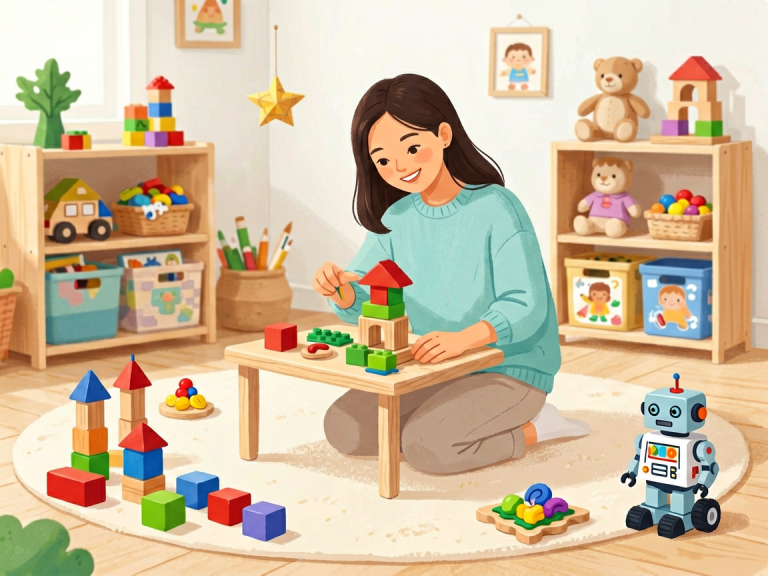
Dedicate a corner of your living room or playroom where building is encouraged and mess is allowed. Keep all engineering toys organized in open bins—not hidden away—so they are visible and inviting. Include a simple tool kit with tape, string, scissors, and markers, because true engineering often involves modifying a set with household materials. Let your child know that it’s okay to break a model to build something new. Many children worry about "ruining" a toy; reassure them that the real fun is in re-imagining.
Ask the Right Questions, Not Give the Right Answers
When your child hits a wall, resist the urge to fix it for them. Instead, use Socratic questioning: "Why do you think the tower falls on the left side every time?" "What would happen if you added a wider base?" "Can you draw a picture of what you think the solution looks like?" These questions guide them to analyze their own failures and develop systematic thinking.
Consider keeping a "failure log" (a simple notebook) where your child can sketch what didn’t work and what they learned. This normalizes failure as part of the engineering process—a lesson more valuable than any completed model.
Connect Toys to Real-World Engineering
To make engineering toys meaningful, link them to real careers and problems. When your child builds a bridge, show them photos of actual suspension bridges like the Golden Gate. If they build a robotic arm, watch a video of how a NASA Mars rover uses a similar mechanism. Visit science museums, watch construction sites from a safe distance, or read biographies of famous engineers (a child-friendly book about Elon Musk or the Wright brothers can spark curiosity).
Also encourage “reverse engineering.” Take apart an old broken toaster or remote control (with supervision) and let your child see how gears, springs, and circuits actually work inside. The thrill of discovery is irreplaceable.
Safety and Sustainability: Choosing the Right Balance
While engineering toys are generally safe, a few considerations will keep the experience positive. Always check age recommendations—small parts in advanced kits are choking hazards for young children. For electronics, ensure that any batteries are secured with a screwdriver-driven compartment and that the voltage is low (most kits use 3V to 9V circuits, which are safe). Avoid toys that require excessive force to snap pieces together, as this can cause finger strain or frustration.
From a sustainability perspective, consider buying second-hand sets (LEGO and K’NEX last for decades) or choosing brands that use recycled materials. Many subscription services like "KiwiCo" offer monthly engineering crates with recyclable packaging. Also, teach your child to respect the toys: keep all pieces together, and when they outgrow a set, donate it to a school or library instead of throwing it away.
Conclusion: The Gift That Keeps on Building
Engineering toys are not a passing trend—they are a gateway to a lifelong love of learning and making. Whether your child dreams of being an astronaut, architect, or entrepreneur, the skills they develop through these toys will serve them in any field. As a parent, your role is not to teach engineering but to provide the tools, the space, and the encouragement to explore. The tower may fall, the robot may bump into walls, and the circuit may fail to light up—but with each stumble, your child builds resilience, curiosity, and the joy of figuring things out. That is the true engineering masterpiece.