Engineering Toys for Preschoolers: Crafting Curiosity, Creativity, and Cognitive Foundations
In a world increasingly shaped by technology, infrastructure, and innovation, the seeds of engineering thinking are best sown early. For preschoolers—children aged three to five—play is not merely a pastime; it is the primary engine of learning. Among the vast array of toys available today, engineering toys hold a unique and powerful position. They do more than entertain; they build the foundational skills of problem-solving, spatial reasoning, perseverance, and collaboration. This article explores the profound importance of engineering toys for preschoolers, examining how these playful tools cultivate future innovators while meeting the developmental needs of young children. From simple building blocks to more sophisticated construction kits, engineering toys transform abstract concepts into tangible, joyful experiences. Through a detailed analysis of cognitive benefits, toy categories, social-emotional growth, and practical guidance for parents and educators, we will uncover why every preschooler deserves a toolkit for thinking like an engineer.
The Cognitive Benefits of Engineering Play
Engineering toys are not just about stacking blocks or connecting gears; they are about wiring the brain for logical thought. Cognitive development in the preschool years is rapid, and engineering play directly stimulates several key areas.
Spatial Reasoning and Mathematical Thinking
When a preschooler attempts to balance a wooden block on top of two others, they are engaging in spatial reasoning—the ability to visualize and manipulate objects in two and three dimensions. Research in developmental psychology has consistently shown that early spatial skills predict later success in STEM fields (science, technology, engineering, and mathematics). Engineering toys such as building sets, magnetic tiles, and interlocking gears require children to estimate proportions, understand symmetry, and predict how parts fit together. For instance, when a child tries to build a tower that doesn’t topple, they learn about center of gravity and weight distribution without ever hearing those terms. This intuitive grasp of physics and geometry lays a strong foundation for mathematical concepts like geometry, measurement, and even early algebra.
Problem-Solving and Critical Thinking
Engineering, at its core, is about solving problems within constraints. Preschoolers naturally encounter problems during play: “Why won’t my bridge stay up?” or “How can I make this ramp fast enough for my toy car?” Engineering toys force children to iterate. They test a hypothesis, observe the result, and modify their approach. This cycle—often called the engineering design process (ask, imagine, plan, create, improve)—is embedded in the play. For example, a child using a set of plastic connectors and tubes to build a marble run may find that the marble gets stuck at a certain joint. They must then diagnose the problem, perhaps by adjusting the angle or adding a support, and try again. This iterative thinking promotes flexibility and resilience, teaching children that failure is not an endpoint but a stepping stone to success.
Cause-and-Effect and Scientific Inquiry
Engineering toys also introduce preschoolers to the principle of cause and effect in a concrete, immediate way. When they press a lever and a platform rises, or when they connect a battery-powered motor to a gear train and watch a wheel spin, they are witnessing direct relationships between actions and outcomes. This early exposure to sequential thinking and causality is crucial for later scientific reasoning. Moreover, many engineering kits incorporate elements of simple machines—levers, pulleys, wedges, wheels and axles—which are the building blocks of physics. By manipulating these mechanisms, preschoolers gain an intuitive understanding that later formal education will expand upon.
Types of Engineering Toys for Preschoolers
The market offers a wide spectrum of engineering toys, ranging from open-ended blocks to guided kits. Understanding the different categories helps parents and educators select toys that match a child’s developmental stage and interests.
Classic Building Blocks and Construction Sets
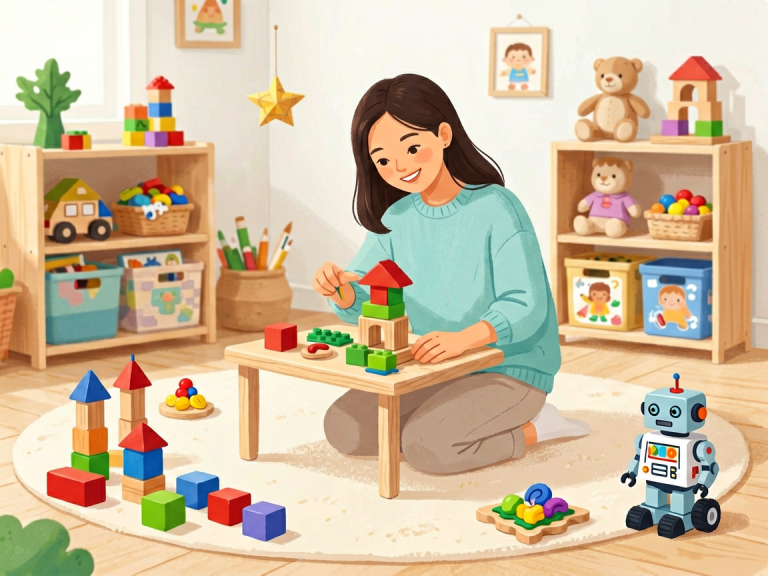
The simplest and most enduring engineering toys are classic wooden blocks. They require no instructions, no batteries, and no predetermined outcome. A child can build a castle, a garage for toy cars, or an abstract sculpture. This open-ended nature encourages creativity and allows for limitless problem-solving. More sophisticated versions include magnetic building tiles (like Magna-Tiles or Magformers) that snap together with magnetic edges, enabling the construction of 3D shapes and structures that hold together firmly. These toys teach children about polarity, stability, and geometry. Similarly, interlocking plastic bricks such as Duplo (the larger version of LEGO) are excellent for fine motor development and following simple patterns or creating original designs.
Gear and Mechanism Kits
Toys that introduce moving parts are particularly effective for demonstrating mechanical principles. Gears, pulleys, and levers can be found in kits designed for preschoolers. For instance, a set of colorful plastic gears that attach to a pegboard allows children to create spinning contraptions. They quickly learn that gears of different sizes turn at different speeds, and that connecting gears in a chain causes them to spin in opposite directions. Some kits include simple cranks or handles that let children manually operate their creations. These toys demystify how machines work and spark curiosity about everyday objects like bicycles, clocks, and escalators.
Marble Runs and Ramps
Marble runs are a classic example of engineering toys that combine physics with fun. Children assemble tracks, tunnels, ramps, and drops to guide a marble from start to finish. The challenge of designing a path that successfully carries the marble through loops and curves teaches concepts of gravity, momentum, and slope. Many sets use modular pieces that can be reconfigured, encouraging endless experimentation. Preschoolers learn that a steeper ramp increases speed, while a curve may cause the marble to fly off if not properly banked. These lessons are intuitive and memorable.
Simple Machines and Tool Kits
Some engineering toys specifically focus on the six simple machines: lever, wheel and axle, pulley, inclined plane, wedge, and screw. Age-appropriate kits might include a plastic seesaw (lever), a wheeled cart, a spool-and-string pulley, or a screwdriver set that lets children “build” a toy workbench. These toys help children understand how humans amplify force to make work easier. Additionally, toy tool kits with plastic hammers, wrenches, and screwdrivers allow children to engage in pretend play—fixing a “broken” toy car or constructing a birdhouse from foam pieces—which develops both engineering concepts and hand-eye coordination.
Fostering Social and Emotional Growth Through Engineering Play
While cognitive benefits are often highlighted, engineering toys also play a vital role in social and emotional development. Collaboration, communication, and self-regulation are naturally woven into the fabric of building and problem-solving with others.
Collaboration and Teamwork
When two or more preschoolers work together on a building project, they must negotiate roles, share materials, and coordinate their actions. One child may hold a piece steady while another attaches it. They might have to articulate their ideas: “Let’s put the big block here so the tower doesn’t fall.” Such interactions foster language development and teach the value of teamwork. Studies have shown that cooperative play with construction toys leads to better social skills and a greater ability to resolve conflicts. For example, if two children want to use the same blue block, they must find a compromise—perhaps using it now and letting the other have it later, or finding an alternative color. These are real-world social negotiations practiced in a safe, playful context.
Perseverance and Resilience
Engineering play is full of setbacks. A tower collapses, a marble run fails, a gear jams. For a preschooler, these moments can be frustrating, but they also present opportunities to develop emotional regulation and perseverance. With supportive guidance from a parent or teacher, children learn to take a deep breath, assess what went wrong, and try again. This “grit” is a key predictor of long-term success in any field. Engineering toys provide immediate, concrete feedback: if your design doesn’t work, it’s obvious. There’s no ambiguity. This clarity helps children understand that effort and revision lead to improvement, building a growth mindset at an early age.
Confidence and Self-Efficacy
When a preschooler successfully completes a complex structure—a bridge that holds a toy car, a marble run that works on the first try—they experience a powerful sense of accomplishment. This boosts their self-confidence and motivates them to take on more challenging projects. Engineering toys allow children to see their own agency in the world: “I made this! I figured it out!” This feeling of efficacy is crucial for healthy development. Moreover, because engineering toys can be open-ended, there is no single “right” answer. A child’s unique solution is valid, which fosters individual creativity and pride in their own thinking.
Choosing the Right Engineering Toys: A Parent’s Guide
With so many options available, selecting appropriate engineering toys for a preschooler can be overwhelming. Here are key considerations to ensure the toys are both developmentally suitable and engaging.
Prioritize Open-Ended Play
The best engineering toys allow for multiple outcomes rather than prescribing a single model. Open-ended toys—like basic wooden blocks, magnetic tiles, or loose parts (e.g., cardboard tubes, fabric scraps, connectors)—encourage imagination and problem-solving. In contrast, kits that only allow one specific build (e.g., a predetermined helicopter) may limit creativity. Look for toys that can be used in many ways over time. For example, a set of 100 wooden blocks can be used for a castle today and a spaceship tomorrow, providing years of varied play.
Check for Age Appropriateness and Safety
Preschoolers are still developing fine motor skills and impulse control. Ensure that toy parts are large enough to avoid choking hazards (generally, toys should be larger than a toilet paper roll). For children under three, avoid small magnets or gears that could be swallowed. Look for toys made of non-toxic materials, with smooth edges and no sharp points. Many reputable brands explicitly label their products for specific age ranges. Following these guidelines ensures safety while also aligning the toy’s complexity with the child’s abilities.
Encourage Variety, Not Overload
It is better to have a few high-quality, versatile engineering toys than a cluttered room of single-purpose gadgets. A classic set of building blocks, a magnetic tile set, a simple gear kit, and a marble run can provide a rich engineering curriculum. Rotating toys can keep interest fresh. Additionally, consider incorporating “loose parts” from everyday life: cardboard boxes, bottle caps, string, and recyclable containers. These invite engineering thinking just as effectively as store-bought toys, and often more so because they require children to reimagine their uses.
Look for Toys That Grow with the Child
Some engineering toys offer progressive difficulty. For example, a brand may sell expansion packs that add more pieces or new mechanisms as the child’s skills develop. Magnetic tiles can be used for simple towers at age three and complex geometric structures at age six. A marble run can be a straight ramp for a toddler and an elaborate multi-level course for an older child. Investing in such toys creates long-term value and supports continuous learning.
The Role of Parents and Educators in Guided Play
Toys alone do not teach engineering; the interactions around them are just as important. Adults can amplify the learning potential of engineering play through thoughtful guidance.
Ask Open-Ended Questions
Instead of telling a child what to build, ask questions that stimulate thinking. For instance, “What do you think will happen if we add another block here?” or “How can we make the bridge stronger?” Such questions encourage prediction, observation, and reflection. Avoid yes/no questions; instead, invite explanations: “Tell me about your design—why did you put the big gear there?” This kind of “scaffolding” helps children verbalize their thought processes and deepens understanding.
Model the Engineering Mindset
Children learn by watching adults. When playing with engineering toys, parents can demonstrate curiosity, patience, and a willingness to try new approaches. For example, if a tower falls, a parent might say, “Oh, that didn’t work! Let’s see what we can learn from it. Maybe the base was too narrow. Let’s try a wider base next time.” This normalizes failure as part of learning. Parents can also share their own experiences of building or fixing things, showing that engineering is a lifelong skill.
Provide Time and Space for Extended Play
Deep learning requires uninterrupted time. Preschoolers should be allowed to engage in engineering play for at least 30–45 minutes at a stretch, if possible. A designated area—a table, a corner of the room, or even a large cardboard box—can serve as a “building zone” where projects can be left for days. This freedom to return to a work-in-progress enables iterative improvement and complex problem-solving. Rushed play rarely leads to the kind of sustained effort that develops persistence.
Connect Play to Everyday Life
Help children see engineering all around them. While walking, point out bridges, cranes, escalators, and even the structure of their own home. Discuss how gears work in a bicycle or how a lever helps open a paint can lid.