The Ultimate Guide: Essential Considerations Before Choosing Outdoor Toys for Your Child
Introduction
Outdoor play is not merely a leisure activity; it is a fundamental component of childhood development. It fosters physical fitness, enhances social skills, stimulates creativity, and nurtures a deep connection with nature. However, the market is flooded with an overwhelming array of outdoor toys—from sprawling playhouses to intricate climbing structures, from simple balls to sophisticated remote-controlled vehicles. Choosing the right toy can be a daunting task for parents, caregivers, and educators. Making an uninformed decision can lead to safety hazards, wasted money, or a lack of sustained engagement. This comprehensive guide delves into the critical factors you must consider before making a purchase. By understanding these elements, you can select outdoor toys that are safe, developmentally appropriate, durable, and genuinely enjoyable, ensuring countless hours of meaningful play under the sun.
1. Safety First: Non-Negotiable Standards
Safety is the paramount concern when selecting any toy, especially outdoor ones that are exposed to more rigorous use and potential risks. Before you even consider the color or brand, scrutinize the safety features.
1.1 Material and Construction Quality
Outdoor toys must withstand varying weather conditions, falls, and rough handling. Avoid toys made from cheap, brittle plastics that can crack and create sharp edges. Look for descriptions like "impact-resistant," "UV-stabilized," and "non-toxic." For wooden toys, ensure they are made from sustainably sourced hardwood and treated with child-safe, water-based sealants to prevent splinters. Metal components should be rust-proof (e.g., powder-coated steel) and have no sharp corners. Always check for certifications such as ASTM (American Society for Testing and Materials) or EN71 (European Standard for toy safety), which indicate that the product has passed rigorous safety tests.
1.2 Age-Appropriate Design
A toy designed for a 10-year-old may be hazardous for a toddler. Check the manufacturer’s age recommendations, but also use your judgment. For younger children (ages 1–3), avoid toys with small parts that pose choking hazards, long cords or ropes that could cause strangulation, or unstable structures that could tip over. For older children, ensure that climbing equipment has proper guardrails, that swing sets have adequate ground clearance, and that no heavy components can fall. Additionally, consider the child’s physical abilities—a sturdy, low-to-ground tricycle is better for a beginner than a tall, fast bicycle.
1.3 Environment and Supervision
No toy is completely risk-free. Think about where the toy will be used. Is the ground under a swing set covered with impact-absorbing mulch, sand, or rubber mats rather than concrete or grass? Are there nearby trees, fences, or other obstacles? Even with the safest toy, adult supervision is essential, particularly for activities involving heights, speed, or water. A trampoline, for example, requires strict rules and a safety enclosure net.
2. Developmental Appropriateness: Matching Toy to Age and Stage
Every child develops at their own pace, but there are general milestones that outdoor toys can support. Choosing a toy that matches your child’s current stage ensures they will be engaged without being frustrated or bored.
2.1 For Toddlers and Preschoolers (Ages 1–4)
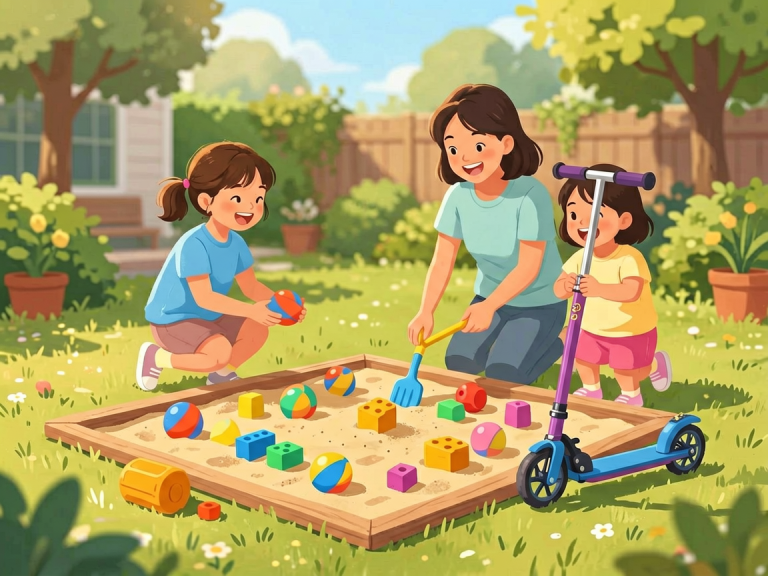
At this stage, gross motor skills are developing rapidly. Toys should encourage movement—pushing, pulling, climbing, and balancing. Simple ride-on toys, small slides with gentle slopes, sandboxes with buckets and shovels, and large, soft balls are excellent. These toys promote sensory exploration and cause-and-effect learning. Avoid complex construction sets or toys that require advanced coordination.
2.2 For Early School-Age Children (Ages 5–8)
Children in this age group have better coordination and are eager for more challenging activities. Bicycles (with training wheels if needed), jump ropes, kites, small climbing structures, and sports equipment like soccer balls or basketball hoops (adjusted to lower heights) are ideal. They also enjoy imaginative play—a play tent or a simple garden playset can become a castle, a spaceship, or a store. This is the time to introduce toys that require some turn-taking and rule-following, fostering social skills.
2.3 For Tweens and Teens (Ages 9+)
Older children and teenagers seek independence, skill mastery, and social interaction. Consider larger sports equipment (a full basketball hoop, a volleyball net), skateboards or scooters (with proper protective gear), more advanced climbing walls, or even outdoor science kits like a telescope or a weather station. For group play, lawn games like cornhole, badminton, or ladder toss are fantastic. At this age, durability and the potential for long-term use become crucial—cheap plastic will break quickly.
3. Space and Location: Practical Constraints
The most magnificent outdoor toy is useless if it does not fit your yard or is inappropriate for your local environment. Measure your outdoor space carefully and visualize the toy in it.
3.1 Available Area and Clearance
Consider not only the footprint of the toy but also the safety clearance required around it. For a swing set, experts recommend at least six feet of clear space on all sides. A trampoline needs a wide buffer zone away from fences, trees, and buildings. A basketball hoop needs a hard, level surface. If you have a small patio or balcony, prioritize compact, foldable, or wall-mounted options like a climbing wall panel or a mini-golf set. For a large lawn, you can invest in more extensive structures but avoid overcrowding the yard so children still have room to run.
3.2 Surface and Ground Preparation
The type of surface under the toy dramatically affects safety and longevity. Soft, uneven grass can become muddy and slippery. Hard surfaces like concrete or asphalt require extra padding for fall zones. For fixed play equipment, you might need to lay down interlocking rubber tiles, pea gravel, or wood chips. Remember that water can pool under some structures, leading to mosquitoes or rot, so good drainage is important.
3.3 Climate Considerations
Think about your local weather. If you live in a rainy or snowy region, choose rust-resistant materials and ensure toys can be stored or covered. UV rays can fade and weaken plastic; look for UV-protected polyethylene. In windy areas, avoid lightweight, unsecured items like an inflatable bounce house that can blow away. If you have a pool or beach nearby, consider water-safe toys like floating mats, diving rings, or sand toys—but always with water safety in mind.
4. Durability and Material Longevity: An Investment Worth Making
Outdoor toys face sun, rain, mud, and constant use. A cheap toy that falls apart after one season is both frustrating and wasteful. Evaluate the materials and construction.
4.1 Plastic vs. Wood vs. Metal
High-density polyethylene (HDPE) is a common material for slides and playhouses; it is resistant to cracking and fading but can become brittle in extreme cold. Wood offers a natural look and is sturdy, but it requires periodic sealing or staining to prevent rot and splinters. Cedar and redwood are naturally rot-resistant but more expensive. Metal, especially steel, is strong but can heat up in direct sunlight (causing burns) and may rust if not properly coated. Consider the trade-offs for your specific environment. For example, a powder-coated aluminum frame is lightweight and rust-proof, ideal for coastal areas.
4.2 Assembly and Maintenance
Check reviews for ease of assembly. Some outdoor toys require professional installation, which adds to the cost. Maintenance is another factor: does the toy have parts that can be replaced easily? Can the fabric (on a play tent or sun shade) be removed for cleaning? A toy that requires little maintenance will be more enjoyable in the long run.
5. Educational Value and Skill Development
Outdoor toys are not just about burning energy; they can be powerful learning tools. Consider what skills a toy cultivates.
5.1 Physical Skills
Gross motor skills (running, jumping, throwing) are obvious benefits, but also look for toys that improve fine motor control, such as a small garden tool set, a marble run that can be moved outside, or a balance board. For older children, toys that require precision (like a cornhole game or a frisbee) enhance hand-eye coordination.
5.2 Cognitive and Social Skills
Toys that encourage problem-solving—a treasure hunt kit, a building block set for outdoor forts, or a simple navigation compass for a scavenger hunt—add an intellectual layer. Social skills are developed through group games: cooperative play (like a large parachute) or competitive play (like a classic game of capture the flag). Choose toys that can be used by more than one child to encourage sharing, negotiation, and teamwork.
5.3 Creativity and Imaginative Play
The best outdoor toys are open-ended. A simple sandbox can become a construction site, a dinosaur excavation, or a bakery. A set of buckets, shovels, and molds is far more versatile than a single plastic sandcastle shape. Similarly, a treehouse or a play tent provides a blank canvas for endless stories. Avoid toys that have a single, prescribed function (like a "talking" toy that repeats the same phrase) because they limit imagination.
6. Storage and Portability: Keeping It Tidy
Outdoor toys must endure the elements, but they also need to be stored when not in use to prolong their life and keep your yard neat.
6.1 Permanent vs. Portable
Permanent structures like a large playset or a fixed basketball hoop require a dedicated location and may add value to your home, but they cannot be moved easily. Portable toys—such as a foldable soccer goal, a collapsible wagon, or a sports ball set—can be taken to the park, the beach, or a friend’s house. They also allow you to rotate toys to keep children interested. For families with limited space, prioritize portable and stackable options.
6.2 Storage Solutions
Think about where you will keep balls, rackets, jump ropes, and sand toys. A weatherproof deck box, a garden shed, or even a mesh bag hung on a fence can work. Some toys come with their own storage, like a sandbox with a fitted cover or a climbing set with a built-in cubby. Ensure storage is accessible to children so they learn to clean up after themselves.
7. Budget and Cost Over Time
Outdoor toys can range from a few dollars for a jump rope to thousands for a custom playset. Determine your budget but also consider the long-term value.
7.1 Initial Investment vs. Replacement Costs
A very cheap plastic slide might cost $30 but crack within weeks, leading to a replacement. A higher-quality slide for $100 might last for years and even be passed down to siblings. Calculate the cost per use. Also, consider that some toys require accessories—a trampoline needs a safety net, a swing set needs swings, and a bicycle needs a helmet and perhaps a bell. Factor in these additional expenses.
7.2 Second-Hand Options
Outdoor toys can sometimes be found second-hand, but safety must be verified. Examine for recalls, rust, cracks, or missing parts. Wooden structures should be checked for rot and splinters. If buying used, ensure all safety certifications are still valid. For certain items like car seats or inflatable pools, it is better to buy new due to unknown wear.
8. Personal Interests and Peer Influence
Finally, consider the child’s own preferences. A toy that sits unused because it does not match the child’s interests is a poor purchase.
8.1 Observing Play Patterns
Does your child prefer solo activities like climbing and reading, or do they thrive in group sports? Are they an adventurous risk-taker or a cautious observer? For a child who loves building, consider a construction set of large interlocking blocks. For a future gardener, a child-sized wheelbarrow and watering can spark joy. Involve your child in the decision-making process—show them pictures or visit a store to see what excites them.
8.2 Social Trends
Be aware of peer influence, especially for school-age children. If all their friends are into scooters or a particular type of bike, your child may feel left out. However, do not feel pressured to buy the most popular brand; there are often durable and safer alternatives at a lower price. Strike a balance between following trends and choosing toys that align with your values and budget.
Conclusion
Choosing the perfect outdoor toy is an art as much as a science. It requires balancing safety, developmental needs, spatial realities, material quality, educational potential, and the whims of a child’s imagination. By methodically evaluating each of these factors—from the type of ground beneath the toy to the cognitive skills it nurtures—you can make an informed decision that brings joy, growth, and lasting memories. Remember that the best outdoor toys are those that invite children to move, explore, create, and connect with the world around them. They are not just objects; they are catalysts for adventure. So take your time, do your research, and watch your child’s world expand with every swing, slide, and spirited game.