Fueling Young Minds: The Best Creative Gifts for 9-Year-Olds
Introduction
At the age of nine, children stand at a remarkable crossroads of development. They have outgrown the simple make-believe of early childhood, yet they still possess an uninhibited sense of wonder. Their cognitive abilities have sharpened—they can grasp abstract concepts, follow multi-step instructions, and think critically. At the same time, their fine motor skills are well-honed enough for intricate projects, and their social awareness is blossoming. This is the golden age for nurturing creativity, problem-solving, and self-expression through play. The right gift at this stage can spark a lifelong passion, build confidence, and provide hours of meaningful engagement. But not all toys are equal. The best creative gifts for 9-year-olds are those that challenge, inspire, and invite open-ended exploration. They resist passive consumption and instead demand active involvement, allowing the child to become a maker, a designer, an inventor, or an artist. Below, I explore five categories of exceptional gifts that will unlock imagination and fuel young minds. Each suggestion is carefully chosen to match the developmental needs and interests of a nine-year-old, ensuring that the present is not merely entertaining but truly transformative.
1. Art and Craft Kits That Go Beyond Coloring
Most nine-year-olds have outgrown simple coloring books and washable markers. They crave tools that offer real creative control and produce tangible, impressive results. The first standout in this category is a high-quality embroidery or cross-stitch starter set. Embroidery combines careful hand-eye coordination with artistic expression. A kit that includes pre-printed fabric, a child-safe needle, colorful threads, and a simple pattern (like an animal or a floral motif) teaches patience and precision. The child learns to plan her stitches, to follow a grid, and to see a picture emerge thread by thread. This is not just a craft—it is a lesson in delayed gratification and the satisfaction of making something beautiful from raw materials. Moreover, finished pieces can be framed, sewn onto pillows, or turned into patches for backpacks, giving the child a deep sense of accomplishment.
Another excellent choice is a pottery wheel kit or air-dry clay sculpting set. Nine-year-olds love the tactile sensation of molding, rolling, and shaping. Air-dry clay is forgiving: if a sculpture crumbles, it can be rehydrated and reshaped. For a more advanced experience, a mini pottery wheel (with a foot pedal and a small bucket for water) allows the child to experiment with the physics of spinning clay. The process itself is meditative and deeply satisfying. Children can make bowls, cups, or tiny figurines. Once dry, they can paint and seal their creations. This gift fosters an understanding of form, volume, and structural integrity—all while indulging in pure sensory play.
For the child who loves drawing and visual storytelling, consider a light box and tracing paper set combined with a comic book template. A light box allows them to trace and refine their own sketches, build layers, and create clean, professional-looking cartoons. Paired with a blank comic book template (with empty panels and speech bubbles), the child can write and illustrate their own stories. This activity integrates literacy, character design, and sequential thinking. It is also highly shareable—finished comics can be photocopied and given to friends or family. The gift of a light box is essentially the gift of a personal animation studio.
2. Science and Engineering Kits That Encourage Real Experimentation
At nine, children are natural scientists. They ask “why” and “how” constantly. A creative gift in this realm should not be a passive demonstration (like a volcano that simply fizzes) but rather an open-ended kit that lets them hypothesize, test, and iterate. One top pick is a programmable robot kit, such as those based on microcontrollers like the BBC micro:bit or a beginner-friendly robotics platform like Makeblock. These kits come with sensors, wheels, and snap-together parts. The child assembles the robot physically and then writes simple block-based code to make it move, avoid obstacles, or follow a line. The learning curve is gentle, but the possibilities are endless. When the robot finally rolls across the floor after an hour of troubleshooting, the child experiences a genuine “Eureka!” moment. This gift teaches logic, debugging, and resilience—far more valuable than any pre-programmed toy.
Another fantastic option is a chemistry set that focuses on everyday substances. Traditional chemistry sets with unknown powdered chemicals and strict adult supervision can seem intimidating. Instead, look for a kit that uses household items like vinegar, baking soda, cabbage juice (as a pH indicator), and cornstarch. Some modern kits include test tubes, safety goggles, and a manual with experiments that explore acids, bases, polymers, and crystals. The child can create slime, grow a crystal tree, or make a lava lamp. The key is that each experiment explains the underlying principle in child-friendly language. The best kits also include a notebook for recording observations, encouraging the young scientist to think like a real researcher.
For mechanical-minded kids, a gear and pulley building set is unbeatable. Many of these sets (like those from LEGO Technic or K’nex) allow children to construct working models of cranes, cars, and even simple engines. The child learns about torque, rotational speed, and power transmission. Some advanced sets even include rubber bands or small motors to create moving creations. The open-ended nature means a single set can be used hundreds of times to build different machines. This is not just about following instructions—it is about engineering logic. A child who builds a functioning drawbridge gains a profound, intuitive grasp of levers and counterweights.
3. Building and Construction Toys That Redefine Architecture
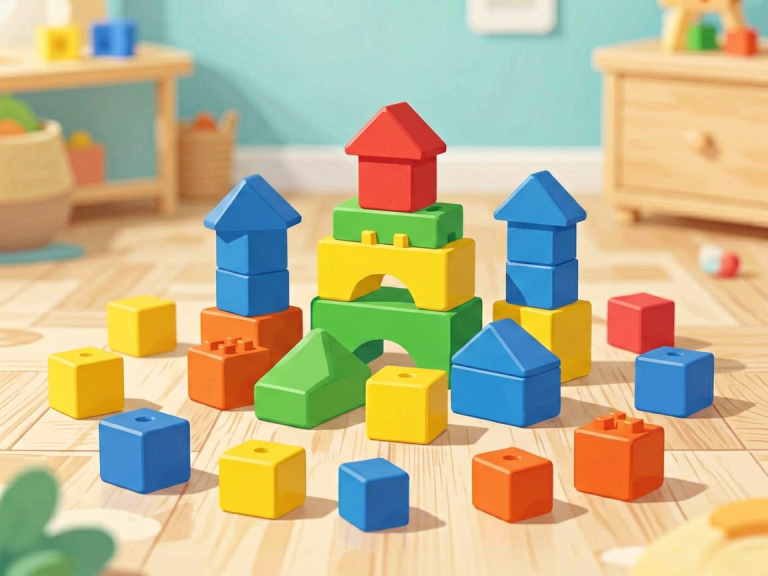
While classic LEGO bricks remain beloved, nine-year-olds benefit from construction toys that introduce new principles—tension, compression, stability, and symmetry. An exceptional gift in this category is a magnetic tile set designed for structural engineering. Unlike square blocks, magnetic building sets (like Magna-Tiles or Picasso Tiles) use magnetic edges and geometric shapes—triangles, squares, pentagons. Children can build 3D structures that defy gravity: towers that lean, domes, bridges, and even geodesic spheres. The magnets provide instant feedback—if the structure is unstable, it collapses, teaching the child to adjust angles and reinforce weak points. This type of play enhances spatial reasoning and geometric intuition. It is also highly collaborative; siblings or friends can build together, negotiating design decisions.
Another inventive building toy is the Strawbees Construction Kit, which uses plastic straws and flexible connectors to create enormous, lightweight structures—tents, geodesic domes, or even wearable wings. The system is simple: slots in the connectors allow straws to be inserted at various angles. Because the materials are so cheap and plentiful, the child can build on a large scale without fear of running out. They can experiment with triangulation (the strongest shape) and see how adding one diagonal strut can make a floppy square rigid. Strawbees are often used in STEM classrooms, but bringing them home means the child can build a fort in the living room or a chariot for a stuffed animal. The sense of scale is thrilling.
For the child who dreams of real architecture, a 3D wooden puzzle kit of famous landmarks (such as the Eiffel Tower, Taj Mahal, or a suspension bridge) provides a satisfying challenge. These kits consist of laser-cut plywood sheets that snap out without glue. The interlocking pieces require careful assembly, often taking several hours over multiple sessions. The finished model is a beautiful display piece. More importantly, the process teaches the child about how real structures are designed—how arches distribute weight, how cable-stayed bridges support a deck. Many kits include a booklet with historical and engineering facts, turning a puzzle into a mini history lesson.
4. Music and Sound Tools That Encourage Composition
Musical instruments are classic creative gifts, but for nine-year-olds, a standard recorder or a toy keyboard can quickly become boring. Look instead for instruments that invite improvisation and composition. A kalimba (thumb piano) is a perfect choice. This small, hand-held instrument from Africa has metal tines that you pluck with your thumbs. It is tuned to a pentatonic scale (often C major), which means that any combination of notes sounds harmonious. A child can start playing recognizable tunes within minutes, without any formal training. The kalimba’s soothing tone and portability make it ideal for quiet afternoons. Many kits include a songbook and stickers with note names. The child can also experiment with tuning by adjusting the tine lengths. This is a gateway to understanding melody, rhythm, and even basic music theory.
For the tech-savvy child, a DIY synthesizer kit is an extraordinary gift. Several companies produce small, solder-free synthesizer kits that allow the child to build a working electronic instrument. The kit includes a breadboard, wires, resistors, capacitors, and a speaker. By following illustrated instructions, the child assembles a circuit that produces different tones when buttons are pressed or sensors are touched. The experience demystifies electronics: they learn how voltage, resistance, and oscillation create sound. Once built, the synthesizer can be used to create spacey sound effects, rhythmic patterns, or even simple songs. This gift merges science and art perfectly.
Another innovative option is a loop station pedal paired with a basic microphone or an electric ukulele. A loop station records a short phrase and then plays it back in a continuous loop. The child can layer sounds—first a strummed chord, then a melody, then a percussive beat created by tapping the ukulele body. They become a one-person band. This encourages a deep understanding of musical form, harmony, and timing. It also builds confidence in performance, as the child can produce a surprisingly polished piece entirely by himself. The only limit is imagination.
5. Digital Creativity Tools That Inspire, Not Distract
Screen time is often a concern for parents, but certain digital tools can be profoundly creative. The key is to choose devices and software that require active input, not passive scrolling. A digital drawing tablet (like a Wacom One or a Huion Kamvas) connected to a computer, combined with a subscription to a beginner-friendly drawing app (such as Procreate for iPad or Krita for PC), gives a child access to endless digital brushes, layers, and effects. Nine-year-olds are often already familiar with the concept of digital art from games and videos. A tablet lets them create their own characters, scenes, and comics. The undo button reduces the fear of making mistakes, encouraging experimentation. They can learn composition, shading, and color theory at their own pace. Many online tutorials are free and geared toward children.
Alternatively, a stop-motion animation kit is a spectacular gift. These kits typically include a camera or compatible app, a small tripod, and a software interface that captures frames sequentially. The child can use clay figures, LEGO minifigures, or paper cutouts to create a short movie. They learn the painstaking process of moving objects a fraction of an inch for each frame and then watching the result play back as smooth motion. This teaches patience, storytelling, and attention to detail. The best kits include sound effects and editing features so the child can add voiceovers and music. Sharing the finished video with family is a proud moment.
Finally, consider a block-based coding subscription box (like Bitsbox or Kiwi Co’s Crate). Each month, the child receives a new project—a mini app or game that they can code by arranging code blocks on a screen. The concepts (variables, loops, conditionals) are taught through a theme (e.g., a ninja game, a space shooter, or an interactive story). The child can then modify the code to change the game’s behavior. Coding is one of the most powerful creative skills a child can learn because it gives them the ability to build entire virtual worlds. The subscription box removes the intimidation of starting from scratch, providing a structured path to digital literacy.
Conclusion
Choosing the best creative gift for a nine-year-old is about seeing the child as a unique individual with budding talents and boundless curiosity. Whether they gravitate toward art, science, building, music, or digital design, the right gift will respect their intelligence and offer room for growth. Avoid toys that have a single use or that dictate exactly what to do. Instead, choose gifts that provide tools, not instructions—a set of possibilities rather than a script. When a child receives a gift that challenges them to think, to fail, to try again, and to create something entirely their own, they are receiving far more than a toy. They are receiving confidence, persistence, and a glimpse of their own potential. And in that moment, the gift becomes truly unforgettable.