Fueling Young Minds: The Best STEM Toys for Kids Who Love Experiments
Introduction: The Magic of Hands-On Discovery
Every child who loves experiments is, at heart, a young scientist. They are the ones who mix baking soda and vinegar in the kitchen, who take apart old remote controls to see the gears inside, and who ask “what happens if…” with an insatiable curiosity. For these budding explorers, traditional toys often fall short—they need tools that allow them to question, test, fail, and try again. This is where STEM toys come into play. STEM—an acronym for Science, Technology, Engineering, and Mathematics—is more than an educational buzzword; it represents a mindset of inquiry and problem-solving. When designed for children who crave hands-on experimentation, STEM toys transform abstract concepts into tangible, thrilling discoveries. In this article, we will explore the key features that make STEM toys ideal for experiment-loving kids, dive into specific categories and examples, and offer guidance for parents and educators who want to nurture that spark of scientific wonder.
Why Experimentation Matters in Early STEM Education
Before delving into specific toys, it is crucial to understand why experimental play is so powerful. Children learn best when they are actively engaged, and experiments provide a natural framework for the scientific method: posing a question, forming a hypothesis, conducting a test, observing results, and drawing conclusions. Unlike passive learning from screens or books, hands-on experiments engage multiple senses—touch, sight, hearing, and even smell—which strengthens memory and understanding. Moreover, experiments inherently embrace failure. When a chemical reaction fizzles unexpectedly or a bridge collapses, the child is forced to rethink their assumptions. This resilience is one of the greatest gifts a STEM toy can offer. For kids who already love experiments, these toys not only satisfy their curiosity but also channel it into structured, safe, and productive activities that build confidence and critical thinking.
Key Features of STEM Toys for Experiment-Loving Kids
Not every toy labeled “STEM” is suitable for a child who thrives on experimentation. The best options share several common characteristics that align with the experimental mindset.
Open-Ended Design
An experiment-driven child needs toys that allow multiple outcomes, not just a single correct answer. Open-ended sets, such as building kits with hundreds of pieces or chemistry labs with variable recipes, invite repeated play and creative problem-solving. A single circuit kit, for example, can be assembled to light a bulb today, power a fan tomorrow, and trigger a buzzer the next day—each configuration a mini-experiment.
Real Science, Not Pretend
Toys that simulate real scientific processes—like growing crystals, extracting DNA from fruit, or building a working catapult—resonate far more deeply with true experimenters than pretend-lab sets that only look scientific. Authenticity matters. A microscope that actually magnifies, a chemistry set with real (safe) chemicals, or a robotics kit that requires coding delivers the genuine thrill of discovery.
Age-Appropriate Complexity
The best STEM toys meet children where they are developmentally but also challenge them just enough. For younger experimenters (ages 4–7), simple color-mixing experiments or magnetic building blocks offer foundational concepts. For older kids (ages 8–14), sophisticated kits involving physics principles, electronic circuits, or rudimentary programming satisfy their growing intellectual appetite.
Safety and Clear Instructions
Because experiments can go awry, safety is paramount. Top-quality kits include non-toxic materials, child-safe tools, and detailed instructions that explain not only the “how” but the “why” behind each step. Many also incorporate safety goggles, gloves, or spill-proof containers, teaching responsible lab practices early on.
Categories of STEM Toys That Ignite Experimental Joy
Now let’s examine some of the most popular and effective categories of STEM toys designed specifically for kids who live for hands-on exploration.
Chemistry and Biology Kits
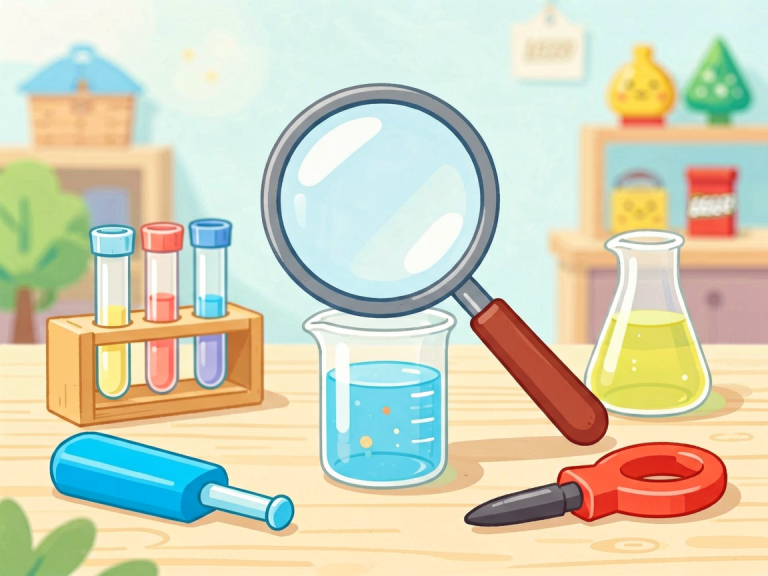
Nothing says “experiment” like a test tube and a bubbling liquid. Chemistry sets have evolved dramatically from the simple baking soda volcanoes of the past. Modern kits like the Thames & Kosmos Chem C3000 or the Mel Science Chemistry Kits include dozens of real experiments—from creating polymers to analyzing pH levels—with materials that are both safe and scientifically rigorous. Biology kits, such as National Geographic’s Break Open Geodes or 4M Crystal Growing Experiment, allow children to observe natural processes firsthand. These toys teach observation, patience, and the joy of unexpected outcomes—like when a crystal forms in an unexpected shape or a color change reveals a chemical reaction.
Physics and Engineering Building Sets
For the child who loves building contraptions and testing limits, physics-based toys provide endless experimental opportunities. Snap Circuits is a classic example: children snap together electronic components to create working radios, doorbells, and alarms. Each configuration is an experiment in conductivity and circuit design. More advanced options like LEGO Mindstorms or Makeblock mBot introduce robotics and programming, allowing kids to build robots and then tweak their code to change behavior. Engineering kits like K’NEX Education or Strawbees encourage structural experiments—what shape holds the most weight? How does a cantilever behave? These toys make abstract physics concepts like force, torque, and leverage wonderfully concrete.
Coding and Computer Science Toys
Experimentation isn’t limited to the physical world; digital experiments are equally valuable. Toys like Osmo Coding or Botley the Coding Robot use tangible blocks or physical programming sequences to teach logic gates and debugging. Children can experiment by changing a command and observing the robot’s different response. More advanced coding kits, such as Raspberry Pi starter sets or Arduino beginner kits, allow kids to wire sensors and write code to create interactive projects—a weather station, a motion-activated light, or a simple game controller. These toys demystify technology and show that coding is a process of trial and error.
Earth and Space Science Kits
Kids fascinated by volcanoes, earthquakes, or the solar system can explore earth science through experiment-based kits. 4M’s Volcano Making Kit is a perennial favorite, but there are also kits that simulate tornadoes in a bottle, model tectonic plate movements, or build working seismographs. Astronomy kits, such as Orion StarBlast telescopes or Thames & Kosmos Space Exploration sets, allow children to experiment with lenses and filters, track moon phases, or even grow “space” crystals under conditions that mimic low gravity. These toys nurture a sense of wonder about the universe while teaching systematic observation.
How to Choose the Right STEM Toy for Your Young Experimenter
With so many options, parents and educators may feel overwhelmed. Here are practical criteria to narrow the field.
Follow the Child’s Interests
The best STEM toy is one that aligns with the child’s existing passions. If they love mixing things, a chemistry set is a natural fit. If they are obsessed with machines, a robotics kit will keep them engaged for hours. For the child who loves nature, a biology kit with a microscope or a terrarium-building set might be perfect. Pay attention to what they naturally gravitate toward—then find a toy that deepens that curiosity.
Consider the Level of Parental Involvement
Some STEM toys are designed for independent play, while others require adult guidance. For very young children, a parent-supervised chemistry experiment can be a wonderful bonding experience. For older kids, independence is key. Read reviews and product descriptions to gauge how much adult help is needed. Kits that include clear, illustrated instruction manuals often promote self-directed learning.
Balance Open-Ended Play with Structured Goals
While experiment-loving kids thrive on autonomy, they also benefit from occasional structure that teaches specific skills. A good STEM toy strikes a balance: it offers guided projects (like building a specific circuit) while leaving room for free exploration (like inventing your own circuit). Look for kits that include at least 10–20 guided experiments plus blank templates for custom creations.
Prioritize Quality and Durability
Children who love experiments often use toys intensively. Invest in kits with sturdy components, well-fitting connectors, and replaceable parts. Avoid cheap plastic sets that break easily, as frustration can dampen enthusiasm. Brands like Thames & Kosmos, LEGO Education, Snap Circuits, and littleBits are known for reliable, long-lasting materials.
The Role of Parents and Educators in Enhancing the Experience
A STEM toy is only a tool; the real magic happens when a supportive adult guides the exploration. Instead of providing answers, ask open-ended questions: “What do you think will happen if we add more vinegar?” “Why do you suppose the car didn’t move?” “Can you think of another way to make the light brighter?” This approach mirrors the scientific method and encourages deeper thinking. Also, allow children to fail gracefully. If an experiment doesn’t work, resist the urge to fix it immediately. Instead, help them analyze what went wrong and try a different approach. Celebrate mistakes as learning opportunities. Finally, connect the toy experiments to real-world phenomena. If a child builds a simple electromagnet with a Snap Circuits set, point out how the same principle powers junkyard cranes and MRI machines. This contextual learning makes STEM feel relevant and exciting.
Conclusion: Plant Seeds, Watch Them Grow
STEM toys for kids who love experiments are far more than playthings. They are passports to a world of inquiry, resilience, and joy. Whether mixing chemicals, coding a robot, or building a bridge, children who engage in experimental play are not just learning facts—they are internalizing the very process of discovery. The right toy can ignite a lifelong passion for science and engineering, turning a curious child into a confident problem-solver. As parents and educators, our role is to provide the tools and the space for that exploration, then step back and let the experiments begin. The next great inventor, engineer, or scientist might just be a child with a chemistry set and a burning question: “I wonder what happens if…” So choose wisely, encourage bravely, and watch their young minds bloom.