Ignite Curiosity: The Ultimate Guide to Birthday Gifts for Kids Who Love Science
Finding the perfect birthday present for a child can be a delightful challenge, but when the child in question has a passion for science, the options become both exciting and vast. Science-loving kids are naturally curious; they ask “why” and “how” with genuine wonder, and they view the world as an endless experiment. The best gifts for these young minds are not just toys—they are tools that fuel discovery, critical thinking, and hands-on learning. Whether your budding scientist is five or fifteen, selecting a gift that matches their interests and age can spark a lifelong love for inquiry. This guide categorizes thoughtful, engaging, and educational birthday gifts that will make any science enthusiast’s day unforgettable.
1. Hands-On Experiment Kits for Every Age
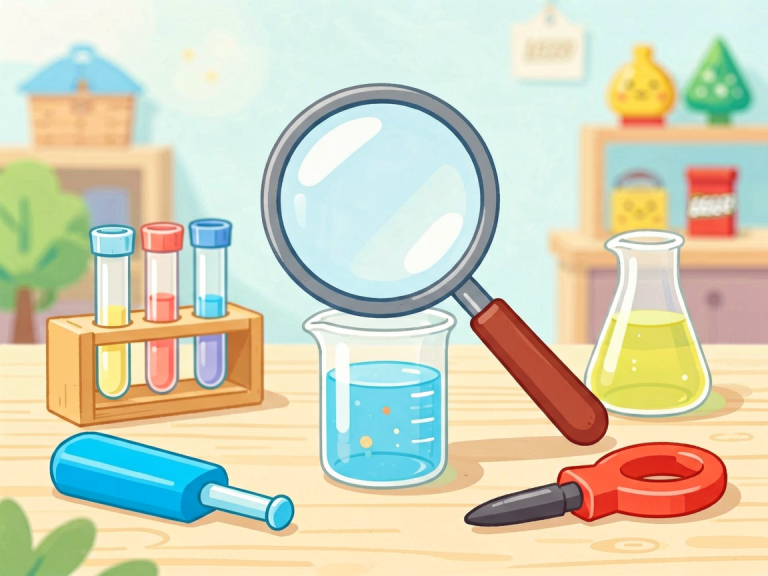
Nothing beats the thrill of mixing chemicals, growing crystals, or building a working volcano. Experiment kits are the classic go-to, but today’s options go far beyond the baking-soda-and-vinegar reaction. For younger children (ages 4–8), look for kits that emphasize simple, safe, and visually striking results. A “Magic Science” kit that includes color-changing liquids, glow-in-the-dark slime, and test tubes with kid-friendly instructions can captivate a preschooler’s imagination while teaching basic concepts like pH and polymers.
For elementary school kids (ages 8–12), invest in more sophisticated sets. National Geographic’s Mega Science Series, for example, offers earth science kits that let children dig for real fossils, grow geodes, and examine specimens under a microscope. Similarly, Thames & Kosmos produces award-winning kits that cover topics from chemistry to renewable energy. A “Chemistry Chem C3000” set (for older kids) includes over 300 experiments and teaches proper lab techniques—perfect for a child who dreams of becoming a scientist. These kits often come with durable equipment and detailed booklets that explain the science behind each step, encouraging independent learning.
For teenagers (ages 13+), consider advanced kits like the “Physics Workshop” from Elenco or the “SmartLab Toys Stealth Physics Lab.” Some teens might prefer electronic kits such as Snap Circuits or Arduino starter sets, which blend physics, engineering, and programming. The key is to choose a kit that challenges without frustrating—too simple, and it feels like a baby toy; too complex, and it gathers dust. Reading reviews and checking the recommended age range ensures a perfect fit.
2. Microscopes and Telescopes: Opening Windows to the Invisible and the Universe
A microscope or telescope is not just a gift; it’s an invitation to explore realms beyond the naked eye. For kids who love biology, a good-quality microscope can reveal the intricate structure of a leaf, the cells in an onion skin, or the tiny organisms in a drop of pond water. Beginners should start with a model that has adjustable magnification (100x to 1200x) and a sturdy, child-friendly design. The “AmScope M30-ABS-KT2-W” is an excellent entry-level option, offering a metal frame, LED illumination, and prepared slides. Pair it with a set of blank slides and a guidebook on what to look for, and the child will have hours of investigative fun.
For astronomy enthusiasts, a telescope opens up the night sky—planets, craters on the moon, star clusters, and even distant galaxies. Avoid cheap department-store telescopes that frustrate with flimsy tripods and poor optics. Instead, invest in a beginner refractor telescope like the “Celestron PowerSeeker 70EQ,” which offers easy setup and enough power to see Saturn’s rings. Alternatively, a tabletop Dobsonian model (e.g., the “Orion StarBlast 4.5 Astro”) provides a wide field of view and is simple for kids to aim and focus. Remember to also gift a star chart or a smartphone app like SkyView Lite to help them navigate. The moment a child sees the moons of Jupiter for the first time is a memory that can fuel a passion for astronomy for years.
3. Coding and Robotics: Merging Science with Technology
Today’s scientific frontier increasingly relies on programming and engineering. Gifts that teach coding and robotics blend logic, creativity, and problem-solving—all essential STEM skills. For younger children (ages 5–9), screen-free coding toys such as “Botley the Coding Robot” or “Learning Resources Code & Go Robot Mouse” introduce basic algorithmic thinking through simple commands and physical play. These toys don’t require a tablet or computer, making them accessible and screen-time-friendly.
For ages 8–14, programmable robots like “Sphero Mini” or “Lego Boost Creative Toolbox” offer a natural progression. Sphero is a small, app-enabled robot ball that can be coded to roll, change colors, and react to its environment. Kids can learn block-based coding (similar to Scratch) and even transition to JavaScript as they grow. Lego Boost, on the other hand, lets children build five different models (a robot, a cat, a guitar, etc.) and then program their movements using a straightforward drag-and-drop interface. This combination of building and coding reinforces engineering concepts.
Older kids (12+) might enjoy more advanced platforms like the “BBC micro:bit” starter kit, which includes sensors, LEDs, and buttons. They can create wearable electronics, simple games, or even a homemade weather station. Adding a “Raspberry Pi 4” starter kit opens the door to learning Python and building custom projects—from a retro gaming console to a smart mirror. These gifts not only teach technical skills but also cultivate patience and resilience when debugging code.
4. Science Books and Magazine Subscriptions: Fueling the Mind
While physical experiments are irreplaceable, books provide the foundational knowledge that turns curiosity into deep understanding. A beautifully illustrated science encyclopedia can become a child’s treasure. “The Science Book” by DK Publishing covers topics from atoms to zoology with stunning graphics and clear explanations. For younger readers, “Ada Twist, Scientist” by Andrea Beaty inspires with its story of a girl who asks endless questions and conducts experiments—a powerful message that science is for everyone.
Non-fiction series like “The Magic School Bus” (updated for today’s kids) or “National Geographic Kids’ Everything Space” make complex ideas accessible. For aspiring chemists, “The Elements: A Visual Exploration of Every Known Atom in the Universe” by Theodore Gray is a coffee-table-style book that turns the periodic table into a feast for the eyes.
Another brilliant gift is a subscription to a science magazine. “Muse” (for ages 9–14) features articles on archaeology, astronomy, and engineering, often with DIY projects and puzzles. “National Geographic Kids” is perfect for younger children, with animal facts, experiments, and stunning photography. Subscriptions arrive monthly, extending the gift’s excitement throughout the year. Each issue feels like a new surprise, reinforcing the idea that science is a constantly unfolding adventure.
5. Science-Themed Experiences and Field Trips
Sometimes the most memorable birthday gift isn’t an object but an experience. Consider giving a “pass to explore” at a local science center, planetarium, or natural history museum. Many institutions offer birthday party packages that include a private show or workshop. Alternatively, a family membership to a science museum provides unlimited visits—perfect for a child who never tires of the hands-on exhibits.
For the ultimate experience, look for science-related events in your area: a rocket-building workshop, a robotics competition, a fossil dig at a nearby park, or a citizen-science project like a butterfly count. Some organizations also offer virtual experiences—for example, a live-streamed dissection or a Q&A with a real astronaut. These gifts create lasting memories and show the child that science is a living, social endeavor, not just something in a textbook.
If your budget allows, consider a science-themed vacation destination, such as the Kennedy Space Center in Florida, the Smithsonian National Air and Space Museum in Washington D.C., or the CERN laboratory in Switzerland (for older teens). Even a day trip to a local observatory or a nature center with a geology walk can feel like a birthday adventure.
Conclusion: Choosing the Gift That Sparks Wonder
The best birthday gift for a child who loves science is one that matches their current level of curiosity and hands-on ability. A five-year-old might delight in a simple crystal-growing kit, while a teenager might treasure a Raspberry Pi. The common thread is engagement: the gift should invite them to ask their own questions, test their own ideas, and feel the joy of discovery. Avoid the temptation to buy the flashiest or most expensive item—instead, focus on quality, safety, and the potential for repeated use.
Remember, too, that the presentation matters. Wrap the gift in a “scientific” way: include a note written in invisible ink (use lemon juice and heat to reveal) or place the gift inside a box labeled “DO NOT OPEN: Experiment in Progress.” Such playful touches amplify the excitement. By choosing a science-focused birthday gift, you’re not just giving a present—you’re nurturing a mindset that values evidence, creativity, and lifelong learning. And in a world that increasingly depends on scientific literacy, that might be the most valuable gift of all.