Introduction
Title: A Complete Guide to Choosing Pretend Play Sets for Newborns: Safety, Sensory Stimulation, and Developmental Milestones
When we think of pretend play, images of toddlers donning superhero capes or preschoolers hosting tea parties often come to mind. But what about newborns? Can a baby who has just entered the world, still adjusting to the rhythm of breathing and feeding, benefit from pretend play sets? The answer is a resounding yes—though the definition of “pretend play” for a newborn is vastly different from that for an older child. For a newborn, pretend play is not about acting out complex scenarios; it is about laying the foundational building blocks for imagination, social interaction, and cognitive development. Choosing the right pretend play sets for a newborn requires careful consideration of safety, sensory engagement, and age-appropriate stimulation. This guide will walk you through every crucial factor to ensure that the toys you introduce not only captivate your baby’s budding curiosity but also support their rapid physical and neural growth during the first few months of life.
Understanding Pretend Play in the Context of Newborns
For a newborn, all play is sensory exploration. Their world is a whirlwind of new sights, sounds, textures, and smells. Pretend play at this stage is less about “acting as if” and more about the early mimicry and cause-and-effect experiences that will later blossom into full-blown imagination. A simple soft doll, a crinkly fabric book, or a mirror that reflects a curious face can become the first tools of pretend play. Newborns observe caregivers’ facial expressions, imitate sounds, and react to objects that mimic real-life items—like a tiny plush cup or a soft rattle shaped like a telephone. These items encourage the baby to practice eye tracking, grasping, and even early vocalizations. The key is to recognize that a newborn’s pretend play set should be a gateway to sensory-rich interactions, not a complex multi-piece ensemble. When selecting such sets, parents should look for items that invite the baby to explore through multiple senses, while also being gentle enough for the most delicate skin and developing motor skills.
Key Safety Considerations for Newborn Toys
Safety is the paramount concern when choosing any toy for a newborn, and pretend play sets are no exception. Newborns explore primarily through mouthing—they will put everything into their mouths. Therefore, all materials must be non-toxic, BPA-free, phthalate-free, and free from sharp edges or small parts that could pose a choking hazard. The toy should be large enough that it cannot fit entirely into the baby’s mouth, yet light enough that the baby can hold it (or attempt to) without risk of injury. Additionally, check for secure stitching and avoid any embellishments like buttons, beads, or ribbons that could detach. Washability is also critical; newborn toys should be machine washable or easily wiped clean to maintain hygiene. Further, consider the weight of the set—a heavy toy falling on a newborn can cause harm. Finally, ensure that any electronic components (e.g., musical features) are securely enclosed and that volume levels are low to protect sensitive hearing. Always verify that the toy meets safety standards such as ASTM (American Society for Testing and Materials) or EN71 (European toy safety standard). Remember, a safe toy is one that allows the baby to explore without constant adult supervision for fear of accidents.
Essential Features of Ideal Pretend Play Sets for Newborns
Beyond safety, the best pretend play sets for newborns share several essential features that promote development. First, they should offer high-contrast colors and patterns. A newborn’s vision is still developing; high-contrast black, white, and red patterns are most effective at capturing attention and strengthening visual tracking. Second, incorporate a variety of textures—soft fleece, crinkly fabric, smooth wood (with non-toxic finish), and bumpy silicone. Touching different surfaces stimulates the tactile senses and helps build neural connections. Third, include elements that produce gentle sounds, such as soft rattles, bells, or crinkle paper. Auditory stimulation aids in hearing development and cause-and-effect learning. Fourth, look for mirrors. Newborns are fascinated by faces, and a safe, unbreakable mirror can encourage self-recognition and social interaction. Fifth, the set should be easy to grasp. Newborns have a strong palmar reflex and will hold onto objects placed in their hands; toys with rings, loops, or soft handles support this natural reflex. Finally, consider the portability of the set. A compact, clutter-free design that can be taken to different rooms or used on a play mat makes it convenient for daily use.
Top Types of Pretend Play Sets Recommended for Newborns
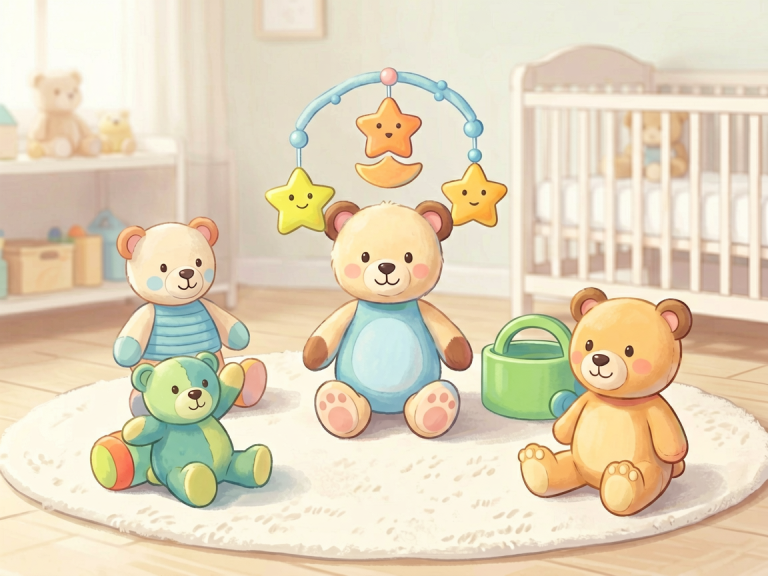
While the market is flooded with options, a few specific types of pretend play sets stand out as ideal for newborns. The first is the “soft doll” set: a simple, stuffed cloth doll with embroidered eyes and a smiling mouth, dressed in washable fabric. The newborn can hold it, pat it, and later begin to imitate feeding or rocking motions as they grow. Another top choice is a “pretend food” set made entirely of soft, squeezable fabric—think a plush apple, a crinkly carrot, or a soft bottle. These items allow the baby to explore shapes and colors safely. A third type is the “sensory play mat” that combines elements of pretend play: one section might have a crinkly house, another a mirror that looks like a window, and yet another a squeaky animal. This all-in-one set encourages tummy time and reaching. The “ring stack” is also worth mentioning; while not traditionally a “pretend” item, it can be introduced as a tower for a pretend crown or a stacking game. Finally, a set of soft blocks with patterns and mirrors serves as an ideal multi-purpose toy. When choosing among these, prioritize sets that offer a mix of textures and sounds without overwhelming the baby. Overstimulation can be counterproductive, so a set with two to three distinct elements is usually more beneficial than a 20-piece collection.
How to Evaluate and Select the Right Set
With countless options available, how do you narrow down your choice? Start by observing your newborn’s current developmental stage. A one-month-old benefits from high-contrast cards or a simple black-and-white rattle, whereas a three-month-old may be ready for a soft doll or a textured play mat. Next, assess your living space. If you have limited floor area, a compact set that can be used on a changing table or in a bassinet is preferable. Read product reviews from other parents, especially those that mention durability and ease of cleaning. Another practical tip: choose sets that grow with the baby. For instance, a set of soft blocks can be used for squeezing at three months, stacking at six months, and sort-by-color games at nine months. Additionally, consider your baby’s temperament. A very sensitive baby might be overwhelmed by loud sounds or bright lights, while a more energetic baby may prefer toys with motion or music. If possible, test the toys in person to feel their weight and texture. Finally, trust your instincts as a parent—you know your baby’s cues best. A set that you genuinely enjoy using with your child will lead to more engaged, positive interactions.
Conclusion
Choosing pretend play sets for newborns is not about purchasing the trendiest or most elaborate toys. It is about selecting safe, sensory-rich, and thoughtfully designed items that spark early curiosity and lay the groundwork for imaginative play. From high-contrast visuals to gentle sounds and varied textures, each element plays a role in supporting your newborn’s cognitive, motor, and emotional development. Remember that the best “pretend” play at this stage is often the interaction between you and your baby—your voice, your smile, and your gentle guidance bring the toy to life. So, take your time, research well, and choose with love. The right pretend play set will not only entertain your newborn but also become a cherished part of your bonding journey, building memories that last far beyond infancy. Happy playing!