Melodies for the Tiniest Ears: A Comprehensive Guide to Choosing Musical Toys for Newborns
Introduction
The arrival of a newborn transforms a household into a symphony of new sounds: soft coos, gentle lullabies, the rhythmic hum of a rocking chair. Among these, the deliberate introduction of musical toys can be one of the most enriching experiences for both parent and child. Music is not merely entertainment for infants; it is a fundamental language that stimulates brain development, fosters emotional bonding, and lays the groundwork for auditory processing. However, the market is flooded with colorful, noisy, and often overwhelming options, making the simple act of choosing a musical toy a surprisingly complex decision. For a newborn whose sensory systems are still developing, the wrong toy can be overstimulating or even unsafe. This guide aims to equip parents and caregivers with the knowledge to select musical toys that are not only safe and age-appropriate but also genuinely beneficial for a baby’s early growth. From understanding the nuances of sound frequency to evaluating material safety, we will explore every critical factor so that the first notes your baby hears are harmonious, gentle, and perfectly tuned to their world.
Why Musical Toys Matter for Newborns
Before delving into the selection criteria, it is essential to appreciate why musical toys hold such significance in the first months of life. Newborns are born with an innate sensitivity to rhythm and melody. Research in early childhood development indicates that exposure to music can enhance neural connectivity, particularly in areas responsible for language acquisition and spatial reasoning. A simple musical mobile above the crib, for instance, can help a baby learn to track visual and auditory stimuli simultaneously, strengthening the coordination between eye and ear. Furthermore, music has a powerful soothing effect. The familiar refrain of a soft lullaby can reduce cortisol levels and help regulate a newborn’s erratic sleep-wake cycles. Musical toys also encourage cause-and-effect learning when a baby accidentally bats a hanging chime and hears a sound—a primitive discovery that sparks curiosity. Finally, shared musical moments—such as a parent humming along with a toy—deepen attachment and provide a sense of security. Thus, the right musical toy is not a frivolous purchase but a developmental tool.
Key Safety Considerations for Newborn Musical Toys
Safety is the non-negotiable foundation of any toy selection for a newborn. At this age, infants explore the world primarily through their mouths and their hands, meaning that any object within reach must be free of hazards. When evaluating a musical toy, first examine its construction for small parts. Buttons, beads, or detachable components that could become choking hazards are unacceptable. The toy should be made of non-toxic materials, ideally labeled as BPA-free, phthalate-free, and lead-free. Check for certification marks such as ASTM (American Society for Testing and Materials) or CE (Conformité Européenne) on the packaging. Another critical aspect is the volume level. Newborns have highly sensitive hearing, and prolonged exposure to sounds above 85 decibels can damage their delicate inner ear structures. A good rule of thumb is to test the toy yourself: hold it at arm’s length from your ear; if it sounds uncomfortably loud, it is too loud for the baby. Many parents prefer toys with adjustable volume controls or those that produce soft, ambient sounds rather than sudden blasts. Additionally, ensure that the toy has no sharp edges, pinch points, or long cords that could pose strangulation risks. Battery compartments should be secured with screws to prevent a baby from accessing small batteries, which are both choking hazards and toxic if ingested.
Understanding Developmental Stages and Musical Needs
A one-month-old and a six-month-old have vastly different abilities and interests, yet many musical toys are incorrectly marketed for “ages 0+” without clear differentiation. For a newborn in the first three months, vision is blurry and limited to about 8–10 inches, while hearing is already well-developed. Therefore, the ideal musical toy for this stage is one that provides gentle, repetitive auditory stimulation without requiring visual focus or manual manipulation. Think of a wind-up musical box that plays a single, calm melody for 30–60 seconds, or a soft plush toy that emits a quiet lullaby when squeezed. As the baby enters the 3–6 month stage, they begin to grasp objects and show interest in cause-and-effect. Here, musical toys that respond to touch—like a gentle rattle that makes a soft jingle, or a sensory ball that plays a note when rolled—become appropriate. By 6–12 months, babies can sit up, transfer objects between hands, and deliberately shake or bang items. At this point, more interactive musical toys such as small drums, xylophones with rounded mallets, or activity centers with buttons that play different melodies can be introduced. Always observe your baby’s cues: if they turn away, cry, or seem agitated when the toy is active, it may be too stimulating.
Types of Musical Toys Suitable for Newborns
The variety can be overwhelming, so breaking down the categories helps narrow the search. Here are the most suitable types:
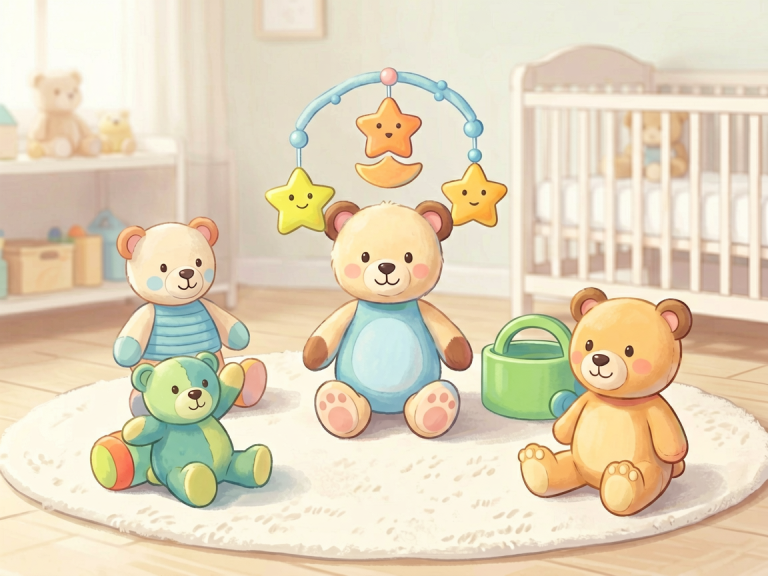
- Musical Mobiles: Attached to the crib or playpen, these toys typically feature hanging figures that rotate while playing a soft tune. Look for mobiles with a volume control or a timer that automatically shuts off after 10–15 minutes to prevent overstimulation. The melodies should be classical or nature-based (e.g., Brahms’ Lullaby), not jarring pop songs.
- Soft Musical Plush Toys: Stuffed animals that play melodies when squeezed or when a pull-string is tugged. Ensure the music box mechanism is securely enclosed inside the fabric and that the fabric is machine-washable. Avoid those with loud, electronic voice recordings; instead, prefer instrumental versions.
- Rattles and Shakers: While traditional rattles produce sound, musical versions can have gentle chimes or bells. Choose rattles made of silicone or soft plastic with smooth surfaces, and avoid those with loose filling that could leak.
- Activity Gyms with Musical Elements: Many baby play mats include hanging toys that play music when batted. The best ones have detachable musical components so you can remove them for closer play. Verify that the hanging strings are short and securely fastened.
- Sensory Musical Instruments: Small, lightweight instruments designed for babies, such as maracas, tambourines, or bells on a wrist strap. Ensure the sound is soft and not harsh. A set of wooden claves (small rhythm sticks) can be used by an adult to create gentle tapping patterns while the baby watches.
Evaluating Sound Quality and Volume
Not all music is created equal. A toy that plays a tinny, distorted version of “Twinkle Twinkle Little Star” may actually irritate rather than soothe. When choosing a musical toy, listen to the audio sample if possible. The sound should be clear, warm, and without static or harsh treble. Acoustic sounds (like a real music box or a hand-cranked glockenspiel) are generally superior to synthesized electronic sounds because they have a natural richness that appeals to infant ears. Many experts recommend avoiding toys that feature rapid tempo changes or multiple competing sounds, as these can overwhelm a newborn’s auditory cortex. Instead, opt for simple, repetitive melodies with a slow tempo—think of the steady, predictable rhythm of a heartbeat or a rocking chair. Some high-quality musical toys offer a choice of classical pieces specifically composed for infant development, such as those by Mozart or Bach arranged for babies. Also consider the toy’s ability to be turned off easily: a night-time lullaby that cannot be silenced without removing batteries is a recipe for frustration.
Material and Durability
Newborns are messy; they drool, spit up, and chew on everything. Therefore, material choice directly impacts hygiene and longevity. The soft components of a musical toy—fabric, plush, stuffing—should be machine-washable in hot water. Avoid toys with glued-on pieces that may detach after a few washes. For plastic components, look for high-grade, shatter-resistant ABS plastic. Wooden musical toys are an excellent option as they are durable, biodegradable, and often produce a warmer sound than plastic. However, ensure that the wood is smooth, splinter-free, and finished with a non-toxic, water-based paint or sealant. Avoid painted toys that might chip. Electronic musical toys with batteries should have a secure battery compartment that requires a screwdriver to open. Additionally, check the seams of plush toys for double stitching; loose threads can wrap around tiny fingers or be ingested.
Interactive vs. Passive Musical Toys
One essential distinction is between interactive toys (those that respond to the baby’s action) and passive toys (those that play music automatically or are activated by a parent). For a newborn under three months, passive toys are generally more appropriate because the baby lacks the motor control to initiate interaction. A wind-up carousel that plays music while the baby simply lies and watches is ideal. As the baby grows, interactive toys become valuable for teaching cause and effect. However, be wary of toys that require too much force or precision. A toy that only plays music when a tiny button is pressed will frustrate a 4-month-old who cannot yet isolate their fingers. Instead, choose toys with large, easy-to-press surfaces or ones that respond to gross motor movements like shaking or batting. A good compromise is a toy that offers both modes: it can play music continuously (parent-activated) and also respond to the baby’s random touches.
Tips for Introducing Musical Toys to Newborns
Even the best toy can be ineffective if introduced incorrectly. Start slowly: play the musical toy for only 30–60 seconds at a time during alert, calm periods—never when the baby is already fussy or overtired. Observe your baby’s reaction. A content baby may look toward the source of sound, smile, or become still. A stressed baby may arch their back, cry, or turn their head away. If the latter occurs, reduce the volume or put the toy away for a few days. Rotate toys to prevent habituation; a musical box that plays the same tune every night may become background noise rather than a source of stimulation. Use the toy as a bonding tool: hold the baby in your arms and sing along softly, or dance gently while the toy plays. This multimodal engagement—hearing music, feeling your touch, and seeing your face—amplifies the benefits. Finally, always remember that the best “musical toy” is your own voice. No gadget can replicate the comfort of a parent humming a familiar song.
Conclusion
Choosing a musical toy for a newborn is a delicate balance of safety, developmental appropriateness, and sensory quality. Far from being a trivial purchase, it is a first step in nurturing a lifelong relationship with sound and rhythm. By prioritizing non-toxic materials, safe volume levels, age-appropriate interactivity, and high-quality sound, parents can provide their infants with a positive auditory environment that supports cognitive growth and emotional well-being. Always trust your instincts and your baby’s cues; if a toy brings a glimmer of recognition or a peaceful sigh, it has done its job. In the quiet moments of early parenthood, the right melody can become a cherished thread in the fabric of family life—a tiny note in the grand symphony of growing up.