Mistakes to Avoid When You Pick Birthday Toys: A Comprehensive Guide for Thoughtful Gifting
Selecting the perfect birthday toy for a child is far more complex than it appears. What seems like a simple trip to the store or a few clicks online can quickly become a minefield of poor decisions—toys that break within hours, gifts that gather dust in the corner, or worse, items that pose safety risks. Every year, millions of parents, relatives, and friends fall into predictable traps that turn a joyous occasion into a source of frustration. To help you navigate this challenging landscape, here are the most critical mistakes to avoid when picking birthday toys, organized by category for easy reference.
Mistake 1: Ignoring the Child’s Developmental Stage
One of the most common errors is choosing a toy based solely on the child’s chronological age without considering their actual developmental abilities. A toy that is too advanced will overwhelm and frustrate the child, while one that is too simple will bore them instantly. For example, giving a complex Lego Technic set to a four-year-old who still struggles with fine motor skills is a recipe for tears and scattered pieces. Conversely, offering a basic rattle to a seven-year-old is an insult to their growing intellect.
To avoid this mistake, research the child’s current interests and skills. Observe how they play with other toys. Do they enjoy building, pretending, solving puzzles, or physical activity? A three-year-old might thrive with a shape sorter or a simple wooden train set, while a six-year-old may be ready for cooperative board games or beginner science kits. Always check the manufacturer’s recommended age range, but use it as a guideline, not a rule. The best toy meets the child where they are developmentally and offers a gentle challenge.
Mistake 2: Prioritizing Price Over Quality and Safety
It is tempting to equate a high price tag with a high-quality gift, but this assumption is often misleading. Many expensive toys are overhyped, poorly constructed, or laden with unnecessary features that break quickly. On the other hand, cheap, bargain-bin toys frequently contain sharp edges, toxic paints, or small parts that pose choking hazards. The real mistake is failing to assess the core attributes of durability and safety.
Always inspect the toy for physical integrity. Are seams well-sewn? Are edges smooth? Does it have a strong, unpleasant chemical smell? Look for safety certifications such as ASTM (American Society for Testing and Materials) or CE marks, which indicate compliance with international safety standards. Avoid toys with detachable small parts for children under three. Remember that a well-made wooden toy that lasts for years can be far more valuable than a flashy plastic gadget that stops working after two weeks. Spending more on a safe, sturdy product is never a mistake.
Mistake 3: Falling for the Hype of “Educational” Labels
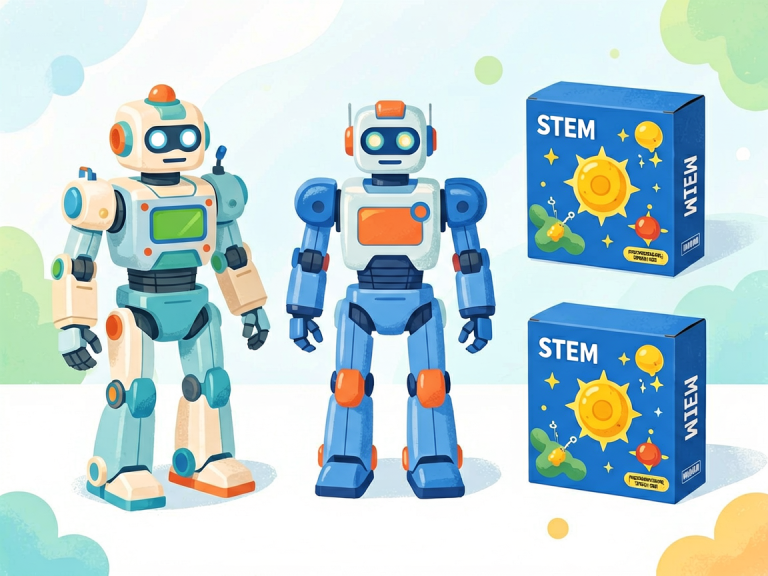
In today’s marketplace, nearly every toy claims to be “educational” or “STEM-based.” Parents and gift-givers are often guilted into buying these products, thinking they are investing in the child’s future. However, many so-called educational toys are little more than gimmicks. A toy that purports to teach coding but merely lights up when a button is pressed offers no real learning value. Meanwhile, a simple set of building blocks, which has no fancy label, naturally fosters creativity, spatial reasoning, and problem-solving.
The mistake is assuming that learning must be explicit or technology-driven. True educational toys encourage open-ended play, experimentation, and imagination. Before purchasing, ask yourself: Does this toy require active engagement from the child, or does it do most of the work? Does it allow for multiple ways to play, or is it one-dimensional? Research shows that the most effective learning toys are often the simplest—dolls, art supplies, construction sets, and puzzles. Do not let flashy packaging and buzzwords fool you.
Mistake 4: Overlooking the Child’s True Interests in Favor of Your Own
It is natural to project your own childhood nostalgia or adult preferences onto the child. Maybe you loved trains as a kid, so you buy a train set. Maybe you think all girls should play with dolls, or all boys should play with action figures. But children are individuals with their own evolving tastes. Forcing a gift that aligns with your vision rather than the child’s interests is a fast track to disappointment.
The solution is simple: pay attention. Listen to what the child talks about. Notice what kind of play they initiate. If they are obsessed with dinosaurs, do not buy them a ballet kit. If they love drawing, a high-quality sketchbook and colored pencils outperform any pre-designed craft kit. Better yet, ask the parents or the child directly. A child who feels heard and respected will cherish a gift that reflects their unique personality. Gifting is an act of love, not a vehicle for your own preferences.
Mistake 5: Choosing Toys That Encourage Passive Consumption
In an age of screens, many toys have become digital babysitters. Electronic toys that sing, talk, or display lights may seem entertaining, but they often require little to no active participation from the child. The result is a child who watches the toy perform rather than using their own imagination or problem-solving skills. Studies have linked excessive passive play with reduced attention spans and delayed language development.
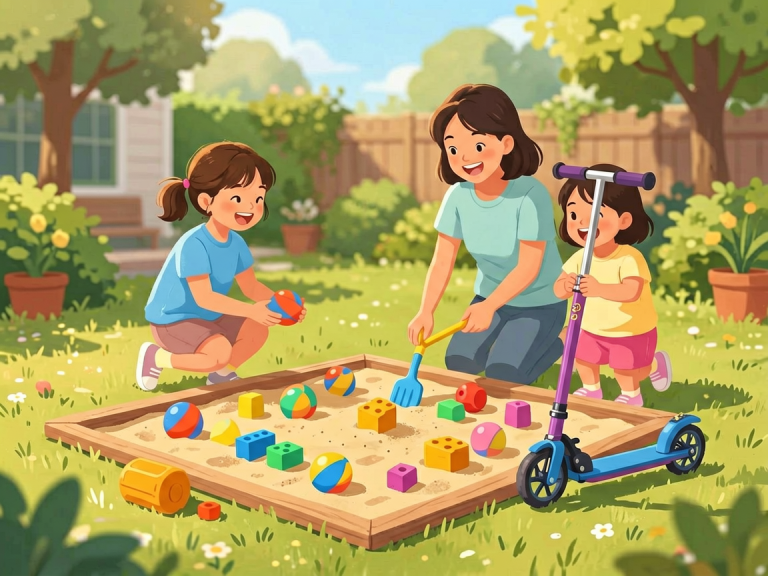
Avoid toys that do everything for the child. Instead, seek out open-ended toys that require the child to be the driver of the play. Examples include art materials, construction sets, puzzles, puppets, musical instruments, and outdoor play equipment like balls and jump ropes. Even board games that involve strategy and social interaction are far more beneficial than a tablet-based toy that simply responds to taps. The best toys are tools for the child’s own creativity, not performers.
Mistake 6: Neglecting to Check for Small Parts and Choking Hazards
This is a safety critical mistake that cannot be overstated. Every year, thousands of children are treated in emergency rooms for injuries caused by toy parts that become lodged in airways. The mistake is assuming that because a toy is sold in a store, it is automatically safe for all ages. In reality, choking hazards are pervasive, especially in toys marketed to older children that may end up in the hands of younger siblings.
Always read the warning labels carefully. If the toy contains small balls, marbles, or pieces that can fit inside a toilet paper roll, it is unsafe for children under three. Moreover, consider the play environment. Even a five-year-old might put small parts in their mouth when distracted. When in doubt, choose larger, sturdier toys for younger children. For older kids, verbally reinforce the importance of not putting toys in their mouths. Safety is not an afterthought—it is the foundation of a good gift.
Mistake 7: Buying Toys That Require Excessive Parental Involvement
Some toys are designed with the assumption that a parent will always be available to set them up, maintain them, or supervise complex instructions. While parental involvement is valuable, the reality is that busy families have limited time. A toy that requires constant adult intervention—like a complex chemistry set that needs supervision every minute, or an elaborate dollhouse that takes hours to assemble—can become a source of stress rather than joy.
Before purchasing, consider the time and energy needed. Is the toy something the child can play with independently after a brief introduction? Are the instructions clear and manageable? If the answer is “no,” and the parents are already stretched thin, that toy will likely end up untouched or used only during rare, scheduled playdates. Choose toys that empower the child to play on their own, fostering independence while giving caregivers a well-deserved break.
Mistake 8: Forgetting to Consider Storage and Cleanup
The aftermath of a birthday party is often a mountain of toys that quickly overwhelm the family’s living space. Many well-intentioned gifts come with dozens of small pieces, require special storage containers, or are difficult to clean. The mistake is buying a toy without thinking about where it will live. A large, motorized car that cannot fit in the toy box or a craft set that leaves glitter all over the carpet may be met with parental resentment.
Be mindful of the family’s home environment. Ask the parents about their storage preferences. Some families prefer minimalist toys that can be tucked away easily, while others have designated playrooms. Choose toys that have built-in storage solutions—like a train table with drawers or a dollhouse that folds shut. Also, consider noise level. A drum set might seem fun, but if the parents live in an apartment, it will quickly become a nuisance. Empathy for the caregivers is part of thoughtful gifting.
Mistake 9: Giving Toys That Are Too Trendy or Seasonal
Trends in children’s toys change rapidly—one year it is fidget spinners, the next it is slime, then pop-it fidget toys, then collectible blind bags. While a trendy toy might bring short-term excitement, it often loses appeal once the next craze arrives. The mistake is investing time and money in a fad that will be forgotten in weeks. Moreover, many trendy toys are poorly made and marketed aggressively, with little lasting play value.
Instead, consider timeless classics. Building blocks, classic board games like checkers or chess, art supplies, books, dolls, and outdoor sporting equipment have delighted children for generations. These toys adapt as the child grows and do not depend on a fleeting social media trend. If you must include a trendy item, pair it with a more enduring gift. The goal is to provide joy that lasts beyond the current season.
Mistake 10: Ignoring the Value of Experience-Based Gifts
Finally, the biggest mistake of all is assuming that a birthday gift must always be a physical object. Many children have too many toys already, and the most memorable experiences often come from activities rather than things. A trip to a children’s museum, a subscription to a craft kit delivery service, tickets to a theater show, or a family outing to a zoo can create lasting memories without cluttering the home.
Experience-based gifts also sidestep many of the issues listed above—no choking hazards, no storage problems, no obsolescence. Of course, not every gift needs to be experiential, but for the child who already has a overflowing toy box, an experience can be the most thoughtful choice. Combine it with a small, meaningful token—a book or a stuffed animal—to make it feel like a proper present. The key is to think beyond the box and consider what will truly enrich the child’s life.
Conclusion: Thoughtful Selection Leads to Joyful Giving
Choosing a birthday toy is an act of care that deserves careful thought. By avoiding these ten common mistakes—ignoring development, confusing price with quality, falling for educational hype, projecting your own preferences, promoting passive play, overlooking safety, demanding too much from parents, ignoring storage, chasing trends, and neglecting experiences—you can select a gift that is safe, engaging, and beloved. The perfect toy does not need to be expensive or flashy; it needs to resonate with the child’s unique world. Take the time to observe, ask questions, and reflect. Your effort will shine through, and the child’s delighted smile on their birthday will be your greatest reward.