Nature’s Lab: The Best STEM Toys for Kids Who Love the Outdoors
—
Introduction: Where Curiosity Meets the Wild
For generations, children have found their first classroom in the backyard, the forest, or the nearest creek. The smell of damp soil, the flutter of a butterfly, the intricate pattern of a leaf vein — these are not just fleeting moments of wonder; they are invitations to explore the fundamental principles of science, technology, engineering, and mathematics (STEM). Yet in an age when screens dominate childhood, parents and educators often struggle to keep that natural spark alive. The solution lies at the intersection of two powerful worlds: the unstructured magic of nature and the structured curiosity of STEM. The right toys can transform a simple walk in the woods into a lesson in physics, biology, and data analysis. In this article, we will explore a range of carefully selected STEM toys designed specifically for kids who are drawn to the natural world. These tools do not replace nature; they amplify it, turning every rock, puddle, and seedling into a hands-on laboratory.
—
Why Combine STEM with Nature?
Before diving into specific products, it is important to understand why this combination is so effective. Children who already love nature possess an innate drive to ask “why” and “how.” Why does that bird build its nest so high? How does a seed know which way is up? Traditional classroom STEM lessons often feel abstract, but when they are anchored in a real, observable environment, learning becomes visceral. Moreover, nature-based STEM toys encourage outdoor play, physical activity, and sensory engagement — all of which are critical for cognitive development and emotional well-being. By connecting mathematical patterns to pinecones or engineering principles to beaver dams, these toys help children see that science is not a separate subject but a way of understanding everything around them.
—
Category 1: Biology and Observation Kits
1.1 The Bug Hunter’s Magnifier Kit
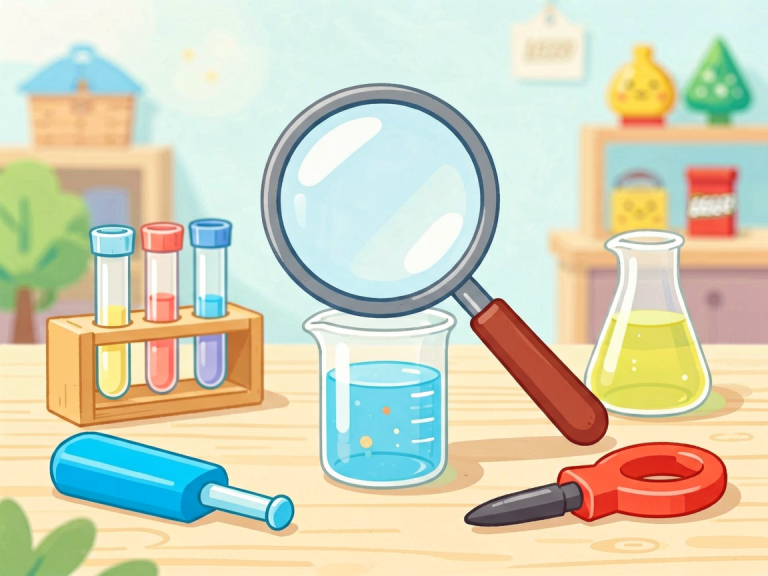
One of the simplest yet most effective STEM toys for nature-loving kids is a high-quality observation kit. A durable magnifying glass with a built-in LED light, a collection jar with a ventilated lid, and a small field journal can turn an afternoon in the garden into a scientific expedition. The best kits go a step further: they include a magnifying scope that attaches to a smartphone, allowing children to photograph and identify insects, leaves, or fungi using a companion app. This not only teaches classification (a core biological skill) but also introduces digital imaging and data recording. Kids learn to document location, weather conditions, and behavior — all foundational habits of real biologists.
1.2 Butterfly and Ladybug Growing Habitats
Raising living organisms from egg to adult is a powerful lesson in life cycles, metamorphosis, and ecosystem interdependence. A butterfly growing habitat typically comes with a small mesh enclosure, a feeding station, and a voucher to purchase live caterpillars. Children witness firsthand the transformation from larva to chrysalis to adult — a process that demonstrates metamorphosis, genetics, and the importance of host plants. Similarly, ladybug habitats allow kids to observe aphid predation, introducing concepts of food webs and biological pest control. These kits also teach responsibility: the child must maintain proper humidity, temperature, and food supply. Data collection (e.g., days between stages, size measurements) turns the experience into a mini science fair project.
1.3 Plant DNA Extraction and Germination Labs
For slightly older kids (ages 8–12), a home DNA extraction kit using fruits like strawberries or kiwis demystifies the building blocks of life. While not strictly a “nature” toy in the field, it connects directly to what they see in the garden. More advanced kits allow children to set up controlled germination experiments, testing variables such as light, water, and soil pH. They can graph the growth rate of beans under different conditions, learning about experimental design and statistical significance. The results have immediate relevance: why do some plants thrive in shade while others need full sun? Answering that question through hands-on experimentation is far more memorable than reading a textbook.
—
Category 2: Earth Science and Weather Tools
2.1 Build-Your-Own Weather Station
Meteorology is a perfect marriage of technology and nature. A DIY weather station kit typically includes an anemometer (wind speed), a rain gauge, a hygrometer (humidity), and a thermometer. Children assemble these components using simple circuits and then install them outdoors. Over weeks or months, they log daily data and learn to interpret patterns: why does it often rain after a sudden drop in barometric pressure? How does wind direction correlate with temperature? Many kits now include a Bluetooth module that syncs with a smartphone app, allowing kids to graph their local microclimate. This teaches data analysis, digital literacy, and the scientific method — all while keeping them engaged with the changing sky.
2.2 Erosion and Water Flow Simulation Kits
Kids who love streams and puddles will enjoy a hands-on erosion simulation kit. These sets include a shallow tray, sand or soil, small rocks, and a water pump. By manipulating the slope, water flow rate, and vegetation (often represented by small plastic plants), children can observe how rivers carve landscapes, how sediment deposits lead to deltas, and how plant roots prevent soil loss. This is a direct introduction to geomorphology and civil engineering. The toy often comes with a guide that asks open-ended questions: “What happens when you increase the water speed? Can you design a dam that slows erosion?” Such challenges encourage iterative problem-solving — the essence of engineering.
2.3 Crystal Growing and Rock Tumbler Sets
Geology toys have always been popular, but modern versions integrate STEM more deeply. A crystal growing kit allows children to create their own amethyst-like geodes using a supersaturated solution. They must follow precise measurements and timing, learning about solubility, saturation, and crystal lattice structures. A rock tumbler, meanwhile, teaches physical weathering: over several weeks, rough stones become polished gems, illustrating how rivers and waves smooth rocks over millennia. The best kits include a mineral identification chart and a streak test, offering a tactile introduction to chemistry and material science.
—
Category 3: Engineering and Physics in the Wild
3.1 Solar-Powered Bug and Plant Models
Renewable energy is a hot topic in STEM education, and nature provides the perfect context. Solar-powered toys — such as a small solar car that can be decorated like a ladybug or a solar-powered water pump for a mini pond — demonstrate the conversion of light energy into motion. Children can experiment with panel angles, cloud cover, and different light sources to measure efficiency. Some kits even include a small motor that powers a fan, simulating a wind turbine. By placing these toys in their natural surroundings (a sunny patch of grass), kids see how location and environment affect energy production. This merges environmental science with physics.
3.2 Build-a-Birdhouse or Bug Hotel with Measured Plans
A step beyond simple woodworking, a STEM-focused birdhouse kit includes architectural plans with scale drawings, angles, and load-bearing considerations. Children must measure, cut (with safe tools), and assemble parts that meet specific dimensions — for example, a 1.5-inch entrance hole to attract chickadees but exclude larger birds. This teaches applied geometry, material selection, and basic construction principles. A bug hotel kit, meanwhile, uses different compartments (pinecones, bamboo, straw) to attract beneficial insects. Designing the hotel requires understanding insect habitats and ecological niches. Both projects culminate in real-world observation: after installation, kids can record which species visit, creating a long-term citizen science data set.
3.3 Water Rocket and Catapult Kits for Outdoor Physics
While not exclusively nature-themed, water rockets and catapults thrive when used in a natural setting. A water rocket kit uses air pressure and water to launch a plastic bottle high into the air. Kids can modify the amount of water, the initial air pressure, and the fin shape to optimize flight trajectory. Launching in an open field allows them to measure distance and height using simple trigonometry (or phone apps). Similarly, a catapult or trebuchet kit teaches potential and kinetic energy, levers, and force. When children test these devices in a park, they learn to account for wind direction and surface friction — engineering in the real world.
—
Category 4: Technology and Nature Data Collection
4.1 Wildlife Camera Traps for Kids
Camera traps — motion-activated cameras that capture images of animals — are widely used in ecological research. Kid-friendly versions are now available with rugged casing, simple controls, and memory cards. A child can set up the camera in a backyard or local forest, baiting it with a bit of birdseed or a scent lure. Over a week, they may capture deer, raccoons, birds, or even foxes. The resulting photos serve as data points: species identification, time of day, frequency of visits, and behavior. This is an authentic introduction to wildlife biology and environmental monitoring. Kids can create a digital logbook and even contribute observations to platforms like iNaturalist, connecting their local findings to global biodiversity databases.
4.2 Smart Soil and Plant Sensors
The Internet of Things (IoT) has reached the garden. Affordable soil sensors measure moisture, temperature, light, and soil pH, and transmit data to a smartphone app. Children can place these sensors near different plants — a tomato in full sun, a fern in shade — and compare readings. They can set up alerts (e.g., “The soil is too dry!”) and learn to interpret graphs over days. This introduces concepts of sensor technology, data visualization, and plant physiology. For kids who prefer hands-on tinkering, some kits allow them to build their own sensor using a microcontroller like the micro:bit or Arduino, adding a coding element.
4.3 Nature Photography and Macro Lens Kits
While not strictly a “toy,” a kid-friendly digital microscope or clip-on macro lens for a tablet or phone turns nature exploration into a technological adventure. Children can photograph the scales on a butterfly wing, the structure of a spider web, or the patterns on a leaf. Many kits include software that allows them to measure objects, create time-lapse videos of flowers opening, or even stitch panoramic images of a tree canopy. This combines art, biology, and technology. Encouraging kids to maintain a digital nature journal — photos, captions, and scientific notes — fosters both writing and observation skills.
—
How to Choose the Right Toy: A Practical Guide
With so many options, parents and educators may feel overwhelmed. Here are a few criteria to consider:
- Age Appropriateness: A 9-year-old will benefit from a soil sensor kit, while a 5-year-old may be better suited to a simple magnifier and bug jar. Look for age ranges on the package, but also consider the child’s attention span and manual dexterity.
- Open-Ended vs. Structured Play: Some kits provide a single experiment, while others encourage ongoing exploration. For a child who loves to invent, choose a kit that allows modifications (e.g., a weather station that can be upgraded with additional sensors).
- Safety and Durability: Outdoor toys must withstand rain, mud, and drops. Avoid fragile plastics. Check for non-toxic materials if living organisms are involved.
- Integration with School Curriculum: Many of these toys align with Next Generation Science Standards (NGSS) or similar frameworks. A quick search can confirm whether a kit reinforces concepts the child will encounter in class.
- Sustainability: Opt for toys that use recycled materials or minimal packaging. Some companies plant a tree for every kit sold, reinforcing the nature-loving ethic.
—
Conclusion: Let Nature Be the Teacher
The best STEM toys for kids who like nature do not replace the wonder of a real forest or the thrill of turning over a log to find a salamander. Instead, they give children the tools to *understand* that wonder. A magnifying glass reveals hidden intricacies. A weather station turns the sky into a data set. A solar bug introduces clean energy. And a wildlife camera lets them see the secret lives of animals that share their world. When STEM is anchored in nature, it becomes not a subject to be studied but a language for listening to the earth. So the next time a child asks why the moon changes shape or where the river goes, hand them a kit — and then step outside. The classroom has no walls, and the lessons are infinite.