The Rise of Educational Robot Toys for Kids: Bridging Play and Learning in the Digital Age
In an era where technology permeates every aspect of daily life, the way children learn and play has undergone a profound transformation. Among the most exciting innovations in early childhood education is the emergence of educational robot toys for kids. These interactive, programmable, and often artificially intelligent companions are no longer mere novelties; they are powerful tools that combine the joy of play with the rigor of learning. From teaching basic coding logic to fostering social-emotional skills, educational robots are reshaping how children engage with science, technology, engineering, and mathematics (STEM)—and beyond. This article explores the multifaceted benefits, diverse types, selection criteria, and future potential of educational robot toys, offering parents and educators a comprehensive guide to integrating these smart devices into a child’s developmental journey.
The Pedagogical Value of Robot Toys: More Than Just Fun
Educational robot toys are designed with intentional learning outcomes, making them distinct from traditional static toys. One of their primary strengths lies in their ability to make abstract concepts tangible. For example, a robot that responds to simple commands like “forward,” “left,” or “repeat” introduces children to the basics of sequencing and algorithmic thinking without requiring them to stare at a screen. Through trial and error, kids learn cause and effect: if they program a robot to move in a certain way and it fails, they must debug their logic—a skill that mirrors real-world problem-solving.
Fostering STEM Literacy and Computational Thinking
The most celebrated benefit of educational robots is their role in introducing computational thinking. Toys like LEGO® Boost, Sphero Bolt, and Ozobot allow children as young as four to drag and drop visual blocks of code, gradually progressing to text-based languages like Python or JavaScript as they mature. This hands-on approach demystifies technology, showing children that they can be creators rather than passive consumers. Studies have shown that children who engage with programmable robots demonstrate higher confidence in math and science, and they develop persistence, as debugging code requires patience and resilience.
Social and Emotional Development Through Interaction
Beyond cognitive skills, robot toys also nurture social and emotional learning (SEL). Social robots like Cozmo and Moxie are designed to recognize faces, express emotions, and engage in conversation. They respond to a child’s tone of voice, celebrate achievements with joyful sounds, and even express “sadness” when ignored. These interactions help children practice empathy, turn-taking, and verbal communication. For children with autism spectrum disorder (ASD), certain robot toys have been used successfully in therapeutic settings to model social cues and reduce anxiety, because robots can offer consistent, predictable, and non-judgmental feedback.
A Spectrum of Options: Classifying Educational Robot Toys
The market for educational robot toys has expanded rapidly, and understanding the different categories can help parents choose the most appropriate tool for their child’s age and interests.
Screen-Free Robots for Early Learners (Ages 3–6)
For preschoolers, screen-free robots are ideal. Products like Fisher-Price’s Code-a-Pillar and Botley the Coding Robot rely on physical buttons, puzzle pieces, or light patterns to direct movement. They require no tablet or smartphone, encouraging gross motor skills and logical thinking while keeping young eyes away from blue light. These robots often feature colorful designs, friendly faces, and simple commands (e.g., “go forward three steps”). They introduce the concept of “input → output” in a playful, concrete manner.
Programmable STEM Kits for Elementary and Middle School (Ages 7–12)
As children grow, more complex robots become appropriate. Robotic kits like LEGO Mindstorms, VEX Robotics, and mBot require assembly, wiring, and programming. These kits teach mechanical engineering fundamentals along with coding. Children can build a robot that follows a line, avoids obstacles, or even picks up objects. The modular nature of these kits encourages creativity and iteration: a child can customize their robot, test it, then redesign it. Such projects often involve teamwork in school settings, fostering collaboration and communication.
AI-Powered Social Companions for Emotional Growth (Ages 5–10)
Social robots represent a unique subcategory. Moxie, created by Embodied, is a conversational robot designed to help children develop emotional intelligence through daily interactions. It uses AI to adapt its behavior based on the child’s responses, asks open-ended questions, and encourages mindfulness practices. Similarly, Kibo by KinderLab Robotics combines social interaction with programming—children can program Kibo to dance, sing, and express emotions. These robots are particularly valuable for children who may struggle with social skills, providing a safe space to practice conversation and empathy.
Selecting the Right Educational Robot Toy: A Practical Guide
With countless options on the market, choosing the right educational robot can be overwhelming. However, a few key criteria can simplify the decision-making process.
Age Appropriateness and Complexity
Always check the manufacturer’s recommended age range, but also consider your child’s individual developmental stage. A robot that is too advanced may frustrate a child, while one too simple may bore them. For a 4-year-old, a button-based robot is suitable; for a 10-year-old, a coding robot with sensors and a graphical interface offers appropriate challenge. It is wise to view child reviews and unboxing videos to gauge the real-world usability.
Learning Goals and Interests
Define what you want the robot to achieve. Are you primarily interested in coding skills? If so, a robot like Dash (by Wonder Workshop) offers a progressive coding curriculum with apps that grow with the child. Are you more focused on creativity? Then a buildable kit such as LEGO Boost allows kids to construct multiple projects (a guitar, a cat, a rover). For social–emotional goals, a robot like Moxie is purpose-built for that. Aligning the toy with your child’s natural interests—whether they love building, storytelling, or problem-solving—will increase engagement.
Screen Time and Connectivity
Consider how much screen time you are comfortable with. Some educational robots require a tablet or smartphone app to function, while others are completely autonomous. For families limiting screen exposure, robots that use physical coding blocks, cards, or colored markers (e.g., Ozobot) are excellent choices. Also, look for robots that offer offline modes or do not require constant internet connectivity, which can be a distraction.
Durability and Price
Children can be rough on toys. Look for robots made of sturdy plastic or with replaceable parts. Read reviews regarding battery life and ease of recharging. Prices range from under $30 for simple coding toys to over $500 for advanced robotics kits. Consider starting with an affordable option to test your child’s interest before investing in a more expensive system.
Real-World Integration: How Parents and Educators Can Maximize the Benefits
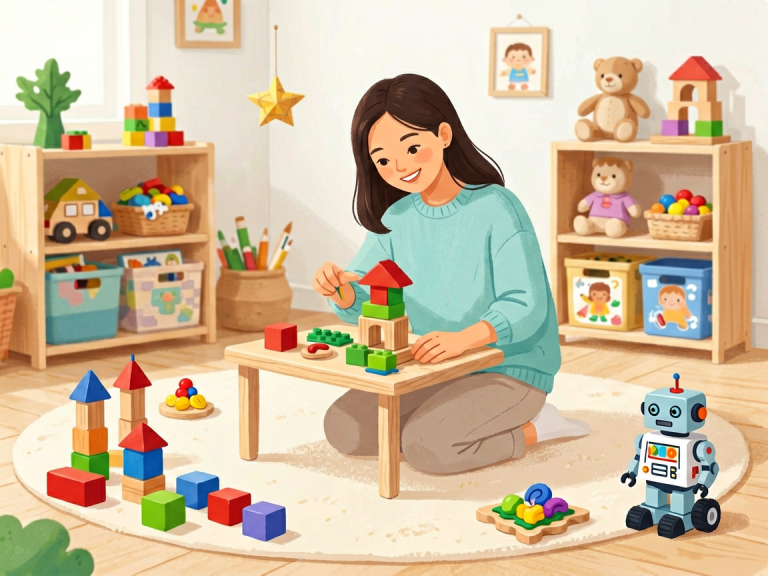
Purchasing a robot toy is only the first step; the manner in which it is used determines its educational impact. Parents should actively participate in the learning process, especially for younger children. Sitting with a child during their first few coding sessions, asking open-ended questions (“What do you think will happen if you change that block?”), and celebrating failures as learning opportunities can deepen the experience. Avoid turning robot play into a test or a chore—maintain a playful atmosphere.
In the Classroom
Many schools now incorporate robot toys into their STEM curriculum. Teachers use robots like Sphero to teach physics (velocity, acceleration) or Ozobot to illustrate artistic concepts (drawing lines of different colors triggers different robot behaviors). For collaborative projects, teams of students can work together to program a robot to navigate a maze. These activities naturally promote communication, division of labor, and critical thinking. Moreover, because robots provide immediate, tangible feedback, students can see the results of their code immediately, which reinforces learning.
Balancing Screen Time and Hands-On Play
Parents often worry that robot toys contribute to screen addiction. However, high-quality educational robots emphasize active screen use rather than passive consumption. For example, when a child programs a robot, they are actively designing, testing, and observing physical outcomes. That said, it is wise to set time limits and ensure that robot play does not replace outdoor physical activity, reading, or free imaginative play. A good rule is that robot toys should be one tool in a diverse play ecosystem.
The Future Landscape: Where Are Educational Robot Toys Headed?
The field of educational robotics is evolving at breakneck speed. Emerging trends suggest that future robots will be even more personalized, adaptive, and integrated into everyday life.
Artificial Intelligence and Personalization
Next-generation educational robots will leverage advanced AI to adapt to each child’s learning style, pace, and emotional state. Imagine a robot that notices a child is feeling frustrated and automatically simplifies the coding challenge, or one that detects boredom and introduces a new game mode. This level of personalization could revolutionize individualized learning, especially in classrooms with diverse student abilities.
Voice Assistants and Natural Language Interaction
While current robots often require touch or app input, future models will increasingly respond to natural language. Children will be able to say, “Robot, can you show me how to build a bridge?” or “Let’s play a math game,” and the robot will initiate a relevant activity. This removes the barrier of learning a specific coding interface, making robots accessible to even younger children.
Integration with Augmented Reality (AR) and Virtual Reality (VR)
Some companies are experimenting with combining physical robot toys with AR overlays. For instance, a child might build a robot car, then use a tablet to see a virtual track superimposed on the floor, or watch the robot’s “emotions” visualized as a virtual avatar. This blend of physical and digital can deepen engagement and provide multimodal learning.
Accessibility and Inclusivity
Efforts are underway to design robots that are inclusive for children with disabilities. For children with visual impairments, robots that provide audio feedback and tactile buttons are being developed. For those with motor challenges, voice-controlled robots offer an opportunity to program without fine-motor demands. As these technologies become more affordable, educational robots may become a staple in inclusive classrooms worldwide.
Ultimately, educational robot toys for kids are not a fleeting trend but a meaningful evolution in how we prepare children for a technologically driven world. They offer a unique bridge between abstract concepts and concrete experience, between solitary play and collaborative problem-solving, between instruction and discovery. When chosen wisely and used thoughtfully, these robots can spark a lifelong love of learning, creativity, and innovation—one playful command at a time.