The Ultimate Guide to Science Toys: Thoughtful Gift Ideas That Spark Curiosity and Learning
—
Introduction: Why Science Toys Are the Perfect Gift
In an age dominated by screens and passive entertainment, science toys stand out as a rare breed of gift that combines fun with genuine intellectual stimulation. They do more than occupy a child’s time—they ignite questions, encourage experimentation, and build foundational skills in problem-solving, critical thinking, and creativity. Whether the recipient is a preschooler discovering the concept of gravity or a teenager prototyping a mini robot, the right science toy can transform a moment of play into a lifelong passion for discovery. This guide explores a curated selection of science toy gift ideas, organized by age group and scientific discipline, to help you choose a present that is not only entertaining but also deeply educational.
—
1. For the Budding Scientist (Ages 3–6)
At this stage, children are naturally curious about the world around them. The best science toys for early learners are those that encourage sensory exploration, cause-and-effect reasoning, and simple hands-on experimentation.
1.1 Magnetic Building Blocks
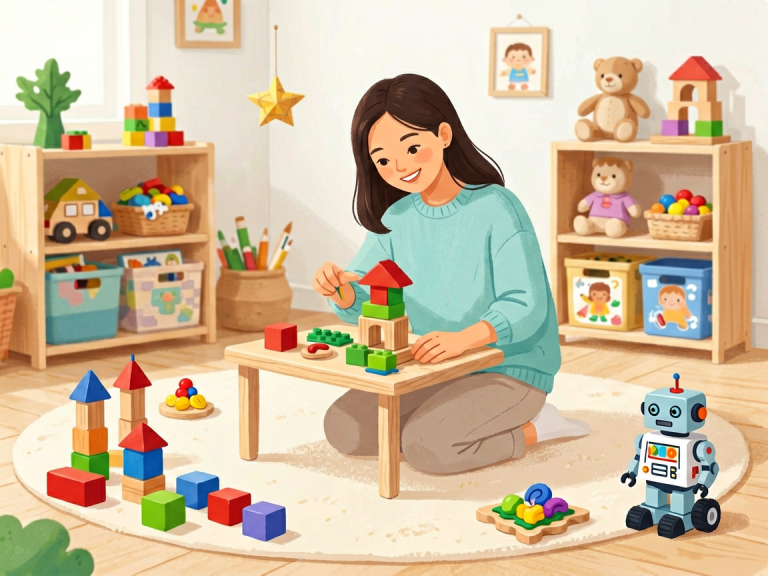
Magnetic tiles, such as Magna-Tiles or PicassoTiles, are a classic choice. These colorful, translucent shapes snap together with embedded magnets, allowing children to build 2D patterns or 3D structures. Beyond the obvious geometry and spatial awareness benefits, these toys introduce concepts of magnetism and polarity. A child quickly learns that some sides attract while others repel—a tangible lesson in physics that feels like magic. The open-ended nature of the play also fosters creativity, as kids can construct anything from a simple square to a complex castle or a rocket ship.
1.2 Beginner’s Chemistry Kits (Non-Toxic)
For children who love mixing things, a safe chemistry kit designed for ages 3+ is ideal. Look for kits that use common household ingredients like baking soda, vinegar, and food coloring to create fizzy reactions, color changes, and even homemade slime or playdough. These kits often come with large, easy-to-grip test tubes, safety goggles, and illustrated instruction cards that guide the child through “experiments” while teaching basic vocabulary like “reaction,” “mixture,” and “solid vs. liquid.” The instant visual payoff—a volcano of foam or a rainbow of colors—delights young minds and plants the seed that science is exciting.
1.3 Light-Up Discovery Microscope
A child-friendly microscope with a built-in LED light and large focusing knobs allows very young children to explore the hidden world of everyday objects. They can examine a leaf, a strand of hair, a piece of fabric, or even their own fingerprint. The simple act of looking at something familiar under magnification sparks endless questions: “Why does this look bumpy?” “What are those little lines?” Such a toy builds observational skills and a sense of wonder about the microscopic universe that exists all around them.
—
2. For the Elementary Explorer (Ages 7–10)
As children enter elementary school, their attention spans grow, and they are ready for more structured experiments and projects that require a bit of patience and following instructions. Science toys in this category often combine STEM principles with playful challenges.
2.1 Hydraulic Robot Arm Kit
A hydraulic arm kit, like those from Thames & Kosmos or OWI Robotics, is a superb gift for a child interested in mechanics and engineering. The kit typically includes plastic pieces, syringes, and tubes. By moving the syringes, the child controls the arm’s joints using water pressure—no batteries required! Building the arm teaches principles of fluid dynamics, levers, and force transfer. Once assembled, the real fun begins: picking up small objects, moving them from one spot to another, and troubleshooting when the arm doesn’t quite work as intended. This toy is a perfect bridge between play and real-world engineering concepts.
2.2 Crystal Growing Experiment Set
Growing crystals is a mesmerizing activity that combines art and science. A good crystal growing kit provides all the necessary chemicals (usually alum, salt, or other safe compounds), along with trays, stirrers, and detailed instructions. Over the course of a few days or weeks, children watch as tiny seed crystals transform into large, colorful formations. The process teaches about saturation, evaporation, and the geometric structure of crystals. Many kits also include a UV light so the crystals can glow in the dark, adding an extra layer of excitement. This is a gift that rewards patience and careful observation.
2.3 Solar-Powered Car or Wind Turbine Model
Environmental science comes to life with a renewable energy model. A solar-powered car kit, for instance, requires the child to assemble the chassis, connect the motor, and attach the solar panel. They then have to test it under different light conditions—direct sunlight, shaded areas, or even a desk lamp. The car moves only when the panel receives enough light, directly demonstrating the concept of energy conversion. Similarly, a wind turbine model can be used with a fan to light up an LED bulb. Such toys not only teach about clean energy but also introduce basic circuit-building skills.
—
3. For the Tween Innovator (Ages 11–14)
Pre-teens and early teenagers crave autonomy and more complex challenges. Science gifts at this stage should involve programing, more advanced chemistry, or sophisticated robotics. The goal is to move from following instructions to genuine creative problem-solving.
3.1 Programable Microcontroller Kits (e.g., Arduino or micro:bit)
A starter kit based on the Arduino or micro:bit platform is a powerhouse of learning. These kits come with a small board, a breadboard, wires, LEDs, sensors, and a servo motor. Using a computer, the child can write simple code (in a block-based language like MakeCode for micro:bit, or in C++ for Arduino) to make an LED blink, a buzzer play a tune, or a sensor detect temperature. The best part is that the possibilities are nearly endless: they can create a weather station, a simple game controller, or an automatic plant-watering system. This gift nurtures computational thinking, electronics literacy, and the confidence to invent.
3.2 Chemistry Explosion Kit (with Proper Safety Gear)
For the teen who has outgrown baking-soda volcanoes, a more sophisticated chemistry set—such as the “Chemistry C500” or “Mega Chemistry Lab” from reputable brands—offers dozens of experiments involving acids, bases, indicators, and even small-scale combustion (safely contained). Look for kits that include safety goggles, gloves, and non-toxic but exciting chemicals like copper sulfate or calcium chloride. Experiments might include making a pH rainbow, growing a chemical garden, or producing a “genie in a bottle” reaction. The emphasis should be on proper lab procedures and understanding the chemical equations behind the reactions. Such kits often come with a comprehensive manual that explains the “why” behind each colorful display.
3.3 Build-Your-Own Telescope or Microscope Kit
Optical science takes center stage with a DIY telescope or microscope. These kits require careful assembly of lenses, mirrors, and tubes. Once built, the child can observe the moon’s craters, Jupiter’s moons, or the details of a butterfly wing. The process of alignment and focusing teaches about refraction, focal length, and magnification. Some advanced kits even allow for customization (adding a camera mount or a smartphone adapter). This is a gift that marries craftsmanship with astronomy or biology, resulting in a device they can use for years.
—
4. For the Teen Enthusiast and Adult Hobbyist (Ages 15+)
Science toys are not just for children. Many adults enjoy hands-on learning, and the market is rich with sophisticated kits that blur the line between toy and serious hobbyist equipment. These make excellent gifts for curious teenagers, college students, or even parents who secretly love science themselves.
4.1 Analog Modular Synthesizer DIY Kit
Music and physics merge beautifully in a modular synthesizer kit. Brands like Erica Synths or Moog offer DIY kits where the user solders components onto a circuit board to build a working synthesizer module. The final product generates sounds by manipulating voltage-controlled oscillators, filters, and envelope generators. Building the synth teaches soldering skills, basic electronics, and the principles of sound synthesis. Then, the user can patch it with other modules to create unique, alien-like tones. This is an especially engaging gift for a teen interested in both music and engineering.
4.2 Advanced Robotic Arm or Quadcopter Kit
For the engineering-minded individual, a fully programmable robotic arm kit (e.g., from Dobot or MeArm) or a quadcopter drone kit is a serious investment in learning. These kits often require assembling the mechanical structure, wiring the motors and sensors, and then writing code to control movements via a computer or smartphone app. Some arms can even be taught to pick and place objects via a “record and playback” function. Similarly, building a drone from a kit (not a ready-to-fly model) involves understanding aerodynamics, weight distribution, and electronic circuit integration. The learning curve is steep, but the reward—a fully functional, self-built machine—is immense.
4.3 DNA Extraction and Molecular Gastronomy Kit
Biology and chemistry meet at the kitchen table with a DNA extraction kit. These kits include everything needed to extract real DNA from fruits (like strawberries or bananas) using soap, alcohol, and filters. The resulting white, stringy substance is actual genetic material—a mind-blowing experience for anyone. Some kits go further, allowing users to test food for enzymes or even run simple gel electrophoresis (though this is more expensive). Alternatively, a molecular gastronomy kit—with ingredients like sodium alginate, calcium lactate, and agar—lets the user create spherical “caviar” from fruit juice, edible foam, or liquid-center noodles. This turns cooking into a chemistry lab and is a huge hit at parties.
—
Conclusion: Choosing the Right Science Toy
When selecting a science toy as a gift, consider three factors: the recipient’s age, their existing interest level, and the complexity of the activity. The best science toys are those that are slightly challenging but not frustrating—they should offer a clear path to success while leaving room for exploration and failure. Remember that the true value of a science toy lies not in the finished product (a crystal, a robot, a sound) but in the journey of building, testing, and understanding. With the right gift, you are not just giving an object; you are giving a gateway to a mindset of inquiry and innovation. So whether you choose a simple magnetic block set or a DNA extraction lab, you are empowering someone to ask “Why?” and “How?”—and that is the greatest gift of all.