The Ultimate Guide to Selecting Safe and Stimulating Toys for Newborns
Introduction
Welcoming a newborn into the family brings immense joy, along with a flood of decisions—from diapers to nursery décor. Among the most exciting yet confusing tasks is choosing toys for your baby. While a newborn may seem too tiny to play, the first weeks and months are critical for sensory and motor development. The right toys can stimulate vision, hearing, touch, and even early cognitive skills. However, with countless products on the market, parents often feel overwhelmed. Some toys are unsafe; others are too advanced or simply unnecessary. This comprehensive guide will walk you through the essential principles of selecting toys for newborns, emphasizing safety, developmental appropriateness, and practical tips to make informed choices that support your baby’s growth without breaking the bank.
Safety First: The Golden Rules of Newborn Toy Selection
Before considering colors, textures, or educational claims, safety must be your top priority. A newborn’s immune system is still developing, and their natural instinct to explore the world by mouthing objects makes any toy a potential hazard. The first rule is to avoid any toy with small parts that could become choking hazards. Buttons, beads, or removable eyes on stuffed animals are common culprits. Always check the manufacturer’s age recommendation—even if a toy seems harmless, the label “0+ months” or “newborn” indicates it has passed strict safety tests for that age group.
Second, examine materials. Newborn toys should be made from non-toxic, BPA-free, and phthalate-free plastics or organic, hypoallergenic fabrics. Avoid toys with sharp edges, long strings, or cords longer than 30 centimeters (about 12 inches), as these pose strangulation risks. For crib or stroller toys, ensure they are securely attached and cannot fall onto the baby. Also, pay attention to noise levels. Some electronic toys produce sounds that exceed safe decibel limits for an infant’s sensitive ears. Test the volume yourself—if it sounds loud to you, it is too loud for a newborn. Finally, inspect toys regularly for wear and tear. A chewed plastic edge or a loose thread can quickly turn a favorite toy into a danger. By adhering to these safety guidelines, you create a secure environment where your baby can explore freely.
Understanding Newborn Development: What Your Baby Needs at Each Stage
Toys for newborns should align with their rapidly changing developmental milestones. In the first month, a baby’s vision is blurry, focusing only on objects 20–30 centimeters away. They prefer high-contrast patterns, especially black-and-white or bold primary colors. Their hearing is well-developed, and they startle at sudden sounds but calm down with rhythmic, soft noises. Touch is their earliest sense; they are soothed by gentle strokes and different textures. Therefore, the best toys for a 0–3-month-old are simple, sensory-rich items that do not require any action from the baby.
Between 3 and 6 months, hand-eye coordination begins. Babies start to bat at hanging objects, grasp rattles, and bring everything to their mouths. This is the age of discovery—toys that crinkle, squeak, or have varied surfaces encourage exploration. By 6 to 9 months, most babies can sit with support and transfer objects from one hand to another. They enjoy cause-and-effect toys like activity centers with buttons that produce sounds or lights. From 9 to 12 months, crawling and standing emerge, and toys that promote movement (like push toys) or problem-solving (like simple shape sorters) become engaging. However, always remember that every baby develops at their own pace. The toy should match your baby’s current abilities, not a label on the box. Observing your newborn’s reactions—whether they gaze at a black-and-white card or ignore a noisy rattle—will guide you better than any age chart.
Types of Toys That Truly Benefit Newborns
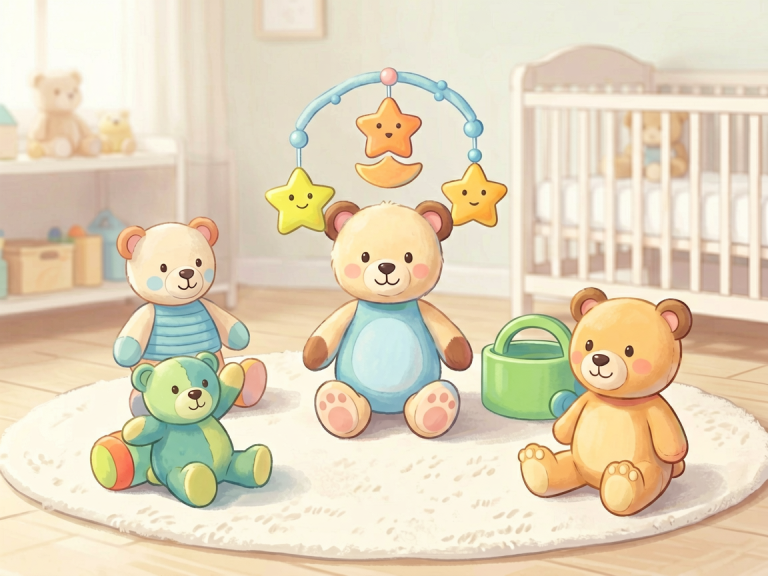
Given the short attention span of a newborn, you do not need a closet full of toys. Instead, focus on a few carefully chosen categories. Visual stimulation toys include black-and-white contrast cards, mobiles (placed at least 30 centimeters above the crib, out of reach), and unbreakable mirrors. These help track objects and develop focus. Auditory toys like soft rattles with a gentle tinkle, musical crib mobiles with lullabies, or crinkle paper inside fabric toys encourage listening skills. Avoid high-pitched electronic sounds; choose toys that produce soft, natural tones.
Tactile toys are perhaps the most important for newborns. Soft fabric books with different textures—smooth, bumpy, furry, or ribbed—allow babies to feel and mouth safely. Teething toys made of food-grade silicone (with no small parts) soothe gums while providing sensory play. Activity gyms or play mats with dangling toys invite kicking and batting, strengthening leg and arm muscles. For babies who are a bit older (3+ months), an infant rattle with a easy-to-grasp handle helps develop fine motor skills. Another versatile choice is a soft, washable lovey or comfort blanket; it becomes a familiar object that provides security during sleep and playtime. Keep in mind that newborns get overstimulated easily. Offer only one or two toys at a time, and rotate them every few days to maintain novelty without overwhelming your baby’s senses.
Age-Appropriate Toy Selection by Month: A Practical Timeline
To simplify your shopping, here is a month-by-month guide. For 0–2 months, invest in a high-contrast mobile (black and white or red and white) and a few unbreakable wall mirrors. A soft musical toy that plays a gentle lullaby can be placed near the crib, but never inside the crib while sleeping. A textured play mat with a dangling arch is excellent for supervised tummy time. At this stage, babies do not grasp intentionally, so avoid toys that require holding.
From 3 to 5 months, introduce a lightweight rattle with a ring handle (easy to hold), a soft cloth book with crinkle pages, and a silicone teether shaped like a ring or animal. Tummy time becomes more active; a small, safely attached mirror or a play gym with toys that make different sounds (squeak, rattle, bell) will encourage reaching. Around 6 to 8 months, babies sit up and start to transfer objects. Give them stacking cups (simple ones without sharp edges), a soft activity ball with textures, and a cause-and-effect toy like a push-button music box. Avoid toys with many small pieces at this age.
For 9 to 12 months, as mobility increases, choose a push toy that is sturdy and not too fast, a shape sorter with large, rounded shapes, and a soft, baby-safe set of blocks. You can also introduce a simple wooden puzzle with knobs. Throughout this entire first year, the best “toy” remains your face, voice, and interaction. No purchased toy can replace the benefits of a parent singing, making silly faces, or narrating daily activities. Use toys as tools to complement, not replace, human connection.
Conclusion: Less Is More When Choosing for Your Newborn
Selecting toys for a newborn does not have to be a source of anxiety. By prioritizing safety, understanding your baby’s developmental stages, and choosing age-appropriate, sensory-rich items, you can provide an enriching environment without clutter. Remember that a newborn’s favorite “toy” is often the simplest—a washcloth to feel, a crinkle of paper, or sunlight dancing on the wall. Resist the marketing pressure to buy every educational gadget. Instead, observe your baby’s cues: if a toy causes fussiness or disinterest, set it aside and try again later. A few carefully chosen, high-quality toys that encourage exploration of sights, sounds, and textures are more valuable than a room full of unused items. Ultimately, the best gift you can give your newborn is your time and attention, with toys serving as joyful companions on the wonderful journey of growing up.