Sparking Curiosity: The Ultimate Guide to Gifts for Kids Who Love Experiments
Introduction: Why Experimentation Matters
Children are natural-born scientists. From the moment they can grab a spoon and fling it to the floor to test gravity, they are conducting experiments. For kids who never outgrow that innate drive to ask “what if,” the best gifts are those that feed their hunger for discovery. A gift that encourages hands-on experimentation does more than entertain—it builds critical thinking, patience, and a love for learning that can last a lifetime. But not all experiment kits are created equal. Some are shallow, one-time tricks; others offer endless possibilities for tinkering, failing, and trying again. This guide explores the most thoughtful, engaging, and educational gifts for young experimenters, organized by scientific domain and age suitability.
1. Chemistry Kits That Go Beyond Baking Soda Volcanoes
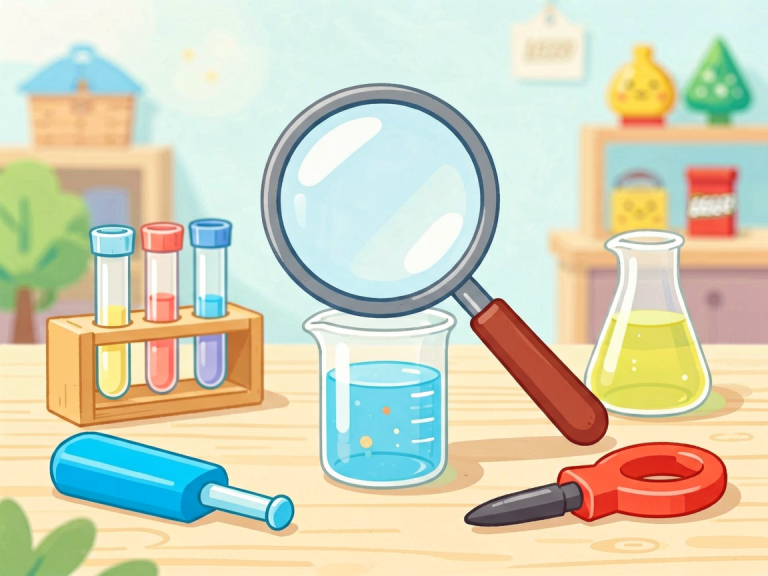
The classic baking soda and vinegar volcano is a rite of passage, but for a kid who truly loves experiments, it’s only the beginning. A high-quality chemistry set can open up a whole new world of reactions, crystals, and color changes.
Look for kits that include safe but exciting materials like pH indicators (red cabbage powder, for example), effervescent tablets, and non-toxic powders that bubble, fizz, and change color in unexpected ways. One excellent choice is the *National Geographic Mega Chemistry Set*, which features over 15 experiments with real lab tools such as test tubes, a beaker, and safety goggles. Another standout is the *Thames & Kosmos Chem C3000*, designed for older kids (ages 10 and up). It includes over 300 experiments, from electrochemistry to chromatography. The key is to choose a kit that teaches the underlying principles—not just a recipe to follow. A great kit will include a manual that explains why the reaction occurs, encouraging the child to hypothesize and tweak variables.
For younger children (ages 4–7), look for “mess-free” chemistry kits that use pre-measured powders and sealed bags to minimize cleanup. The *Learning Resources Primary Science Lab Set* is perfect for this age, with oversized, child-safe tools and simple experiments like making “magic” slime or watching a color change in a test tube. The goal is to build confidence and vocabulary while feeding curiosity.
2. Physics and Engineering: Building, Breaking, and Understanding Forces
Kids who love experiments often have a fascination with how things work—or don’t work. Physics and engineering gifts allow them to test concepts like gravity, momentum, electricity, and structural integrity.
A classic choice is the *Snap Circuits* series. These kits let children build working electronic circuits by snapping together color-coded pieces. They can create a doorbell, a flashing light, or even a radio. The beauty of Snap Circuits is that they are reusable and endlessly combinable. For example, the *Snap Circuits Pro* set includes over 500 projects and introduces concepts like resistors, capacitors, and integrated circuits. It’s perfect for a child who wants to understand why the light turns on when they flip a switch.
Another fantastic option is a marble run or a construction set with kinetic elements. The *Gravity Maze* by ThinkFun is a logic game that combines marble runs with puzzle-solving. Kids build a path for a marble to reach a target, learning about gravity, angles, and problem-solving along the way. For a more open-ended building experience, consider *K’NEX Education* sets or the *Engino STEM Mechanics* series, which allow children to construct levers, pulleys, and gears. These sets teach real mechanical principles through trial and error. When a bridge collapses, the child learns to reinforce it. When a car won’t roll, they adjust the axle. That process of failure and revision is pure science.
For older kids (teens), a *Raspberry Pi* starter kit or an *Arduino* board can be a gateway to programming and electronics experiments. These tiny computers can control sensors, motors, and lights, turning the bedroom into a mini laboratory. Pair it with a book like *“Python for Kids”* or *“Electronics for Young Makers,”* and you have a gift that keeps on giving.
3. Biology and Nature Kits: Exploring the Living World
Not all experiments happen in test tubes. For kids fascinated by living things, biology gifts can inspire a deeper connection to the natural world. These kits often involve observation, patience, and record-keeping—skills that are just as important as mixing chemicals.
A top pick is a *butterfly garden* or an *ant farm*. The *Insect Lore Butterfly Garden* allows children to watch caterpillars transform into painted lady butterflies. They observe the chrysalis stage, record the days until emergence, and then release the butterflies. This is not just a science experiment; it’s a lesson in life cycles and responsibility. Similarly, a *Uncle Milton Ant Farm* provides a clear gel habitat where ants dig tunnels. Kids can test how ants respond to different foods or light levels, building their own simple experiments.
For microscopy enthusiasts, a good-quality beginner microscope can open up an entire hidden world. The *AmScope 40X–1000X Compound Microscope* is affordable and includes prepared slides, blank slides, and tools for collecting pond water or cheek cells. Encourage the child to collect samples from the garden—a leaf, a feather, a drop of water from a puddle. Then help them document what they see with a lab notebook. This gift encourages the scientific habit of observation repeated over time.
A more novel option is a *plant growing lab* that uses LED lights and self-watering systems. Kits like *AeroGarden* let kids experiment with hydroponics, varying light cycles, nutrients, and seed types. They can record growth rates and compare results. It’s a perfect gift for a child who loves gardening but also wants to understand the biology behind photosynthesis.
4. Outdoor and Environmental Experiments: Science in the Wild
Some children prefer to experiment outside, where the elements are unpredictable and the variables are real. Gifts for these kids should be rugged, portable, and designed for field work.
A *weather station kit* is a fantastic choice. The *4M Weather Science Kit* includes a wind vane, a rain gauge, and a thermometer, plus instructions for building a barometer and a simple anemometer. Kids can track daily weather, make predictions, and compare their data to local forecasts. More advanced options like the *AcuRite Wireless Weather Station* connect to a smartphone app, allowing kids to graph temperature, humidity, and wind speed over time. This is real data science.
Another excellent outdoor gift is a *nature explorer backpack* that contains a magnifying glass, a compass, a bug viewer, a field guide, and a collection of vials and tweezers. Brands like *Melissa & Doug* or *National Geographic* offer such sets. But for a truly experimental twist, pair the backpack with a *simple water testing kit* (pH, hardness, nitrate levels) so the child can analyze pond water or stream water. They can map different locations and compare water quality. Alternatively, a *kite-making kit* allows experimentation with aerodynamics. Change the tail length, the bridle angle, or the sail material—then fly the kite and see how it behaves in different wind conditions. This is physics in the real world.
5. The Gift of Tools: Lab Equipment for Young Researchers
Sometimes the best gift isn’t a pre-packaged kit but the tools to create your own experiments. A child who is serious about experimenting will appreciate real (but safe) laboratory equipment.
Consider a *digital microscope* that connects to a computer or tablet. Instead of looking through an eyepiece, the child can see the image on a screen, take snapshots, and even record video. This is perfect for capturing the movement of microorganisms or the structure of a crystal. The *Plugable USB Digital Microscope* (250x magnification) is a popular and affordable option.
Another essential tool is a *good set of measuring instruments*: a digital scale (accurate to 0.1 grams), a set of graduated cylinders, a compass, a stopwatch, and a thermometer with a probe. These items can be bought separately or as part of a *science starter lab set*. The key is that they allow the child to design their own experiments. For example, they could measure the density of different fruits, test the rate at which ice melts in saltwater versus freshwater, or compare the fermentation rates of yeast with different sugars.
Finally, consider a *kid-friendly soldering iron* and a bare-bones electronics kit. For older children (ages 12+), learning to solder components onto a circuit board is a rite of passage into real electronics. Kits like the *SparkFun Solder: The Kit* come with all safety gear and guided projects. This gift teaches patience, fine motor skills, and the satisfaction of creating a functional device from scratch.
Conclusion: Fueling a Lifelong Passion
The perfect gift for a child who loves experiments is not the flashiest or the most expensive. It is the one that says, “I trust your curiosity. Here are tools to chase your questions.” Whether it’s a chemistry set that reveals the secret colors of household liquids, a microscope that turns a drop of pond water into an alien landscape, or a soldering iron that lets them build a blinking light from scratch, the best experiments are those that spawn new questions. And that is the greatest gift of all: the realization that science is not a set of facts to memorize, but a never-ending adventure. So next time you shop for a young experimenter, skip the video game and give them the chance to play with reality. They will thank you by asking, “What happens if I try this?”