Sparking Curiosity: The Transformative Power of Science Toys for Elementary Kids
In an age dominated by screens and passive entertainment, the humble science toy stands as a quiet revolution. For elementary-aged children—typically ranging from five to eleven years old—these hands-on tools are not mere playthings. They are gateways to understanding the universe, catalysts for critical thinking, and bridges between abstract concepts and tangible reality. Science toys for elementary kids have evolved far beyond the classic chemistry set; today, they encompass robotics kits, crystal-growing experiments, magnetic building blocks, and even simple microscopes that reveal the hidden world of microbes. This article explores why these toys matter, what types are most effective, and how parents and educators can choose the best ones to nurture a lifelong love of learning.
Why Science Toys Matter More Than Ever
Building Foundational Knowledge Through Play
Children learn best when they are engaged, curious, and having fun. Science toys capitalize on this natural inclination. When a young child mixes baking soda and vinegar to create a fizzy volcano, they are not just making a mess—they are internalizing the concept of chemical reactions. They observe cause and effect: add more vinegar, get more fizz. This experiential learning sticks far better than reading about acids and bases in a textbook. According to educational psychologists, hands-on activities activate multiple regions of the brain simultaneously, strengthening neural pathways and improving long-term retention. For elementary kids, whose attention spans are still developing, science toys provide immediate, satisfying feedback that keeps them motivated.
Fostering Critical Thinking and Problem-Solving
Science toys rarely work perfectly on the first try. A solar-powered car might not move if the light is dim; a homemade rocket might fizzle instead of launch. These “failures” are invaluable learning opportunities. Children learn to hypothesize why something went wrong, test adjustments, and iterate. This process mirrors the scientific method itself: observation, question, hypothesis, experiment, conclusion. By tinkering with a simple circuit set, a third-grader develops resilience and logical reasoning. They discover that electricity flows only in a closed loop, and that reversing the battery terminals changes the direction of a motor. Such insights are not taught—they are discovered, making them infinitely more powerful.
Bridging the Gender Gap in STEM
Science toys can play a pivotal role in leveling the playing field. Historically, STEM fields have been male-dominated, partly because girls were often steered away from “technical” play. Today, many science toys are designed to be gender-neutral, featuring bright colors, diverse characters, and themes that appeal to all children. A magnetic building set or a crystal-growing kit knows no gender. When both boys and girls have equal access to these toys from an early age, they develop similar levels of confidence and competence in science. Studies show that girls who engage with science toys in elementary school are significantly more likely to pursue STEM subjects in high school and college. The message is clear: give every child a kaleidoscope, a bug-catching kit, or a geology rock set, and watch their innate curiosity flourish.
Top Categories of Science Toys for Elementary Kids
Chemistry and Physics Experiment Kits
These are the classics for a reason. Modern chemistry sets for elementary kids are safe, using non-toxic materials and child-friendly instructions. They might include activities like creating slime (a lesson in polymers), growing crystals (understanding saturation and evaporation), or making a simple lava lamp (density and immiscible liquids). Physics kits often feature pulleys, levers, and inclined planes that let children explore mechanics. A marble run, for instance, teaches gravity, momentum, and trajectory. The best kits come with a guide that explains the science behind each experiment in simple terms, turning playtime into a mini science lesson.
Robotics and Coding Kits
In the digital age, understanding technology is as fundamental as reading. Robotics kits for elementary kids have become remarkably accessible. Products like the LEGO Boost or Sphero Mini allow children to build a robot and then program its movements using a tablet or smartphone. These kits introduce basic coding concepts—sequencing, loops, and conditionals—without requiring any prior knowledge. A child might program a robot to navigate a maze or respond to sound. This not only demystifies technology but also teaches computational thinking, a skill that applies to everything from solving math problems to planning a project.
Nature and Biology Exploration Kits
For kids who love the outdoors, biology kits are a fantastic choice. A portable microscope with prepared slides lets children examine onion cells, insect wings, or pond water. Bug-catching kits with magnifying jars encourage gentle observation of insects and spiders. Plant-growing kits teach photosynthesis and plant life cycles—watching a bean sprout from a paper towel is a profound lesson in patience and biology. These toys connect children to the natural world, fostering environmental stewardship and awe. They also require little more than curiosity and a sunny windowsill, making them accessible even in urban settings.
Engineering and Building Sets
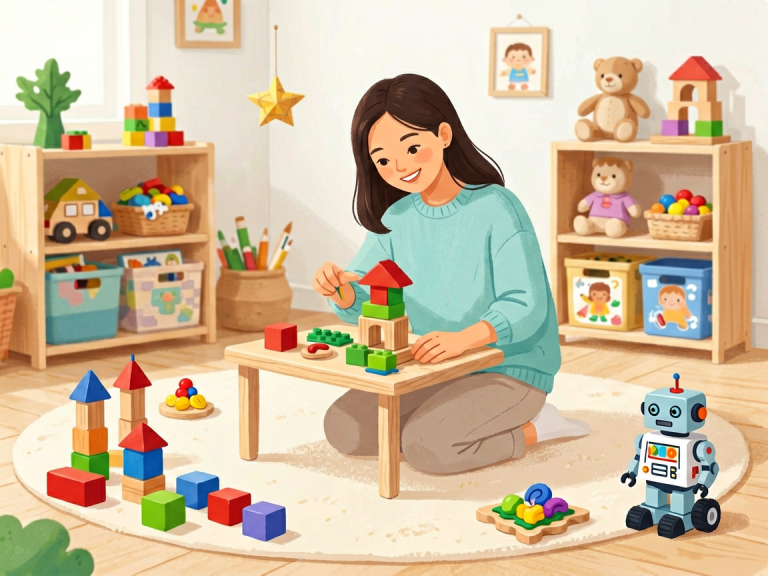
Engineering toys go beyond simple blocks. Magnetic tiles like Magna-Tiles allow children to construct 3D shapes, teaching geometry and structural stability. Advanced sets like K’NEX or Erector Sets introduce gears, motors, and levers. Building a bridge that can hold weight—or a tower that withstands a simulated earthquake—teaches real engineering principles. Children learn about tension, compression, and balance through trial and error. These toys are especially good for group play, promoting collaboration and communication as kids work together to solve a building challenge.
How to Choose the Right Science Toy for Your Child
Age Appropriateness and Safety
Always check the recommended age range. Toys with small parts can be choking hazards for children under three. For elementary kids, look for kits that are challenging but not frustrating. A first-grader might enjoy a simple magnet set, while a fifth-grader might be ready for a basic electronics kit. Read reviews and look for safety certifications like ASTM or CE marks. Avoid kits that require open flames or toxic chemicals. Many modern kits use LED lights, battery-powered motors, and safe household items like cornstarch and food coloring.
Aligning With Your Child’s Interests
A science toy will only be effective if the child actually wants to play with it. If your child loves animals, choose a biology or ecology kit. If they are fascinated by space, a rocket-building set or a star projector might be perfect. If they enjoy building, engineering sets are ideal. The key is to let the child lead. You can also combine science toys with other interests: a child who loves art might enjoy a chromatography kit that separates colors, or a crystal-growing set that produces beautiful shapes. The more personalized the toy, the deeper the engagement.
Encouraging Open-Ended Play
The best science toys are not one-time activities. They allow for multiple uses, modifications, and creative extensions. A set of magnetic blocks can be used to build a house today and a molecule model tomorrow. A circuit kit can be expanded with additional components. Look for toys that come with challenge cards or online resources for new ideas. Avoid toys that do everything automatically—if a robot moves on its own with a press of a button, the child learns nothing. The toy should be a tool for discovery, not a passive entertainment device.
The Role of Parents and Educators
Guiding Without Taking Over
Adults can enhance the learning experience but should resist the urge to solve problems for the child. Instead, ask questions: “What do you think will happen if we add more water?” “Why do you think the balloon didn’t inflate?” This Socratic approach encourages reflection. Celebrate mistakes as learning steps. If a crystal fails to grow, discuss what might have gone wrong—temperature, concentration, time. This teaches children that science is not about getting the right answer immediately, but about asking better questions.
Integrating Science Toys into Daily Life
Science toys should not be confined to a designated “science hour.” Leave them accessible in a playroom or living area. A child might spontaneously decide to build a catapult after watching a cartoon about medieval castles. Use everyday moments to connect toy experiences: when cooking, talk about heat and chemical changes; when gardening, discuss soil and water absorption. Science toys become more meaningful when children see their real-world applications.
Supporting School Curriculum
Many science toys align with elementary school learning standards. A kit about simple machines can reinforce what a child is learning in third-grade physics. A weather station toy can complement a unit on climate. Parents can even coordinate with teachers to bring science toys to school for show-and-tell or classroom demonstrations. This bridges formal education and self-directed exploration, making science feel less like a subject and more like a way of life.
Conclusion: The Gift That Keeps on Growing
Science toys for elementary kids are far more than a passing trend. They are investments in a child’s intellectual and emotional development. They plant seeds of wonder that can grow into careers in medicine, engineering, ecology, or any field that values inquiry and creativity. In a world that increasingly demands problem-solvers and innovators, these hands-on tools equip children with the skills they need to thrive. The next time you see a child’s eyes light up as they watch a homemade rocket soar into the sky—or as they peer through a magnifying glass at an ant carrying a crumb—remember that you are witnessing the birth of a scientist. And it all started with a toy.