The Ultimate STEM Toys Guide for Parents: How to Choose Play That Builds Future Innovators
Introduction: Why STEM Toys Matter More Than Ever
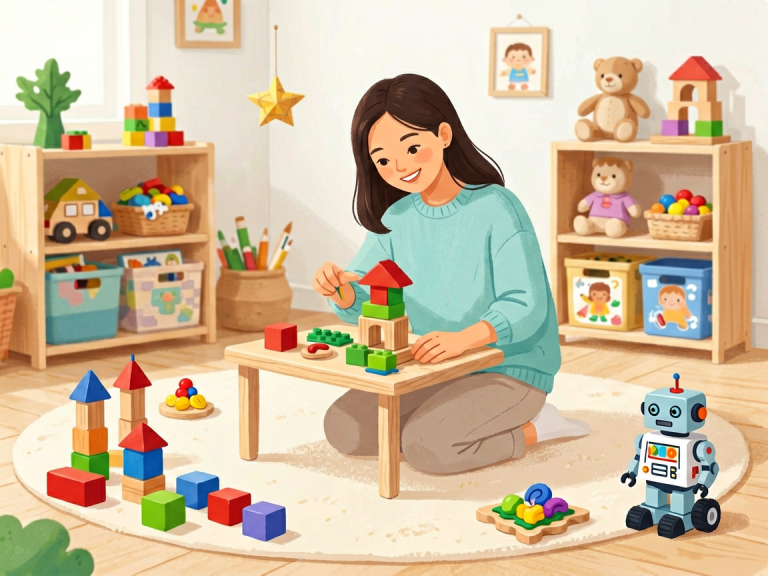
In an era where technology evolves at lightning speed and scientific literacy is no longer optional, parents face a pressing question: How do we prepare our children for a future we cannot fully predict? The answer, surprisingly, begins not in a classroom or a screen, but on the living room floor, in a pile of colorful blocks, or in the glow of a small robot’s LED eyes. STEM toys—those designed to engage children in Science, Technology, Engineering, and Math—have become the modern equivalent of the classic building set or chemistry kit. But with shelves overflowing with options, from coding caterpillars to crystal-growing labs, how can parents separate genuine learning tools from marketing gimmicks? This guide will walk you through everything you need to know: why STEM toys matter, how to match them to your child’s developmental stage, and what to look for when making a purchase that truly sparks curiosity and critical thinking.
What Exactly Are STEM Toys? Breaking Down the Acronym
First, let’s clarify what we mean. A true STEM toy does more than just teach a fact—it encourages the *processes* of science, technology, engineering, and mathematics. A plastic dinosaur that roars is not a STEM toy; a kit that lets a child build a working volcano and measure the reaction is. STEM toys integrate hands-on experimentation, problem-solving, and often a dose of failure (which, in the STEM world, is a vital learning opportunity). They might involve building a bridge that can hold weight, writing simple code to make a character move, or designing a water filtration system from household materials. The goal is to mimic the way real scientists and engineers think: ask a question, hypothesize, test, observe, and iterate.
The Science of Play: Why STEM Toys Promote Deep Learning
Child development research consistently shows that the most effective learning happens when children are actively engaged, not passively receiving information. STEM toys capitalize on this by turning abstract concepts into tangible experiences. When a five-year-old stacks wooden blocks to build a tower and watches it fall, she is internalizing principles of gravity, balance, and structural integrity—long before she encounters the physics equations in high school. When an eight-year-old programs a robot to navigate a maze, he learns sequencing, logic, and debugging (a skill that translates directly to coding and everyday problem-solving). Furthermore, these toys often require persistence. A circuit that doesn’t light up the first time teaches resilience and the scientific method: Why didn’t it work? What can I change? This iterative process is far more powerful than memorizing facts from a worksheet.
Choosing the Right STEM Toy for Your Child’s Age and Stage
One of the most common mistakes parents make is buying a toy that is either too simple (boring) or too advanced (frustrating). Here is a breakdown by age group to help you navigate.
Ages 2–4: Foundations of Exploration
At this stage, children are sensory explorers. They learn through touch, sight, and simple cause-and-effect. Ideal STEM toys include large building blocks (magnetic tiles are excellent for early geometry and creativity), simple shape sorters, water tables, and basic pattern puzzles. Look for toys that introduce vocabulary like “more,” “less,” “big,” “small,” “heavy,” and “light.” Avoid anything with small parts due to choking hazards. A set of sturdy wooden ramps and balls, for example, teaches gravity and trajectory in a pure, open-ended way. The key is open-endedness: toys that can be used in multiple ways encourage more creative problem-solving than those with a single correct outcome.
Ages 5–7: Building Basic Concepts
This is the golden age for introductory STEM kits. Children can now follow simple instructions and engage in guided experimentation. Consider beginner coding toys like programmable robots that use color-coded tiles or buttons (such as Botley or Code-a-Pillar). Simple circuits kits with snap-together components allow kids to light bulbs or spin fans. Building sets like classic LEGO bricks or more specialized engineering sets (like marble runs or gear sets) are fantastic for developing spatial reasoning and understanding mechanical systems. Also look for nature exploration kits—magnifying glasses, bug catchers, and simple microscopes. At this age, the goal is to cultivate wonder and show that asking “why” is a superpower.
Ages 8–10: Delving into Complexity
Now children can handle more sophisticated projects with longer attention spans. Robotics kits (like LEGO Boost or littleBits) let them build and program moving creations. Chemistry sets with safe, non-toxic materials can introduce reactions, crystals, and polymers. Math-oriented games that involve logic puzzles, strategy, and spatial thinking (like Rush Hour or Gravity Maze) are excellent. Also consider kits that teach the basics of engineering design: building bridges, catapults, or simple machines. The critical shift here is that children should begin to understand the *why* behind the results. A good toy will include prompts like “What happens if you change the angle?” or “How can you make your car go faster?”
Ages 11–13 and Beyond: Real-World Application and Coding
Pre-teens and teens are ready for real-world tools masked as toys. Advanced robotics kits (like VEX or Arduino starter sets) allow for genuine programming in languages like Scratch or Python. Electronics kits that teach soldering (with adult supervision) or breadboard circuits are excellent. 3D printing pens or small 3D printers can turn digital design into physical objects, blending art and engineering. Math challenges like Rubik’s cubes, KenKen puzzles, or even chess promote strategic thinking. At this stage, the best STEM toys are those that bridge the gap between play and practical skill-building, often with an online community or competition aspect to keep motivation high.
Key Features to Look for in High-Quality STEM Toys
Not all toys labeled “STEM” are created equal. Here is a checklist to help you evaluate options.
- Open-Ended vs. Prescriptive: Does the toy allow for multiple outcomes, or does it have a single “right” answer? Open-ended toys (like building sets, coding sandbox games, or art-meets-science kits) encourage creativity and divergent thinking. Prescriptive kits (like a pre-molded crystal that grows exactly as shown) can still teach a specific concept but may become boring after one use.
- Encourages Iteration: The best STEM toys make failure a natural part of the process. Look for kits that explicitly include a “test and redesign” phase. For example, a catapult kit that lets you adjust the tension and measure distance teaches the engineering cycle better than one that just snaps together perfectly.
- Grows with the Child: Some toys offer expansion packs or different difficulty levels. A robot that can be programmed with simple block-based code and later with text-based code extends its lifespan and educational value.
- Teaches Process, Not Just Facts: A toy that explains *why* a chemical reaction happens is more valuable than one that simply shows a cool result. Look for kits with instructional materials that ask guiding questions, not just step-by-step commands.
- Safety and Durability: Especially for younger children, ensure materials are non-toxic, BPA-free, and sturdy enough to withstand repeated use. Read reviews for potential choking hazards or sharp edges.
Beyond the Box: How Parents Can Maximize the Learning Potential
Buying a STEM toy is just the first step. How you engage with your child during play can dramatically magnify its impact.
- Ask Open-Ended Questions: Instead of “Did you make it work?” ask “What happened when you tried that?” or “What could you change to make it better?” This shifts focus from success/failure to process.
- Be Comfortable with Mess and Mistakes: Let your child lead. If a bridge collapses, resist the urge to fix it. Instead, ask, “Why do you think it fell? What could you do differently?” The best learning happens in the “messy middle.”
- Connect Play to Real Life: After building a simple machine, point out similar mechanisms in the real world—a ramp at a warehouse, a lever on a playground seesaw, a gear in a bicycle. This contextualization deepens understanding.
- Rotate Toys and Limit Screen Time: Keep a few STEM toys accessible at a time, and rotate them every few weeks to maintain novelty. Also, many digital STEM apps exist, but balance them with hands-on, physical manipulation, which is crucial for developing motor skills and spatial understanding.
Common Pitfalls to Avoid When Buying STEM Toys
Even well-intentioned parents can make missteps. Here are a few to watch out for.
- Buying Based on Gender Labels: STEM is for everyone. Many toys are marketed as “for boys” (robots, construction) or “for girls” (pink chemistry sets, fashion-oriented coding). Ignore these labels and choose based on your child’s interests. A child who loves building is a child who loves engineering, regardless of gender.
- Over-Emphasizing “Educational” Value: If a toy feels too much like a lesson, children may resist. The best STEM toys feel like pure fun, with learning happening as a side effect. If you find yourself having to force your child to play with it, it’s likely not the right fit.
- Neglecting the “A” in STEAM: Remember that art and creativity (the “A” in STEAM) are integral to innovation. A toy that combines science with design—like a marble run that also looks beautiful, or a coding app that lets you create your own animations—will engage a broader range of minds.
- Assuming Price Equals Quality: Expensive kits are not always better. Some of the best STEM learning happens with cardboard boxes, rubber bands, and tape. A simple set of dominoes or a ball of clay can teach as much as a $100 robot, if the parent provides the right prompts.
Conclusion: The Gift of Curiosity
Ultimately, the greatest STEM toy you can give your child is not something you buy—it’s your own enthusiasm for discovery. When you get down on the floor to build a tower, when you wonder aloud “I wonder what would happen if…”, when you celebrate a “failed” experiment as a valuable clue, you model the very mindset that STEM education aims to cultivate. The toys are tools, but the real magic happens in the interaction between a curious child and a supportive adult. So next time you browse the aisles of toy stores or scroll through online listings, remember: choose toys that ask questions, that make room for trial and error, and that spark more questions than answers. That is the play that builds not just better test scores, but better thinkers—and a better future.