Top 5 Building Toys for Kindergarteners: Unleashing Creativity and Learning Through Play
Introduction
Kindergarten is a magical period of rapid cognitive, social, and motor development. At ages four to six, children are naturally curious, eager to construct, and ready to experiment with symbolic thinking. Building toys are far more than simple playthings—they are powerful tools that nurture spatial reasoning, problem-solving, fine motor skills, and even early math and language concepts. Choosing the right construction set for a kindergartener can be overwhelming, given the sheer variety available. However, the best building toys for kindergarteners share common traits: they are safe, durable, appropriately sized for small hands, open-ended, and capable of inspiring both independent exploration and cooperative play. In this article, we will explore five outstanding building toys that have earned the trust of educators, parents, and—most importantly—children themselves. Each recommendation is grounded in developmental research and real-world classroom and home experience. Whether your child is a budding architect, an aspiring engineer, or a storyteller who builds worlds, these toys will provide endless opportunities for growth and joy.
1. LEGO DUPLO: The Classic Giant Bricks for Little Hands
LEGO DUPLO sets are arguably the gold standard in building toys for kindergarteners. These bricks are exactly twice the size of standard LEGO pieces, making them easy for small fingers to grasp, push together, and pull apart without frustration. The larger size also eliminates choking hazards, giving parents peace of mind. What sets DUPLO apart is its thoughtful design: the bricks click together with satisfying precision but require just enough force to build fine motor strength. Sets range from simple tubs of mixed colors to themed collections featuring animals, vehicles, and everyday scenes like farms or fire stations.
For kindergarteners, the open-ended nature of DUPLO is a huge advantage. A child can follow the instruction booklet to create a specific model, then disassemble it and invent something entirely new. This dual approach builds both sequencing skills (following steps) and creative divergent thinking. Furthermore, DUPLO sets often include characters, animals, and accessories that spark pretend play. A child building a house may suddenly imagine a family living inside, leading to rich storytelling and social-emotional development. Teachers frequently use DUPLO in kindergarten classrooms to teach counting, sorting by color or shape, and even early addition and subtraction. The bricks are durable enough to survive years of play, and many sets are compatible with standard LEGO, allowing a seamless transition as the child grows. For kindergarteners, DUPLO is a safe bet that delivers consistent educational value.
2. Magna-Tiles: Transparent Magnetic Building for Open-Ended Play
Magna-Tiles have become a sensation in early childhood education, and for good reason. These translucent plastic tiles are embedded with magnets along their edges, allowing children to connect them in countless configurations—from simple squares and triangles to complex 3D structures like castles, rockets, and geodesic domes. The magnetic connection is strong enough to hold sturdy creations yet easy for a kindergartener to pull apart, promoting trial-and-error exploration without constant adult help.
What makes Magna-Tiles particularly beneficial for kindergarteners is how they integrate abstract spatial concepts with tactile play. As children rotate and attach tiles, they are subconsciously learning about geometry, symmetry, balance, and magnetism. The transparent panels let light pass through, adding a visual dimension that fascinates young learners. They can create flat patterns on the floor or build upward, discovering how support and weight distribution work. Because Magna-Tiles are non-toxic, BPA-free, and have no small parts that could break off, they meet the highest safety standards for this age group.
Moreover, Magna-Tiles excel at fostering collaboration. In a kindergarten classroom, groups of children often work together to construct large structures, negotiating roles and sharing ideas. This cooperative play builds language skills, empathy, and patience. Parents also appreciate that Magna-Tiles do not require batteries or screens—they are a quiet, mess-free activity that can entertain a child for an hour or more. Many families start with the basic 100-piece set and add expansion packs later. For kindergartners who love vibrant colors and magnetic magic, Magna-Tiles are an unbeatable choice.
3. Wooden Unit Blocks: Timeless Learning Through Balance and Geometry
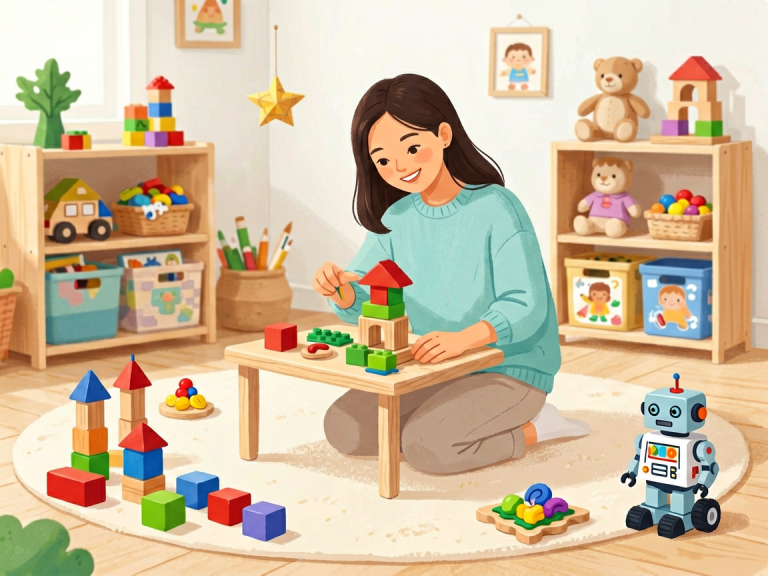
Before plastic and magnets, there were wooden blocks—and they remain one of the most developmentally appropriate building toys for kindergarteners. Unit blocks are precisely cut hardwood blocks in standard shapes: rectangles, squares, triangles, cylinders, arches, and half-circles. Unlike modern interlocking bricks, wooden blocks rely entirely on gravity and friction. This fact makes them an exceptional teaching tool for physics concepts like equilibrium, weight distribution, and center of gravity.
When a kindergartener tries to build a tall tower with unit blocks, they quickly learn that a shaky base leads to collapse. They experiment with different placements, discovering that a larger base and symmetrical stacking yield more stable structures. This trial-and-error process cultivates resilience and scientific thinking. Wooden blocks also support imaginative play because they are non-representational—a rectangular block can be a phone, a bed, a car, or a wall. This encourages abstract thinking, a crucial cognitive skill for literacy and math.
From a classroom perspective, wooden unit blocks are a staple in Montessori and Reggio Emilia settings because they promote self-directed, hands-on learning. They are also remarkably durable—many sets become family heirlooms. For safety, look for blocks made from sustainable, untreated hardwood with rounded edges and non-toxic finishes. A set of 100–200 blocks is usually sufficient for a kindergartener. The only caveat is that wooden blocks can be heavy and may cause damage if thrown, so adult supervision is recommended during enthusiastic building sessions. Nevertheless, for pure, screen-free, foundational learning, wooden unit blocks are unparalleled.
4. Mega Bloks: Colorful Stacking Fun for Early Engineers
Mega Bloks, now produced by Mattel, are another excellent large-block system designed specifically for toddlers and preschoolers, making them ideal for younger kindergarteners around age four. Similar to DUPLO in size and feel, Mega Bloks have a slightly different interlocking mechanism that some children find easier to snap together. The blocks come in bright primary colors and basic shapes, often sold in large bags or tubs that encourage volume-oriented building.
What makes Mega Bloks stand out is their emphasis on pure construction without complex themes. Many sets are simply collections of blocks, allowing children to build whatever their imagination dictates. This simplicity is perfect for kindergarteners who are just transitioning from stacking to intentional construction. The blocks are light enough that a child can build tall towers without fear of injury if they fall. They are also easy to clean up and can be used for sorting activities, pattern making, and early counting exercises.
Educators often recommend Mega Bloks for children who struggle with fine motor skills, as the larger size and looser fit reduce frustration. The company also offers themed sets like “Build & Learn” with wheels, windows, and character pieces that add variety. Although Mega Bloks are not as precisely engineered as LEGO DUPLO, they are more affordable and widely available. For families on a budget or for classroom sets that need many pieces, Mega Bloks are a practical and effective choice. They also pair well with other large-block systems, encouraging creative mixing and matching.
5. Lincoln Logs: Simple Log Cabin Construction for Storytelling
Lincoln Logs hold a nostalgic charm, but they are far more than a retro toy—they offer unique building challenges perfect for kindergarteners. These interlocking wooden logs have notches that allow them to stack perpendicularly, creating miniature log cabins, forts, and barns. Unlike block systems that rely on vertical stacking or magnetic connections, Lincoln Logs teach children about interlocking frameworks and the concept of walls made from horizontal layers.
For a kindergartener, building a Lincoln Log structure requires patience and spatial planning. They must align the notches perfectly, which hones hand-eye coordination and attention to detail. Most sets also include a roof slat, a chimney, and small figures or animals, which instantly launch pretend-play scenarios. A child might build a cabin for pioneer animals, a wilderness fort, or a simple home. This narrative layer enhances language development as children describe their creations and invent stories.
Lincoln Logs are made of natural pine wood and typically finished with water-based, non-toxic stains. They are durable and safe, with no sharp edges or tiny parts. One small drawback is that the logs can sometimes be slightly uneven, requiring a gentle touch to balance, but this imperfection actually teaches adaptability. Kindergarteners who enjoy rustic themes or who love stories about construction and homesteading will find Lincoln Logs immensely satisfying. Teachers also use them to introduce history and engineering concepts, showing how real buildings use similar notching techniques.
Conclusion
Selecting the best building toys for kindergarteners does not mean picking a single “winner” but rather understanding the unique benefits each type offers. LEGO DUPLO provides precision and storytelling; Magna-Tiles introduce magnetism and geometry; wooden unit blocks ground children in physics and open-ended creativity; Mega Bloks offer accessible, large-scale building; and Lincoln Logs connect engineering with historical imagination. The common thread among all these toys is their ability to engage a child’s hands, mind, and heart simultaneously.
When choosing a building toy for your kindergartener, consider their current interests, fine motor abilities, and social preferences. You might also rotate different systems to keep the experience fresh. Ultimately, the best building toys are those that inspire repeated use, survive the occasional block avalanche, and spark the question, “What can I make next?” With any of these five options, you’ll be giving your child a foundation for creativity, resilience, and lifelong learning—one brick (or tile, or log) at a time.