Top Mistakes to Avoid When You Choose Safe Toys: A Parent’s Guide to Smart Purchasing
Choosing toys for children seems like a simple pleasure—a trip to the store, a colorful box, a happy face. Yet beneath the surface of ribbons and plastic lies a minefield of hidden hazards. Each year, thousands of children are treated in emergency rooms for toy‑related injuries, many of which are entirely preventable. The problem is not that unsafe toys are hard to find; it is that well‑meaning adults repeatedly fall into the same traps. Understanding these common mistakes—and how to sidestep them—can transform a potentially dangerous purchase into a genuine source of joy and development. Below are the most critical errors to avoid, explained in detail so that you never have to learn the hard way.
Mistake #1: Ignoring Age Recommendations and Developmental Mismatch
The single most frequent oversight is dismissing the age label printed on the toy’s packaging. Many parents assume that “3+” is a suggestion for marketing, not a safety requirement. In reality, these age markings are based on rigorous research about children’s physical and cognitive development. A toy designed for a five‑year‑old may contain small parts that an infant can choke on, or it may have complex mechanisms that frustrate a toddler and cause them to use the toy in unintended ways.
The danger goes beyond choking hazards. For instance, a toy that requires fine motor skills—like assembling tiny building blocks—can lead to frustration and even injury if a younger child tries to force pieces together. Conversely, giving a six‑year‑old a toy meant for a nine‑year‑old might expose them to magnets or batteries that are not adequately secured. Always respect the age range, and consider your child’s individual abilities, not just their chronological age. If a toy is labeled for ages 3–5 but your 2‑year‑old is advanced, still wait—the label accounts for average risk profiles that your child may not have developed yet.
Mistake #2: Overlooking Small Parts and Choking Hazards
Choking remains the leading cause of toy‑related fatalities, yet many adults fail to check for small parts before purchase. The standard rule is that any object that can fit inside a toilet paper roll—about 1.25 inches in diameter—is a potential choking hazard for children under three. This includes buttons, eyes on stuffed animals, deflated balloons, and detachable wheels.
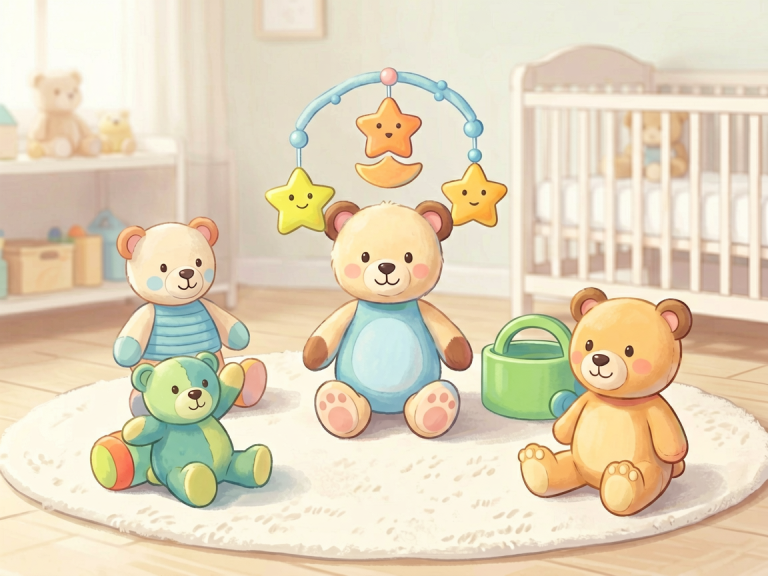
The mistake often occurs with toys that appear safe at first glance. For example, a soft plush bear may have a plastic bow tie that is only glued on. After a few washes, that bow tie can come loose and become a perfect choking object. Similarly, board books often have small cardboard tabs that can be chewed off. Before buying, physically inspect the toy for any removable pieces. Even if the package says “non‑toxic,” a small object in a child’s airway is dangerous regardless of material. Avoid toys with magnets as well—if swallowed, multiple magnets can attract each other through intestinal walls, causing perforations or obstructions that require emergency surgery.
Mistake #3: Assuming “Natural” or “Eco‑Friendly” Means Automatically Safe
The modern marketplace is flooded with toys made from wood, bamboo, organic cotton, or recycled materials. While these options are often better for the environment, they are not inherently safer for children. Natural wood, for instance, can splinter if not properly sealed, and some wood finishes contain volatile organic compounds or heavy metals that are toxic if chewed.
The mistake is trusting marketing buzzwords without reading the fine print. “Organic” cotton might still be dyed with synthetic chemicals, and “natural” rubber can contain latex proteins that trigger allergies. Moreover, handmade toys from small sellers often lack the rigorous testing required for commercial products. Always look for certifications such as ASTM (American Society for Testing and Materials) or EN71 (European standard). These indicate that the toy has passed specific safety tests for mechanical, physical, and chemical hazards. A wooden block that is simply sanded and varnished may look innocent, but if the paint contains lead, it poses a chronic poisoning risk.
Mistake #4: Forgetting to Check for Toxic Chemicals and Lead
Lead poisoning from toys is rare in developed countries today, but it still happens—especially with imported items, vintage toys, or cheap knockoffs sold online. The problem is not always lead; other substances like phthalates (used to soften plastic), bisphenol A (BPA), and formaldehyde can be present in paints, plastics, and adhesives.
Parents often forget that “non‑toxic” on a label is not a regulated term in all regions. A toy may be advertised as “BPA‑free” but still contain phthalates or other endocrine‑disrupting compounds. The safest approach is to buy from reputable brands that submit to third‑party testing. Avoid toys with a strong chemical smell, as that often indicates off‑gassing of solvents. Also, be wary of cheap plastic toys from unknown manufacturers—frequently sold at dollar stores, discount bins, or online marketplaces with no clear origin. Even if the price is tempting, the potential health cost is far higher.
Mistake #5: Neglecting Battery Compartment Security
Electronic toys are ubiquitous—from singing stuffed animals to battery‑powered cars. Yet many parents do not examine how the battery compartment is secured. A child who can access the compartment may swallow button batteries, which are among the most dangerous foreign objects a child can ingest. Button batteries can cause severe internal burns within two hours due to an electrical current that generates heat and caustic sodium hydroxide.
The mistake is assuming that a screw‑on cover is sufficient. Some compartments are held by a single small screw that can be turned with a coin or a fingernail. Others use a sliding latch that a determined toddler can pry open. Buy only toys where the battery compartment requires a tool (like a Phillips‑head screwdriver) to open. Do not rely on tape or friction. Additionally, dispose of old batteries immediately and store new ones out of reach. Even after the toy is retired, the batteries remain a hazard.
Mistake #6: Buying Toys with Long Cords, Strings, or Loops
A toy with a pull‑string, a cape, or a looped handle can pose a strangulation risk. The U.S. Consumer Product Safety Commission recommends that strings on toys intended for young children be no longer than 12 inches, and that no toy should have a loop that can fit around a child’s neck. Yet many parents underestimate how quickly a child can become entangled.
Consider a popular toy: a wooden train with a short rope. If a child wraps the rope around their neck while playing, the result can be a tragic accident that happens in seconds. Avoid any toy that has a cord longer than your child’s arm span. For toys like pull‑along animals, ensure the cord is attached securely and cannot be pulled free. Also, be cautious with toy jewelry, necklaces, or costume accessories—they may look cute, but they are strangulation hazards and often contain small beads that can break off.
Mistake #7: Disregarding Noise Levels
Loud toys are not just annoying; they can cause permanent hearing damage. A toy that emits sounds at 85 decibels or higher—common for many electronic toys, toy phones, or toy vehicles—can harm a child’s sensitive ears if held close to the ear or used for extended periods. The mistake is that parents often test the toy at home and think it is acceptable, but a child may hold it directly to their ear while playing.
Check the packaging for decibel ratings. If none is provided, listen to the toy in the store before buying. If it makes you wince, your child’s ears are at risk. You can also place tape over the speaker to muffle the sound, but it is better to choose toys that have volume controls or are naturally quiet. Remember that repeated exposure to moderately loud sounds can also lead to cumulative hearing loss.
Mistake #8: Falling for Fads Without Checking Recalls or Reviews
Every holiday season, a new “must‑have” toy sweeps social media. Hoverboards, fidget spinners, or cheap drones—these fads often flood the market with low‑quality copies that have not been properly tested. Many parents buy impulsively without checking whether the toy has been recalled for a safety defect.
The mistake is assuming that because a toy is popular, it is safe. Always look up the product’s safety record on government recall databases (like the CPSC in the U.S., or the equivalent in your country). Read user reviews specifically for safety concerns—parents often report broken parts, sharp edges, or overheating batteries. A toy that has been recalled should never be purchased, even secondhand. Also, be careful with used toys handed down from friends or bought at garage sales; they may lack safety labels, have missing parts, or contain materials no longer considered safe.
Mistake #9: Overlooking the Toy’s Intended Use and Play Environment
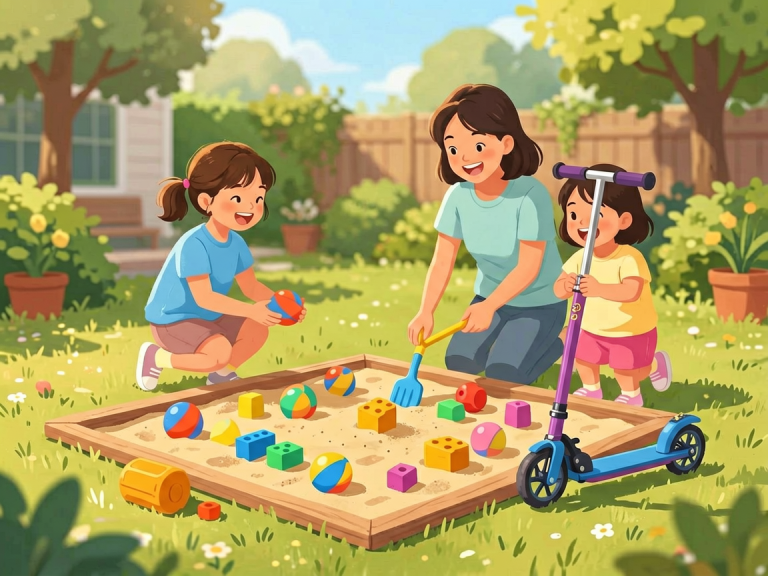
Last but not least, a toy that is safe in one setting may be dangerous in another. A small plastic car is fine for play on a rug, but if the child runs with it near stairs, the toy becomes a trip hazard. Art supplies like glue, paint, or modeling clay are safe under adult supervision, but if left unattended a toddler might eat them. The mistake is failing to match the toy with the child’s supervision level and play space.
Think about the context: Will the toy be used indoors or outdoors? Is the child supervised? Are there younger siblings who might access the toy? A toy that is safe for a 7‑year‑old may be a hazard for a 1‑year‑old sibling who finds it on the floor. Also, consider storage—a heavy toy that falls from a shelf can injure a child. Always pick toys that are appropriate for the space and the presence of other children.
Conclusion: A Mindful Approach to Toy Shopping
The joy of giving a toy is not diminished by caution—it is amplified. When you avoid these mistakes, you give more than a piece of plastic or wood; you give the freedom to explore, learn, and play without unnecessary risk. Read labels, inspect with your eyes and hands, research products, and trust your instincts. Safe toy selection is not about paranoia; it is about informed love. By steering clear of these common errors, you ensure that every smile you see comes from fun, not from hidden danger.