Top Mistakes to Avoid When Choosing Open-Ended Toys for Your Child
Open-ended toys—those versatile playthings like wooden blocks, magnetic tiles, play silks, and loose parts—are widely celebrated for sparking creativity, problem-solving, and independent play. Unlike single-purpose toys that dictate a specific outcome, open-ended toys invite children to invent their own uses, turning a simple cardboard box into a spaceship or a set of pebbles into a treasure map. However, the very freedom that makes these toys so powerful also means that choosing them requires careful thought. Many parents, educators, and gift-givers fall into common traps that can undermine the very benefits they seek. Below are the most critical mistakes to avoid when selecting open-ended toys, each explained with practical insights to help you make smarter, more developmentally appropriate choices.
Mistake #1: Assuming “Open-Ended” Means “Age-Proof”
One of the most pervasive errors is believing that because a toy is open-ended, it is automatically suitable for children of any age. A set of tiny glass beads may be wonderfully open-ended for a ten-year-old who uses them to create mosaic patterns, but for a two-year-old, they are a choking hazard. Similarly, a complex wooden puzzle with dozens of small geometric pieces might frustrate a toddler who lacks the fine motor control to grasp and manipulate them, leading to tears rather than joyful exploration.
Age labels on toy packaging are not arbitrary; they reflect safety regulations, developmental milestones, and typical cognitive abilities. Open-ended does not mean “one size fits all.” A three-year-old will thrive with large, chunky building blocks, play dough, and soft fabric scraps, while a six-year-old can handle smaller loose parts, such as wooden beads and lacing strings, when supervised. Ignoring age guidelines can result in a toy that is either dangerously small, too complex to use, or so simple that it quickly bores an older child. Always check the manufacturer’s recommended age range, and consider your child’s individual developmental stage—not just their chronological age—before making a purchase.
Mistake #2: Confusing “Open-Ended” with “Unlimited Quantity”
There is a common misconception that the more open-ended toys a child has, the more creative they will become. In reality, an abundance of choices can overwhelm a young mind, leading to decision fatigue, scattered play, and a lack of deep engagement. When a playroom is cluttered with dozens of different types of blocks, magnetic tiles, loose parts, and art supplies, children often flit from one item to another without ever diving into sustained, imaginative play.
Research in developmental psychology suggests that a limited, carefully curated selection of open-ended toys actually fosters deeper focus and creativity. A child with ten wooden blocks will likely invent elaborate towers, bridges, and narratives with those blocks. A child with fifty blocks plus a bin of random pieces may spend more time sorting and tidying than actually building. The key is quality over quantity. Choose a few versatile, high-quality sets that complement each other—for example, a set of plain wooden blocks, a collection of colorful scarves, and a set of stacking bowls—rather than buying every open-ended toy on the market. Rotating toys periodically can also keep play fresh without overwhelming the child.
Mistake #3: Neglecting the Role of Simplicity
Open-ended toys are at their best when they are simple. Yet many modern open-ended toys come with excessive features, decorations, or “educational” add-ons that actually limit their flexibility. A wooden block set that includes pre-printed letters, numbers, and cartoon characters may seem like a good idea, but those markings can steer a child toward a specific “correct” usage—such as building the alphabet tower—rather than allowing free-form construction. Similarly, a magnetic tile set with built-in wheels and pre-shaped pieces may reduce the child’s need to invent their own solutions.
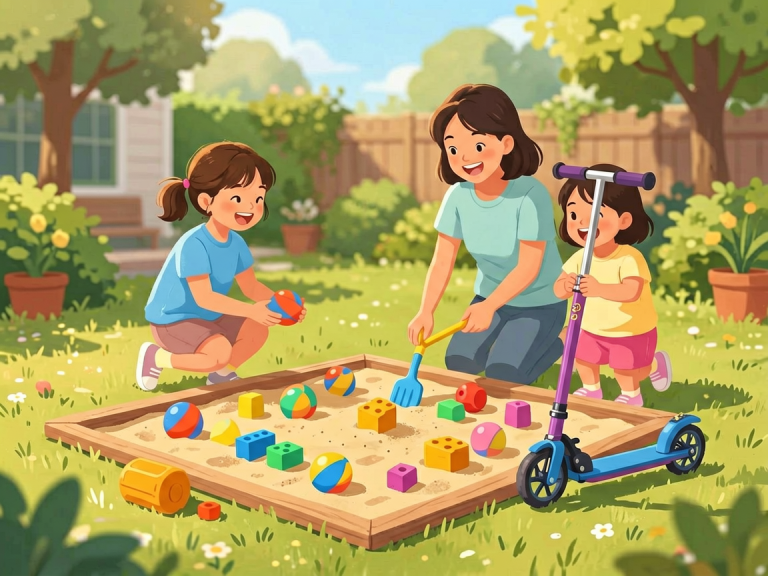
True open-endedness thrives on minimalism. The most effective open-ended toys have no written instructions, no predetermined outcomes, and no built-in stories. A plain, unpainted set of unit blocks, a simple piece of silk cloth, or a bucket of clean sand all offer infinite possibilities because they lack any fixed identity. When you choose a toy, ask yourself: “Does this toy tell the child what to do, or does it wait for the child to decide?” If it leans toward the former, it may not be as open-ended as you think. Opt for the barest, most neutral versions of classic materials—natural wood, unbleached cotton, plain colors—and let your child’s imagination do the rest.
Mistake #4: Ignoring Safety and Material Quality
Because open-ended toys are often used in unpredictable ways—stacked, thrown, chewed, dragged, submerged in water—they demand robust construction and non-toxic materials. A cheaply made plastic toy that cracks easily can produce sharp edges or small fragments that pose hazards. Paints and finishes that contain lead, phthalates, or BPA are still found in some budget products, especially those imported from countries with lax regulations. Moreover, open-ended toys are frequently used for sensory play, which means they may end up in a child’s mouth or rubbed against their skin.
Always prioritize toys made from natural, sustainable materials like solid wood (not particle board), organic cotton, beeswax, or food-grade silicone. Check for certifications such as ASTM (American Society for Testing and Materials) or EN71 (European safety standard). Avoid toys with strong chemical smells, peeling paint, or loose components that can come off easily. While high-quality open-ended toys can be more expensive upfront, they last for years, often being passed down to siblings, and they provide peace of mind that your child is playing safely. Remember: a cheap toy that breaks or harms your child is not a bargain.
Mistake #5: Expecting Open-Ended Toys to Entertain Without Adult Involvement
One of the biggest disappointments for parents is buying an expensive set of open-ended toys only to find their child ignoring them after ten minutes. This often happens because the parent assumes that the toy’s “open-ended nature” means it will automatically captivate the child without any guidance. In reality, open-ended play requires a certain level of cognitive skill and imagination that develops over time. Very young children, especially toddlers, still need adults to model and scaffold play. Without a demonstration, a pile of wooden rings might seem like mere clutter to a two-year-old who hasn’t yet learned to stack or sort.
Adults play a crucial role in the early stages. Sit with your child, show them how to balance a block on another, or drape a scarf over a chair to make a tent. Narrate your actions and invite them to join. As children grow, they will internalize these patterns and eventually invent their own games. But if you buy open-ended toys and expect them to function like a talking electronic toy that does all the work, you will likely be disappointed. The magic of open-ended play flourishes in a supportive environment where adults are present, patient, and playful.
Mistake #6: Overlooking Storage and Accessibility
Finally, many well-intentioned gift-givers fail to consider the practical logistics of open-ended toys. These toys often consist of many small pieces—blocks, beads, rings, caps, and fabric scraps—that can quickly become lost, mixed, or scattered across the house. Without proper storage, a beautiful set of wooden loose parts can turn into a chaotic mess that discourages both play and clean-up.
Invest in clear, low bins, open shelves, and divided trays that let children see and access the pieces easily. Label containers with pictures for pre-readers. Keep the number of pieces visible at any one time manageable; store duplicates or seasonal items out of reach and rotate them. Also consider the floor space needed for building and spreading out. A small play mat or a low table can define the play area and help contain the pieces. By making the toys easy to find and easy to put away, you remove a major barrier to meaningful play.
Conclusion
Open-ended toys are a powerful tool for nurturing creativity, independence, and cognitive flexibility in children, but they are not a magic solution that works automatically. The mistakes outlined above—ignoring age suitability, overloading the play space, choosing overly complex or poorly made items, or expecting instant independent play—can all diminish the benefits. By selecting simple, high-quality, age-appropriate toys, limiting the quantity, and being an active play partner, you create the conditions for rich, self-directed play that will serve your child for years to come. The best open-ended toy is not the one with the longest features list, but the one that, in the hands of a child, quietly becomes anything they want it to be.