Top STEM Gifts for 7-Year-Olds: Fueling Curiosity and Creativity
Choosing the perfect gift for a 7-year-old can be a delightful challenge. At this age, children are brimming with curiosity, asking endless “why” and “how” questions, and developing the fine motor skills and attention span needed for more complex activities. The best STEM (Science, Technology, Engineering, and Math) gifts do more than just entertain—they nurture problem-solving, critical thinking, and a genuine love for learning. Whether you are a parent, grandparent, or friend, selecting a gift that blends fun with education can spark a lifelong passion. In this article, we explore a range of carefully curated STEM gifts that hit the sweet spot for seven-year-olds: challenging enough to stimulate growth, yet playful enough to keep them engaged for hours.
Building Blocks of Engineering: Construction and Robotics Kits
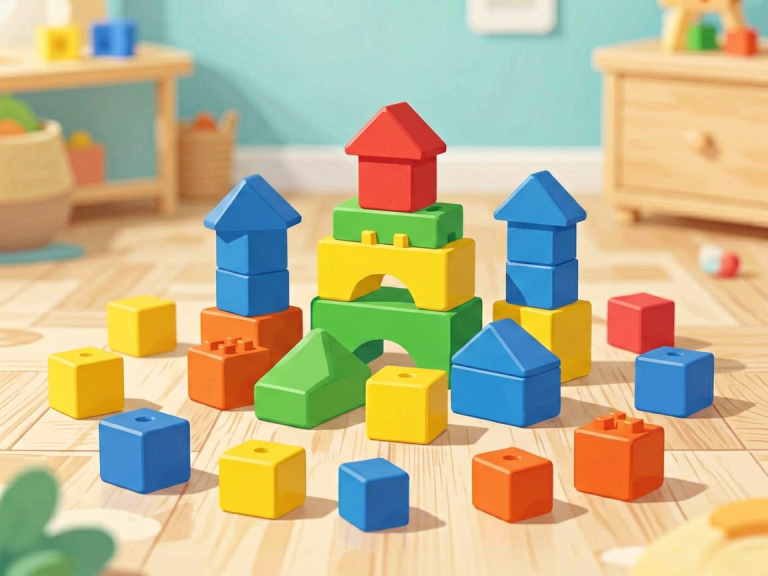
At seven, children are natural builders. They love stacking, connecting, and creating structures that stand—or fall—with satisfying drama. Construction kits that go beyond simple blocks are ideal for introducing engineering principles. Look for sets that include gears, pulleys, axles, and connectors. With these, kids can build anything from a spinning carousel to a working crane, learning about balance, torque, and mechanical advantage along the way.
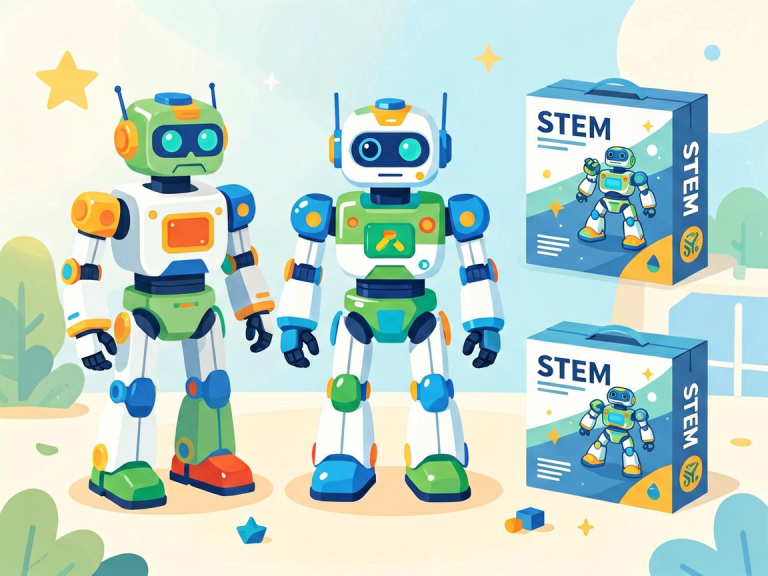
Robotics kits are another outstanding category. Many kits now allow children to build a simple robot and control it via a smartphone app or a remote. For a 7-year-old, the best options are those with snap-together pieces and no soldering required. For instance, a basic motorized robot that can be programmed to follow a line or avoid obstacles teaches early coding logic alongside engineering. These kits often come with story-driven challenges, turning the building process into an adventure. The sense of accomplishment when a child sees their creation move for the first time is priceless, and it lays the groundwork for understanding how machines work in the real world.
Coding and Technology: Introducing Programming Through Play
Technology is a core component of STEM, and introducing coding at age seven can be incredibly rewarding. However, the key is to avoid screens that feel like passive consumption. Instead, choose gifts that make programming tangible and tactile. Board games that use cards to create sequences of commands—like a game where you must guide a mouse to a piece of cheese—teach logic sequencing without any digital device. Similarly, programmable toys that move, light up, or make sounds in response to your code are huge hits.
For children ready to use a tablet or computer, block-based coding apps and websites (such as ScratchJr) are excellent starting points. But for a physical gift, consider a toy that combines coding with creativity. Some kits allow kids to code their own video games by arranging physical blocks that represent code commands. Others include a small robot that can be programmed to draw shapes or dance to music. The goal is to demystify technology, showing children that they can be creators, not just consumers, of digital experiences. When a 7-year-old sees that their instructions can make a screen character jump or a robot spin, they gain a powerful sense of agency.
Science Exploration: Hands-On Experiments and Kits
Seven-year-olds are fearless scientists. They love mixing, pouring, and observing—sometimes with messy but memorable results. Science experiment kits are a classic STEM gift, but not all are created equal. The best ones focus on safe, guided activities that explain the "why" behind the "wow." Look for kits that cover multiple branches of science: a chemistry set with non-toxic powders that fizz and change color; a physics kit that explores magnets, circuits, and optics; or a biology kit that includes a bug viewer, a plant-growing terrarium, or a simple microscope.
One particularly engaging trend is the "crystal growing" or "volcano eruption" kit, which provides instant gratification while subtly teaching about chemical reactions and crystallization. Another fantastic option is a weather station that lets kids measure wind, rain, and temperature, turning their backyard into a real-world lab. These kits often come with a guidebook that encourages children to record observations and form hypotheses—essential skills for any budding scientist. The best part is that these activities can be done with minimal adult supervision, giving kids the independence to explore at their own pace.
Mathematical Thinking: Puzzles, Games, and Logic
Mathematics for a 7-year-old doesn’t have to mean worksheets or flashcards. The right gifts make numbers, patterns, and logic feel like pure fun. Strategy board games that involve counting, probability, or spatial reasoning are fantastic. Games like Qwirkle (matching shapes and colors) or a kid-friendly version of Blokus (placing tiles to cover territory) develop logical thinking and planning skills. Even classic dice games can be adapted to encourage mental math.
Puzzles are another powerhouse. Jigsaw puzzles with 100–200 pieces teach pattern recognition and persistence, while 3D puzzles (like building a wooden dinosaur or a globe) add an engineering twist. For a more high-tech option, consider a handheld electronic math game that quizzes children on addition, subtraction, and multiplication in an arcade-style format. The competitive element—trying to beat their own high score—keeps them coming back for more. There are also subscription boxes that deliver a new math-based challenge each month, such as a marble run that requires calculating the steepest angle. By embedding math in playful contexts, these gifts show children that numbers are tools for solving real problems, not just abstract symbols.
Creative Integration: Arts Meets STEM (STEAM)
Not all STEM gifts have to be purely scientific. The STEAM movement—adding Art to STEM—recognizes that creativity is essential for innovation. For a 7-year-old, combining artistic expression with engineering or science yields some of the most memorable gifts. Consider a circuit kit that lets children build light-up greeting cards or wearable LED accessories. They learn about conductive paths and components while creating something beautiful and personal.
Another excellent STEAM gift is a stop-motion animation kit. With a simple camera stand and software, kids can build characters from modeling clay or LEGO, then film them moving frame by frame. This process teaches storytelling, sequencing, and even basic physics (how to make a character “fly” by adjusting frames). Similarly, a 3D printing pen allows children to draw in the air, creating three-dimensional objects from plastic filament. They must plan their designs, think about balance, and experiment with shapes—all while exercising their imagination. These gifts prove that science and art are not opposites; they are partners. When a child sees a circuit light up their drawing or a clay character come to life on screen, they understand that innovation happens where disciplines meet.
Conclusion: Choosing the Right Spark
The best STEM gift for a 7-year-old is one that matches their unique interests and developmental stage. A child who loves to take things apart might thrive with a robotics kit; one who is always asking “what if” might adore a chemistry set; a quiet thinker might enjoy logic puzzles; and a budding artist will be captivated by STEAM projects. Remember that the goal is not to push advanced knowledge but to provide open-ended, exploratory tools that invite play. A gift that leads to hours of focused, joyful tinkering is a gift that will pay dividends for years. Whether it’s a simple pulley system or a programmable robot, the underlying message is the same: “You can ask questions, you can make mistakes, and you can build something amazing.” And that is the most precious gift of all.