Ultimate Guide to the Best Toy Gifts for 4-Year-Olds: Spark Creativity, Learning, and Fun
Choosing the perfect toy for a 4-year-old can feel like navigating a maze of colorful boxes, flashing lights, and endless parental reviews. At this magical age, children are bursting with curiosity, developing language skills at lightning speed, and beginning to understand the world through imaginative play. Their fine and gross motor skills are evolving, their attention spans are growing, and their social awareness is flowering. The best toys for 4-year-olds are those that meet these developmental milestones while being irresistibly fun. They should encourage problem-solving, foster creativity, promote physical activity, and, above all, bring joy. This guide explores the finest toy categories, each carefully selected to support a 4-year-old’s growth across multiple domains. Whether you are a parent, grandparent, aunt, uncle, or family friend, these recommendations will help you find a gift that is not only cherished but also becomes a catalyst for learning and exploration.
The Power of Imaginative Play: Dress-Up and Role-Playing Sets
Four-year-olds live in a world where dragons can be tamed, doctors can fix teddy bears, and tea parties are held for invisible guests. Imaginative play is the cornerstone of cognitive and social development at this age. A high-quality dress-up trunk filled with costumes—such as a firefighter jacket, a princess gown, a chef’s apron, or a superhero cape—invites endless storytelling and role-switching. These props help children practice empathy by putting themselves in others’ shoes, refine language skills through scripted dialogues, and gain confidence by acting out scenarios from daily life or fantasy. Look for sets that include accessories like a doctor’s kit with a stethoscope, syringe, and bandages, or a wooden kitchen with pots, pans, and play food. The open-ended nature of these toys means they never go out of style; a child might be a veterinarian one day and a spaceship captain the next. For added durability, choose sets made from sturdy fabrics or wood rather than flimsy plastic. A family favorite, the Melissa & Doug Let’s Play House! Dust! Sweep! Mop! Set, for example, allows little ones to mimic adult chores, which satisfies their desire for independence and helps them understand household routines. Investing in imaginative play not only entertains but also builds the foundation for narrative thinking and emotional intelligence.
Building Blocks and Construction Toys: Cultivating Problem-Solving and Fine Motor Skills
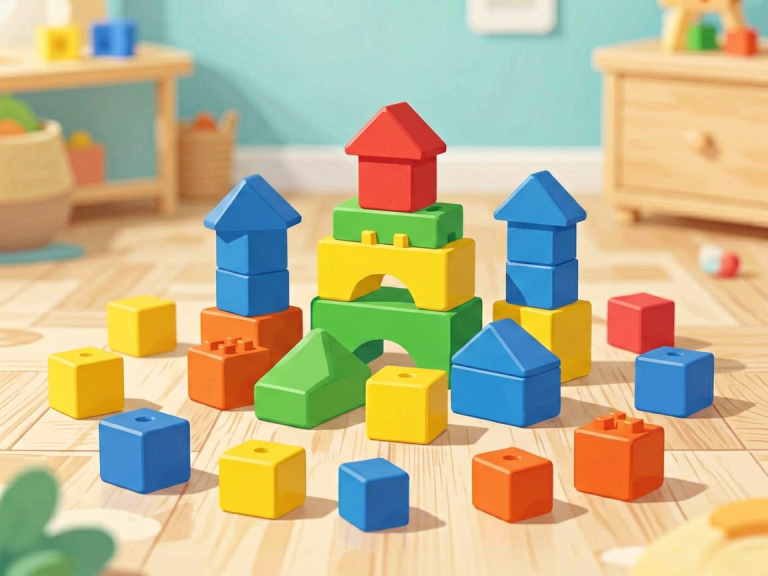
If there is one toy category that consistently earns top marks from educators and parents alike, it is building and construction sets. At age four, children can manipulate larger interlocking blocks, create simple structures, and follow basic instructions—or, more often, invent their own blueprints. Classic wooden unit blocks offer a tactile, open-ended experience; children can stack, balance, and design towers, bridges, and houses, learning about gravity, stability, and spatial relationships in a hands-on way. Meanwhile, magnetic tile sets (like Magna-Tiles or Picasso Tiles) are incredibly popular because they click together effortlessly, allowing even small hands to build 3D shapes, castles, and vehicles. These colorful translucent tiles also teach symmetry, geometry, and color recognition. For a more guided challenge, consider a beginner construction set such as LEGO Duplo. These larger bricks are easy for tiny fingers to snap together and come with themes like farm animals, fire stations, or princess castles. Following the simple step-by-step diagrams enhances sequencing skills and patience. The best part? Building toys grow with the child. A 4-year-old may start by stacking blocks randomly, but within months they will attempt more complex designs, fostering resilience when their creation falls and teaching them to try again. For a unique twist, look for kits that incorporate gears or wheels, like the Learning Resources Gears! Gears! Gears! sets, which introduce cause-and-effect and early engineering concepts. Ultimately, construction toys provide a perfect balance of independent focus and creative expression.
Educational Toys That Feel Like Play: Puzzles, Matching Games, and Early STEM Kits
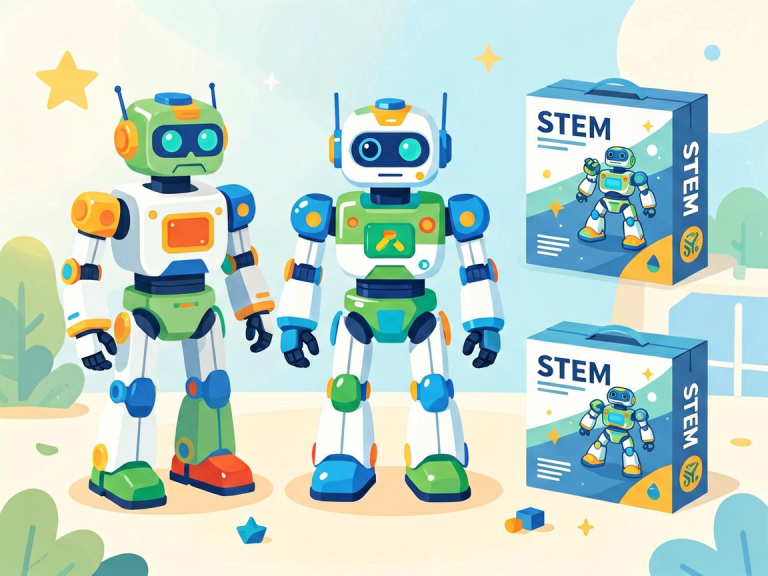
Learning should never feel like a chore for a 4-year-old, and the best educational toys disguise skill-building as delightful fun. Puzzles, for instance, are exceptional tools for developing hand-eye coordination, shape recognition, and logical thinking. At this age, children can handle jigsaw puzzles with 24 to 48 pieces featuring their favorite characters, animals, or landscapes. Floor puzzles are especially engaging because they require the child to move their body and collaborate with others. Completing a puzzle provides a satisfying sense of accomplishment and teaches persistence. Matching games and memory card sets are another fantastic option. A simple game of “Memory” with animal cards sharpens visual memory and concentration, while cooperative matching games—where players work together to find pairs—encourage teamwork rather than competition. For budding scientists and mathematicians, consider early STEM (Science, Technology, Engineering, Math) toys that are age-appropriate. A simple magnetic counting board or a number puzzle that pairs digits with corresponding dots helps build number sense. Science kits designed for preschoolers, such as a set for growing crystals or a bug-catching kit with a magnifying glass and collection jar, spark natural curiosity. The “ThinkFun Roll and Play” game is also a hit: it involves a large cube with pockets containing activity cards that prompt actions like “make a sad face” or “hop like a frog,” combining emotional learning with gross motor movement. When selecting educational toys, look for those that encourage trial and error and are not overly prescriptive. The goal is to cultivate a love of discovery, not to drill facts.
Outdoor and Active Toys: Encouraging Gross Motor Development and Healthy Habits
A 4-year-old has boundless energy and a growing need for physical exertion. Outdoor toys that promote running, jumping, balancing, and throwing are essential for developing gross motor skills, strength, and coordination. One of the best gifts you can give is a quality tricycle or balance bike. Balance bikes, which have no pedals, teach children to steer, lean, and glide, building the confidence needed to transition to a pedal bike later. They also provide excellent cardiovascular exercise and help with spatial awareness. If you have a yard, consider a small climbing dome or a toddler-sized slide. Playhouses, tents, or pop-up tunnels create a private space where children can engage in imaginative adventures outdoors. For cooperative play, a classic set of plastic golf clubs with large balls or a child-size basketball hoop with an adjustable height encourages social interaction and turn-taking. Kites, bubbles, and parachutes also offer simple thrills that require running and coordination. Don’t overlook the value of a simple sandbox with buckets, shovels, and molds; digging, pouring, and building in sand strengthens hand muscles and introduces basic concepts of volume and texture. For rainy days, consider an indoor obstacle course kit with foam blocks, stepping stones, and balance beams. The key is to choose toys that are safe (no sharp edges, non-toxic materials) and made to withstand energetic use. Active toys not only combat sedentary screen time but also improve sleep, mood, and overall health—making them a gift that keeps giving.
Arts, Crafts, and Sensory Play: Unleashing Creativity and Fine Motor Precision
At four, children love to create. The process of drawing, painting, gluing, and sculpting is not just messy fun; it is vital for developing fine motor control, hand-eye coordination, and self-expression. An art caddy filled with washable markers, crayons, safety scissors, glue sticks, and a ream of paper provides endless possibilities. Look for specialty items like “dot markers” that produce perfect circles without spilling, or water-reveal mats that allow mess-free painting. Modeling clay or Play-Doh is another enduring favorite—kids can roll snakes, cut shapes, and make imaginary creatures, which strengthens the small muscles in their hands and fingers, preparing them for writing. For a more structured activity, consider a craft kit such as a wooden dinosaur to paint, a sticker mosaic kit, or a bead-stringing set with chunky wooden beads and cord. These kits teach following instructions and patience. Sensory play is equally important; a tabletop sand tray, water beads (supervised), or a DIY kinetic sand kit can calm an overwhelmed child while promoting tactile exploration. For an eco-friendly twist, choose natural materials like beeswax crayons and recycled paper. Remember, the goal is not a perfect masterpiece but the joy of experimentation. Displaying their artwork on the fridge or in a portfolio boosts self-esteem. These creative toys also provide a wonderful opportunity for parent-child bonding—you can sit down together and paint, chat, and laugh, making memories that last far longer than the toy itself.
Musical Instruments and Sound Toys: Building Rhythm and Listening Skills
Music has a profound impact on a child’s developing brain. Introducing musical instruments at age four can enhance listening skills, pattern recognition, and emotional regulation. Simple percussion instruments like maracas, tambourines, drums, and xylophones allow children to experiment with tempo, volume, and rhythm. A high-quality children’s ukulele or a small electronic keyboard with a microphone can spark a lifelong love of music. Look for instruments that are durable and sized for small hands—for instance, a Remo Kids Floor Tom or a pair of rhythm sticks. There are also clever toys like the “B. Toys Wooden Symphony Drum” or the “Hape Pound & Tap Bench with Xylophone” that combine music with fine motor actions. For a screen-free music experience, try a set of 8-note glockenspiels or a handbell set that introduces scales and harmony. Singing along with a karaoke machine (with adjustable volume) builds confidence and language skills. If you want to go a step further, musical story tapes or CDs (yes, they still exist!) encourage active listening and imagination. The social aspect of music—playing along with siblings, making up songs together—fosters cooperation and shared joy. The best musical toys are those that are open-ended, allowing the child to create their own tunes rather than follow rigid instructions.
Board Games and Cooperative Play: Developing Social Skills and Turn-Taking
While many four-year-olds are still learning the rules of sharing, introducing simple board games can teach them about patience, fairness, and following directions—all in a playful context. Choose games with very limited text and strong visual cues. “Hoot Owl Hoot!” is a perfect cooperative game where players work together to help the owls fly home before the sun rises, promoting teamwork without the pressure of losing. “Candy Land” and “Chutes and Ladders” are classics that practice counting, color recognition, and emotional resilience when a player slides back. “Zingo!” is a bingo-style game that builds vocabulary and matching speed. For a memory twist, “The Sneaky, Snacky Squirrel Game” uses tweezers and acorns to develop fine motor skills and turn-taking. Remember that the adult or older sibling’s role is to model good sportsmanship and that winning or losing is part of the fun. These games also create quality family time, offering a break from screens and a chance to engage in conversation. As the child grows, the same game can be played more strategically, giving it long-lasting value. When shopping, look for games labeled “ages 4 and up” with chunky pieces that are easy to grasp and difficult to lose.
Conclusion: Choosing with Intention and Joy
Selecting the best toy gift for a 4-year-old is ultimately about understanding the child as a unique individual. Some children love the kinetic thrill of a balance bike; others lose themselves in a dreamy world of costumes and stories. The most cherished toys are those that invite repetition, variation, and interaction—toys that do not dictate how to play but instead whisper, “What will you do with me today?” While it is tempting to buy the latest electronic gadget, the most developmental and lasting gifts often have no batteries, no screens, and no predetermined endpoints. They are simple blocks, a paintbrush, a drumstick, or a dress-up cape. By choosing toys that align with a 4-year-old’s natural drive to build, imagine, move, create, and connect, you give a gift that supports their whole development—cognitive, physical, social, and emotional. Moreover, these toys become part of family memories: the tower that fell with a crash and prompted laughter, the painted handprint that became a keepsake, the board game that taught a lesson in kindness. So go ahead, wrap up something amazing, and watch a 4-year-old’s world expand with joy. After all, the best toy is not just a thing—it is the beginning of an adventure.