Unlocking Curiosity: The Best STEM Gifts for 6-Year-Olds to Inspire a Love of Learning
—
Introduction
At age six, children are naturally curious explorers. Their world is expanding rapidly—they are learning to read, solve simple math problems, and ask endless “why” questions about how things work. This is the golden age for introducing STEM (Science, Technology, Engineering, and Mathematics) concepts through play. The right STEM gift does more than entertain; it builds critical thinking, problem-solving skills, and a lifelong enthusiasm for discovery. However, choosing among countless options can be overwhelming. Parents and gift-givers need toys that are age-appropriate, safe, durable, and genuinely engaging for a six-year-old’s developing mind. In this article, we explore the best STEM gifts for 6-year-olds—each carefully selected to spark wonder, encourage hands-on experimentation, and lay a strong foundation for future learning. Whether you are shopping for a birthday, holiday, or simply to nurture a budding scientist, these recommendations will help you make a meaningful choice.
—
Why STEM Gifts Matter at Age Six
Before diving into specific products, it is worth understanding why STEM-focused play is so critical at this stage. At six, children are in what psychologist Jean Piaget called the “concrete operational stage”—they can think logically about tangible objects and understand cause-and-effect relationships. They also develop fine motor skills and hand-eye coordination rapidly. STEM toys capitalize on these abilities by allowing children to build, test, and modify their own creations.
Moreover, research shows that early exposure to STEM reduces gender stereotypes and boosts confidence in subjects traditionally considered “hard.” A six-year-old who tinkers with a simple circuit or builds a bridge with magnetic tiles is not just playing—they are internalizing principles of physics, engineering, and design. These experiences foster a growth mindset: when a tower falls, they learn to troubleshoot rather than give up. The gifts highlighted below are chosen because they encourage open-ended exploration, provide instant feedback, and grow with the child’s skills.
—
Top STEM Gift Recommendations for 6-Year-Olds
1. Magnetic Building Tiles (e.g., Magna-Tiles or Picasso Tiles)
Magnetic tiles are perhaps the most versatile STEM toy for this age group. Sets typically include squares, triangles, and other geometric shapes with strong magnets embedded along the edges. Six-year-olds can build 3D structures—houses, rockets, castles—and experiment with symmetry, balance, and structural integrity.
The beauty of magnetic tiles lies in their simplicity. There are no instructions; children learn through trial and error. A six-year-old might discover that a tower stands taller when the base is wider, or that adding a diagonal support strengthens a wall. This hands-on experience with geometry and physics is invaluable. Additionally, magnetic tiles enhance spatial reasoning, which is a strong predictor of later success in math and science. The tiles are durable, easy to clean, and compatible with many other sets, so they can be used for years. For a gift that keeps on giving—and that siblings or friends can enjoy together—magnetic tiles are an unbeatable choice.
—
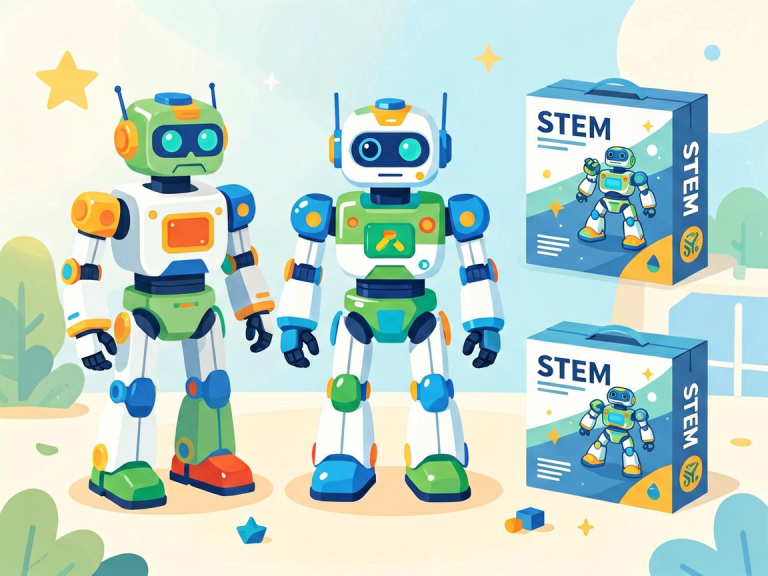
2. Programmable Robot for Beginners (e.g., Botley the Coding Robot Activity Set)
Coding is often seen as an abstract skill, but for six-year-olds, the best introduction is a physical robot they can control. Botley is a screen-free coding robot designed for ages 5 and up. Children program Botley’s movements by pressing arrows on a remote control, creating sequences of up to 150 steps. The set includes obstacle courses, dominoes, and other accessories that turn coding into a playful challenge.
What makes this gift stand out is that it teaches logical sequencing, pattern recognition, and debugging without any screen time. A six-year-old learns that if Botley doesn’t reach the target, they must re-examine their code and try a new approach—a valuable lesson in perseverance. Botley also has hidden features (like “detect object” and “follow black line”) that children can discover over time, extending the toy’s lifespan. For a child who loves puzzles and order, a programmable robot fosters computational thinking in the most natural way: through play.
—
3. Hands-On Science Experiment Kits (e.g., National Geographic Mega Science Lab)
Six-year-olds are natural scientists—they love mixing, pouring, and observing reactions. A comprehensive science kit channels that curiosity into structured experiments. The National Geographic Mega Science Lab, for example, includes over 15 activities: growing crystals, creating volcanic eruptions, digging for fossils, and exploring magnets. The kit comes with clear instructions and most necessary materials, so parents do not need to hunt for extra supplies.
These experiments teach basic chemistry and earth science concepts. When a child mixes baking soda and vinegar to create a “volcano,” they observe acid-base reactions. When they dig out a “fossil” from a plaster block, they practice careful excavation and learn about paleontology. The sense of wonder that comes from seeing a crystal form overnight is unforgettable. Moreover, these kits encourage following step-by-step directions, a skill that serves children well in school. Safety is always a priority—look for kits that are non-toxic and include child-friendly tools. A science lab is the perfect gift for a child who asks “How does that work?” all day long.
—
4. Simple Circuit and Electronics Kits (e.g., Snap Circuits Jr.)
Electricity can feel like magic to a six-year-old, but Snap Circuits makes it tangible. The Snap Circuits Jr. set includes color-coded, snap-together components like switches, lights, motors, and buzzers. Children can build more than 100 different projects—a fan that spins, a doorbell that rings, a flying saucer that whirs. The pieces snap onto a plastic grid, so no soldering or tools are needed.
This gift introduces foundational engineering and electronics concepts in a safe, frustration-free way. A child learns that a circuit must be closed for electricity to flow; they discover what happens when they add a resistor or flip a switch the wrong way. The modular design allows endless creativity beyond the instruction booklet. Older kids can combine sets to create more complex circuits. For a six-year-old, the immediate cause-and-effect feedback is incredibly satisfying. The skills developed—understanding inputs and outputs, troubleshooting, and reading schematic diagrams—are directly transferable to future STEM learning.
—
5. Engineering Building Sets (e.g., LEGO Classic Creative Bricks or K’NEX)
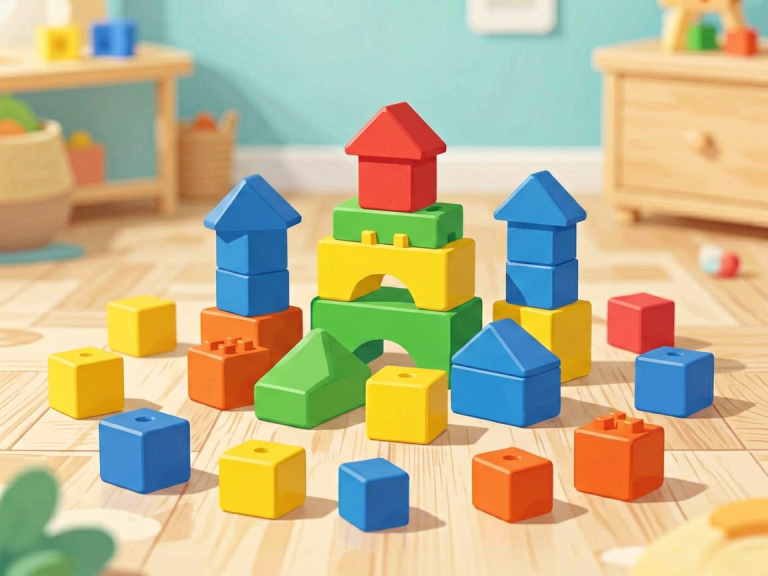
You cannot go wrong with building bricks. LEGO Classic sets come with a variety of bricks, wheels, windows, and special pieces without a specific theme, encouraging free-form construction. For a more engineering-focused experience, K’NEX sets include rods, connectors, and wheels that snap together to create moving structures like cars, cranes, and roller coasters.
What makes these sets different from simple block play is the challenge of creating something that actually works. A six-year-old building a car with K’NEX must consider axle alignment, weight distribution, and friction. They learn to follow visual instructions (a key literacy skill) or to design their own inventions. Engineering building sets boost fine motor skills, patience, and spatial awareness. Unlike pre-assembled toys, building sets allow children to fail, revise, and succeed on their own terms. The sense of accomplishment when a self-built marble run or motorized vehicle finally works is priceless.
—
6. Nature Exploration and Measurement Tools (e.g., GeoSafari Jr. Microscope or Kid-Friendly Binoculars)
STEM isn’t limited to the indoors. Outdoor exploration tools encourage children to observe and catalog the natural world. The GeoSafari Jr. Talking Microscope is designed for preschoolers and early elementary kids—it features two eyepieces (no need to close one eye), a large focusing knob, and 20 slides with images of insects, plants, and animals. When a child places a slide, the microscope “talks” to them, sharing fun facts.
Alternatively, a pair of kid-sized binoculars (with a focus wheel and rubber casing) turns any walk into a bird-watching or cloud-spying adventure. A bug-catching kit with a magnifying jar, tweezers, and field guide encourages scientific observation and documentation. These gifts foster a connection to biology and earth science. Six-year-olds can compare the veins on a leaf, count the legs on an ant, or identify constellations (with a simple star finder). The key is that these tools make the invisible visible, turning the backyard into a laboratory.
—
7. Math and Logic Puzzles (e.g., ThinkFun’s Gravity Maze or Math Dice)
Finally, don’t overlook the “M” in STEM. Math and logic puzzles disguised as games are ideal for six-year-olds. Gravity Maze is a marble-run logic game where players build a path using colorful towers and a launcher. Each card presents a challenge of increasing difficulty. Children must plan ahead, test solutions, and use trial and error—all while engaging with physics and geometry.
Math Dice is a fast-paced game for two or more players. Roll three dice, combine them using addition or subtraction, and try to match the target number on another die. This builds mental math fluency in a fun, competitive way. Logic puzzles like these improve working memory, pattern recognition, and systematic thinking. They are compact, affordable, and travel-friendly—perfect for car rides or waiting rooms. And because they require no batteries or screens, they offer pure cognitive challenge.
—
Conclusion: Choosing the Perfect STEM Gift
Selecting the best STEM gift for a 6-year-old comes down to understanding the child’s interests and developmental stage. Some children will be captivated by the hands-on mess of a chemistry kit; others will prefer the neat logic of a coding robot. The most effective gifts share common traits: they are open-ended, allowing for multiple outcomes; they encourage active participation rather than passive consumption; and they provide a sense of accomplishment.
When in doubt, err toward simplicity. A set of magnetic tiles or a basic building set can provide years of play, while a highly specific kit may be used only once. Also consider the social aspect—many of these gifts are more fun with siblings or friends, promoting collaboration and communication. Finally, remember that the adult’s role matters: sitting down to explore a new toy together can amplify its educational value tenfold.
By investing in a quality STEM gift, you are not just giving a present—you are giving a mindset. You are telling a six-year-old that their questions matter, that failure is part of learning, and that the world is full of puzzles waiting to be solved. That is a gift that will last far beyond any holiday or birthday.