Unlocking Curiosity: The Essential Guide to Science Toys for Kids
Introduction
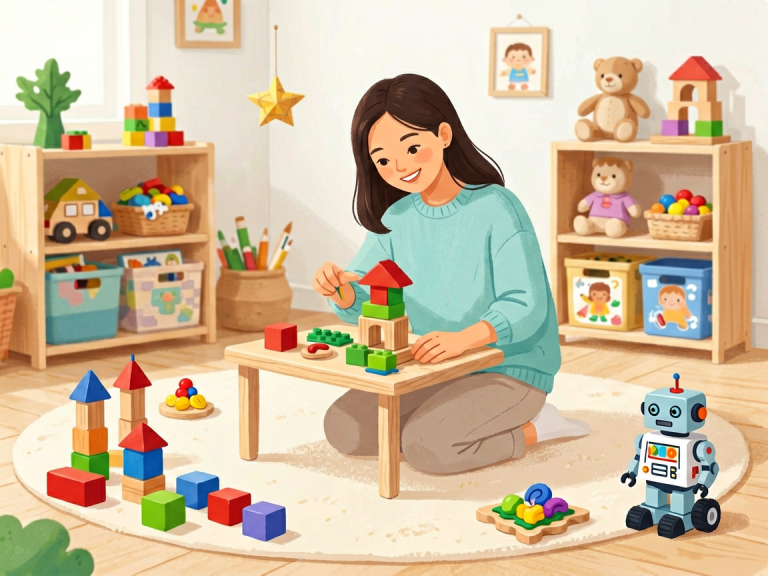
In an age dominated by screens and passive entertainment, the humble science toy stands as a quiet revolutionary. It is not merely a plaything but a portal—a gateway that transforms abstract concepts into tangible wonders. From the first time a child watches a baking soda volcano erupt to the moment they assemble a working circuit that lights a bulb, science toys offer something far deeper than amusement. They plant the seeds of critical thinking, problem-solving, and a lifelong love for discovery. This article delves into the multifaceted world of science toys for kids, exploring why they matter, what types exist, how to choose them wisely, and how parents and educators can maximize their impact. Whether you are a parent looking for the perfect gift or a teacher seeking hands-on learning tools, understanding the power of these toys is the first step toward nurturing the next generation of innovators.
Why Science Toys Matter: The Cognitive and Developmental Benefits
Science toys are not just about teaching facts; they are about building minds. When a child experiments with a simple pulley system or a magnetic construction set, they are engaging in a process that mirrors real scientific inquiry: observing, hypothesizing, testing, and revising. This iterative cycle strengthens executive functions such as planning, attention control, and cognitive flexibility.
Moreover, science toys foster resilience. Unlike many digital games that offer instant rewards, a physical science experiment often requires patience. A crystal-growing kit might take days to yield results; a solar-powered car might need several attempts before it moves smoothly. These small frustrations teach children that failure is not an endpoint but a stepping stone to understanding. This growth mindset is a cornerstone of academic and personal success.
Equally important is the development of fine motor skills and spatial reasoning. Building a model of the solar system or assembling a snap-circuit kit demands precise hand-eye coordination and the ability to visualize how components fit together. Research in neuroscience has shown that such hands-on activities strengthen neural connections in the brain’s parietal lobe, which is crucial for mathematics and engineering.
Finally, science toys democratize learning. A child from a non-scientific background can discover the joy of chemistry through a colorful pH test kit, or the thrill of physics through a DIY hovercraft. They level the playing field by making complex ideas accessible and, most crucially, fun.
Types of Science Toys for Different Age Groups
Selecting the right science toy depends heavily on a child’s developmental stage. For toddlers aged 2 to 4, the focus should be on sensory exploration and cause-and-effect. Toys like water tables, simple stacking blocks with magnifying glasses, or color-mixing paddles allow young children to observe changes without needing complex instructions. The goal is to spark wonder—how does the water flow? Why does the red and blue make purple?
Children aged 5 to 7 are ready for more structured play. Chemistry sets designed for this age (often non-toxic and safe) introduce basic reactions, such as fizzing and color changes. Magnifying glasses and bug-catching kits encourage outdoor exploration, while beginner microscopes with large, easy-to-focus lenses reveal the hidden world of leaves, fabric, and fingerprints. Building sets like magnetic tiles or simple gear systems teach rudimentary engineering principles.
For ages 8 to 12, the possibilities expand dramatically. Robotics kits (such as those from LEGO Mindstorms or littleBits) allow kids to program sensors and motors, bridging the gap between digital coding and physical output. Electronics kits like Snap Circuits or Arduino starter sets let them build alarms, radios, and even mini arcade games. Chemistry sets become more sophisticated, with real experiments in crystallization, chromatography, and polymer chemistry. Astronomy enthusiasts can use refractor telescopes to observe the Moon’s craters or Jupiter’s moons.
Teens aged 13 and above benefit from advanced kits that mimic real-world STEM tools. Microcontroller boards (Raspberry Pi, micro:bit) enable projects like weather stations or automated plant waterers. Drone-building kits teach aerodynamics and soldering. For biology lovers, home lab-grade microscopes with 1000x magnification can reveal bacteria and cell structures. At this stage, science toys often transition into serious hobbies or even foundations for future careers.
Key Features to Look for in Quality Science Toys
Not all science toys are created equal. The market is flooded with gimmicky products that promise learning but deliver shallow entertainment. To ensure a toy genuinely educates and engages, consider the following criteria:
First, open-endedness. The best science toys allow for multiple trials, modifications, and creative outcomes. A simple set of gears can be assembled in countless ways, each producing different mechanical behavior. In contrast, a preassembled dinosaur model that just roars on command offers little cognitive challenge. Look for toys that come with a guide but also invite “what if” experimentation.
Second, safety and durability. Science toys often involve small parts, chemicals, or electronic components. Always check for age-appropriate labels and certifications (e.g., ASTM, CE). Non-toxic materials, rounded edges, and secure battery compartments are non-negotiable for younger children. For kits with liquids or powders, ensure clear safety instructions and child-safe packaging.
Third, scalability. A good science toy grows with the child. For instance, a basic optics kit might start with making a periscope, but later allow for building a microscope or telescope. Some brands offer expansion packs, extending the lifecycle of the toy. This not only offers better value but also encourages sustained engagement.
Fourth, real-world connection. Toys that tie experiments to everyday phenomena are more memorable. A crystal-growing kit is fun, but one that explains how stalactites form in caves adds context. A weather station that lets kids track temperature, humidity, and wind speed makes abstract meteorology tangible. The “why” behind the “wow” is what transforms a toy into a learning tool.
Finally, inclusive design. Historically, science toys have been marketed predominantly to boys, but the best modern products consciously break stereotypes. Look for sets that show diverse children on packaging, that use colors and themes appealing to all genders, and that include role models from various backgrounds in the instruction booklets.
How to Encourage STEM Learning Through Play
Having a great science toy is only half the equation. The role of parents and educators in facilitating meaningful play is critical. Here are practical strategies:
Ask open-ended questions. Instead of saying, “That’s a nice volcano,” ask, “What do you think would happen if we used vinegar instead of lemon juice?” or “How could we make the eruption last longer?” These questions guide the child to think like a scientist—forming hypotheses and designing tests.
Embrace mess and mistakes. Science is messy by nature. A spilled liquid or a broken circuit is not a failure; it’s data. Resist the urge to intervene immediately. Let the child troubleshoot. If their solar robot doesn’t move, suggest checking the panel’s angle or battery connection. This builds perseverance and independent problem-solving.
Connect play to real life. When a child builds a simple crane, point out construction cranes on the street. After a chemistry experiment with acids and bases, taste-test the difference between lemon juice and baking soda water (with supervision). These connections anchor abstract concepts in concrete experience.
Integrate storytelling. Many children find science intimidating until it’s wrapped in a narrative. A robotics kit becomes more exciting if it’s framed as building a “Mars rover” that must navigate obstacles. A plant-growing kit can turn into a “secret garden adventure.” Storytelling activates the imagination and makes the learning stick.
Encourage collaboration. Science is rarely done in isolation. Arrange playdates or family sessions where kids work on projects together. They can debate designs, share discoveries, and learn communication skills. For older children, online communities (e.g., Scratch for coding or robotics forums) offer peer support and inspiration.
Addressing Common Concerns: Screen Time, Gender Stereotypes, and Safety
Despite their benefits, science toys face several misconceptions that deserve thoughtful consideration.
*Screen Time vs. Hands-On Play:* Some worry that modern science toys—especially those with apps or digital components—merely add more screen time. However, the key is the nature of the interaction. A coding robot that requires the child to physically place tiles or adjust sensors is active, not passive. The screen (if used) is a tool for input, not a source of endless videos. Parents should look for toys where digital elements are a means to a physical outcome, not the endpoint themselves.
*Breaking Gender Stereotypes:* The stereotype that science is for boys has been slowly crumbling, but it still influences toy marketing. Parents can counteract this by deliberately choosing science toys that are gender-neutral or that challenge norms. A pink chemistry set might appeal to some girls, but better is a set that features vibrant colors, diverse role models, and themes like “science detective” or “eco-engineer.” Equally, boys should be encouraged to explore biology and environmental science, not just rockets and robots.
*Safety First:* While most reputable brands prioritize safety, parents should always supervise experiments, especially those involving heat, electricity, or chemicals. Teach children to read labels, wear safety goggles when appropriate, and clean up properly. Establish a designated “science space” (a kitchen table with a washable cover works well) to contain mess and prevent accidents.
Conclusion
Science toys for kids are far more than pastimes—they are the building blocks of curiosity, creativity, and competence. In a world that increasingly demands STEM literacy, giving children the tools to explore, fail, and discover through play is one of the greatest gifts we can offer. From the simplest magnifying glass to the most sophisticated robotics kit, each toy holds the potential to ignite a spark that may one day illuminate a new invention, a medical breakthrough, or a deeper understanding of our universe. As parents, educators, and caregivers, we have the privilege of choosing wisely: to select toys that challenge, inspire, and respect the boundless potential of young minds. Let us embrace the power of play, and watch as our children engineer their own futures—one experiment at a time.