Unlocking Imagination: The Best Creative Gifts for 7-Year-Olds
At the age of seven, children stand at a magical crossroads. They have outgrown the simple sensory play of toddlerhood, but they have not yet entered the rigid, rule-bound world of older childhood. Their brains are buzzing with newfound cognitive abilities—logical thinking, extended attention spans, and a growing capacity for complex storytelling. Yet their hearts remain fully anchored in wonder, fantasy, and the sheer joy of making things up as they go. This is the golden age for creative gifts, because a seven-year-old can now *do* something with a tool, not just hold it and marvel. The right present can fuel hours of self-directed exploration, build confidence, and lay the foundation for lifelong creative habits. But choosing from the sea of plastic toys, digital gadgets, and flashy packaging can feel overwhelming. This guide cuts through the noise, focusing on gifts that genuinely spark imagination, encourage problem-solving, and respect a seven-year-old’s evolving abilities.
The Power of Open-Ended Play: Building and Construction Sets
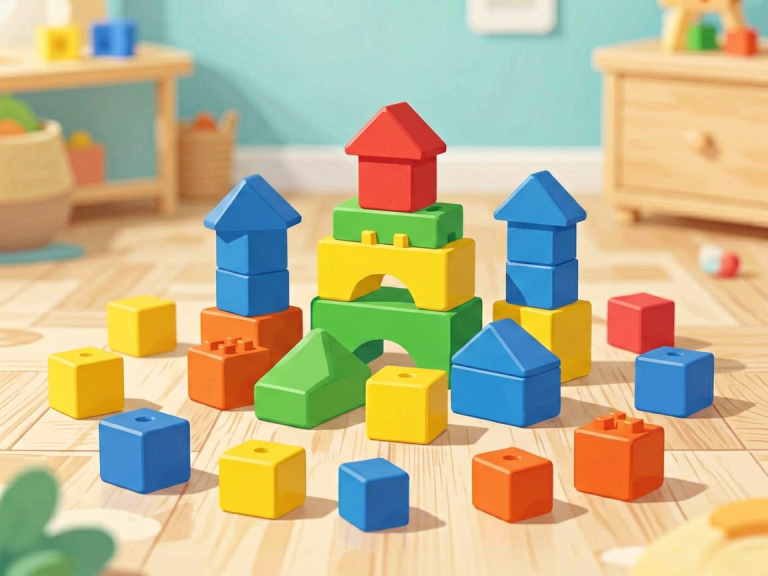
When we think of creative gifts, construction toys often come first—and for good reason. At seven, children have the fine motor control to handle smaller pieces and the spatial reasoning to follow multi-step instructions. But the most valuable building sets are those that don’t just ask the child to replicate a picture on a box. Look for sets that are *open-ended*—collections of basic blocks, planks, magnetic tiles, or modular connectors that allow for infinite reconfiguration. A set of classic wooden unit blocks, for example, can become a castle one day, a space station the next, and a tiny city for action figures after that. Magnetic building tiles (like Magna-Tiles or Connetix) are especially powerful because their translucent surfaces and strong magnets let children experiment with geometry, symmetry, and balance in a visually stunning way. For a more mechanical twist, consider a gear-based construction kit or a set like KEVA planks, which require precise stacking and a steady hand. The beauty of these gifts is that they don’t come with a “right answer.” Every tower that falls teaches resilience; every lopsided bridge teaches physics. And because the child builds from their own imagination, the gift never grows stale—it evolves with them.
Artistic Adventures: Craft Kits and Drawing Tools That Go Beyond Crayons
A seven-year-old’s artistic ability has blossomed dramatically. They can now control a pencil with intention, mix colors with purpose, and create representational drawings that tell stories. This is the perfect moment to upgrade their art materials from toddler-safe basics to tools that invite mastery and experimentation. A high-quality set of watercolor paints, with proper brushes and a paper pad, encourages them to explore washes, layering, and color blending—techniques that feel like magic. Alternatively, consider a set of artist-grade colored pencils or watercolor pencils that can be used dry or with a wet brush for effects. For children who love detail, a fine-tip marker set and a blank sketchbook can unleash hours of pattern drawing, comic strips, or character design. Beyond traditional drawing, craft kits that combine multiple media—such as weaving looms, polymer clay sets, or embroidery kits with pre-printed patterns—teach patience and fine motor precision while producing a tangible, satisfying result. One especially creative option is a “make your own kaleidoscope” or “make your own lava lamp” craft kit, which blends art with a touch of science. The key is to choose kits that are not just one-time projects but rather *systems*—like a reusable weaving loom with a supply of yarn, or a clay set that can be baked and painted multiple times. These gifts say to a child: “Your creativity is worth taking seriously.”
Science and Discovery: STEM Kits That Inspire Curiosity
Seven-year-olds ask endless questions. Why is the sky blue? How do magnets work? What makes a volcano erupt? A creative gift doesn’t have to be purely artistic—scientific exploration is a deeply imaginative act. The best STEM (Science, Technology, Engineering, and Mathematics) kits for this age are those that treat discovery as a playful, hands-on process rather than a lecture. Look for kits that involve building a working model—a solar-powered car, a hydraulic robot arm, a crystal-growing set, or a simple circuit board with LED lights and buzzers. These kits transform abstract concepts into tangible experiments. For example, a Snap Circuits set allows a child to click together electronic components to create a doorbell, a flying fan, or a light-sensitive alarm. The thrill is immediate, and the understanding comes through doing. Another wonderful category is nature-based science: a microscope with prepared slides (and blank slides for the child to create their own), a butterfly growing kit, or a weather station that tracks wind and rain. What makes these gifts creative is not just the facts they teach, but the questions they provoke. After building a circuit, a child might wonder: “What if I add another battery?” After watching a caterpillar transform, they might draw the stages or write a story from the butterfly’s perspective. Science kits that include a journal or encourage recording observations double as creative writing prompts. They teach that creativity and logic are not opposites—they are partners in understanding the world.
Musical Exploration: Instruments and Sound-Making Gifts
Music is one of the most direct pathways to creative expression, and seven is an ideal age to introduce a first instrument. While formal lessons can wait, a gift that invites free play with sound can ignite a lifelong passion. Consider a quality ukulele—its nylon strings are gentle on small fingers, and its four strings make chord-playing achievable. With a simple tuning app and a free online songbook, a child can be strumming familiar tunes within days. Alternatively, a digital keyboard with built-in rhythms and melodies allows exploration of different sounds and styles without the pressure of perfect pitch. For children who prefer percussion, a handpan or a set of tuned percussion instruments (like a glockenspiel or a colorful xylophone) offers immediate, beautiful feedback. There are also wonderful experimental options: a “build your own” musical instrument kit, such as a cigar-box guitar or a set of boomwhackers (plastic tubes that produce different notes when struck). Beyond traditional instruments, consider gifts that blend music with technology—a simple loop pedal or a voice recorder that lets a child layer sounds and create their own compositions. The goal is not to turn them into a prodigy, but to give them a tool for joy and self-expression. At this age, the act of making a sound—any sound—and controlling it builds confidence and teaches that creativity can be heard, not just seen.
Storytelling and Imagination: Books and Creative Writing Tools
A seven-year-old’s reading skills are sharpening rapidly, and many are beginning to write simple stories themselves. Creative gifts that support this literacy explosion are invaluable. First, consider unusual or interactive books: a “choose your own adventure” book that lets the child decide the plot, a wordless picture book that demands they invent their own story to match the illustrations, or a beautifully illustrated encyclopedia of mythical creatures that sparks fantasy world-building. For the budding writer, a high-quality blank journal with a lock and key can feel secret and special—perfect for writing down dreams, jokes, or the next great epic. Add a set of colorful pens or a typewriter-inspired keyboard for a truly magical experience. A storytelling game, like Rory’s Story Cubes (dice with pictures) or a deck of “story starter” cards, turns story creation into a family activity. Another brilliant gift is a “make your own comic book” kit, complete with blank panels, speech bubble stickers, and drawing templates. This combines visual art, writing, and sequential storytelling. For a tech twist, consider a simple digital voice recorder that a child can use to narrate their own audiobooks or interview family members for a “history of our family” project. These gifts validate the child’s inner world and give them the tools to share it. They teach that stories are not just something you read—they are something you *do*.
Active and Outdoor Creativity: Movement and Nature-Based Gifts
Creativity doesn’t only happen at a desk or on a screen. Seven-year-olds have boundless physical energy, and outdoor play offers a different kind of imaginative expression. A gift that encourages creative movement or nature exploration can be just as valuable as a paint set. Consider a high-quality scooter or balance bike—not just for transportation, but for inventing obstacle courses, creating “trick” routines, or simply feeling the wind. A set of chalk for pavement art turns the driveway into a giant canvas, and a beginner’s photography camera (designed for children, shockproof and waterproof) encourages them to look at the world with a photographer’s eye. Nature-based gifts are especially rich: a bug-catching kit with magnifying glass and field guide, a child’s gardening set with seeds and a small raised bed, or a nature journal with prompts like “find something that looks like a face” or “draw a leaf that has been nibbled.” These gifts connect creativity to the real, messy, beautiful world. They teach that inspiration is everywhere—in the bark of a tree, the shape of a cloud, the pattern of ants marching. For indoor active play, a large set of building blocks with ramps and balls (like the classic marble run) combines engineering with the joy of watching a physical system in action. The child becomes both the architect and the audience of their own kinetic sculpture.
Tech-Savvy Creativity: Coding and Digital Art Tools
Let’s address the elephant in the room: screens are not inherently bad. For a seven-year-old, carefully chosen digital tools can be profoundly creative. The key is to choose platforms that are *active* rather than *passive*—that is, the child creates something, rather than just watching or tapping. Coding toys like the Botley robot or an introductory Scratch programming book (with family guidance) teach logical sequencing through storytelling: “If the robot hits the wall, turn left, then say a joke.” There are also child-friendly animation apps and digital drawing tablets (like a basic Wacom tablet or a kid’s drawing pad with stylus) that let children paint, draw, and even create simple stop-motion movies using free software. Subscription boxes that deliver monthly coding or engineering projects—such as KiwiCo’s “Crate” for ages 5-8—blend the tangible and digital beautifully. Another creative tech gift is a kid-safe camera that can also record short video clips, plus a simple editing program that lets them add text and transitions. The child can become a filmmaker, documenting their world from their own unique perspective. The caveat is balance: these tools should complement—not replace—physical play and outdoor time. When used well, they teach that technology is a medium for imagination, not a substitute for it.
The Gift of Experience: Classes, Workshops, and Subscriptions
Sometimes the most creative gift is not an object at all, but an opportunity. For a seven-year-old, a one-day workshop in pottery, a four-week class in stop-motion animation, or a subscription to a monthly craft box (like Little Passports or a science kit subscription) provides ongoing inspiration and a sense of anticipation. Experiences create memories and teach skills in a structured, social context. A child who loves art can take a local painting class; one who loves animals can join a nature club. The gift of an experience says: “I believe in your curiosity enough to invest time and attention in it.” It also solves the problem of clutter—no boxes to store, no batteries to replace. For families with limited local options, online live classes (such as creative writing webinars, drawing tutorials via Outschool, or music lessons via Zoom) have become wonderfully accessible. Pair the experience with a small related tool—a sketchbook for the art class, a recorder for the music lessons—and you have a gift that keeps giving long after the birthday candles are blown out.
Final Thoughts: Choosing What Matters
At the end of the day, the best creative gift for a seven-year-old is one that respects their current abilities while stretching them just a little. It is a gift that offers freedom, not instructions. It is a gift that says “I trust you to make something wonderful,” rather than “Here is exactly what to make.” Whether it’s a box of wooden blocks, a set of watercolors, a microscope, or a museum membership, the most important feature is that it opens a door—into a world of possibilities, of trial and error, of quiet focus and messy joy. A seven-year-old’s creativity is a fire that needs fuel, not a race that needs a finish line. Give them the tools, step back, and watch them build their own universe. That is the truest gift of all.