Wooden Toys vs. Plastic Toys for 3-Month-Olds: A Comprehensive Guide for New Parents
Introduction: Navigating the Toy Aisle for Your Newborn
Bringing a newborn home is a whirlwind of joy, exhaustion, and endless decisions. By the time your baby reaches three months old, the world begins to open up in remarkable ways. Those tiny fingers start to uncurl, the eyes track movement with increasing precision, and that first social smile melts your heart into a puddle. As a parent, you naturally want to provide the best possible environment for your baby’s development, and toys play a surprisingly significant role in those early months. But a trip to any baby store or an online search reveals an overwhelming array of choices, and one of the most persistent debates among parents, pediatricians, and early childhood experts is this: should you choose wooden toys or plastic toys for a three-month-old?
At first glance, the question might seem trivial. After all, a three-month-old baby is hardly going to appreciate the craftsmanship of a hand-carved rattle or the sleek design of a modern plastic teether. But beneath the surface lies a complex web of considerations—safety, sensory stimulation, developmental appropriateness, hygiene, environmental impact, and even long-term value. This article aims to provide an evidence-based, nuanced comparison that will help you make an informed decision tailored to your baby’s unique needs and your family’s values. We will explore the developmental milestones of a three-month-old, the pros and cons of each material, safety regulations, cleaning protocols, and practical advice for integrating toys into your daily routines. By the end, you will have a clear roadmap for choosing toys that nurture your baby’s growth without overwhelming your home—or your budget.
Understanding the Three-Month-Old: Developmental Milestones
Before diving into the wooden-versus-plastic debate, it is essential to understand what a three-month-old baby is actually capable of doing and experiencing. At this age, infants undergo a rapid transformation. They are no longer the sleepy, mostly reflexive beings they were at birth. Instead, they are beginning to engage actively with their environment. A three-month-old typically exhibits the following key developmental achievements:
- Visual tracking: Babies can now follow moving objects with their eyes for short periods, and they show a preference for high-contrast patterns (black and white, bold colors) and faces.
- Grasping reflex: The palmar grasp reflex is still present, but babies are starting to intentionally swipe at dangling objects and bring their hands to their mouths.
- Oral exploration: Mouthing is the primary way infants explore objects at this stage. Everything goes into the mouth, and the gums are sensitive, especially if teething begins early (some babies start as early as three months).
- Auditory awareness: Babies respond to familiar voices, turn their heads toward sounds, and may coo or babble in response to toys that make gentle noises.
- Head control: While still wobbly, most three-month-olds have better neck strength during tummy time and can briefly lift their chests.
- Social interaction: They smile spontaneously, engage in reciprocal vocalizations, and show interest in faces and mirrors.
Given these milestones, the ideal toys for a three-month-old should be lightweight, easy to grasp (or bat), safe to mouth, visually stimulating without being overwhelming, and free from small parts that could pose a choking hazard. Both wooden and plastic toys can meet these criteria, but they do so in very different ways. Let us examine each material in depth.
Wooden Toys: Timeless Appeal with Modern Considerations
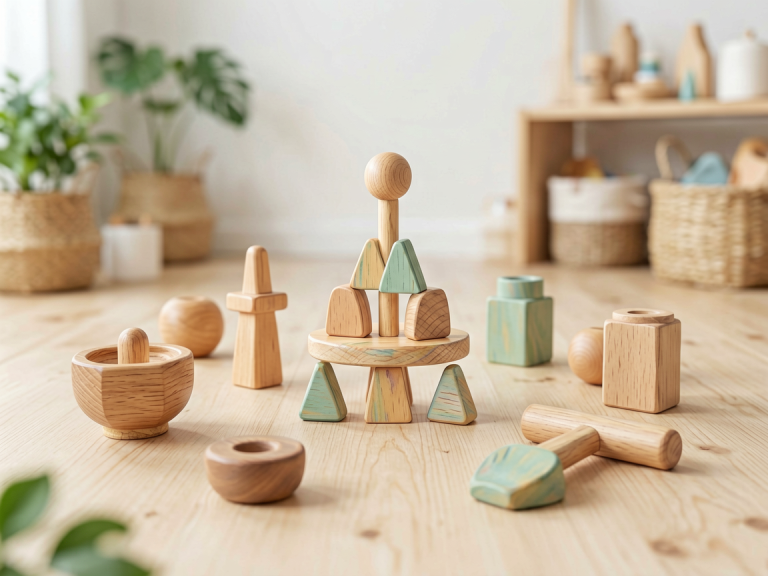
Wooden toys have a nostalgic charm that resonates with many parents. They evoke images of heirloom-quality blocks, simple rattles, and smooth teethers passed down through generations. But beyond aesthetics, wooden toys offer several concrete benefits for a three-month-old.
Sensory and Tactile Benefits
Natural wood has a unique texture that synthetic materials cannot replicate. For a baby who is just beginning to explore the world through touch, the slight grain, warmth, and weight of wood provide rich sensory input. Unlike plastic, which often feels uniform and cold, wood has subtle variations in surface smoothness and temperature. This variation encourages babies to explore with both their hands and mouths, supporting the development of fine motor skills and sensory integration. Many experts in early childhood development argue that natural materials offer a more complex and grounding sensory experience, which can be calming for a developing nervous system.
Safety and Chemical Concerns
One of the most compelling arguments for wooden toys is the absence of certain chemicals commonly found in plastics. High-quality wooden toys are typically finished with non-toxic, water-based paints or plant-based oils, and sometimes left completely unfinished. This is crucial for a three-month-old who will inevitably put the toy in their mouth. In contrast, many plastic toys, especially those of lower quality, may contain bisphenol A (BPA), phthalates, or other endocrine-disrupting chemicals. While reputable manufacturers of plastic baby toys have largely phased out these substances (especially BPA), the regulatory landscape varies by country, and it can be difficult for parents to verify the safety of every product. Wooden toys from trusted brands that comply with international safety standards (such as EN71 in Europe or ASTM F963 in the US) offer peace of mind on the chemical front.
Durability and Longevity
Wooden toys are famously durable. A well-made wooden rattle can survive being dropped, chewed, and even thrown across the room without cracking or shattering. This is particularly relevant for a three-month-old, who will eventually develop the strength to fling toys with surprising force. Plastic toys, by contrast, can break into sharp shards or release small pieces if dropped on a hard surface. While high-quality plastic can be robust, many cheap plastic rattles and keyrings are prone to splitting at seams, creating dangerous edges. Wooden toys also have the advantage of being “timeless” in design—they often remain appealing as the baby grows into a toddler, whereas plastic toys designed for infants can look childish or break long before the child outgrows them.
Environmental Impact
From an ecological perspective, wooden toys from sustainably managed forests are generally more environmentally friendly than plastic toys, which are derived from petroleum and are rarely recyclable. However, it is important to note that not all wooden toys are created equal. Cheap wooden toys from unknown sources may be made from tropical hardwoods harvested unsustainably, or they may be coated with varnishes containing volatile organic compounds (VOCs). Parents should look for certifications like FSC (Forest Stewardship Council) or PEFC (Programme for the Endorsement of Forest Certification) when purchasing wooden toys. Additionally, wooden toys that are painted require careful disposal—they cannot simply be composted if the paint is not biodegradable.
Drawbacks of Wooden Toys for Three-Month-Olds
Despite their many advantages, wooden toys are not without limitations for this age group. First, weight: solid wood is heavier than hollow plastic, and a three-month-old has very limited arm strength. A wooden rattle that is too heavy might frustrate a baby who cannot lift it, or worse, could cause injury if the baby drops it on their own face during tummy time. Second, cleaning: wood is porous and can absorb moisture, making it more difficult to sanitize than plastic. While wiping with a damp cloth and mild soap is usually sufficient, you cannot soak wooden toys or run them through a dishwasher. This can be problematic if the toy becomes coated in drool, milk, or baby food residue. Third, sharp edges: poorly crafted wooden toys may have splinters or sharp corners. Only purchase from reputable manufacturers that sand their products meticulously. Finally, wooden toys often lack the bright, high-contrast colors that are most visually stimulating for a three-month-old’s developing eyes. Many wooden toys are left in natural tones or painted in muted pastels, which are less effective at capturing a newborn’s attention than bold black, white, and red patterns.
Plastic Toys: Modern Versatility and Practicality
Plastic toys dominate the baby market for good reason: they are lightweight, affordable, easy to clean, and can be molded into virtually any shape, color, or texture. For a three-month-old, plastic toys offer distinct advantages that wooden toys cannot always match.
Lightweight and Easy to Manipulate
Weight is perhaps the single most important practical factor for a three-month-old. Plastic rattles, teethers, and activity rings are often hollow or made of soft, flexible plastic, making them extremely light. A baby can easily lift, shake, and mouth a plastic toy without fatigue. This encourages active exploration and helps develop the hand-eye coordination that will later lead to purposeful grasping. Many plastic toys are also designed with ergonomics in mind—they have easy-to-hold handles, textured surfaces for sensory input, and shapes that fit perfectly into tiny palms.
Safety and Hygiene
Modern plastic toys that are designed specifically for infants undergo rigorous safety testing. Look for labels such as “BPA-free,” “phthalate-free,” and “food-grade silicone” (which is technically a type of plastic) on teethers and chew toys. Because plastic is non-porous, it is far easier to sanitize than wood. A trip through the dishwasher (top rack) or a soak in a mild bleach solution can kill bacteria and viruses that might linger on a wooden toy. This is especially important during cold and flu season, or if your baby tends to drop toys on the floor frequently. For parents who are meticulous about hygiene, plastic toys are the clear winner.
Visual and Auditory Stimulation
Plastic toys can be manufactured in high-contrast colors, patterns, and shapes that are specifically designed to capture a three-month-old’s attention. Many plastic rattles have bright red, black, and white elements, moving beads inside transparent chambers, and multiple textures on a single toy. Some even incorporate lights and music, although experts generally advise against electronic toys for infants because they can be overstimulating and may hinder active exploration. Simple plastic toys—like a set of interlocking rings, a textured teether, or a rattle with a clear window showing colorful beads—provide excellent visual tracking practice and auditory feedback without overwhelming the baby.
Variety and Affordability
Plastic toys are available at every price point, from budget-friendly dollar-store options to premium designer brands. This accessibility means that parents can easily acquire a small collection of toys without breaking the bank. Furthermore, plastic toys come in a dizzying variety: you can find rattles shaped like animals, teethers that can be chilled in the refrigerator to soothe sore gums, activity gyms with dangling plastic toys, and bath toys that float. This variety allows parents to tailor the toy selection to their baby’s specific preferences.
Drawbacks of Plastic Toys
The downsides of plastic are well-documented. Chemically, even BPA-free plastics may contain other endocrine disruptors like bisphenol S (BPS) or phthalates in the case of soft, flexible plastics (though regulations are tightening). Over time, plastic can degrade from repeated washing and chewing, potentially releasing microplastics or chemical residues. Environmentally, plastic toys contribute to the global plastic waste crisis; most are not recyclable and end up in landfills after a short lifespan. Additionally, plastic can feel less “warm” and engaging than wood. Some experts argue that the uniformity of plastic surfaces provides less tactile variety, which may not challenge a baby’s sensory system as effectively. Finally, cheap plastic toys often break easily, and broken plastic can produce sharp edges or small parts that are a choking hazard. A cracked plastic rattle should be discarded immediately.
Safety First: What Every Parent Must Know
Regardless of whether you choose wooden or plastic toys, safety is non-negotiable for a three-month-old. At this age, babies have virtually no ability to move away from a dangerous situation, and their primary mode of exploration is mouthing. Here are critical safety considerations:
- Choking hazards: Any toy with small parts that can fit inside a toilet paper tube (about 1.25 inches in diameter) is a choking risk. Avoid toys with beads, buttons, or detachable pieces. Both wooden and plastic toys should be one solid piece or have securely attached components.
- Sharp edges and splinters: Inspect wooden toys thoroughly for rough spots. Run a cotton ball over the surface; if it snags, the toy is not smooth enough. For plastic toys, check for mold lines, sharp seams, or cracks.
- Length and shape: Avoid toys with long strings or cords (over 12 inches) that could wrap around a baby’s neck. Rattles should not have handles that could be thrust into the mouth or throat.
- Paint and coatings: Only choose toys labeled as non-toxic, lead-free, and phthalate-free. For wooden toys, water-based paints or natural oil finishes are best. Avoid varnishes or lacquers that could chip.
- Age labeling: Always check the manufacturer’s recommended age. Even if a toy looks suitable, an age rating of 0+ or 3+ should be verified for safety compliance.
- Regular inspection: Check toys daily for signs of wear. Throw away any toy that has cracks, splinters, discoloration, or loose parts.
Practical Tips for Choosing Toys for Your Three-Month-Old
Now that we have weighed the pros and cons of both wooden and plastic toys, let us synthesize the information into actionable guidance. The reality is that you do not need to choose one material exclusively. A balanced toy basket that includes a mix of high-quality wooden and plastic items can offer the best of both worlds. Here is a practical approach:
- Start with one or two wooden toys: Choose a smooth, lightweight wooden rattle or a simple teething ring. Look for unfinished or naturally finished items from brands like PlanToys, Hape, or Grimm’s. These toys are pleasing to the eye, safe to mouth, and will last for years.
- Add plastic items that prioritize function: A plastic teether that can be chilled, a set of stacking rings (even if your baby just bats at them), and a rattle with high-contrast colors are excellent additions. Opt for BPA-free, food-grade silicone teethers that are soft on gums and easy to clean.
- Consider sensory variety: Incorporate toys with different textures—smooth wood, bumpy silicone, crinkly fabric (cloth books), and shiny plastic. This diversity supports sensory development.
- Focus on developmentally appropriate features: For a three-month-old, the best toys are those that encourage reaching, grasping, mouthing, and visual tracking. Avoid anything with batteries or loud electronic sounds. Simple, natural sounds like the gentle clack of wooden rings or the soft rattle of plastic beads are ideal.
- Think about longevity: Consider toys that will grow with your baby. Wooden blocks, for example, are useless for a three-month-old but will become treasured playthings at nine months and beyond. Plastic teethers will be outgrown relatively quickly. If you want to minimize waste, invest in wooden toys that have longer lifespans.
- Clean regularly: For wooden toys, wipe with a damp cloth and mild soap, then air dry thoroughly. Do not submerge. For plastic toys, wash with hot soapy water or run through the dishwasher if the manufacturer says it is safe. Sanitize weekly during illness.
- Observe your baby: Ultimately, your baby’s reactions are the best guide. Try showing them both a wooden rattle and a plastic one. Notice which one they reach for, which one they mouth happily, which one seems to engage their attention. Every baby has individual preferences, and those preferences will change rapidly over the coming weeks.
Conclusion: There Is No Single Right Answer
The question of wooden toys versus plastic toys for a three-month-old does not have a black-and-white answer. Each material offers distinct advantages and drawbacks, and the best choice depends on your priorities—whether you value sustainability and tactile richness, or convenience and hygiene. The most important thing is to choose toys that are safe, developmentally appropriate, and engaging for your baby. A three-month-old does not need a large collection; a few well-chosen items are more than sufficient to support their exploration and learning.
Remember that the parent-baby interaction is far more important than any toy. A simple wooden rattle becomes a magical tool when you shake it while singing a lullaby, and a plastic teether becomes a comfort object when you hold it during a cuddle session. Your presence, your voice, and your loving attention are the most stimulating and reassuring “toy” your baby will ever have. Use that as your foundation, and let the wooden-versus-plastic debate take a back seat to the joy of watching your little one discover the world, one grasp, one mouthful, and one delighted coo at a time.