Magnetic Tiles vs Building Blocks: Which Is Better for Early Learning?
In the world of early childhood education and developmental play, few debates are as persistent as the one between magnetic tiles and traditional building blocks. Both have earned their place in homes, classrooms, and therapy centers, praised for their ability to foster creativity, problem-solving, and fine motor skills. Yet parents and educators often wonder: which one truly offers superior learning outcomes? The answer, as with most educational tools, is not a simple either/or. Each has unique strengths and limitations that align differently with various developmental stages, learning styles, and educational goals. To make an informed choice, we must examine how these two classic construction toys engage a child’s mind, body, and imagination across multiple domains of learning.
The Foundations of Fine Motor and Spatial Development
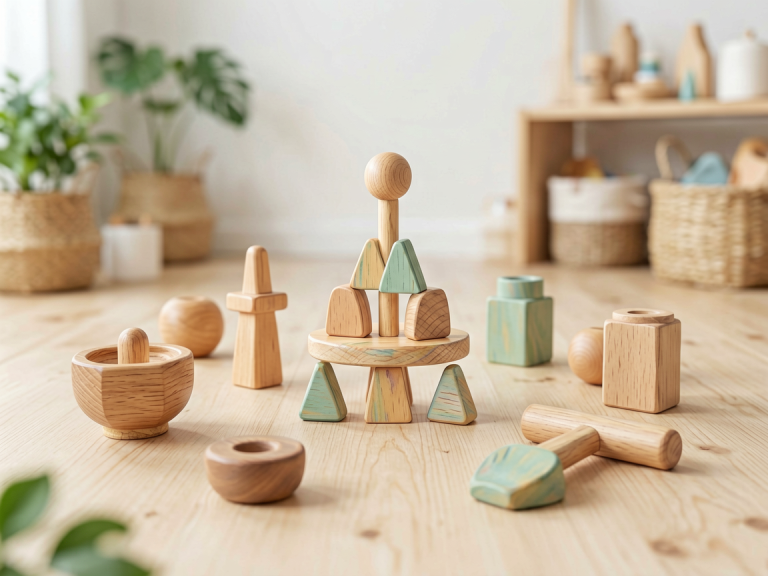
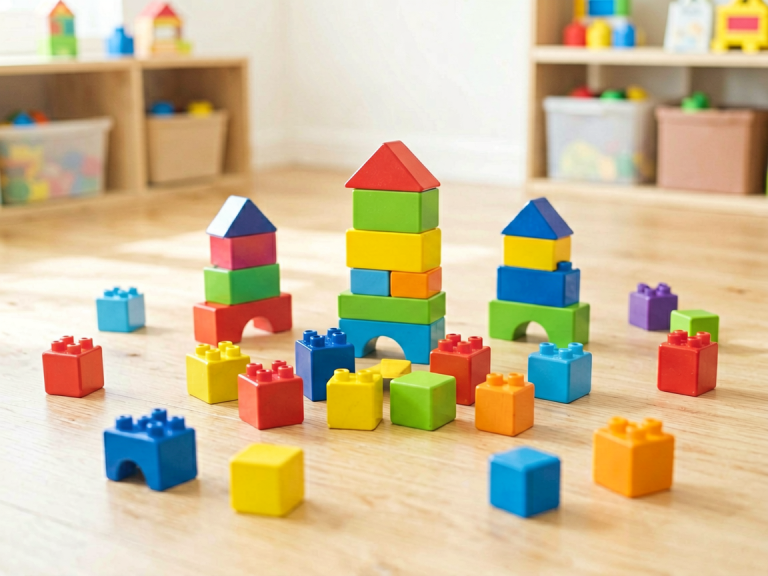
Building blocks, especially the classic wooden or plastic varieties, have been a staple of childhood for centuries. Their primary learning benefit lies in the fundamental development of fine motor skills. Picking up a small block, rotating it to the correct orientation, and carefully placing it on top of another requires precise hand-eye coordination and controlled finger movements. For toddlers and preschoolers, this process strengthens the small muscles in the hands and fingers, which later supports writing, cutting, and other academic tasks. Moreover, blocks teach spatial awareness in its most raw form: a child must understand that a square block cannot balance on a round one, and that a tower will topple if the base is too narrow. These lessons in gravity, balance, and geometry are learned through trial and error, building neural pathways that are essential for later mathematical and scientific reasoning.
Magnetic tiles, on the other hand, offer a different tactile experience. The magnets embedded in the edges provide an instant “snap” that holds pieces together with little effort. This lowers the physical demand on young hands, making it easier for children with weaker grip strength or those who become frustrated by blocks that constantly fall. For this reason, magnetic tiles can be particularly beneficial for children with fine motor delays or for very young toddlers who are not yet ready for the precision required by stacking blocks. However, this ease of connection also means that the fine motor challenge is reduced. A child can simply bring two tiles close and they click into place, bypassing the careful alignment and pressure needed for blocks. Therefore, while magnetic tiles still support spatial reasoning—children must figure out which edges attract and which repel—they do not provide the same level of fine motor refinement. For parents prioritizing dexterity development, blocks have a clear edge, while magnetic tiles excel in lowering barriers to entry for creative construction.
Creativity and Open-Ended Play: Constraints That Inspire
One of the most celebrated features of building blocks is their complete lack of predetermined connectivity. A block can be placed in any orientation, stacked in infinite ways, and used as a car, a person, a wall, or a mountain. This absolute freedom is theoretically ideal for creativity, but it also presents a challenge: without any inherent guiding mechanism, young children may struggle to create stable structures, leading to frequent collapses and frustration. Many children eventually learn to build “bridges” or “houses” only after repeated attempts, which builds resilience but can also discourage those who prefer immediate success.
Magnetic tiles impose a specific constraint: they must attach along magnetized edges or corners. This means that structures are inherently geometric—typically pentagonal, square, triangular, or rectangular faces. While this limits some organic, irregular shapes, it actually scaffolds creativity in a different way. The magnetic connection allows children to build 3D forms that are geometrically sound much earlier than they could with blocks. A four-year-old can construct a cube, a pyramid, or even a simple castle with walls that stand upright because the magnets hold them in place. This geometry-focused play naturally introduces concepts of symmetry, angles, and polyhedra. Many magnetic tile sets also come with special pieces like windows, doors, or even LED lights, which further inspire imaginative scenarios such as building a “spaceship” or a “fairy house.” The key difference is that blocks encourage creativity through *free-form exploration* with few rules, while magnetic tiles encourage creativity through *structured geometry* that often leads to more complex finished products. For children who become easily discouraged by instability, magnetic tiles can unlock a world of imaginative play that blocks might inadvertently shut off.
STEM Learning: Engineering Principles in Action
The STEM (Science, Technology, Engineering, and Mathematics) potential of both toys is substantial, but they target different aspects. Building blocks are excellent for teaching basic physics—gravity, stability, weight distribution, and the concept of a fulcrum. When a child builds a tall tower, they must learn that a wider base supports more weight, and that placing heavy blocks on top of light ones creates instability. These are intuitive engineering lessons. Additionally, blocks can be combined with other materials like ramps or marbles to create simple machines, making them versatile for early physics experiments.
Magnetic tiles, however, introduce a unique STEM component: magnetism itself. Children quickly learn that opposite poles attract and like poles repel—a fundamental scientific principle. They also experience the concept of magnetic force and how it can hold structures together without any adhesive. Moreover, because tiles are typically transparent or translucent, children can see exactly how pieces align at corners and edges, reinforcing spatial visualization. Many educators use magnetic tiles to teach 2D-to-3D transformations: a child can lay tiles flat to make a 2D shape, then fold it up into a 3D prism. This is a powerful early geometry lesson that blocks cannot replicate as naturally. In terms of engineering, magnetic tiles allow for cantilevers and overhangs that would be nearly impossible with blocks, since the magnets can hold a piece suspended in mid-air. This opens up architectural possibilities that challenge children to think about balance and tension rather than just stacking compression. Overall, blocks offer a more intuitive, hands-on physics experience, while magnetic tiles provide a more explicit introduction to magnetism and geometric transformations.
Social and Emotional Learning: Collaboration and Frustration Tolerance
Both toys shine in social play settings. With blocks, children must negotiate space, share limited pieces, and learn to accept that their tower may be knocked down by a friend. Blocks naturally teach turn-taking and compromise because a structure can be built incrementally by multiple children. However, the fragility of block towers can also lead to tears and arguments when a building collapses just before completion. This emotional challenge is valuable for building frustration tolerance, but some children may find it overwhelming.
Magnetic tiles, because they “snap” together securely, produce far fewer accidental collapses. This can reduce social conflict and allow children to focus more on cooperative building and imaginative storytelling. On the other hand, their ease of assembly might mean that children spend less time learning to cope with failure. Some developmental psychologists argue that encountering and overcoming failure is a crucial part of emotional growth, and blocks provide more opportunities for that. However, for children on the autism spectrum or those with anxiety, the lower frustration level of magnetic tiles can make play a more positive and inclusive experience. Ultimately, the choice depends on the child’s temperament and the specific social-emotional goals of the learning environment.
Age Appropriateness and Long-Term Use
There is no doubt that magnetic tiles are often easier for very young children (ages 2–3) to use successfully. By age 4 or 5, children can build impressive 3D castles and vehicles with magnetic tiles, while blocks at that age might still result in simple towers. However, blocks have a longer developmental arc. Older children (ages 7–10) can use wooden blocks to build elaborate marble runs, bridges with complex weight distribution, or even recreate architectural landmarks. Magnetic tiles, while still fun for older kids, tend to have a more limited ceiling in terms of structural complexity—once you know how to connect edges, the possibilities, though vast, are still bounded by the geometric constraints of the pieces themselves. Blocks, especially those that are unit blocks or custom shaped, offer infinite variability. Many families find that children who loved magnetic tiles at age 3 gradually return to blocks at age 6 or 7 as their engineering abilities mature.
Conclusion: Not a Competition, but a Complement
After examining the strengths and weaknesses of both magnetic tiles and building blocks, it becomes clear that the best learning outcome comes not from choosing one over the other, but from providing both. Each addresses a different facet of development: blocks build fine motor precision, resilience, and intuitive physics; magnetic tiles lower the barrier to entry, promote geometric thinking, and teach magnetism. For a well-rounded early learning environment, parents and educators should offer both types of construction play. The child who struggles with blocks may flourish with magnetic tiles, and the child who easily masters magnetic tiles can be challenged by the unpredictability of blocks. By understanding the unique contributions of each, we can guide children toward a richer, more diverse learning experience—one that builds not only towers but also minds.