Wooden vs Plastic Toys for 18-Month-Olds: Which Choice Supports Healthy Development?
As your baby crosses the milestone of 18 months, the world becomes a fascinating playground of discovery. At this age, toddlers are rapidly developing motor skills, language, and cognitive abilities, and toys play a crucial role in shaping these early experiences. One of the most common dilemmas parents face is choosing between classic wooden toys and modern plastic alternatives. Each material offers distinct benefits and drawbacks, particularly for children aged 18 months—a stage marked by intense mouthing, unsteady walking, and budding problem-solving. This article provides a comprehensive, balanced comparison to help you make an informed decision that prioritizes safety, development, and long-term value.
Safety Considerations
For 18-month-olds, safety is the single most important factor in toy selection. Toddlers at this age explore everything through their mouths, so any toy must be free of choking hazards, toxic substances, and sharp edges.
Wooden toys are generally considered safer in terms of chemical exposure, provided they are made from solid wood and finished with non-toxic, water-based paints or natural oils. High-quality wooden blocks, push toys, and puzzles often meet stringent safety standards (e.g., ASTM or EN71) and are less likely to contain harmful phthalates, BPA, or lead. However, wood can splinter if poorly finished, and small wooden parts (like knobs on a puzzle) may become loose over time. Parents should inspect wooden toys regularly for rough spots or cracks. Additionally, some cheaper wooden toys may be painted with unsafe dyes, so always buy from reputable brands.
Plastic toys have improved dramatically in safety regulations, but concerns remain. Many plastic toys are labeled BPA-free and phthalate-free, yet some may still contain synthetic chemicals that can leach out when chewed. For 18-month-olds who drool and gnaw, this is a real risk. On the positive side, plastic toys can be molded without sharp edges and are less likely to splinter. They also often come with larger, securely attached parts that reduce choking hazards. However, plastic toys can break into small, sharp pieces if dropped or stepped on, and the brittle nature of some plastics (e.g., hard polystyrene) poses a risk. A safer choice is durable, flexible plastic like high-density polyethylene (HDPE), commonly used in stacking cups and bath toys.
Verdict: Both materials can be safe if sourced carefully. For wood, prioritize solid construction and non-toxic finishes; for plastic, choose brands that explicitly avoid harmful chemicals and avoid very cheap, rigid plastics.
Developmental Benefits
Toys are tools for learning, and at 18 months, the brain is wiring new connections every second. The material and design of a toy directly influence what skills it nurtures.
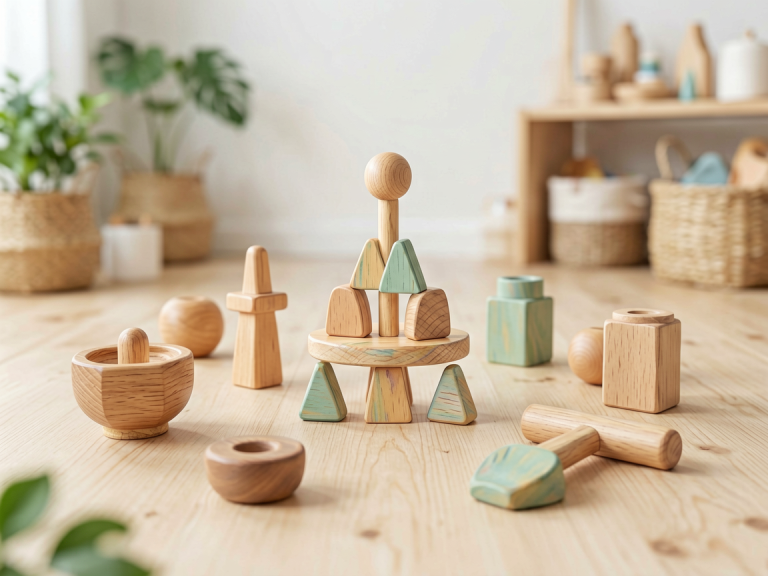
Wooden toys offer a sensory richness that plastic often lacks. The natural grain, weight, and subtle texture of wood provide deep tactile feedback, which helps develop fine motor control and sensory integration. For example, a wooden shape sorter requires a toddler to grasp, rotate, and press—each action requiring slightly different pressure. Wooden blocks are excellent for stacking, balancing, and early physics lessons (cause and effect). They also promote creative, open-ended play: a wooden block can be a car, a tower, or a “biscuit” for a teddy bear. The lack of lights, sounds, and movements encourages imaginative thinking rather than passive watching. For 18-month-olds, this self-directed play is crucial for attention span and problem-solving.
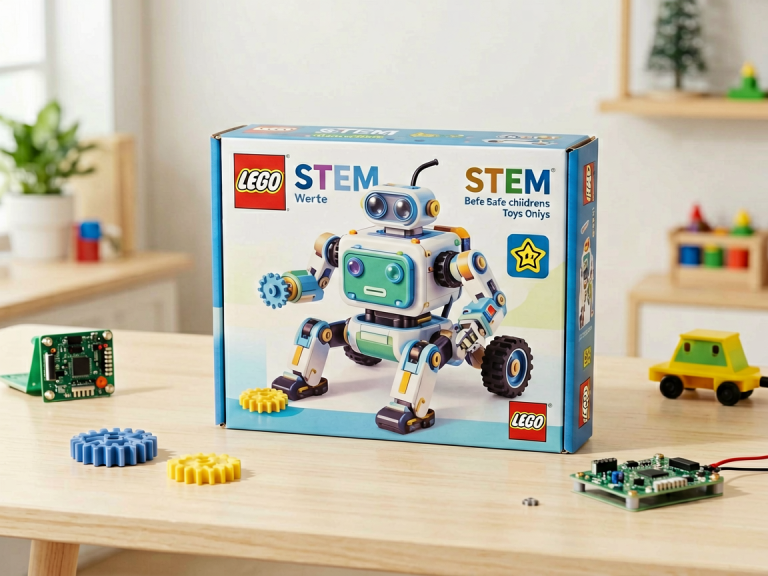
Plastic toys often incorporate bright colors, sounds, buttons, and moving parts that can grab a toddler’s attention quickly. These features can be beneficial for early visual tracking, cause-and-effect learning (press a button, a song plays), and language development (many plastic toys have recorded words). However, there is a downside: overstimulation. Research suggests that too many flashing lights and sounds can overwhelm a developing brain, leading to shorter focus and reduced creativity. Plastic toys are also often designed for a single purpose (a shape sorter that only accepts one shape in one hole), which limits exploration. On the plus side, plastic toys are generally lighter, making them easier for small hands to carry and manipulate. Bath toys, for instance, are typically plastic because wood warps in water.
Verdict: For pure developmental depth and open-ended play, wooden toys have a clear edge. Plastic toys are better for specific cause-and-effect lessons and for scenarios where weight or water resistance matters. A balanced toy box should include both.
Durability and Longevity
Parents want toys that survive the chaos of toddlerhood—being thrown, chewed, dropped, and even used as drumsticks. Durability affects both safety and value.
Wooden toys are legendary for their longevity. A high-quality wooden train set can be passed down through generations. Solid hardwood (maple, beech, birch) resists dents and cracks, and the paint often holds up well if applied properly. However, wood is vulnerable to moisture. A wooden toy left in the garden or dropped in a puddle can swell, warp, or develop mold. Chewing can also wear down the finish over time, potentially exposing raw wood that can splinter. For an 18-month-old who still mouths toys frequently, wooden toys may need to be retired earlier than expected if the finish starts to degrade. Also, wooden toys with moving parts (e.g., wheels on a wooden car) may loosen and require maintenance.
Plastic toys are generally more resistant to moisture and can be wiped clean easily. Many plastic toys are designed to be dropped, kicked, and thrown without breaking, especially those made from thick, flexible plastics. However, plastic can become brittle with age, especially if exposed to sunlight or extreme temperatures. Cheaper plastic toys may crack after a few strong impacts, leaving sharp edges. Additionally, once a plastic toy breaks, it often cannot be repaired and ends up in the trash. Another consideration: plastic toys with batteries and electronic components are prone to malfunction, and replacing batteries can be frustrating.
Verdict: Wooden toys win in terms of potential heirloom longevity if properly maintained, but they are less forgiving of moisture and heavy chewing. Plastic toys are more practical for rougher daily use, especially wet environments, but they have a shorter lifespan due to breakage and battery issues.
Environmental Impact and Sustainability
With growing awareness of climate change and waste, many parents consider the ecological footprint of their purchases.
Wooden toys are often marketed as “eco-friendly,” but it’s not that simple. Sustainably sourced wood from certified forests (FSC-certified) is renewable and biodegradable. The production process uses less energy than petroleum-based plastics. Moreover, wooden toys can be passed down, donated, or composted at the end of their life (if free of synthetic paints). However, the supply chain can include long-distance shipping, and some finishes contain volatile organic compounds (VOCs). If you choose painted wooden toys, ensure the paint is water-based or plant-based. Unfinished wooden toys are the most environmentally friendly option.
Plastic toys are made from fossil fuels, a non-renewable resource, and their production emits greenhouse gases. Most plastic toys cannot be recycled curbside because they are mixed materials (hard plastic + metal + electronics). They often end up in landfills, where they take hundreds of years to decompose. Even “biodegradable” plastics require specific industrial conditions to break down. The bright side: buying durable plastic toys that are used by multiple children (e.g., hand-me-downs) reduces the per-child environmental cost. Second-hand plastic toys are abundant and cheap, extending their life.
Verdict: From a pure eco-perspective, wooden toys have the advantage if they are responsibly sourced and uns oiled by toxic paints. But the most sustainable choice is always to buy less and buy used—regardless of material.
Cost and Value for Money
Budget constraints are real for many families. Comparing the upfront cost and long-term value of wooden vs. plastic toys is essential.
Wooden toys are typically more expensive. A simple set of wooden blocks can cost $30–$50, while a plastic equivalent might be $10–$15. However, wooden toys often last through multiple children and retain resale value. A well-cared-for wooden puzzle can be sold for 50% of its original price. The higher initial investment can be worth it if you plan to have more children or if you value durability and timeless design. Many wooden toys are also “open-ended,” meaning they grow with the child (a set of stacking blocks can be used from 6 months to 4 years), offering excellent cost-per-play-hour.
Plastic toys are cheaper to manufacture and purchase. You can find a huge variety of plastic toys at discount stores, which is helpful for families on a tight budget. However, these toys often lose interest quickly due to their single-function design. A plastic toy that plays a tune may be fascinating for a week, then become ignored. They also break more easily, requiring replacement. Electronic plastic toys also need battery replacements, an ongoing expense. Over a two-year period, the total cost of several cheap plastic toys may actually exceed that of one high-quality wooden toy.
Verdict: Wooden toys offer better long-term value for families who can afford the upfront cost. Plastic toys are more accessible for immediate budgets but may require frequent replacements.
Hygiene and Maintenance
Keeping toys clean is crucial for 18-month-olds who are constantly putting things in their mouths and spreading germs.
Wooden toys cannot be submerged in water or run through the dishwasher, as excess moisture causes warping and cracking. Instead, they must be wiped with a damp cloth and mild soap, then dried immediately. They are also more porous, meaning they can absorb saliva, food, and bacteria if not cleaned frequently. Some wooden toys are treated with antimicrobial finishes, but these may wear off. For shared daycare settings, wooden toys require more diligent, careful cleaning.
Plastic toys have a clear advantage here. Most plastic toys can be washed with soap and warm water, rinsed thoroughly, and even put in the dishwasher (top rack) or a bleach solution for deep sanitization. They dry quickly and do not absorb liquids. Bath toys, however, can trap water inside if they have holes (leading to mold), so choose infant bath toys with sealed designs. The non-porous surface of plastic makes it easier to keep hygienic in the germ-laden environment of a toddler.
Verdict: Plastic toys are far superior for easy cleaning and disinfection. Wooden toys require more care and are less suitable for situations where daily deep cleaning is needed (e.g., in a multi-child household or daycare).
Aesthetic and Sensory Appeal
The look and feel of a toy can influence a toddler’s engagement and the overall atmosphere of your home.
Wooden toys have a classic, natural beauty that many adults find appealing. They blend well with minimalist, Montessori-style, or neutral-themed nurseries. The muted colors derived from natural dyes are gentle on a child’s developing vision and may promote calmness. The weight and texture of wood also provide a satisfying sensory experience that plastic cannot replicate. Studies in child development suggest that natural materials help children feel more grounded and connected to their environment.
Plastic toys come in bright, primary colors and often feature popular characters from cartoons (e.g., Peppa Pig, Paw Patrol). This can be a double-edged sword: the familiarity may initially capture attention, but character-branded toys can limit creativity (the toy must be that character). The glossy, uniform surface of plastic offers less tactile variety. However, the vibrant colors are engaging for young children and can help with color recognition. Some plastic toys also incorporate different textures (bumpy, smooth, rubbery) into their design.
Verdict: The choice here depends on personal preference. If you value a calm, minimalist environment and natural sensory input, wood is preferable. If you prefer stimulating colors and pop-culture references, plastic may be more fun.
Recommendations and Conclusion
After weighing the various factors, no single material is definitively “better” for every 18-month-old. The ideal toy box is a curated mix that leverages the strengths of both wood and plastic. Here are practical guidelines:
- Prioritize wood for open-ended, sensory-rich play. Invest in a set of high-quality wooden blocks, a shape sorter, a push toy, and a wooden stacking ring. These will be used in countless ways for years.
- Use plastic for specific purposes. Plastic is ideal for bath toys, outdoor toys (sand and water play), lightweight nesting cups, and toys that require electronic interaction (e.g., a simple cause-and-effect musical toy). Choose brands like Green Toys (made from recycled milk jugs) or Hape (a mix of wood and safe plastic).
- Check safety first. Regardless of material, always look for ASTM or EN71 certification, avoid small parts that fit through a toilet paper tube, and inspect toys regularly for damage.
- Consider your child’s temperament. If your toddler tends to be overstimulated, lean toward simpler wooden toys. If they need extra motivation to engage, a well-designed plastic toy with sounds may be helpful.
- Think long term. Wooden toys are an investment in quality and sustainability. Plastic toys can be a short-term solution, but buy fewer, higher-quality pieces rather than a pile of cheap novelties.
Ultimately, the best toy for an 18-month-old is one that is safe, developmentally appropriate, and loved by the child. Neither wood nor plastic has a monopoly on joy or learning. A thoughtful combination will provide your toddler with the rich, varied experiences they need to explore their world with confidence. And remember: the most valuable plaything is your presence and interaction. A simple cardboard box with you by their side can be more valuable than the most expensive wooden or plastic toy on the shelf.