Introduction
Title: Wooden vs. Plastic Toys for 3-Year-Olds: A Comprehensive Guide to Choosing the Best for Development, Safety, and Sustainability
Selecting the right toys for a three-year-old is a decision that many parents and caregivers take seriously. At this age, children are rapidly developing motor skills, language abilities, social awareness, and cognitive functions. The toys they interact with can significantly influence these developmental milestones. Among the endless choices available, the debate between wooden toys and plastic toys is one of the most persistent. Both materials have passionate advocates, and each type offers distinct advantages and potential drawbacks. This article aims to provide a balanced, evidence-informed comparison of wooden and plastic toys for three-year-olds, focusing on safety, developmental benefits, environmental impact, durability, and cost. By the end, readers should have a clearer understanding of which type—or what combination—best suits their child’s unique needs and their family’s values.
Safety Considerations: What Every Parent Must Know
Safety is the top priority when choosing toys for young children. Three-year-olds are still prone to putting objects in their mouths, and they may throw, drop, or bite their playthings. Both wooden and plastic toys come with specific safety concerns.
Wooden toys are often lauded for being natural and free from harmful chemicals like BPA, phthalates, and lead—common additives in some cheap plastics. High-quality wooden toys are typically finished with non-toxic paints or water-based varnishes. However, they are not risk-free. Splinters, sharp edges, or small parts (such as glued-on wheels) can pose choking hazards. Parents should inspect wooden toys regularly for cracks or loose pieces. Additionally, solid wood can be heavy; a dropped block on a toe or a thrown toy can cause injury. Still, reputable brands that follow international safety standards (e.g., EN71) minimize these risks.
Plastic toys, on the other hand, are lightweight and often have rounded edges, which reduces the physical impact of accidental throws. Many plastic toys are also easier to clean—a major plus for hygiene. The primary safety concern with plastic is chemical leaching, especially if the toy is made from low-quality or recycled plastics. Always look for labels like “BPA-free,” “phthalate-free,” or certifications from organizations such as ASTM (American Society for Testing and Materials). Another issue is that some plastic toys break into sharp shards when dropped, creating new hazards. Moreover, the bright colors and appealing shapes can encourage mouthing, and if the plastic degrades, small pieces may be ingested.
Recommendation: For absolute peace of mind, choose high-quality wooden toys from trusted manufacturers, or select plastic toys that are explicitly certified as safe and are free from problematic chemicals. Avoid cheap, unbranded plastic items that may contain toxins.
Developmental Benefits: Stimulating the Mind and Body
At age three, children are in a critical period for sensory integration, fine motor skills, and imaginative play. The material of the toy can directly affect how a child engages with it.
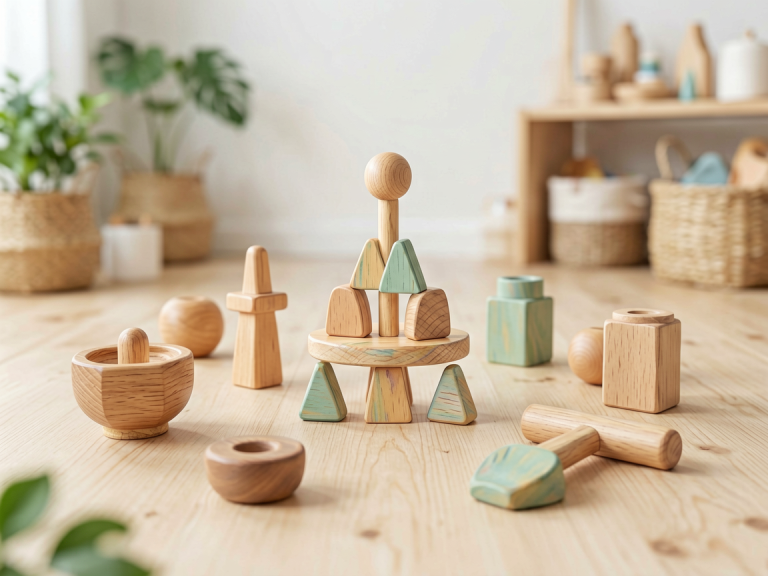
Wooden toys typically have a natural texture, weight, and subtle scent that provide rich sensory input. A set of wooden blocks, for example, offers a satisfying heft and a slightly rough surface that helps develop tactile discrimination. Because wooden toys are often simpler in design and less likely to have flashing lights or electronic sounds, they encourage open-ended play. A simple wooden train set can become a castle, a bridge, or a road—limited only by the child’s imagination. This fosters creativity, problem-solving, and concentration. Magnets, stacking rings, and wooden puzzles also enhance hand-eye coordination and spatial reasoning without overstimulating the child.
Plastic toys, by contrast, are often designed to be more visually and audibly stimulating. Bright colors, blinking lights, and electronic sound effects can grab a child’s attention and teach cause-and-effect relationships. For example, a plastic shape-sorter that plays a melody when the correct shape is inserted can reinforce learning. However, many child development experts warn that excessive electronic stimulation may reduce a child’s attention span and limit creative thinking. Plastic toys also tend to be more “fixed” in their function—a plastic dinosaur that roars when squeezed is unlikely to be transformed into something else during play. That said, not all plastic toys are flashy; simple plastic building bricks (like DUPLO) are excellent for fine motor development and can be used in many ways.
Recommendation: A balanced mix is ideal. Choose wooden toys for quiet, focused, imaginative play and for building foundational sensory skills. Incorporate a limited number of high-quality plastic toys that are interactive but not overstimulating—especially those that require active manipulation rather than passive observation.
Environmental Impact and Sustainability
For eco-conscious families, the environmental footprint of toys is a growing concern. The production, lifespan, and eventual disposal of toys all affect the planet.
Wooden toys, when sourced from sustainably managed forests (look for FSC certification), are renewable and biodegradable. They generally have a longer lifespan than plastic toys because they can be sanded, repaired, or repainted. Many families pass wooden toys down through generations, which reduces waste. However, the manufacturing process involves cutting down trees and using finishes, adhesives, and sometimes metals for wheels or axles. Cheap wooden toys may be made from composite woods like MDF, which contains formaldehyde—so quality matters.
Plastic toys are derived from petroleum, a non-renewable resource. Their production releases greenhouse gases, and most plastic toys eventually end up in landfills or oceans, where they can take hundreds of years to decompose. However, some plastic toys are made from recycled materials or are designed to be recyclable. Unfortunately, the complex mixture of plastics, batteries, and electronics in many contemporary toys makes recycling difficult. The durability of plastic is also a double-edged sword: while it resists water and impact, it often becomes brittle over time and breaks, leading to disposal.
Recommendation: For a lower environmental impact, prioritize wooden toys that are sustainably sourced and built to last. When buying plastic, choose recyclable, durable options with minimal packaging. Consider buying second-hand or borrowing from toy libraries to extend the life of both types.
Durability and Cost: The Long-Term Value
Parents often compare the upfront cost of wooden and plastic toys. Wooden toys are generally more expensive—a simple wooden puzzle might cost three times as much as a plastic equivalent. Yet wooden toys often withstand years of rough play. They do not crackle, fade, or lose shape as easily as cheap plastic ones. A set of high-quality wooden blocks can remain a favorite for a child’s entire early childhood and beyond. On the other hand, plastic toys can be more affordable and are often replaced frequently as interests change. However, many plastic toys, especially those with moving parts or batteries, may break within months. The cost per play session may therefore be higher for flimsy plastic items.
For three-year-olds, who can be rough on toys, durability matters. Wooden toys are less likely to shatter on impact, but they can dent or chip. Plastic toys may survive drops better but can snap if bent. One practical consideration is portability: plastic toys are lighter, making them easier for a child to carry around the house or outdoors.
Recommendation: Invest in a few excellent wooden staples (blocks, a train set, a shape-sorter) that will last through multiple stages. Supplement with more affordable plastic toys for special functions—for example, a plastic sand and water play set for outdoor use.
Personalized Recommendations: Finding the Right Balance
No single material is perfect for every child or every situation. Consider your child’s temperament, interests, and sensory needs. A child who is easily overwhelmed may benefit more from the calm, natural feel of wooden toys. A child who craves auditory feedback might enjoy a well-made plastic musical instrument. Also think about the play environment: wooden toys are great for quiet indoor play, while lightweight plastic toys are better for bath time, sandboxes, or traveling.
In practice, most experts suggest a diversified toy box. For example, include wooden blocks, a wooden train set, Montessori-style wooden puzzles, and a simple wooden dollhouse. Complement these with a few plastic items like interlocking building bricks, a plastic doctor’s kit with durable components, and a set of colorful plastic stacking cups for water play. Avoid the lure of battery-operated “educational” plastic toys that sing and flash; they often do more to entertain than to educate.
Conclusion
Choosing between wooden and plastic toys for a three-year-old does not have to be an either-or decision. Both materials offer unique benefits, and the best choice depends on factors such as safety, developmental goals, environmental values, durability, and budget. Wooden toys excel in promoting open-ended, sensory-rich, and imaginative play while being more sustainable over the long term. Plastic toys are valuable for their versatility, light weight, and ability to provide targeted stimulation, especially in outdoor and messy contexts. The key is to prioritize quality over quantity, to verify safety certifications, and to select toys that match your child’s current stage of development. By curating a thoughtful collection that includes both wooden and plastic options, parents can provide a well-rounded play experience that nurtures a child’s growth, curiosity, and joy.