Unlocking Curiosity: The Ultimate Guide to STEM Toys for Beginners
In an age where technology evolves faster than ever, parents and educators alike are seeking ways to equip children with the skills they need for the future. STEM—an acronym for Science, Technology, Engineering, and Mathematics—has become a buzzword in education, but its true power lies in hands-on, playful learning. For beginners, especially young children who are just starting to explore the world, STEM toys offer a gateway to critical thinking, problem-solving, and creativity. But with countless options on the market, how do you choose the right one? This article dives deep into the world of STEM toys for beginners, offering practical advice, product categories, and the underlying educational philosophy that makes these toys so effective.
What Are STEM Toys and Why Do Beginners Need Them?
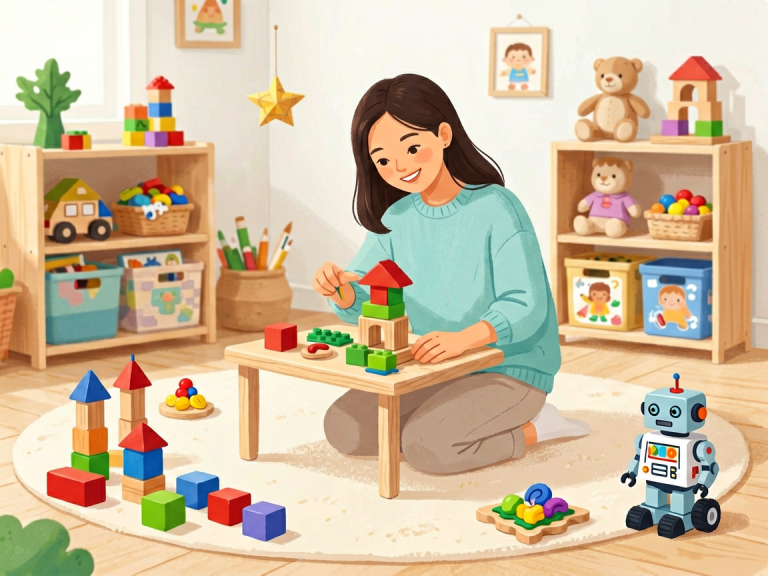
STEM toys are designed to introduce foundational concepts in science, technology, engineering, and mathematics through play. Unlike traditional toys that focus solely on entertainment, STEM toys encourage experimentation, observation, and logical reasoning. For beginners—typically children aged 3 to 8—these toys bridge the gap between abstract ideas and tangible experiences. A simple building set, for example, teaches geometry and structural integrity without a single textbook. A coding robot introduces sequencing and cause-effect relationships through colorful buttons and movements.
The beauty of STEM toys for beginners is that they tap into a child’s natural curiosity. Young minds are wired to ask “why” and “how.” By providing tools that answer these questions in a hands-on manner, STEM toys foster a growth mindset. Mistakes become learning opportunities; a tower that collapses is not a failure but a lesson in balance. This early exposure builds confidence and reduces the fear of complex subjects later in life. Moreover, STEM toys develop fine motor skills, spatial awareness, and the ability to follow multi-step instructions—all critical for academic success.
How to Choose the Right STEM Toy for a Beginner
Selecting the ideal STEM toy can be overwhelming, but a few key criteria simplify the process. The golden rule is to match the toy to the child’s developmental stage, not their age alone. A five-year-old with advanced motor skills may enjoy a more complex engineering kit, while a seven-year-old who struggles with attention might benefit from a simple chemistry set.
Safety First
For young beginners, safety is paramount. Look for toys made from non-toxic materials, with no sharp edges or small parts that could be choking hazards. Reputable brands always label age recommendations and safety certifications. Avoid toys that require excessive adult supervision unless you are prepared to engage actively. The goal is independent exploration.
Open-Ended vs. Structured Play
Some STEM toys are highly structured, guiding children through specific experiments or builds (e.g., a circuit kit with step-by-step instructions). Others are open-ended, like magnetic tiles or interlocking gears, allowing for unlimited creativity. For absolute beginners, a balance works best. Start with structured toys to teach basic concepts, then transition to open-ended ones to encourage innovation. A child who masters a simple pulley system will later design their own complex machines.
Multi-Sensory Engagement
Effective STEM toys engage multiple senses. A toy that lights up, makes sounds, or has different textures holds attention longer. For instance, a water play kit that demonstrates volume and buoyancy combines touch, sight, and even sound as water splashes. Multi-sensory toys also cater to different learning styles—visual, auditory, and kinesthetic—ensuring broader appeal.
Top Categories of STEM Toys for Beginners
Let’s explore the most popular and effective STEM toy categories, each tailored to different interests and skill levels.
Building and Construction Kits
Building sets are the classic entry point. Brands like LEGO Duplo, Magna-Tiles, and K’NEX offer pieces that snap together, teaching geometry, balance, and structural engineering. For beginners, larger blocks are easier to handle. As skills improve, sets with gears, wheels, and axles introduce mechanical principles. A simple marble run, for example, demonstrates gravity, momentum, and trajectory. These toys are infinitely reusable; a child can build a house today and a spaceship tomorrow.
Basic Coding and Robotics
Coding might sound advanced, but beginner-friendly robots like Botley, Code-a-Pillar, or the Fisher-Price Think & Learn Code-a-Pillar use physical buttons or cards to program movements. No screen required. Children learn sequencing, pattern recognition, and debugging (fixing a wrong step). Robotics kits that snap together, such as the Snap Circuits Jr., teach electricity and circuitry by connecting modules to light a bulb or spin a fan. The immediate feedback—a light turns on or a robot moves—reinforces learning.
Science Experiment Kits
Simple chemistry or physics kits can fascinate beginners. Look for kits that involve safe, everyday materials like baking soda, vinegar, or non-toxic dyes. A “grow your own crystals” set teaches crystallization and patience. A magnetic discovery kit allows children to explore attraction and repulsion. Weather kits with a simple rain gauge and thermometer introduce data collection. These toys transform the kitchen table into a laboratory, making science tangible and thrilling.
Math and Logic Puzzles
Not all STEM toys are high-tech. Traditional puzzles, tangrams, pattern blocks, and abacuses build mathematical thinking. Logic games like “Rush Hour” or “ThinkFun’s Color Catch” develop problem-solving and strategic planning. For beginners, puzzles with fewer pieces and bright colors work best. Counting bears or sorting shapes teach number sense and categorization. These toys prove that math is not just numbers but patterns, relationships, and fun.
The Benefits Beyond the Classroom
Investing in STEM toys for beginners yields long-term advantages that extend far beyond academic achievement.
Fostering Resilience and Persistence
When a child’s bridge collapses or a robot doesn’t move as intended, they must try again. This trial-and-error process cultivates resilience. Unlike video games that offer instant do-overs, physical STEM toys require manual adjustment—tightening a screw, repositioning a block—which teaches patience and attention to detail. Over time, children learn that failure is a stepping stone, not a dead end.
Encouraging Collaborative Play
Many STEM toys are designed for multiple children. Building a large structure or completing a coding challenge together promotes communication, negotiation, and teamwork. A child explaining why a tower needs a wider base is practicing both engineering and language skills. This social aspect is often overlooked but is vital for emotional intelligence.
Bridging Gender Gaps
Historically, STEM fields have been male-dominated, but early exposure through toys can break stereotypes. When girls play with building sets or chemistry kits, they see themselves as capable scientists and engineers. Many modern STEM toys deliberately use gender-neutral colors and themes (e.g., space exploration instead of princesses). This inclusive design encourages all children to explore without bias.
Practical Tips for Parents and Educators
To maximize the value of STEM toys, adults need to play an active but not overbearing role.
Ask Open-Ended Questions
Instead of saying, “That’s wrong,” ask, “What do you think would happen if you added another block?” This prompts critical thinking. When a child is stuck, guide them with questions rather than providing solutions. For example, “Why do you think the car didn’t roll down the ramp? Is it too steep or too smooth?” This Socratic approach deepens understanding.
Rotate Toys to Maintain Interest
Beginners can lose interest if they have too many options at once. Rotate a few STEM toys every two weeks. This keeps the experience fresh and allows deep engagement with each toy. Store the rest out of sight. When a toy returns after a month, it feels new again.
Combine Digital and Physical Play
Some STEM toys have companion apps or online videos that demonstrate concepts. Use these resources sparingly as supplements, not substitutes. A child who watches a video about volcanoes should then build a papier-mâché model and simulate an eruption with baking soda. The physical experience cements digital learning.
Conclusion: Start Small, Dream Big
STEM toys for beginners are not just about preparing children for future careers; they are about nurturing a lifelong love of learning. The right toy sparks a fire of curiosity that can illuminate even the darkest corners of complex subjects. Whether it’s a set of magnetic tiles, a simple coding caterpillar, or a crystal-growing lab, the key is to start where the child is—with wonder and play. As they stack, code, mix, and puzzle, they are not just playing; they are building the foundations of innovation. So choose wisely, engage joyfully, and watch a beginner transform into a confident explorer of the world. The journey of a thousand discoveries begins with a single toy.