Magnetic Tiles vs Building Blocks: A Comparative Exploration of Play, Learning, and Creativity
Introduction
For generations, building blocks have been a cornerstone of childhood play, offering a simple yet profound way for children to explore geometry, physics, and imagination. In recent years, magnetic tiles—colorful, translucent plastic pieces embedded with magnets—have surged in popularity, promising a new kind of construction experience that is both intuitive and spectacular. Parents, educators, and toy enthusiasts frequently debate which is superior: the classic wooden block or the modern magnetic tile? The answer, however, is not about declaring a winner, but about understanding the distinct strengths and limitations of each. This essay will delve into a detailed comparison of magnetic tiles and traditional building blocks across multiple dimensions—developmental benefits, creativity, structural stability, accessibility, sensory experience, and long-term educational value. By examining these facets, we aim to provide a nuanced perspective that helps caregivers and educators make informed choices for the children in their lives.
1. Fundamental Design and Mechanism of Play
1.1 Building Blocks: The Physics of Stacking and Balance
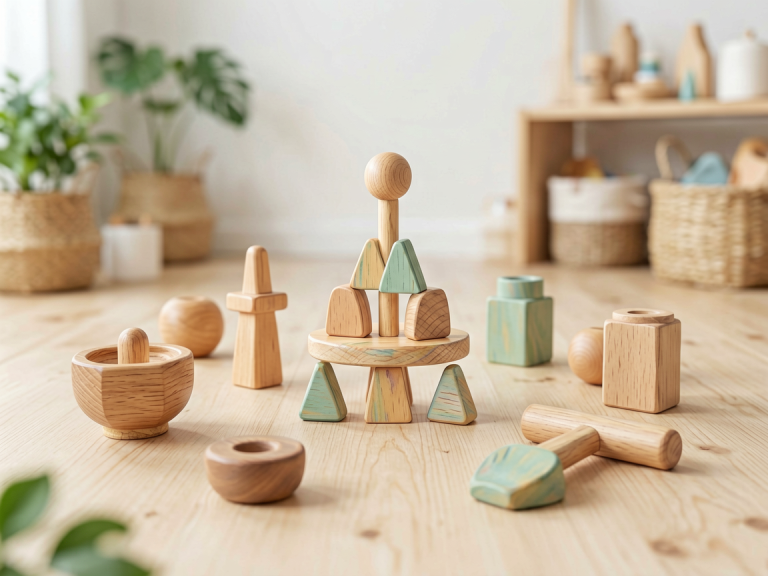
Traditional building blocks, typically made of wood or plastic, rely entirely on gravity and friction to stay in place. Each block is a solid unit, usually rectangular, cubic, or shaped as simple geometric solids. To construct a tower or a bridge, a child must carefully align each piece, balance weight, and respect the laws of equilibrium. The challenge is tactile and physical: a slight misalignment can cause the entire structure to topple. This demands patience, fine motor control, and an intuitive understanding of center of mass and stability. Blocks do not hold together; they rest upon one another. Consequently, the play experience is inherently forgiving yet exacting—forgiving because you can always rebuild, exacting because success requires precision.
1.2 Magnetic Tiles: The Magic of Instant Connection
Magnetic tiles, by contrast, use strong neodymium magnets embedded in the edges or corners of flat, transparent plastic shapes—squares, triangles, rectangles, and occasionally hexagons or arches. When two tiles are brought close, the magnets snap them together with a satisfying click. This mechanism eliminates the need for perfect balance or friction. A child can quickly attach tiles at various angles, forming 2D flat patterns that can be lifted into 3D structures. The magnets provide a firm hold, allowing for cantilevers, archways, and even enclosed spaces without additional support. The result is that children can achieve complex, stable constructions far earlier than with blocks. For example, a three-year-old can build a simple house with four walls and a roof in minutes, an accomplishment that might be frustratingly difficult with wooden blocks at the same age.
2. Cognitive and Developmental Outcomes
2.1 Spatial Reasoning and Geometry
Both toys excel at developing spatial reasoning, but they do so in different ways. Building blocks require a child to mentally estimate how much overhang a block can sustain before it falls. This fosters an intuitive grasp of leverage, balance, and proportional reasoning. A child learns that a long block placed across two supports may wobble if not centered. Magnetic tiles, however, allow for rapid experimentation with angles and symmetries. Because tiles can be joined at any edge, children quickly discover that two squares make a rectangle, two triangles make a square, and so on. This direct, visual feedback accelerates the understanding of geometric transformations and symmetry. Many magnetic tile sets include patterns or cards that prompt children to replicate 2D nets before folding them into 3D shapes—an excellent precursor to geometry in school.
2.2 Problem-Solving and Frustration Tolerance
Blocks teach resilience through failure. A tower that collapses after many minutes of careful stacking is a lesson in humility and perseverance. A child must learn to build a broader base, to distribute weight evenly, and to be patient. Magnetic tiles, on the other hand, rarely collapse unexpectedly because the magnets hold the pieces firmly. This reduces frustration, which can be beneficial for younger children or those with lower frustration tolerance. However, it also means that the learning opportunity to debug structural failure is diminished. Some educators argue that magnetic tiles can create a "low-risk" environment that encourages bold experimentation, while blocks teach a more rigorous form of problem-solving. The ideal scenario is to offer both, allowing children to experience the distinct challenges each presents.
3. Creative Expression and Open-Ended Play
3.1 Blocks: Open-Ended but Constrained by Gravity
With traditional blocks, creativity is constrained by physics. You cannot easily build a floating bridge or a dome without an elaborate keystone arrangement. The shapes are also limited: most block sets are rectangular and cubic, with a few arches and cylinders. This limitation, however, can actually spur creativity. A child must think in terms of stacking, aligning, and balancing. The lack of "instant connection" forces them to consider the relationship between pieces in a more deliberate way. Moreover, blocks can be used for symbolic play—a block becomes a car, a phone, or a piece of food—because their simple, abstract forms invite imagination.
3.2 Magnetic Tiles: A New Dimension of Possibility
Magnetic tiles unlock a much wider range of stable geometries. Children can build spheres (by connecting many triangles), geodesic domes, castles with arches, and even working marble runs if the set includes ball accessories. The transparency and vivid colors also add an aesthetic dimension: light passes through the tiles, creating stained-glass effects when held up to a window or used with a light table. This visual appeal can inspire children to design for beauty rather than purely for structure. The downside is that magnetic tiles are less versatile for symbolic play because they are thin and have a distinct shape that does not easily represent a generic object. They are almost exclusively used for construction, whereas blocks can be both a construction toy and a prop for pretend play.
4. Age Suitability and Safety
4.1 Blocks: Safe from Infancy to Adulthood
Wooden building blocks are generally considered safe for babies as young as six months, provided they are large enough to prevent choking. They are durable, non-toxic, and can be mouthed without harm. As children grow, blocks remain relevant: toddlers stack, preschoolers build, and older children create elaborate structures. Even adults enjoy blocks as part of architectural modeling or stress relief. The only safety concern is the risk of tripping or hitting oneself with a heavy wooden block, but this is minimal.
4.2 Magnetic Tiles: Age Restrictions and Magnet Hazards
Magnetic tiles typically come with a warning that they are not for children under three years old, due to the risk of swallowing small magnets. If two or more magnets are ingested, they can attract through intestinal walls, causing life-threatening perforations. While reputable brands use strong magnets encased in securely welded plastic, accidents can happen if a tile breaks. Therefore, strict supervision is required for toddlers. Additionally, the magnets are powerful; if a child places a tile near a pacemaker or other medical device, it could be dangerous. For children aged three and up, magnetic tiles are generally safe when used as intended. However, their appeal tends to wane earlier than blocks for some children, as the construction possibilities, while varied, can feel somewhat repetitive after extensive use.
5. Social and Collaborative Play
Both toys encourage collaboration, but in distinct ways. With blocks, children often build side by side, occasionally borrowing blocks or adjusting a partner’s structure. The fragility of block structures means that a careless bump can destroy someone else’s work, which can teach empathy and careful movement—or lead to tears. Magnetic tiles, with their strong connections, allow for more robust cooperative building. A group of children can each add a tile to a growing structure without fear of collapse. The magnets also make it easy to attach pieces at awkward angles, which can lead to whimsical, unpredictable designs that emerge from joint creativity. Some studies suggest that magnetic tiles may facilitate more inclusive play because they require less fine motor skill to achieve a satisfying result, allowing children with varying abilities to participate equally.
6. Longevity and Investment Value
6.1 Blocks: Timeless and Generational
A high-quality set of wooden blocks can last for decades. They do not degrade, lose their magnetism, or become obsolete. Families often pass them down through generations. The simplicity of blocks means that they never go out of style. They are also relatively inexpensive compared to magnetic tile sets, which can cost hundreds of dollars for a large collection. Blocks also require no batteries, no cleaning of magnets, and no worry about magnetic field degradation.
6.2 Magnetic Tiles: High Initial Cost but Engaging
Magnetic tiles are more expensive per piece. A standard starter set of 32 tiles may cost $30–$50, and expanding to a large collection can be costly. Over time, the magnets can weaken or the plastic casings can crack, especially if the tiles are stepped on or dropped repeatedly. However, the high initial engagement—the "wow" factor—can justify the expense for parents seeking to captivate a reluctant builder. Many children spend hours with magnetic tiles during a peak interest period of roughly ages 3–7. After that, they may move on to more complex building toys like LEGO or K’NEX. In contrast, blocks often remain interesting into later childhood and adulthood.
7. Educational Applications: STEM and Beyond
In classrooms, both toys are used to teach foundational STEM concepts. Building blocks are excellent for introducing concepts of counting, sorting, and early addition (e.g., “How many blocks make a tower of ten?”). They also teach physics through trial and error. Magnetic tiles are particularly effective for teaching symmetry, angles, and 3D visualization. Many teachers use magnetic tiles to demonstrate the faces, edges, and vertices of polyhedra. The magnetic connection also makes them ideal for use on vertical surfaces like whiteboards, where children can create 2D patterns. Furthermore, the transparent nature of tiles allows for light-play and color mixing, which can be integrated into art and science lessons about light and color.
Conclusion
The debate over magnetic tiles versus building blocks is not a contest of superiority but a recognition of complementary strengths. Building blocks offer timeless, sensory-rich, and forgiving play that teaches resilience, balance, and symbolic thinking. Magnetic tiles provide a modern, frustration-free, and visually stunning experience that accelerates geometric understanding and allows for ambitious structures early in development. For the most enriching play environment, children should have access to both. A child who masters the delicate art of stacking wooden blocks and then experiments with the snap-and-hold magic of magnetic tiles gains a more complete understanding of construction, creativity, and physics. Ultimately, the best toy is the one that inspires a child to build, imagine, and learn—and both magnetic tiles and building blocks accomplish that in beautifully different ways.