STEM Toys vs Montessori Toys: A Comprehensive Comparison for Parents
Introduction
In the modern landscape of childhood education, parents are inundated with choices about how to best stimulate their children’s developing minds. Two buzzwords have risen to the forefront of educational toy marketing: “STEM” and “Montessori.” Walk into any toy store or browse online retailers, and you will find shelves divided between colorful coding robots, chemistry kits, and building sets labeled STEM, alongside wooden puzzles, sensorial blocks, and practical life tools bearing the Montessori name. While both categories claim to foster learning through play, they are rooted in fundamentally different philosophies about how children learn, what skills are most important, and how play should be structured. Understanding these differences is crucial for parents who want to make informed decisions that align with their child’s unique temperament, developmental stage, and long-term educational goals. This article will dissect the core principles of STEM toys versus Montessori toys, compare their learning outcomes, and offer practical guidance on selecting the right mix for your child.
What Are STEM Toys?
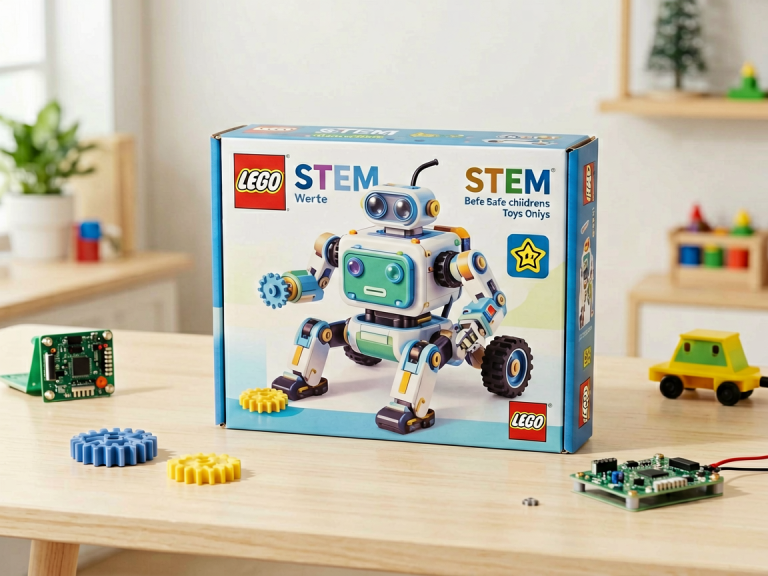
STEM is an acronym for Science, Technology, Engineering, and Mathematics. STEM toys are designed to introduce children to concepts and skills in these four interconnected fields through hands-on, often project-based activities. The underlying assumption is that early exposure to coding, robotics, physics, and engineering fosters critical thinking, problem-solving, and logical reasoning—skills that are increasingly valued in a technology-driven world.
Common examples include robot-building kits (e.g., LEGO Boost, Sphero), circuit boards (e.g., Snap Circuits), coding board games (e.g., Botley the Coding Robot), chemistry sets, and magnetic building tiles. Many STEM toys emphasize open-ended trial and error: a child must figure out why their robot won’t move, adjust the code, or rearrange the gears. The process mirrors scientific inquiry—hypothesis, experiment, observation, iteration. STEM toys often come with detailed instructions or digital apps, but they also leave room for creative modification.
Critically, STEM toys are typically goal-oriented. The child aims to make a light bulb glow, a car move forward, or a program run correctly. Success is measurable and often visual. This can be incredibly motivating for children who enjoy clear objectives and immediate feedback. However, the focus on outcomes can sometimes overshadow the process of exploration itself.
What Are Montessori Toys?
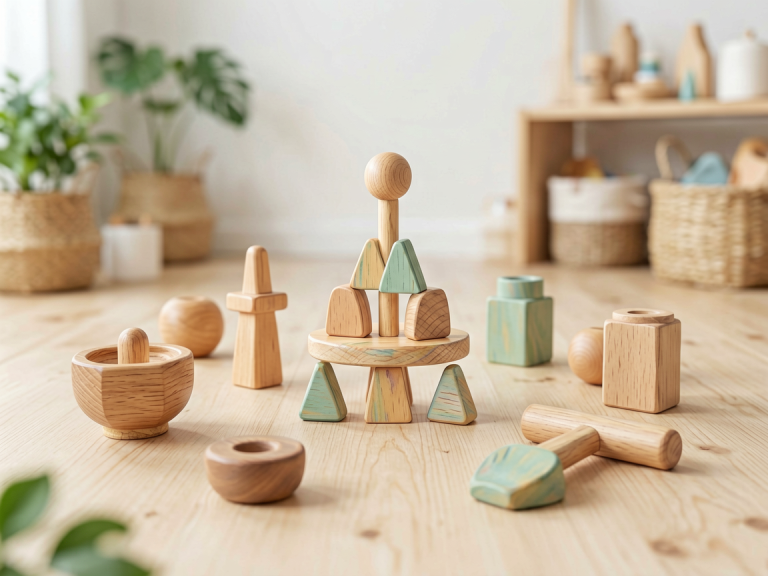
Montessori toys, by contrast, are not defined by a subject area but by a pedagogical philosophy developed by Dr. Maria Montessori in the early 20th century. Montessori education emphasizes self-directed activity, hands-on learning, and collaborative play in a carefully prepared environment. Montessori toys—or “materials,” as they are traditionally called—are designed to isolate a single skill or concept, allowing the child to master it through repetition and self-correction.
Common Montessori materials include the pink tower (a set of wooden cubes that teach size discrimination), the sandpaper letters (for tactile letter recognition), the binomial cube (which introduces algebraic concepts through physical manipulation), and practical life items like pouring pitchers, dressing frames, and sorting trays. Unlike STEM toys, Montessori materials are almost always made of natural materials (wood, metal, fabric) with muted colors to minimize distraction. They are self-correcting: if a child places a cylinder in the wrong hole, it won’t fit, so the error is obvious without adult intervention.
The goal of Montessori play is not to achieve a specific external result (like coding a robot to dance) but to develop internal order, concentration, fine motor skills, and independence. The child chooses the activity, works at their own pace, and repeats it as many times as they wish. This process builds focus and intrinsic motivation. Montessori toys are intentionally simple—they do not have batteries, screens, or complex instructions—because the philosophy holds that the child’s mind is the most powerful learning tool.
Core Philosophical Differences
At first glance, both STEM and Montessori toys champion hands-on learning, but their philosophical underpinnings diverge sharply.
Origin and Purpose. STEM toys emerged as a response to modern economic and technological demands. They aim to prepare children for future careers in science and engineering. Montessori toys, on the other hand, were developed to support the holistic development of the child—cognitive, social, emotional, and physical—within a framework that respects the child’s natural developmental timetable.
Role of the Adult. In a Montessori environment, the adult is an observer and guide, not a teacher. The child chooses their own work. In a STEM play scenario, the adult often functions as a facilitator or even a co-constructor, helping the child decipher instructions or debug a problem. STEM toys can involve more direct adult guidance, especially for younger children who cannot read or follow complex steps.
Structure and Freedom. Montessori toys are designed with precise structure that limits possibilities (a cylinder block has only one correct fit), yet within that structure the child has complete freedom of pace and repetition. STEM toys often offer more open-ended possibilities (e.g., an infinite number of ways to build a bridge with magnetic tiles), but they also come with a built-in expectation to achieve a particular function. The freedom in Montessori is about process; the freedom in STEM is about outcomes.
Feedback Mechanism. Montessori toys provide inherent, physical feedback (a block doesn’t fit, water spills). STEM toys provide feedback via light, sound, motion, or on-screen messages. Both are effective, but the former cultivates a sense of kinesthetic awareness while the latter introduces cause-and-effect in a technological context.
Comparing Learning Outcomes: Skills Developed
When evaluating which toy type is “better,” it is essential to consider the specific skills each cultivates.
STEM Toys develop:
- Logical reasoning and sequencing: Coding and circuit-building require step-by-step thinking.
- Problem-solving under constraints: Children learn to work within limits (e.g., “Why won’t the motor turn?”).
- Spatial and engineering thinking: Building structures with gears, pulleys, and trusses.
- Technological literacy: Familiarity with basic electronics, programming logic, and digital interfaces.
- Persistence and resilience: STEM failures are obvious, encouraging iterative improvement.
Montessori Toys develop:
- Fine motor skills and hand-eye coordination: Grasping, pouring, threading, and sorting.
- Concentration and attention span: Repetitive tasks like stacking blocks or matching sounds require sustained focus.
- Independence and self-confidence: The child learns to manage their own work, clean up, and correct errors without help.
- Order and classification: Many Montessori exercises involve sorting by size, color, shape, or texture, building cognitive categorization.
- Sensorial awareness: Refinement of the senses (tactile, auditory, visual) through specific materials.
Overlap. Both approaches foster creativity and critical thinking, albeit in different domains. A child playing with magnetic tiles might design a bridge (engineering) while also exploring symmetry (Montessori-like sensorial work). However, the emphasis differs: STEM prioritizes analytical thinking; Montessori prioritizes experiential learning and sensory integration.
Age Appropriateness and Play Style
Not all toys are suitable for all ages, and understanding developmental readiness is key.
For infants and toddlers (0–3 years): Montessori toys excel. Simple grasping toys, rattles made of natural materials, nesting cups, and object permanence boxes align perfectly with the sensory and motor development of this age. STEM toys at this stage (e.g., light-up toys with buttons) can be overstimulating and lack the self-correcting, single-skilled nature that toddlers need.
For preschoolers (3–5 years): Both have strong offerings. Montessori provides reading readiness (sandpaper letters, moveable alphabet), math concepts (number rods, spindle boxes), and practical life skills (buttoning, sweeping). STEM introduces simple coding through screen-free robots (e.g., Code-a-pillar) and building sets. A child may enjoy both, but note that many Montessori purists avoid any electronic-based toys during this period, arguing that screens and batteries disrupt the child’s natural curiosity.
For school-age children (6+ years): STEM toys become more compelling as children can handle complex instructions, abstract reasoning, and longer projects. Robotics kits, coding languages like Scratch, and advanced chemistry sets align with growing cognitive abilities. Montessori materials for this age (e.g., grammar boxes, fraction circles, timeline of life) are also powerful but require a prepared environment often found in Montessori schools rather than at home. At this stage, the two approaches can complement each other: a child might use Montessori geometric solids to understand three-dimensional shapes, then apply that knowledge to design a 3D-printed model in a STEM project.
Pros and Cons of Each Approach
Pros of STEM Toys:
- Highly engaging for children who love technology and construction.
- Directly relevant to modern academic and career fields.
- Encourages collaborative problem-solving (many STEM sets are designed for pairs or groups).
- Often scalable—children can progress from beginner to advanced kits.
Cons of STEM Toys:
- Can be expensive, and many kits are single-use or quickly outgrown.
- Overreliance on screens or batteries may reduce imaginative, open-ended play.
- May frustrate children who prefer slower, repetitive exploration rather than goal-oriented challenges.
- Some kits require significant adult involvement, which can be exhausting for parents.
Pros of Montessori Toys:
- Develops deep concentration and intrinsic motivation without external rewards.
- Materials are durable, timeless, and often used across multiple ages.
- Encourages self-correction and independence, reducing the need for constant supervision.
- Screen-free and calming, promoting a slower, more mindful pace.
Cons of Montessori Toys:
- Can feel less exciting or “fun” compared to flashy STEM toys.
- Requires parental understanding of the philosophy; simply buying wooden toys does not guarantee Montessori learning.
- Some materials are expensive for what they are (a set of wooden blocks may cost more than a similar plastic set).
- May not directly address technological literacy that children need in the 21st century.
How to Choose? Practical Tips for Parents
Rather than viewing STEM and Montessori as competing philosophies, consider them complementary tools in your parenting toolbox. Here are actionable tips:
- Observe your child. Does your child love cause and effect, building, and troubleshooting? STEM toys may spark their passion. Does your child prefer calm, repetitive, sensorial activities? Montessori materials will likely resonate more.
- Mix and match by developmental stage. Use Montessori materials during toddler and preschool years to build foundational concentration and motor skills. Introduce STEM toys gradually around age 4–5, starting with simple, screen-free options.
- Prioritize quality over quantity. A few well-chosen Montessori materials (e.g., a pink tower or continent puzzle) can serve years of learning. Likewise, a versatile STEM building set (like magnetic tiles or a modular robotics kit) offers more value than many disposable kits.
- Limit screen-based STEM toys for young children. The American Academy of Pediatrics recommends no screens for children under 18 months, and limited use for older toddlers. Opt for battery-free STEM toys like marble runs, gear sets, and wooden construction kits.
- Embrace the process, not just the product. Whether your child is stacking rings Montessori-style or debugging a robot, focus on what they are learning: patience, problem-solving, and joy in discovery. Avoid pressuring them to “finish” or “get it right.”
- Create a prepared environment. Both approaches work best when toys are displayed neatly on low shelves, rotated regularly, and presented without clutter. A child overwhelmed by choices benefits little from even the best toys.
Conclusion
STEM toys and Montessori toys represent two powerful but distinct gateways to learning. STEM toys equip children with technical skills, logical frameworks, and a comfort with failure and iteration—qualities essential for thriving in a digital age. Montessori toys nurture independence, sensory refinement, and a love of focused work—qualities that underpin all deep learning, regardless of subject. Neither is inherently superior; the “best” choice depends on your child’s temperament, your family’s values, and the stage of development.
The wisest path is not to pick one camp but to understand the strengths of both. A child who grows up with the gentle, self-directed rhythms of Montessori alongside the exciting, purposeful challenges of STEM will develop a richer, more balanced set of skills. They will learn to think like a scientist, but also to feel like an artist. They will code a robot, but they will also know the quiet satisfaction of pouring water from a wooden pitcher without spilling a drop. In the end, the goal of educational toys is not to turn children into miniature engineers or perfect Montessorians—it is to nurture curious, capable, and joyful human beings. And that goal is best served by a thoughtful blend of both worlds.