Magnetic Tiles vs. Building Blocks: A Comprehensive Comparison of Two Beloved Childhood Toys
Introduction
For generations, building blocks have been a cornerstone of childhood play, fostering creativity, motor skills, and spatial reasoning. In recent years, however, a new contender has captured the imagination of parents and educators alike: magnetic tiles. These colorful, translucent shapes with embedded magnets promise a different kind of construction experience—one that is often faster, more forgiving, and more geometrically complex. While both toys fall under the broad category of construction play, they differ fundamentally in materials, mechanics, educational outcomes, and developmental benefits. Understanding these differences is crucial for parents, teachers, and toy enthusiasts who want to make informed choices. This article offers a detailed, side-by-side comparison of magnetic tiles and classic building blocks, exploring everything from structural stability to cognitive growth, to help you decide which—or which combination—best suits your child’s needs.
Material and Structural Differences
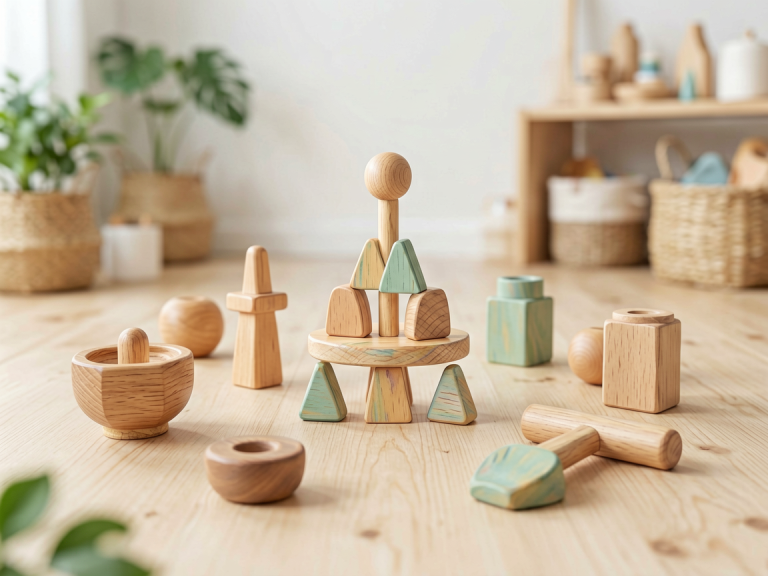
Building Blocks are typically made of wood, plastic, or foam. Classic wooden blocks are solid, heavy, and rely entirely on gravity and friction for stability. They are simple in shape—cubes, cylinders, arches, and triangles—and require precise alignment to stand. A child must learn to balance one block on another, accounting for weight distribution and center of gravity. This inherent instability is actually a feature: it teaches patience, trial-and-error, and fine motor control. However, it can also be frustrating for younger children, as even a slight misalignment can cause a tower to collapse.
Magnetic Tiles, on the other hand, are almost always made of durable ABS plastic with strong neodymium magnets embedded in the edges. The tiles are hollow and lightweight, and the magnets create an instant connection when two edges are brought close. This allows children to build tall, cantilevered, or even 3D structures (such as cubes and pyramids) with minimal effort. The magnetic force provides immediate feedback and a sense of success, even for toddlers. However, the tiles themselves are less tactile—they are smooth and shiny, lacking the organic texture and weight of wood. The magnets also impose a limitation: you cannot build diagonally or at arbitrary angles unless the tiles are designed with hinges (some sets offer this). The structure’s strength depends on the number of magnets engaged; a weak connection can cause sudden collapse, but usually without the dramatic clatter of wooden blocks.
Play Patterns and Creativity
Building Blocks encourage open-ended, imaginative play that often involves storytelling. A child might build a castle for a knight, a garage for a toy car, or a simple house. The blocks’ rough texture and varied shapes invite stacking, nesting, and even sorting by color or size. Because blocks do not lock together, the play is inherently dynamic: structures are rebuilt constantly, and the process is as important as the product. This type of play is excellent for developing creativity within constraints—a child must figure out how to make a stable arch or a bridge using only gravity.
Magnetic Tiles promote a different kind of creativity—one that is more geometric and assembly-focused. Children quickly discover that they can create 2D patterns (like a star or a flower) and then lift them into 3D structures. The transparency of the tiles allows light to pass through, creating beautiful effects when placed on a light table or near a window. Many children become fascinated with building symmetrical shapes, geodesic domes, or even simple machines (a magnetic tile can be used as a hinge if two edges are joined). However, because the magnets make connections so easy, children may focus more on the end result—a large, impressive structure—than on the iterative problem-solving that blocks require. Some educators argue that magnetic tiles can lead to “instant gratification” play, while blocks demand more persistence.
Educational Benefits: STEM vs. Spatial Skills
Building Blocks are widely recognized for developing spatial reasoning, hand-eye coordination, and early math concepts like size comparison, symmetry, and counting. When children stack blocks, they experiment with balance and weight, learning basic physics through trial and error. Block play also supports language development: as children describe their creations, they learn new vocabulary (balance, tower, collapse). Research has shown that children who engage in frequent block play tend to perform better on spatial visualization tests later in life, which is a strong predictor of success in STEM fields.
Magnetic Tiles have a more direct link to geometry and structural engineering. Because tiles can be arranged in 2D nets and then folded into 3D shapes, children intuitively learn about faces, vertices, and edges—concepts that form the foundation of geometry. Many magnetic tile sets include squares and equilateral triangles, allowing children to build cubes, prisms, and even octahedrons. This hands-on experience with polyhedra is difficult to achieve with standard blocks. Furthermore, the magnetic force itself is a tangible lesson in physics: children observe that magnets attract only when oriented correctly, and that magnetic fields can weaken at a distance. For older children, magnetic tiles can be used to explore concepts like polarity, attraction, and repulsion. That said, some critics argue that the magnetic connection is too forgiving—children never have to worry about precise alignment, which means they miss the challenging lessons of fine motor precision that blocks provide.
Age Appropriateness and Safety
Building Blocks are generally safe for children as young as 6 months (larger foam or soft blocks), but classic small wooden blocks pose a choking hazard until age 3. Once a child can safely handle them, blocks remain engaging through elementary school and even into adulthood (think of the popularity of Jenga or Kapla). The primary safety concerns with blocks are splinters (from low-quality wood) and the risk of injury if a child throws a heavy block.
Magnetic Tiles are recommended for ages 3 and up, mainly because the magnets are embedded inside the plastic, and if the casing cracks, a child could swallow a magnet. Ingesting multiple magnets is a serious medical emergency. Therefore, parents must inspect tiles regularly for damage. For children under 3, the risk is too high. For older children, magnetic tiles are generally safe, and the lightweight plastic reduces the chance of injury from falling structures. However, the magnetic force can pinch little fingers if two tiles snap together quickly. Despite these concerns, magnetic tiles are among the most popular toys for preschool and early elementary classrooms because of their ease of use and educational value.
Storage and Durability
Building Blocks are durable, especially wooden ones, which can last for decades if they are not chewed or dropped. They are easy to clean (wipe with a damp cloth), and they never lose their structural integrity. Storage is straightforward: a large bin or a dedicated shelf. The downside is that blocks are heavy, and a large set takes up significant floor space.
Magnetic Tiles are lightweight and can be stored flat, making them more compact. However, the magnets themselves can weaken over time or if exposed to heat. The plastic casing may crack if stepped on or dropped from a height. Once a tile cracks, the magnets can fall out, becoming a hazard. Also, because the tiles are hollow, they can trap dirt or moisture inside if the seams are not sealed well. Cleaning requires gentle soap and water, but submerging the tiles is not recommended. Despite these care requirements, many high-quality tiles last for many years. One interesting advantage: magnetic tiles can be used on vertical surfaces like a magnetic whiteboard or refrigerator, expanding play possibilities beyond the floor.
Cost Considerations
High-quality wooden building blocks vary widely in price. A basic set of 100 natural wood blocks might cost $20–$40, while premium sets from brands like Hape or Melissa & Doug can run $50–$100. They are a one-time investment that often becomes a family heirloom.
Magnetic tiles are generally more expensive. A starter set of 32 pieces from a reputable brand like Magna-Tiles or PicassoTiles costs around $40–$70. Large sets with 100+ pieces can exceed $120. The higher cost reflects the complexity of the magnets and the injection-molded plastic. Because children tend to want to build large structures, most parents end up buying expansion sets, making the total cost higher than blocks. However, many educators argue that the unique structural possibilities justify the price.
Conclusion
Both magnetic tiles and building blocks offer immense developmental value, but they serve different purposes in a child’s play journey. Building blocks teach patience, fine motor control, and fundamental physics through the challenge of balance and gravity. They are perfect for imaginative, story-driven play and can be used from infancy (with soft blocks) through adulthood. Magnetic tiles, on the other hand, excel at introducing geometry, spatial visualization, and basic magnetism in a forgiving, frustration-free environment. They allow children to build complex, symmetrical structures that would be nearly impossible with blocks alone. The best approach for most families is to offer both: blocks for unstructured, physical creativity and magnetic tiles for structured, geometric exploration. By rotating between the two, children gain a well-rounded set of cognitive and motor skills that will serve them for a lifetime. In the end, the choice is not about which toy is “better,” but about how each can enrich a child’s play experience—and there is room under any playroom roof for both.