The Play Paradox: Screen-Free Toys Versus App-Based Toys in Early Childhood Development
Introduction: A Fork in the Playroom
Walk into any toy store today, and you are confronted with a quiet revolution hiding in plain sight. On one shelf sit the classics: wooden blocks, stuffed animals, crayons, and building bricks—objects that ask nothing of a child except imagination and hands. On the adjacent shelf, glowing tablets, interactive robots, and app-controlled dolls promise something else entirely: adaptive learning, instant feedback, and endless content. This is not merely a choice between two categories of playthings; it is a choice between two philosophies of childhood. As parents, educators, and researchers grapple with the accelerating digitization of early life, the debate between screen-free toys and app-based toys has become one of the most consequential conversations in developmental psychology. Which kind of toy actually benefits a child’s cognitive, social, and emotional growth? The answer, as with most profound questions, is layered, nuanced, and far from binary.
The Case for Screen-Free Toys: Hands-On, Heartfelt, and Human
Cognitive Development Through Open-Ended Play
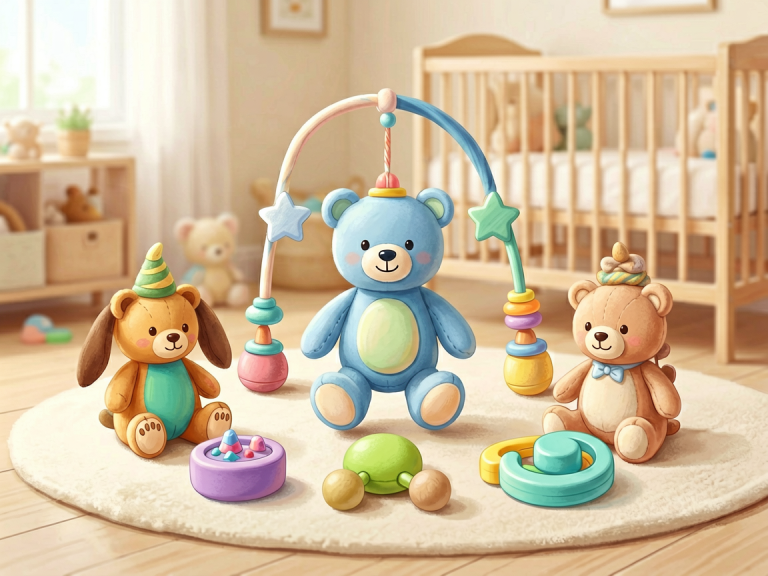
Screen-free toys—such as wooden puzzles, magnetic tiles, clay, dolls, and board games—possess a remarkable quality: they are open-ended. A cardboard box can become a spaceship, a castle, or a time machine, depending entirely on the child who holds it. This ambiguity is not a design flaw; it is a cognitive engine. When a child manipulates a physical object, she engages multiple sensory systems simultaneously—touch, sight, proprioception, and sometimes even sound and smell. Neuroscientific research has consistently shown that multisensory learning strengthens neural connections far more effectively than passive visual or auditory input. A toddler stacking blocks, for example, learns about gravity, balance, spatial relationships, and cause and effect through direct trial and error. The block falls, and she feels the vibration in her hand. She adjusts, tries again, and succeeds. This is learning that cannot be replicated by a screen because it involves the body’s feedback loop.
Furthermore, screen-free toys naturally foster what developmental psychologists call “divergent thinking”—the ability to generate multiple solutions to a single problem. A set of wooden blocks can be used to build a tower, a bridge, a road, a house, or even an abstract sculpture. There is no “right answer” built into the toy. Compare this to an app-based game that rewards a single correct tap or swipe, and the difference becomes stark: one encourages exploration, the other encourages compliance.
Social and Emotional Benefits: The Power of Unstructured Interaction
Perhaps the most undervalued advantage of screen-free toys is the social context they create. When children play with physical toys together, they must negotiate, share, take turns, and resolve conflicts in real time. A group of preschoolers building a castle with foam bricks must communicate verbally and nonverbally: “I’ll put the red one on top, and you put the blue one next to it.” This requires eye contact, tone-of-voice interpretation, and emotional regulation. Research from the University of Cambridge’s Centre for Neuroscience in Education indicates that children who engage in regular unstructured play with non-electronic toys develop stronger theory-of-mind capabilities—the ability to understand that others have thoughts and feelings different from their own.
Screen-free toys also offer something increasingly rare in modern childhood: boredom tolerance. When a child has only a wooden train set, there is no algorithm curating the next exciting moment. The child must generate her own narrative. She must decide whether the train is carrying cargo or passengers, whether it will break down, or whether a dragon will appear. This internal narration is the foundation of creativity, self-regulation, and even later literacy skills. A study published in *Frontiers in Psychology* found that children who spent more time in unstructured, screen-free play showed higher levels of executive function, including inhibitory control and cognitive flexibility, compared to peers who regularly used app-based toys.
The Case for App-Based Toys: Personalized, Responsive, and Engaging
Educational Potential of Adaptive Technology
It would be a mistake to dismiss app-based toys as uniformly harmful. In certain domains, technology-enhanced playthings offer advantages that their analog counterparts cannot match. The most important of these is adaptivity. A high-quality app-based toy—such as an interactive phonics game that adjusts its difficulty based on a child’s responses—can provide personalization that a static toy cannot. A wooden block does not know whether a child is struggling with counting or has already mastered it. A well-designed app, however, can scaffold learning by offering easier problems when a child is frustrated and harder ones when she is bored. This “zone of proximal development” approach, which Vygotsky championed decades ago, is now achievable at scale through algorithms.
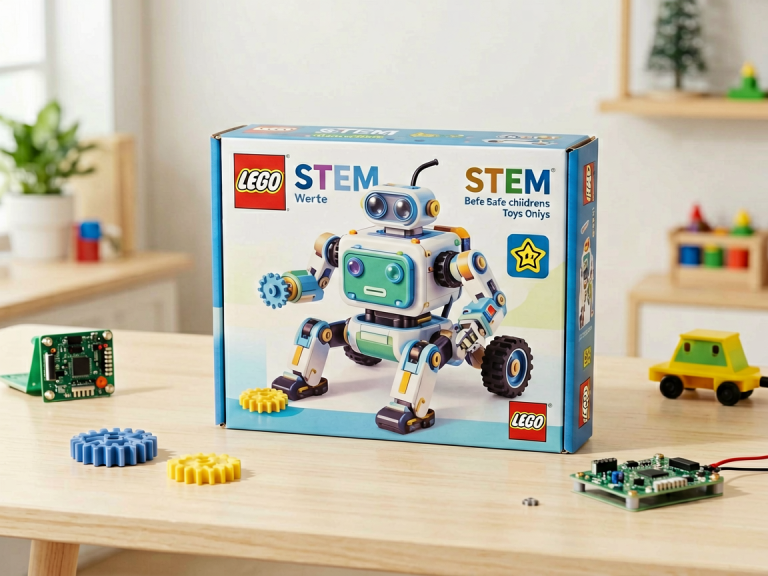
Moreover, app-based toys can introduce children to concepts that are difficult to represent physically. For example, an app that simulates the solar system allows a child to zoom in on Jupiter’s moons, speed up time to see planetary orbits, or watch a rocket launch. These experiences are not easily replicated with plastic models or books. Similarly, coding toys like programmable robots on a tablet interface teach computational thinking—sequencing, debugging, and logical reasoning—in a way that is intuitive and fun. When used intentionally and in moderation, app-based toys can serve as powerful tools for STEM education.
Engagement, Motivation, and the Dopamine Factor
There is a reason children gravitate toward app-based toys: they are engineered for engagement. Bright colors, sound effects, reward animations, and progress bars tap into the brain’s reward system, releasing dopamine and encouraging persistence. A child who might give up on a paper puzzle after a minute may spend twenty minutes trying to solve a similar puzzle on an app that celebrates each small success with stars and cheering. For children with attention difficulties or learning disabilities, this motivational boost can be genuinely beneficial. Occupational therapists often use app-based games to help children practice fine motor skills or attention regulation in a low-stakes, high-reward environment.
However, this very strength is also its Achilles’ heel. The same mechanisms that make app-based toys engaging also make them potentially addictive. The dopamine loop encourages children to seek the next reward rather than to savor the process. A child playing with a physical toy may pause, look out the window, or daydream—gaps that are essential for consolidation of memory and creative insight. An app-based toy, by contrast, tends to fill every moment with stimuli, leaving little room for the quiet incubation that true learning requires.
Critical Evaluation: Which Toys Win for Different Age Groups?
Infants and Toddlers (0–3 Years): The Case for Screen-Free Dominance
For the youngest children, the evidence is overwhelmingly clear: screen-free toys are superior. The American Academy of Pediatrics recommends avoiding screen media for children under 18 months (with the exception of video chatting) and limiting it to one hour per day of high-quality programming for children aged 2 to 5. During the first three years of life, the brain is developing at a dizzying pace, and the most important inputs come from real-world interactions—faces, voices, touch, and movement. An infant learning to grasp a rattle is building neural pathways that will later support reading, writing, and mathematics. A toddler manipulating a shape sorter is developing hand-eye coordination and spatial awareness in a way that a touchscreen cannot replicate because the physical resistance and tactile feedback are missing.
App-based toys for this age group often market themselves as “educational,” but numerous studies have found that they do not produce the promised learning outcomes. A classic study from the University of California, Irvine, showed that infants who watched a DVD claiming to teach them to read actually learned no more than those who did not watch it. Moreover, the passive nature of many apps can displace critical caregiver-child interactions. When a parent and child build a block tower together, they talk, laugh, and point—these serve as the building blocks of language and emotional bonding. When a child uses an app, the interaction is often solitary.
Preschoolers (3–6 Years): A Balanced Approach with Guardrails
For preschool-aged children, the picture becomes more nuanced. At this stage, children are developing foundational literacy, numeracy, and social skills. High-quality app-based toys—such as interactive storybooks that allow children to tap on words to hear them pronounced, or math games that teach counting with animated characters—can supplement traditional learning. However, they should never replace hands-on, sensory-rich play. The key is intentionality: parents should use app-based toys as tools, not as babysitters. The American Academy of Pediatrics recommends co-viewing and co-playing with children whenever possible, so that the digital experience becomes a shared activity rather than a solitary one.
Furthermore, the physical aspects of play remain critical. A child who builds a tower with blocks develops fine motor skills, learns about balance and structural integrity, and experiences the frustration and satisfaction of physical creation. An app that simulates building cannot provide the same proprioceptive feedback. A child who draws with crayons learns to regulate pressure, control the direction of lines, and blend colors—skills that an app’s “undo” button erases. The risk of overreliance on app-based toys is that children may become fluent in digital manipulation but clumsy in the physical world—a phenomenon some educators call “digital disembodiment.”
School-Age Children (6+ Years): Digital Literacy Meets Traditional Play
As children enter school, both categories of toys have distinct roles. App-based toys can introduce complex systems thinking, programming, and multimedia creativity. A child who codes her own game on a tablet learns logical reasoning and persistence in debugging. A child who creates a digital comic learns storytelling in a new medium. However, these benefits are contingent on the quality of the app and the level of parental guidance. Many app-based toys are little more than “digital worksheets” that drill facts without promoting deeper understanding.
Screen-free toys for older children—such as strategy board games, building kits (like LEGO Technic), and craft materials—continue to offer unique benefits. They require face-to-face social interaction, physical manipulation, and patience. A board game like chess or Settlers of Catan teaches strategy, sportsmanship, and delayed gratification in ways that a digital version cannot fully replicate because the physical presence of other players, the ability to read their body language, and the tactile act of moving pieces all contribute to the experience.
Practical Recommendations for Parents and Educators
Given the evidence, the most sensible approach is not to choose one category over the other but to curate a balanced “toy diet.” Just as we understand that a healthy diet includes both nutrient-dense whole foods and occasional treats, a healthy play environment should privilege screen-free toys while allowing carefully selected app-based toys. Here are concrete guidelines:
- Prioritize open-ended screen-free toys for daily play. Blocks, art supplies, dress-up clothes, dolls, vehicles, and sand/water tables provide the richest developmental return on investment.
- Set clear limits for app-based play. Follow the AAP guidelines: no screens before age 18 months, with quality content after that, and a maximum of one to two hours per day for older children.
- Co-play with app-based toys. Sit with your child, ask questions, and extend the learning into the physical world. If the app teaches about animals, go to the zoo or look at a picture book together afterward.
- Choose apps that are active, not passive. Avoid “spa apps” where children only watch or tap mindlessly. Look for apps that require problem-solving, creativity, or collaboration.
- Observe your child’s behavior. If a child becomes irritable, withdrawn, or overly dependent on a device after using an app-based toy, cut back. If a child shows genuine curiosity and learning, use the app as a springboard.
Conclusion: The Toy Is Not the Teacher—The Child Is
In the end, the debate between screen-free toys and app-based toys misses a larger truth: no toy, no matter how well-designed, can replace the active, attentive presence of a caring adult. A wooden block in the hands of a parent who narrates, questions, and celebrates is infinitely more valuable than the most expensive interactive tablet used in isolation. Conversely, an app-based toy used as a shared tool for exploration—where a parent and child talk about what they see and do—can be a wonderful addition to the playroom.
The real danger is not the technology itself but the quiet erosion of unstructured, unhurried, and embodied play. Children need time to be bored, to create their own worlds, to fail and try again without the algorithmic nudge of a “next level.” They need to feel the weight of a stone, the texture of clay, and the warmth of a friend’s hand as they build something together. Screen-free toys offer these experiences naturally; app-based toys can complement them when used with intention. The wise parent or educator will choose neither dogma nor technophilia, but a thoughtful, child-centered path that recognizes play as the serious, joyful, and irreplaceable work of childhood.