Screen-Free vs. App-Based Toys: Which Path Truly Nurtures a Childs Mind?
In the bustling aisles of modern toy stores and the endless scroll of online marketplaces, parents today face a bewildering choice: should they invest in classic wooden blocks, handmade dolls, and crayon sets, or download the latest app-based toys that promise interactive learning through glowing screens? This is not merely a question of price or convenience; it cuts to the very heart of how we believe children should grow, learn, and play. As screens have become ubiquitous in everyday life, the debate between screen-free toys and app-based toys has intensified, with researchers, educators, and parents taking sides. But beneath the marketing claims and parental anxieties lies a more nuanced reality. Both categories offer distinct benefits and potential drawbacks, and understanding these can empower families to make informed decisions that truly serve a child’s holistic development.
—
The Timeless Value of Screen-Free Toys: Hands, Hearts, and Imagination
Screen-free toys—whether they are building sets, puzzles, art supplies, dolls, or simple outdoor equipment—have been the bedrock of childhood for centuries. Their appeal lies not in electronic buzzers or animated characters, but in the infinite possibilities they offer when combined with a child’s own creativity and physical engagement.
Cognitive and Creative Development
One of the most profound advantages of screen-free toys is their ability to stimulate open-ended play. A set of wooden blocks, for example, has no predetermined narrative. One day the blocks become a castle for a princess; the next, they are a spaceship bound for Mars. This flexibility forces children to generate their own stories, solve their own spatial problems, and experiment with cause and effect without external constraints. Research in developmental psychology consistently shows that open-ended play strengthens executive functions—skills like planning, flexibility, and self-regulation—far more effectively than closed-ended, app-based activities that offer limited choices and immediate feedback.
Moreover, screen-free toys often require fine motor skills that are crucial for later academic success. Manipulating small beads, holding a paintbrush, or stacking blocks refines the tiny muscles in a child’s hands and fingers, which directly supports handwriting, drawing, and even using tools later in life. Unlike tapping a screen, which involves a limited range of motion, these toys promote a rich variety of finger and hand movements that build neural connections in the developing brain.
Social and Emotional Growth
When children play with physical toys together—whether it is a board game, a set of toy cars, or a large cardboard box turned into a fort—they naturally practice negotiation, sharing, empathy, and conflict resolution. There is no algorithm to moderate their interaction; they must read each other’s facial expressions, interpret tone of voice, and learn to take turns in real time. These face-to-face social skills are becoming increasingly rare in a digital age, yet they are foundational for building healthy relationships throughout life.
Screen-free toys also allow children to experience boredom—a state that is often undervalued but critically important. When a child has no flashing screen to entertain them, they must look inward. They learn to self-soothe, to daydream, to observe their environment, and to invent their own amusement. This internal resourcefulness is the bedrock of creativity and resilience. In contrast, app-based toys are designed to always provide stimulation, leaving little room for the quiet moments in which a child’s own imagination might take flight.
Physical Health and Sensory Integration
The physicality of screen-free play—running, jumping, balancing, climbing, and even sitting on the floor to build a puzzle—contributes to gross and fine motor development, cardiovascular health, and sensory integration. Children learn about gravity, texture, weight, and temperature through direct experience. A ball feels round and bounces; clay can be squished and molded; sand runs through fingers. These sensory inputs are essential for building a robust body schema and for helping the brain organize information from different senses. App-based toys, by contrast, provide only visual and auditory input, and often encourage prolonged sedentary behavior that can lead to eye strain, poor posture, and even delayed gross motor milestones in young children.
—
The Allure of App-Based Toys: Interactive, Adaptive, and Convenient
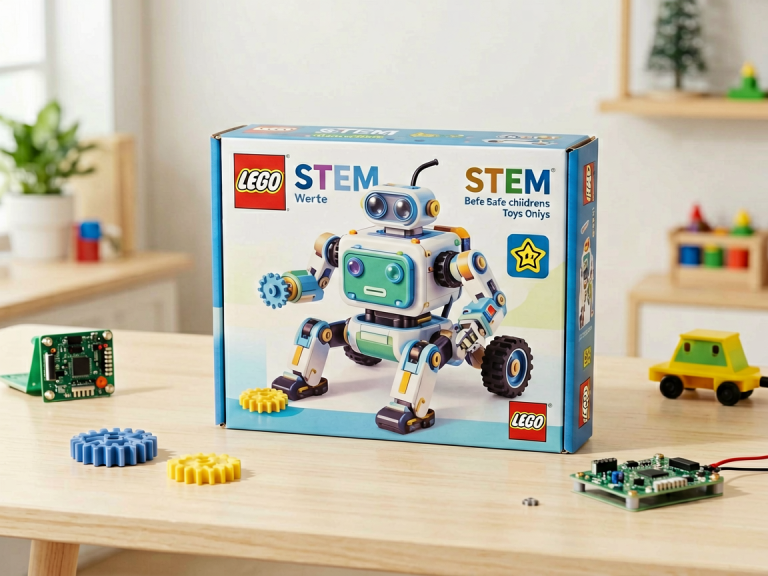
It would be unfair to dismiss app-based toys as merely "digital pacifiers." Well-designed educational apps and interactive toys—such as tablet-based learning games, programmable robots, or augmented reality puzzles—offer genuine advantages that screen-free toys cannot replicate.
Personalized Learning and Immediate Feedback
One of the most compelling arguments for app-based toys is their ability to adapt to a child’s individual skill level. A screen-free workbook or puzzle is static; a child either succeeds or fails, and the difficulty is fixed. But an app can track a child’s progress, adjust the pace, provide hints, and offer multiple attempts without judgment. For example, a phonics app that uses speech recognition can identify exactly which sounds a child is struggling with and provide targeted practice. This kind of personalized scaffolding can accelerate learning in specific academic domains, such as early literacy or numeracy.
Furthermore, children today must eventually learn to navigate digital environments. Starting with age-appropriate, educational apps can teach digital literacy in a controlled setting. They learn to use touchscreens, follow on-screen instructions, and understand basic programming logic through simple coding games. These are skills that are increasingly relevant in a technology-driven world, and waiting until school age to introduce them can put some children at a disadvantage.
Engagement and Motivation
App-based toys are masterful at using gamification to hold a child’s attention. Points, stars, levels, and animations create a feedback loop that can motivate even reluctant learners to persist through challenges. For a child who finds traditional reading or math worksheets tedious, a well-made game can transform practice into play. This is particularly beneficial for children with learning differences, such as dyslexia or ADHD, who may become frustrated with static materials. The interactive nature of apps can also help children with attention deficits by breaking tasks into small, rewarding steps.
In addition, some app-based toys open doors to experiences that would otherwise be inaccessible. A child can explore the solar system through a virtual reality app, watch a dinosaur skeleton come to life through augmented reality, or learn about ocean ecosystems through a simulated underwater adventure. These experiences can spark curiosity and provide a foundation for deeper learning that physical toys alone might not offer.
Accessibility and Variety
For families living in small apartments, or in communities where outdoor play is limited, app-based toys offer a convenient way to engage a child without needing large physical spaces. A single tablet can host dozens of different "toys"—from painting apps to science simulations—which reduces clutter and allows for easy rotation. This can be especially valuable for parents who are unable to provide extensive physical toy collections due to budget or space constraints. Moreover, apps can be updated or replaced with new content, keeping a child’s interest alive without buying new materials.
—
The Hidden Costs: What Screens Take Away
Despite their advantages, app-based toys come with significant risks that deserve careful consideration. The most widely discussed is the impact of screen time on attention span. Many educational apps are designed to be highly stimulating, with rapid scene changes, bright colors, and constant rewards. While this keeps children engaged, it can also train their brains to expect high-intensity stimulation, making it harder for them to focus on slower-paced activities like reading a story or solving a puzzle. Some researchers have linked excessive screen time in early childhood to an increased risk of attention problems later in school.
Another concern is the passive nature of much app-based play. Even when an app claims to be "interactive," the interaction is often limited to tapping, swiping, or selecting from predetermined options. This is qualitatively different from the open-ended exploration that happens when a child builds a fort from cardboard or mixes paint colors to create a new shade. In many cases, the app’s algorithm is directing the play rather than the child’s own imagination. Critics argue that this can undermine a child’s sense of agency and creativity.
Furthermore, screen-based toys can interfere with the parent-child relationship. When a child is absorbed in an app, a parent may feel less inclined to join in, assuming the child is "occupied." This reduces opportunities for what developmentalists call "serve and return" interactions—the back-and-forth conversations and shared attention that are crucial for language development and emotional bonding. Physical toys, by contrast, often invite parents and siblings to participate, leading to richer social interactions.
—
Striking a Balance: Practical Guidance for Parents
Rather than framing the choice as an all-or-nothing war between screens and blocks, a more useful approach is to consider the developmental context. The American Academy of Pediatrics recommends that for children under 18 months, screen time be avoided except for video chatting, and that for older children, high-quality, educational content be prioritized—but with limits. The key is not to eliminate one category entirely, but to use each for what it does best.
Recommendations for Different Age Groups
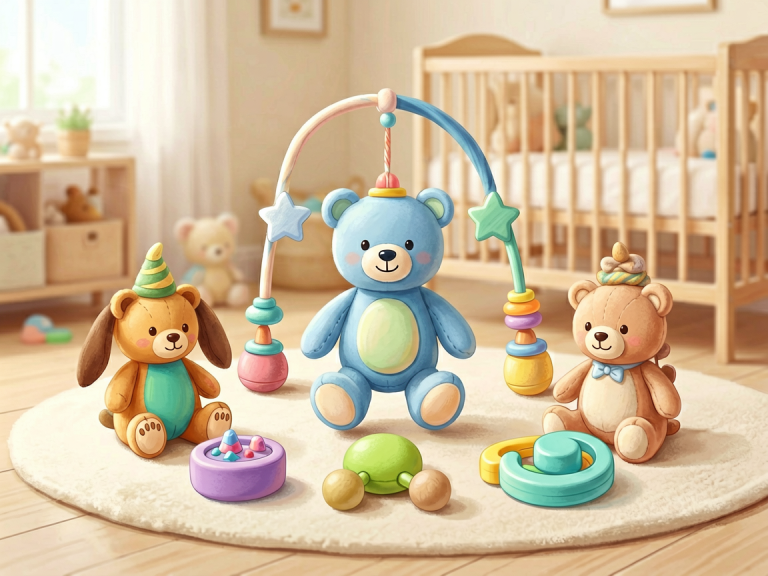
- Infants and Toddlers (0–2 years): Screen-free toys should dominate. Babies and toddlers learn primarily through sensory exploration, mouthing objects, and being held and talked to. Simple rattles, stacking cups, soft blocks, and board books are ideal. App-based toys at this age offer little cognitive benefit and may disrupt sleep and attention development.
- Preschoolers (3–5 years): This is a golden age for imaginative play with physical toys—dress-up clothes, dolls, building sets, art materials. However, brief, supervised use of high-quality educational apps (e.g., drawing or simple puzzle apps) can supplement learning, especially if a parent co-views and talks about what the child is doing.
- School-Age Children (6–12 years): Children can benefit from more complex app-based tools such as coding platforms (e.g., Scratch) or interactive science simulations. But screen-free hobbies like board games, sports, crafts, and playing musical instruments should remain a central part of their daily routine. Encourage a "first, then" rule: first, 30 minutes outside or with a physical toy; then, 20 minutes on an educational app.
Creating a Toy Ecosystem
A healthy play environment includes a diverse range of options. Consider rotating screen-free toys to keep them fresh, and designate screen-free zones (such as the dining table and bedrooms) and screen-free times (such as during meals and before bed). When you do introduce app-based toys, choose ones that are slow-paced, narration-rich, and free of advertisements or in-app purchases. Test the app yourself first to see if it encourages active thinking or passive consumption.
—
Conclusion: The Best Toy Is the One That Sparks Real Connection
In the end, neither screen-free nor app-based toys are inherently good or bad. A cardboard box can be a spaceship; a well-designed math app can light up a mind. The real question is not about the material but about the quality of the interaction. Does the toy invite active creation or passive consumption? Does it encourage social connection or isolate the child? Does it respect the child’s natural pace of development, or does it push for results?
The most powerful "toy" remains a caring adult who plays alongside a child—whether that play involves building a tower together on the living room floor or exploring a digital aquarium on a tablet. The screen is a tool, not a teacher. The app is a helper, not a parent. And the plastic bricks in the corner are not just plastic; they are the raw material of a growing imagination. As we navigate this modern landscape, our goal should be to use every tool wisely, always remembering that childhood is not a race to learn faster, but a time to explore wonder—with all five senses, in all its glorious, messy, screen-free and sometimes screen-assisted fullness.